Mary Ann Site

maryannsite.jpg

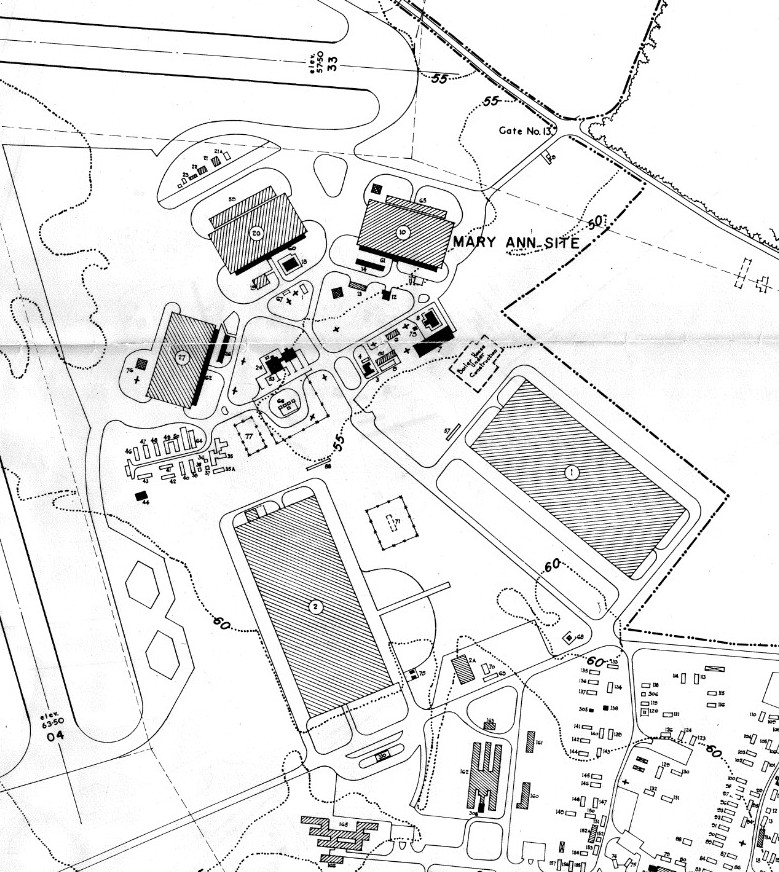
Record Site Plan of Mary Ann Site 1950

Mary Ann Plan.jpg
burtonwood stuff.jpg

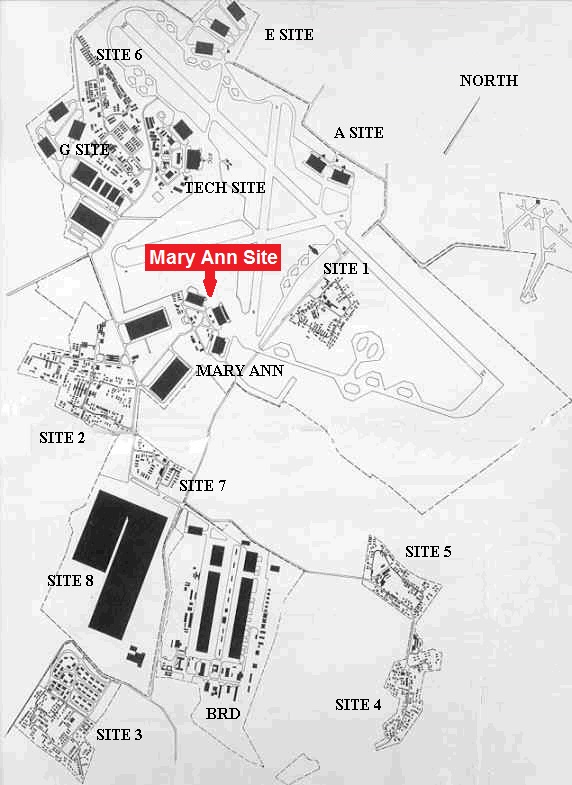
Mary Ann Site Mary Ann site was named after a local wood called ‘Mary Ann Wood’…. today called ‘Mary Ann Meadows’. The wood was named after a local lady ‘Mary Ann Perks’ who lived in Rose Cottage, what is now Burtonwood Road in the late 1800’s. The site was sited to the East close to Burtonwood Road near gate number 13.

Mary Ann Site was developed as part of

Mary Ann Site was developed as part of B.R.D Site and was linked by taxi way to B.R.D. Site by crossing Burtonwood Road at Gate 12 into B.R.D. Sites Norther Entrance at Gate 11.

Mary Ann Site was occupied by 32 mainten...

Mary Ann Site was occupied by 32 maintenance unit RAF between 1940 & 1942. On the 11th of June 1942 the United States Army Air Force (USAAF) arrived on the site. The 3 ‘C’ type hangars were numbered AD4, AD5 & AD6 (AD meaning ‘Aircraft Dock’).

These hangars were manned by over 300 me...

These hangars were manned by over 300 men in each hangar working day & night shifts 7 days a week. Over 1,500 aircraft were modified, repaired and overhauled in each hangar each year in over 2 and a half years. The personnel that worked in these hangars and workshops were very proud of their work.

Each hangar worked to produce more aircr...

Each hangar worked to produce more aircraft than its neighbours hangar in a given time period. Books, similar to college year books were prepared by the personnel of some of the hangars and possibly ‘all’ of them. On the 9th of June 1946 the USAAF returned control back to the RAF and number 276MU then occupied the site, its role being for long term aircraft storage, Inspection Repairs and Modification of Aircraft issued to the RAF.
Also in 1946 the Ministry of Supply (MOS...

Also in 1946 the Ministry of Supply (MOS) took over control of Mary Ann Site for covered storage. In September 1948 the Americans were back, this time the Unites States Air Force (USAF). The airfield was now being extensively used by Military Air Transport Services (MATS) as their UK base & for aircraft maintenance & servicing. 53rd Weather Reconnaissance Squadron with their Boeing WB29 & later WB50 Super Fortress used Mary Ann Site as their dispersal & maintenance facilities.

Armed Forces public open days were held ...

Armed Forces public open days were held on Mary Ann Site on the 15th of May 1954, the 21st of May 1955, the 19th of May 1956, the 18th of May 1957 and the 17th of May 1958 displaying both USAF & RAF aircraft of the period. The USAF left in 1959 & the US Army arrived on the 2nd of January 1967. They focused all their operations on the supply depot on Site 8 but had no use for Mary Ann Site.

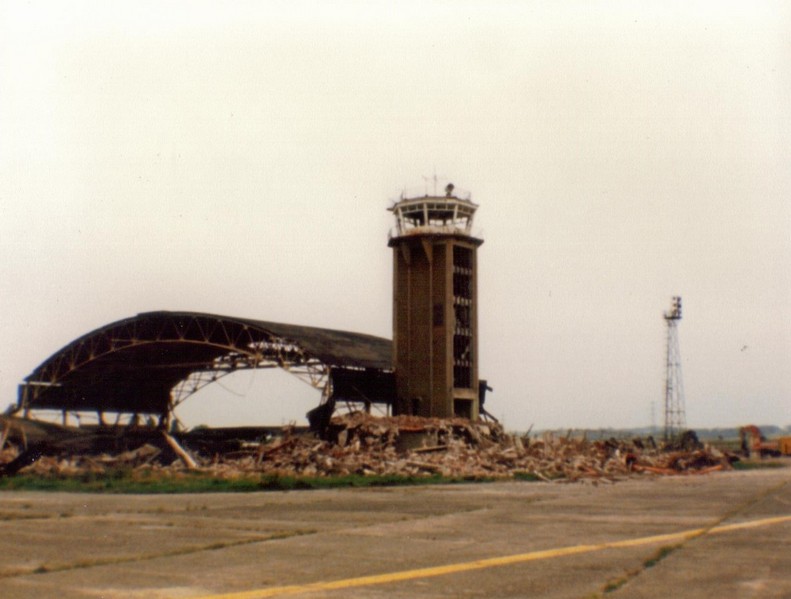
Mary Ann Site was demolished in 1986. Ma...

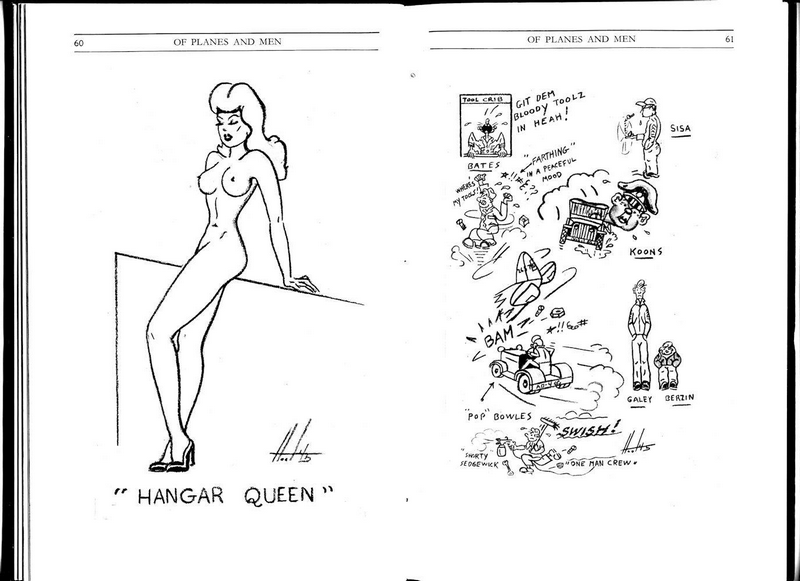
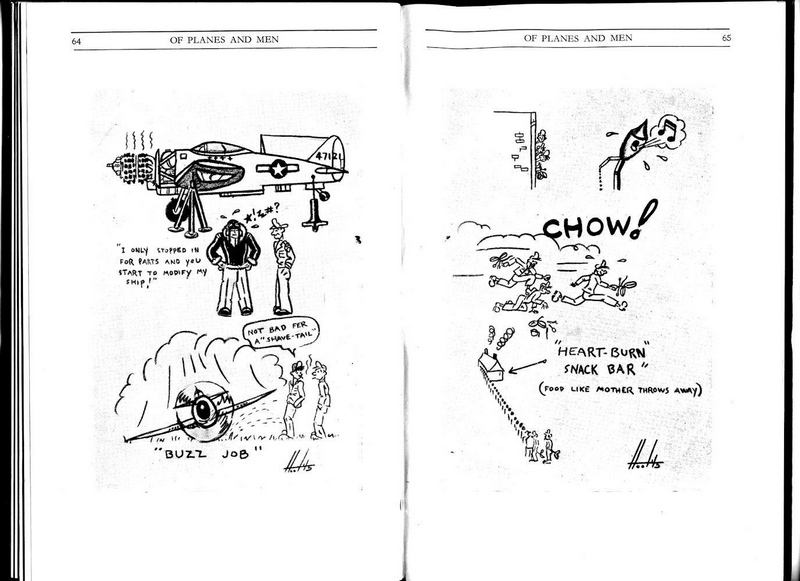
Mary Ann Site was demolished in 1986. Mary Ann Site Aerial Photo Below is an aerial photo of the 3 ‘C’ type hangars on Mary Ann site. The top hangar on the photo is hangar AD6 The middle hangar on the photo is hangar AD5 The bottom hangar is AD4 A memory book of hangar AD4 1943 – 1945 Hangar AD4 was located at Mary Ann site, being one of the three C-type hangars constructed there.

Each of these Hangars measured 150 feet ...

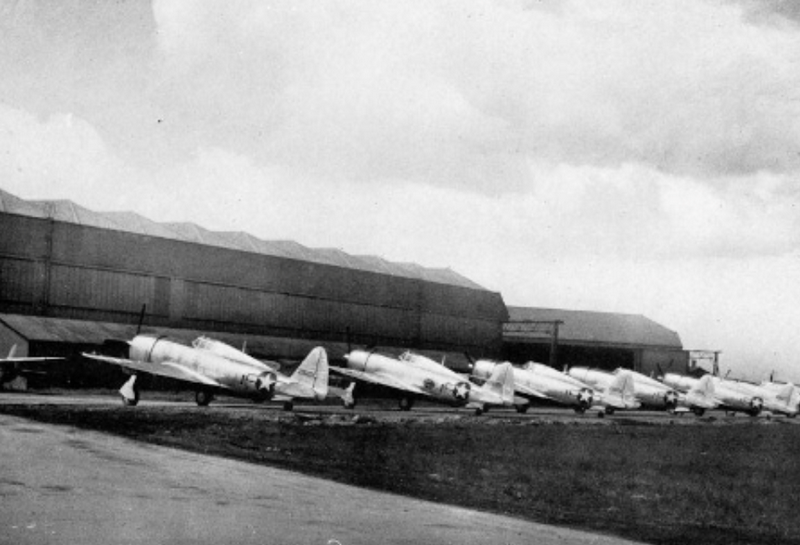
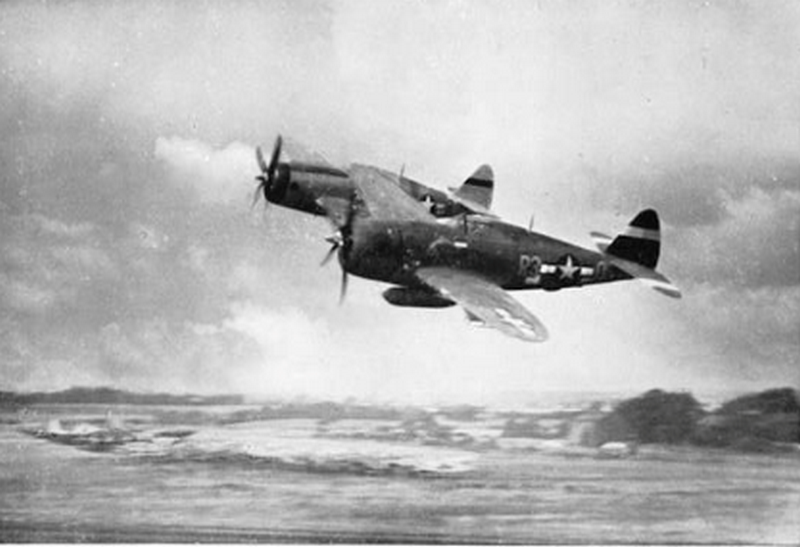
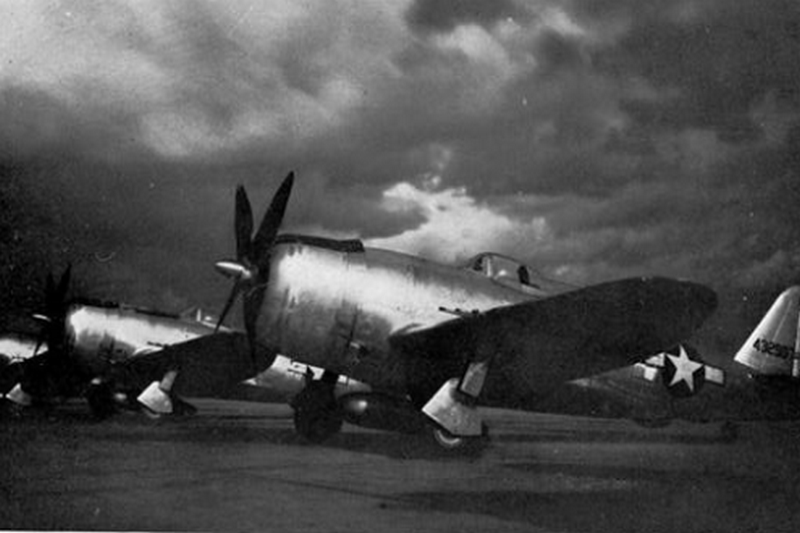
Each of these Hangars measured 150 feet wide x 300 feet long with an open working area of 5,000 square feet. Mary Ann site was also part of BRD-site. P47 Thunderbolts lined up outside hangar AD4.

photo1mary ann site hangar ad4.PNG

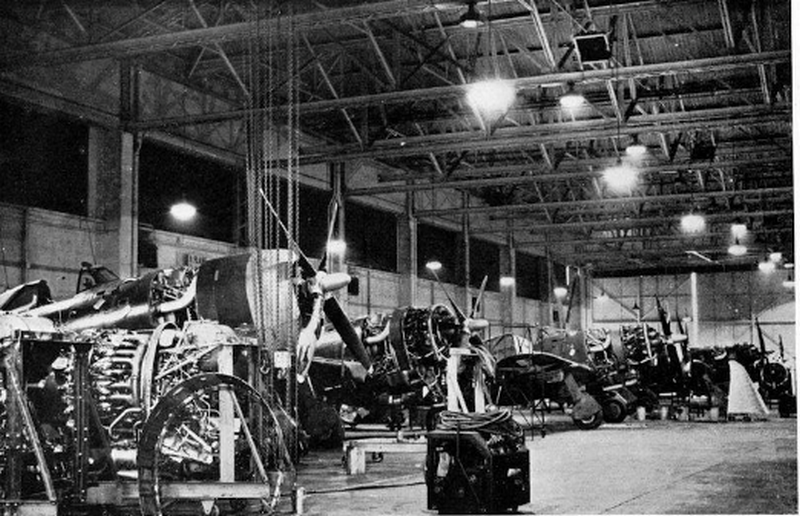
P47 Thunderbolts undergoing maintenance inside hangar AD4.

photo2mary ann site p47.PNG

AD4 Hangar cartons.

photo3new hangar ad4 1.PNG
photo4new hangar ad4.PNG

P 47 Thunderbolts

photo1P47ad4 new 1.PNG
photo2P47ad4 new 2.PNG

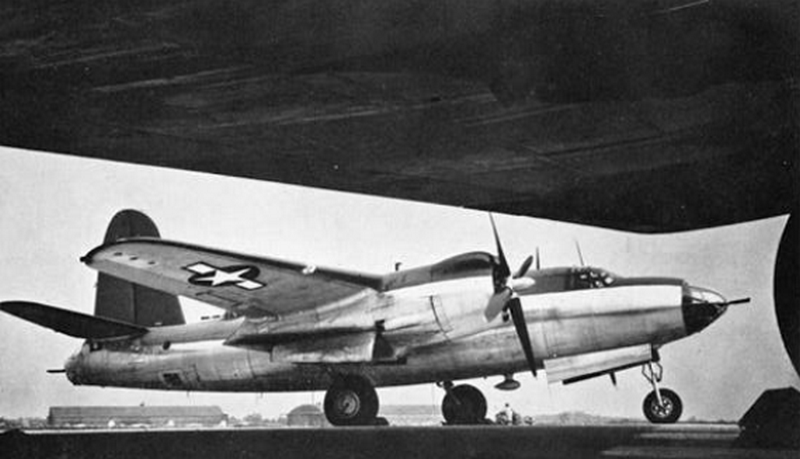
Martin B 26 Marauder

photo3P47ad4 new 3.PNG
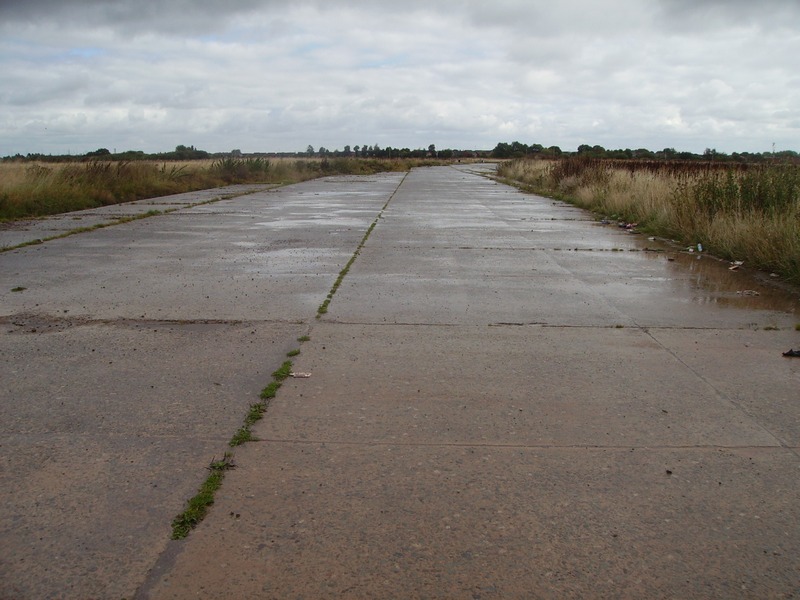
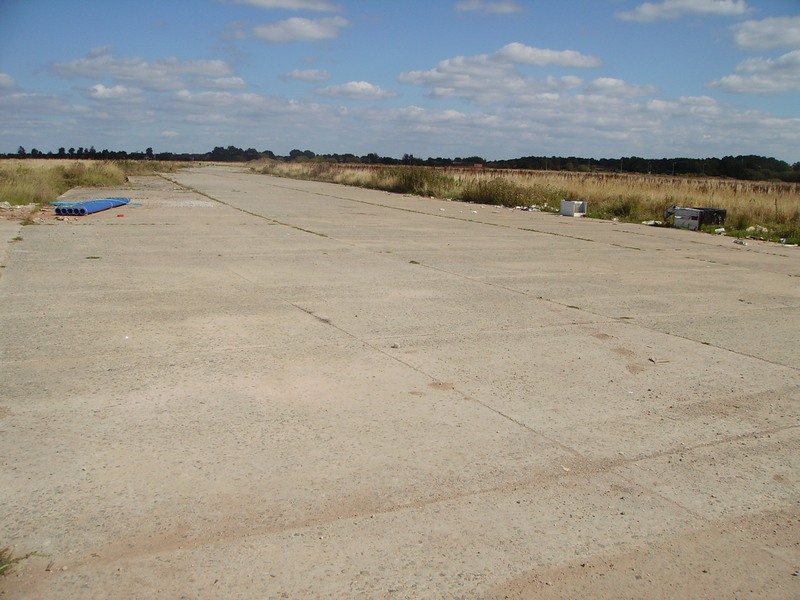
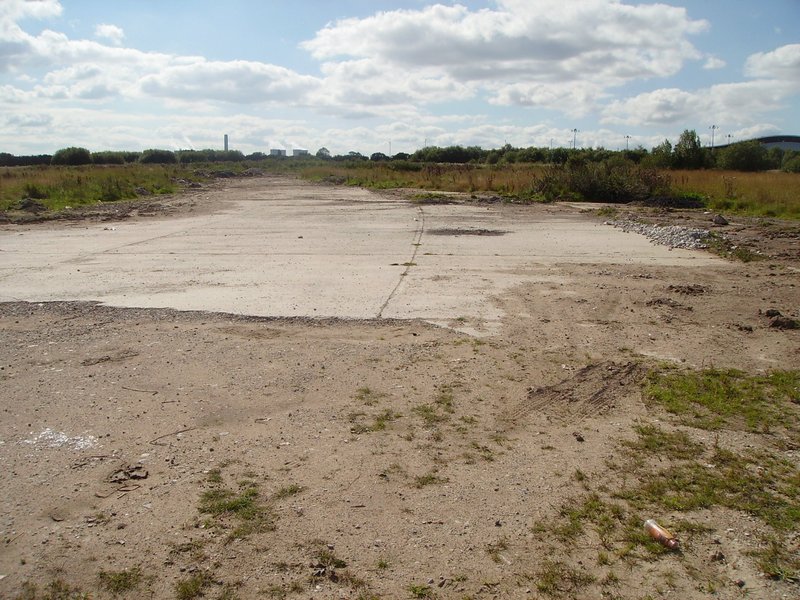
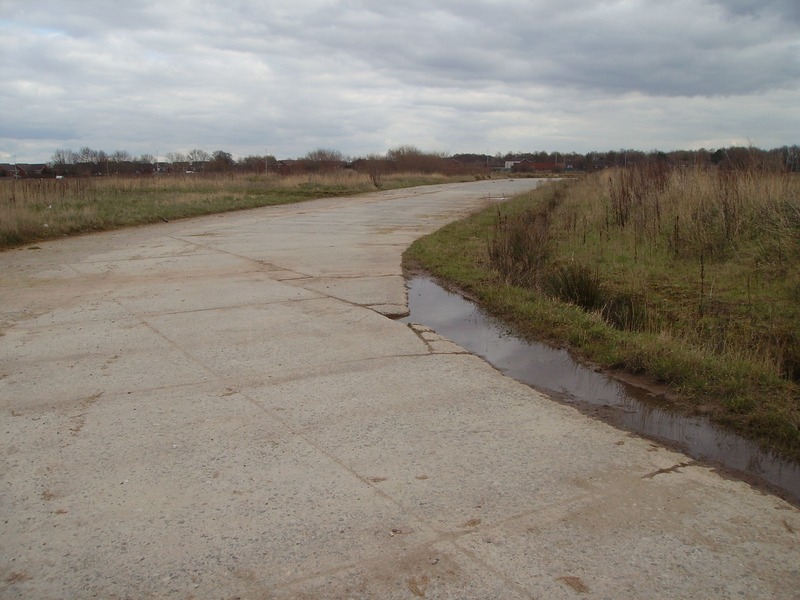
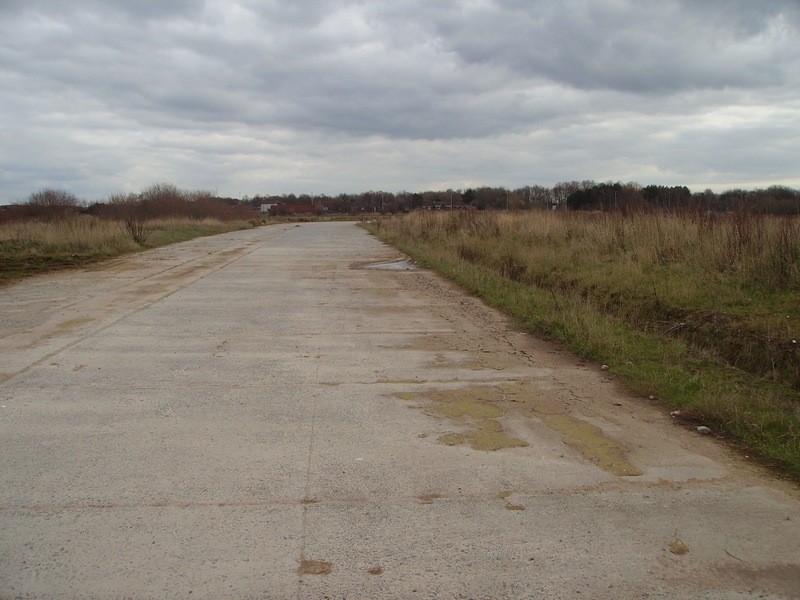
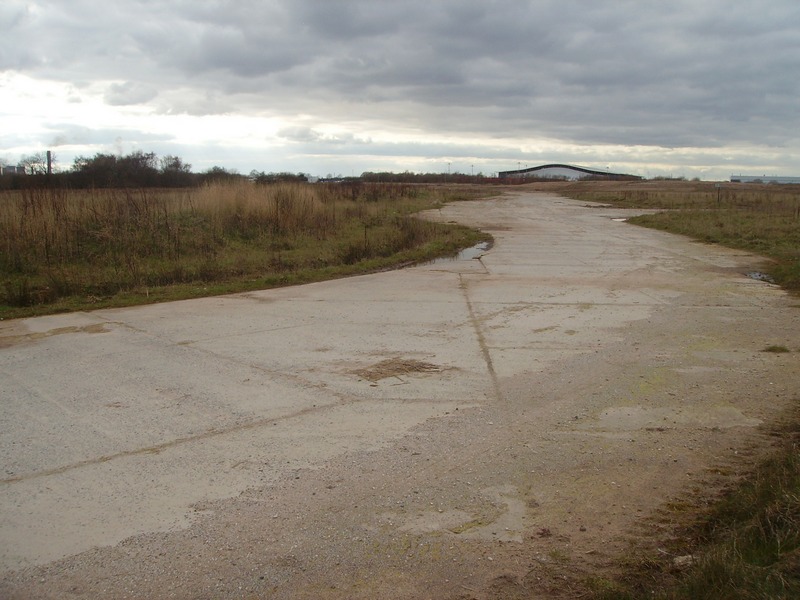
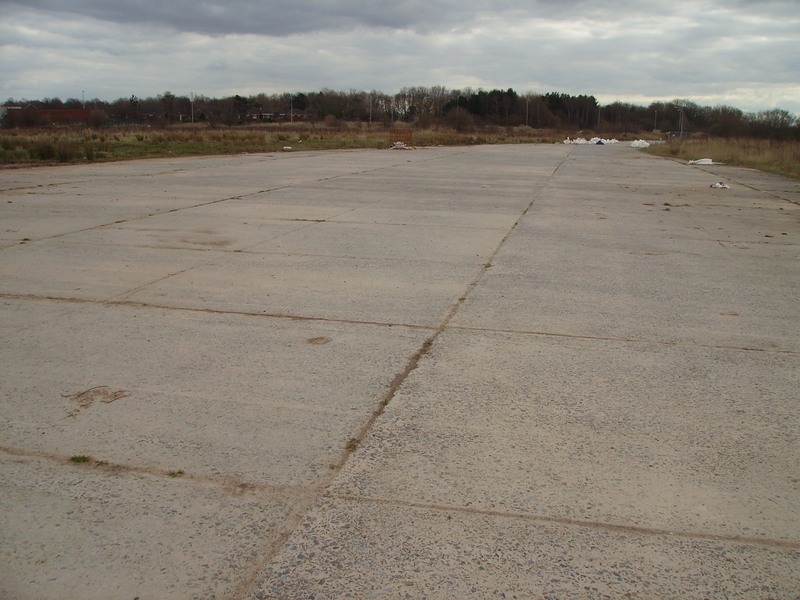
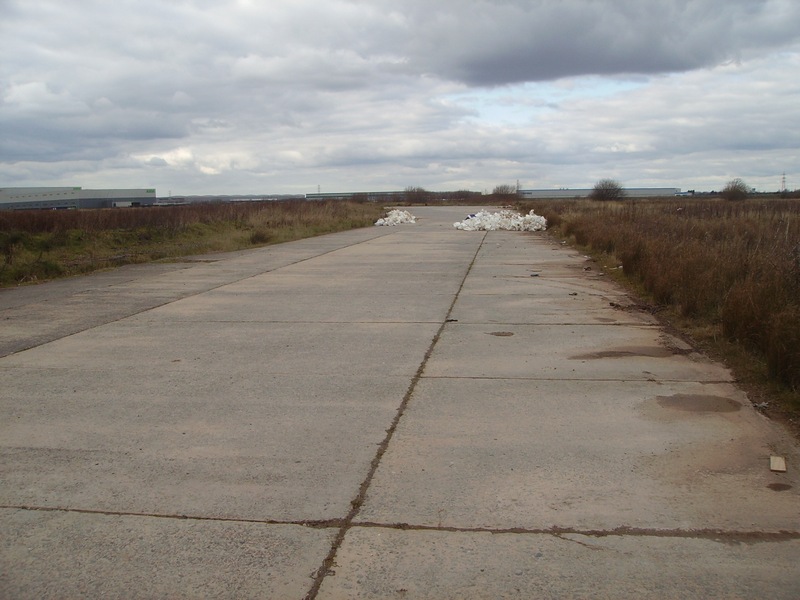
(The Following Photos Were ALL Taken in 2016) The remaining part of the apron in front of the ‘C’ type hangars looking East
mary ann 10 k.jpg
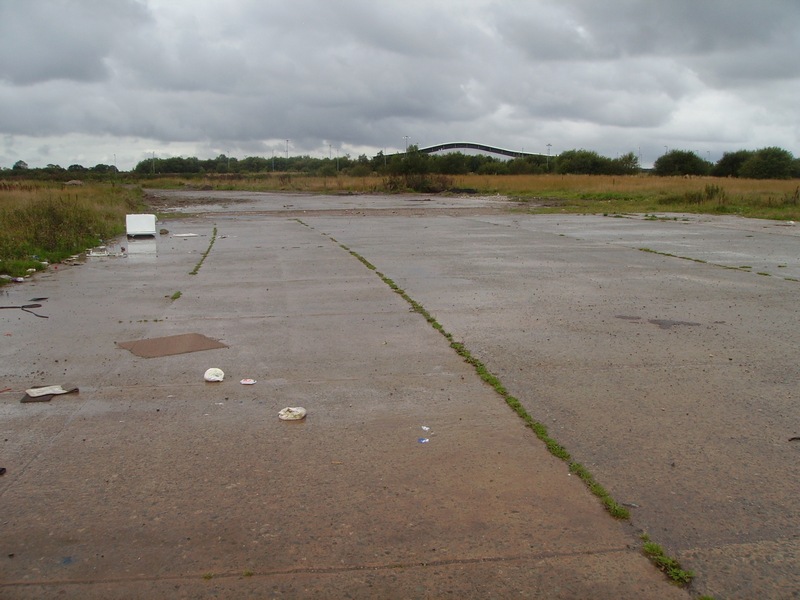
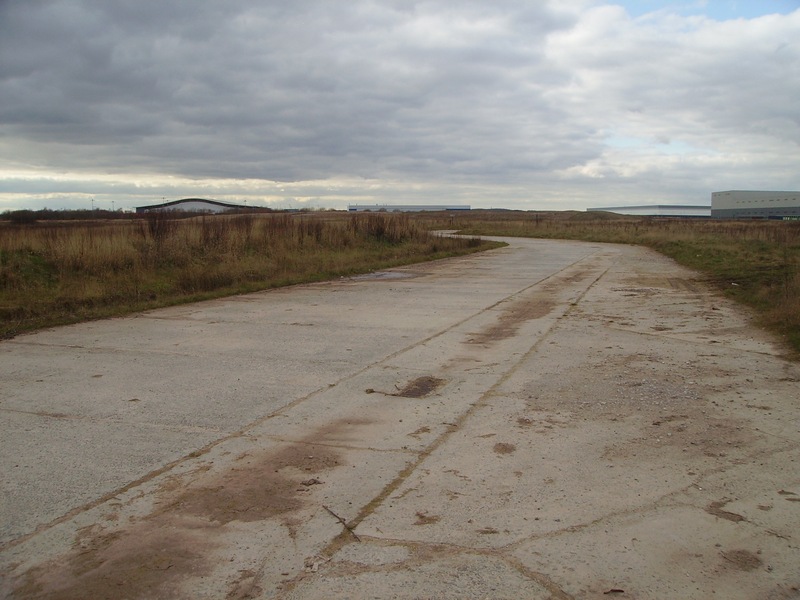
Mary Ann site. The curve of the apron (in the distance) goes round to the right and follows the arc of the hangars.
mary ann 23.jpg

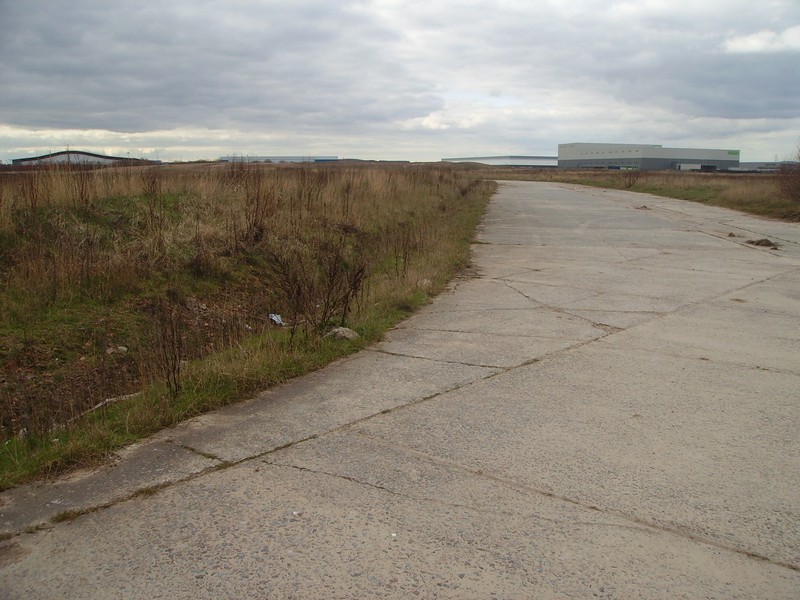
The edge of Mary Ann Site Looking South West (Fiddlers Ferry Power Station is in The Distance)
mary ann 31.jpg

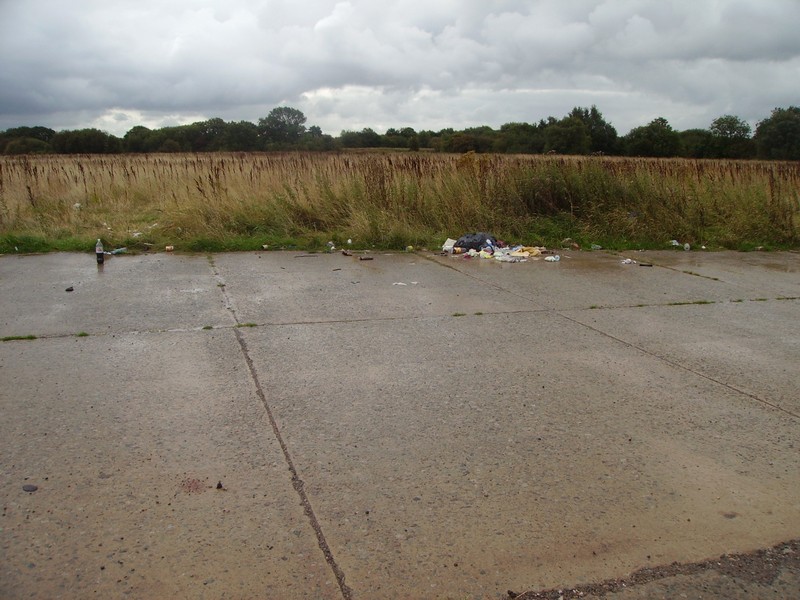
Edge of Mary Ann Site Looking West

mary ann 12.jpg
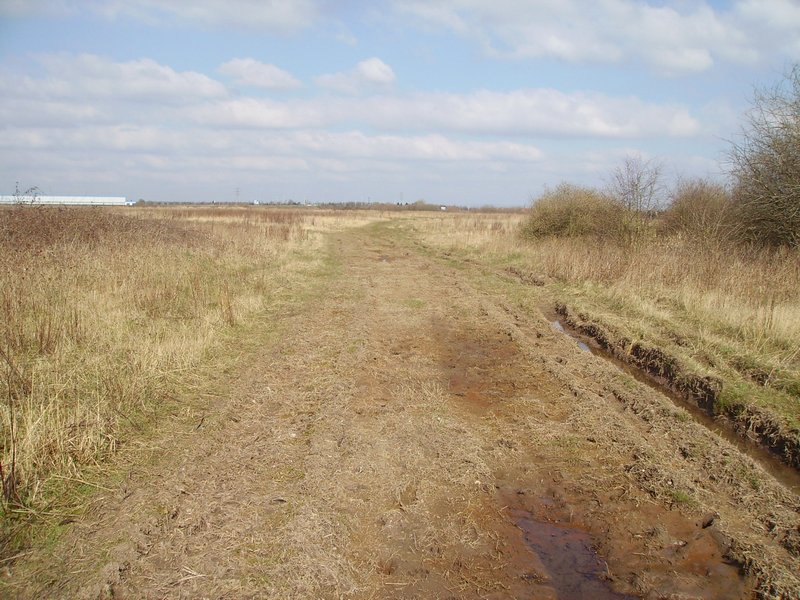
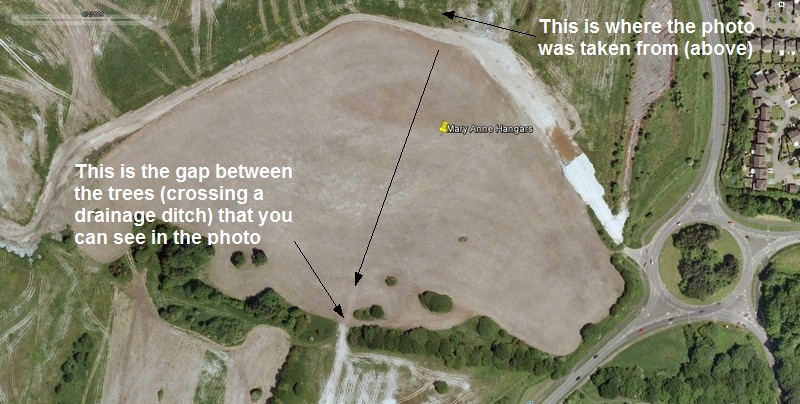
Hangar AD5 was situated just beyond the concrete (in the foreground) AD4 was on the left and AD6 was on the right as you view the photo. Mary Ann site and its associated buildings extended back to the tree line The gap in between the trees in the background was the actual main road leading up to Mary Ann site and contained all 3 hangars.. The main road came from the main entrance and passed through in between the 2 large workshop warehouses building 225 and 226 (beyond the trees in the background) and continued through the gap (in the middle of the photo coming this way) and onto the Mary Ann hangar site.
mary ann main road apron front of c type hangars 1.jpg

Below (Photo) is the Gap between the trees (as Described above) but Looking SOUTH

mary ann steam pipes %2810%29.jpg
Below (Photo) is the Gap between the trees (as Described above) but Looking NORTH This Originally (During WW2) Was The Perimeter Track To/From Mary Ann Site, but Later was Used as a Main Service Road To The Rear of Mary Ann Site.
mary ann steam pipes %289%29.jpg

This is the gap between the trees (crossing a drainage ditch) that you can see in the photo above.

mary ann aerial 2.jpg
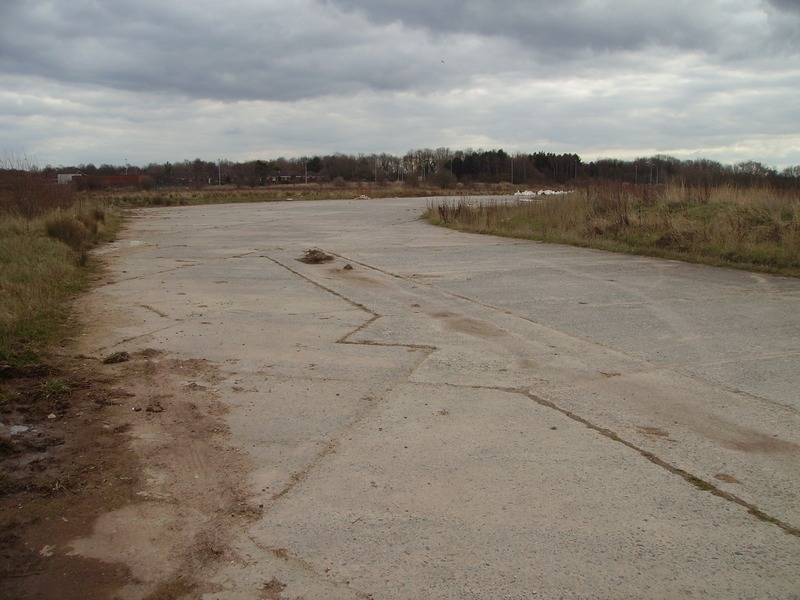
Looking Eastwards at part of the Remaining Apron. The concrete we can see (as a road now) originally extended onto the grassed area that you can see on the left & the ‘C’ Type hangars were on the Right of the concrete.
mary ann 28th february 2016 keep3.jpg
mary ann 28th february 2016 keep4.jpg
Looking West towards ‘G’ site from the Mary Ann Apron. The large building in the background is the Royal Mail Depot and was originally the site of one of the large warehouse workshops.
mary ann 28th february 2016 keep6.jpg
Looking West again (but further round) you can see the Royal Mail Depot that was ‘G’ Site & Just to the right is the new Asda building which is built on Technical Site.
mary ann 28th february 2016 keep11.jpg
mary ann 28th february 2016 keep14.jpg
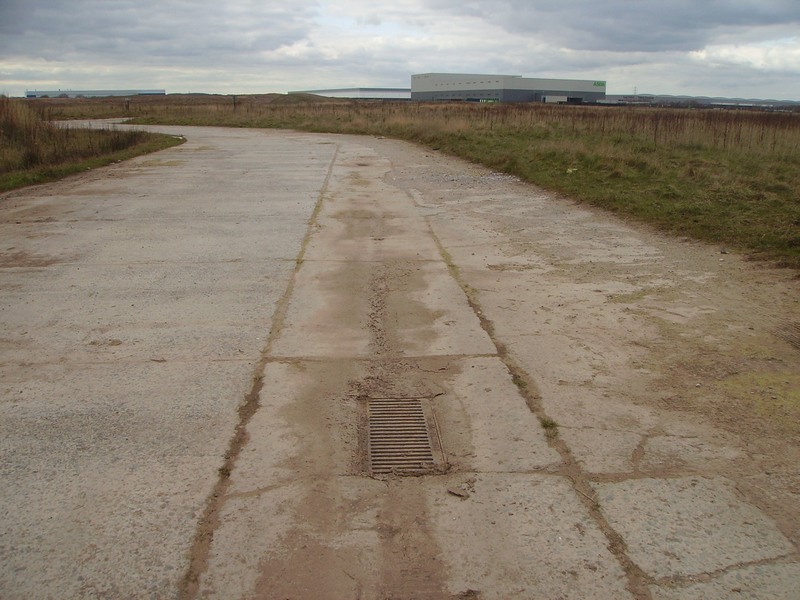
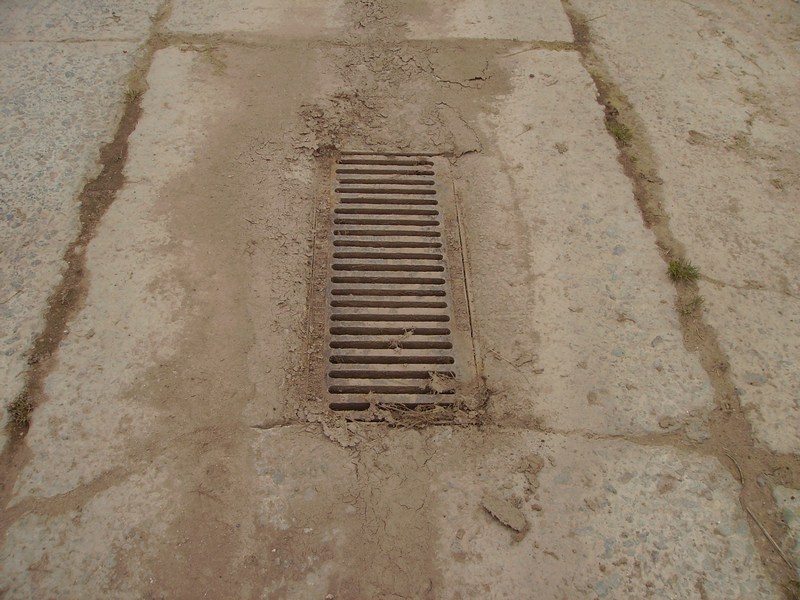
Note the cambered concrete and the grid These grids were spaced out at regular intervals This was to enable the surface water to drain away off the apron
mary ann 28th february 2016 keep7.jpg

This was to enable the surface water to drain away off the apron

mary ann 28th february 2016 keep8.jpg
(Note: The following photos are just to show the grids as they were in operation as a working base) RAF Hawker Hunter F.6 XE527/P of number 19 squadron at Church Fenton on the Burtonwood Mary Ann Site Apron on the 17 May 1958 public open day Note the Apron drainage channel and grid in the concrete Photo Credit, James MacKenzie, North West Air News
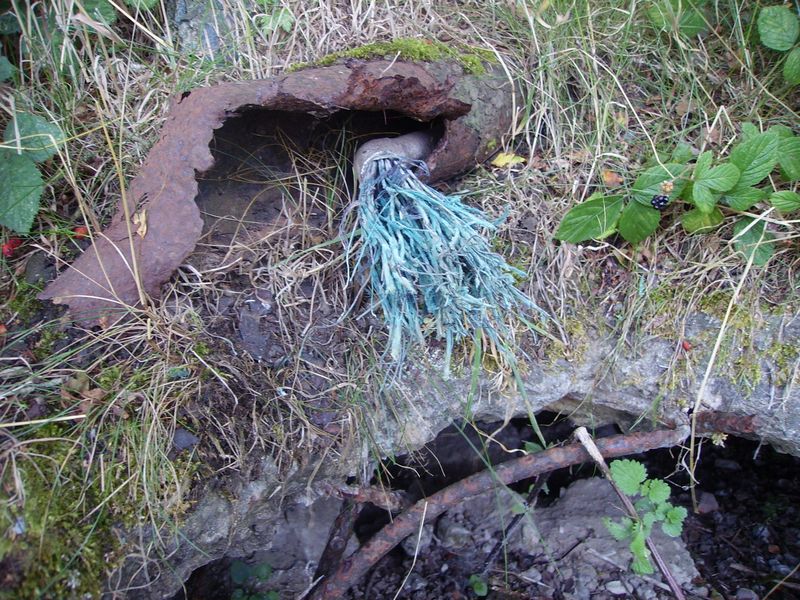
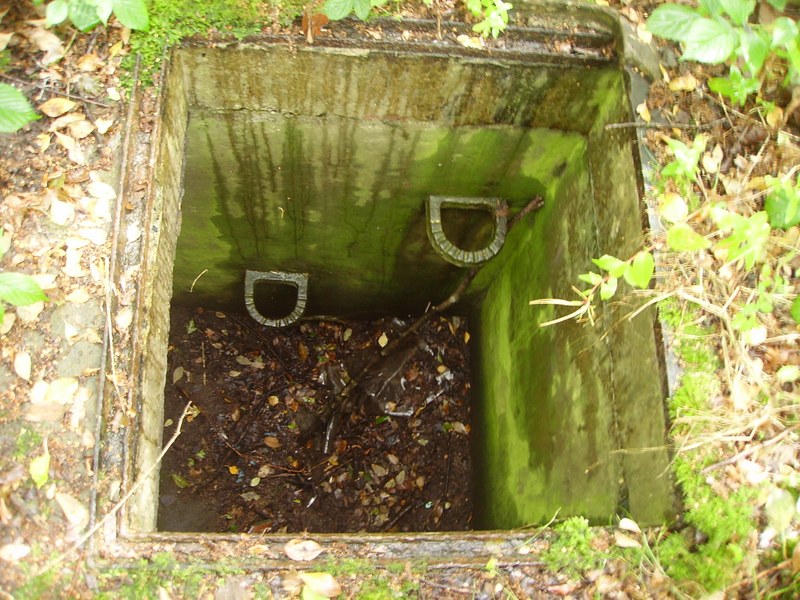
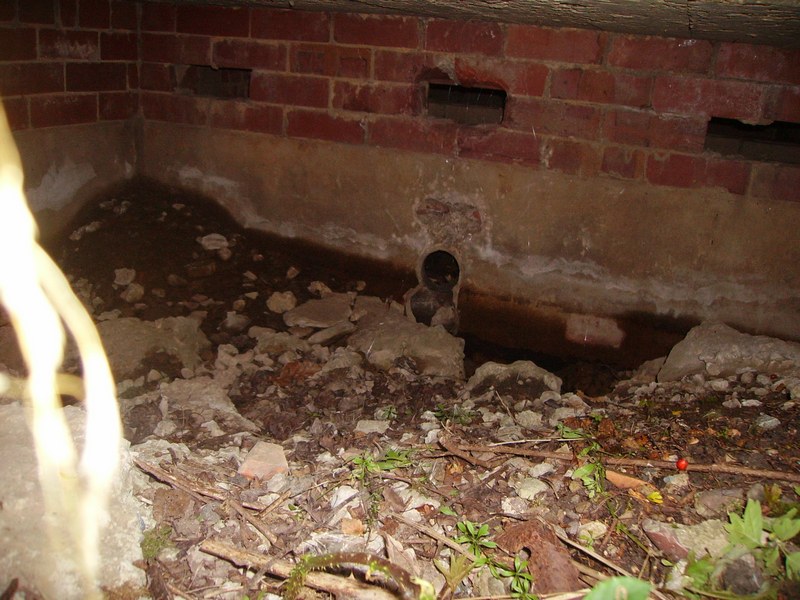
photo 1 burtonwood mary ann hawker hunter f6xe527 p  of 19 sqd  17 may 1958 alex.jpg
1954 – 349250 Douglas C-47 AACS Radar calibrator Natural metal, white top Somewhat over-exposed Although Dick Ward gives this a 1956 date, my lists only show 349250 as being at the 1954 Burtonwood public open day I do suspect 1956 could be missing some of the ‘based’ regulars It could be either 1954 or 1956 Note the apron drainage channel and grid in the concrete Photo credit Richard Ward North West Air News
photo 2 mary ann bortonwood alex new.jpg
USAF Boeing KB-50P 0-483906 with a Silver overall badge on the tailfin The photo was taken on the Burtonwood Mary Ann Site Apron on a public open day in 1956 Note the C-Type hangar in the background Photo credit Richard Ward North West Air News
photo 3 burtonwood open day 1956 boeing kb 50p  0483906 silver overall badge on fin  mary ann c type alex.jpg
RAF Blackburn Beverley C.1. XB268-D of number 47 squadron during the 1956 public open day The 2 K-Type hangars at A-Site can be seen in the background Photo credit R.L. Ward North West Air New
photo 4 burtonwood blackburn beverley c1xb268 during 1956  47 sqd  see text alex.jpg
P.O.L. covered storage inside one of the C-Type hangars at Mary Ann Site
photo 9 mary ann burtonwood drums alex.jpg
Outside P.O.L. storage at Mary Ann Site
photo 10 burtonwood mary ann outside drums alex.jpg
mary ann 28th february 2016 keep12.jpg

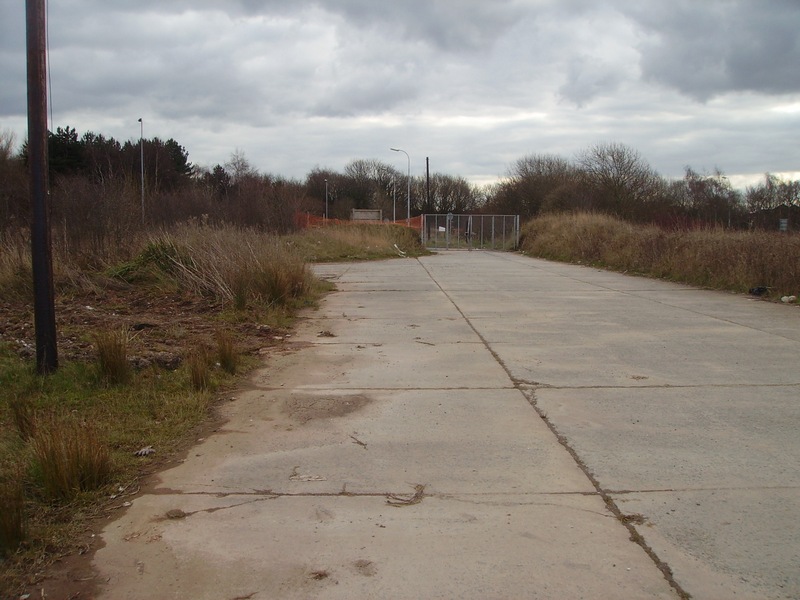
Heading Towards Gate 13

mary ann 28th february 2016 keep13.jpg
Gate 13 Please Note: Gate 13 Was Situated on Burtonwood Road (where the roundabout is now) & Not Where The Gate is on the Photo Below. It was (roughly speaking) where the trees are on this photo past the gate you can see.
mary ann 28th february 2016 keep19.jpg
Looking North Westerly From Gate 13. The Asda Building on the Left of the Photo was Where Technical Site & The Large Warehouse on the Right is ‘E’ Site and is on the Other side of the M62. The M62 was the Actual Main Runway 09/27
mary ann 28th february 2016 keep20.jpg
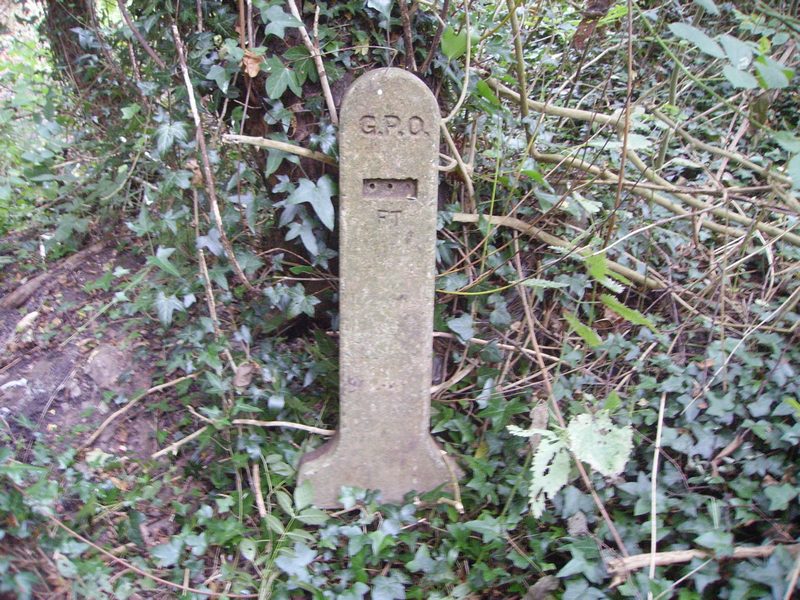
The following photos (below) are from what remains of a small group of buildings between Hangar 17 & the large Workshop Warehouse 2 A GPO (General Post Office) Underground Telephone Cable Line Marker Note: The small rectangle you can see below the G.P.O. letters (typically) had a metal plate inserted in it showing the depth of the cable stamped on it. (A Reminder that All The Photos Were Taken in 2016)
gpo post mary ann.jpg
Lead Sheathed Paper Insulated Multi Core Telephone Cable Encased in a Steel Sleeve to Support it Crossing The Drainage Ditch
mary ann telephone 3.jpg

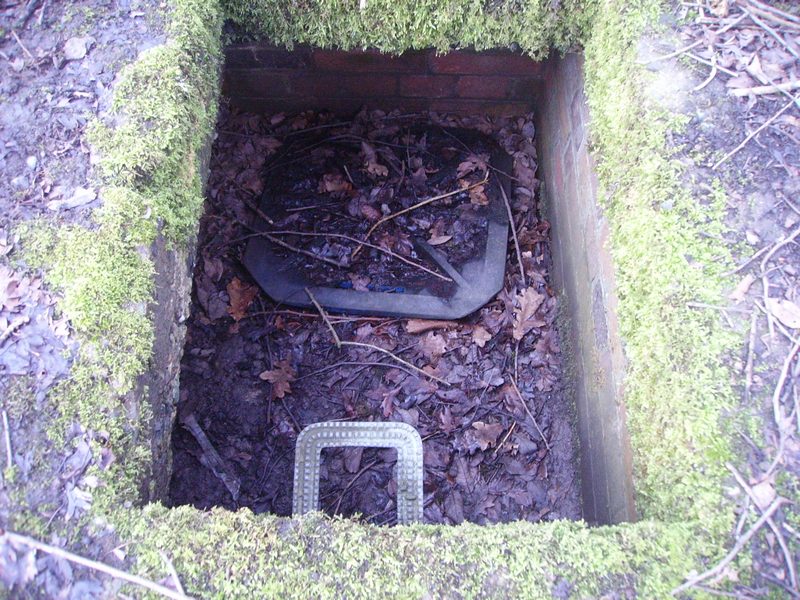
Drainage Man Hole

mary ann drains.jpg

Below Ground Drainage Chamber

mary ann telephone.jpg

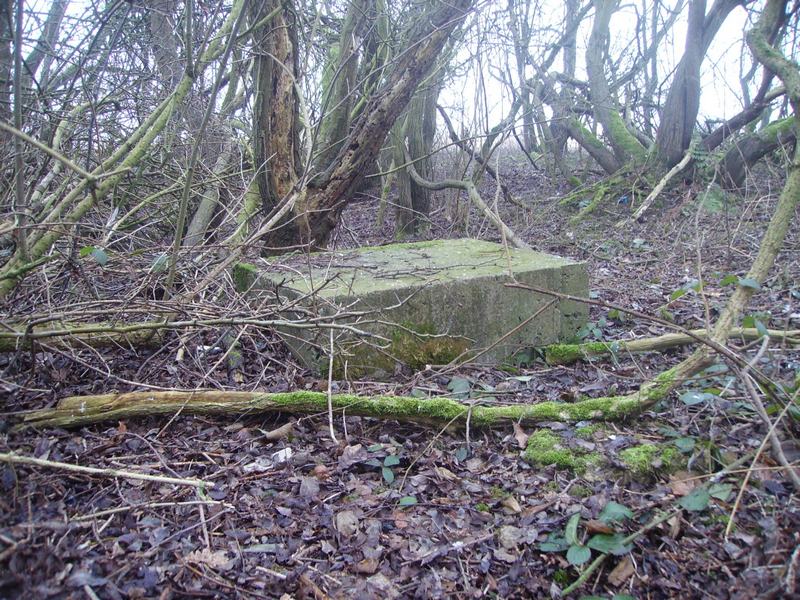
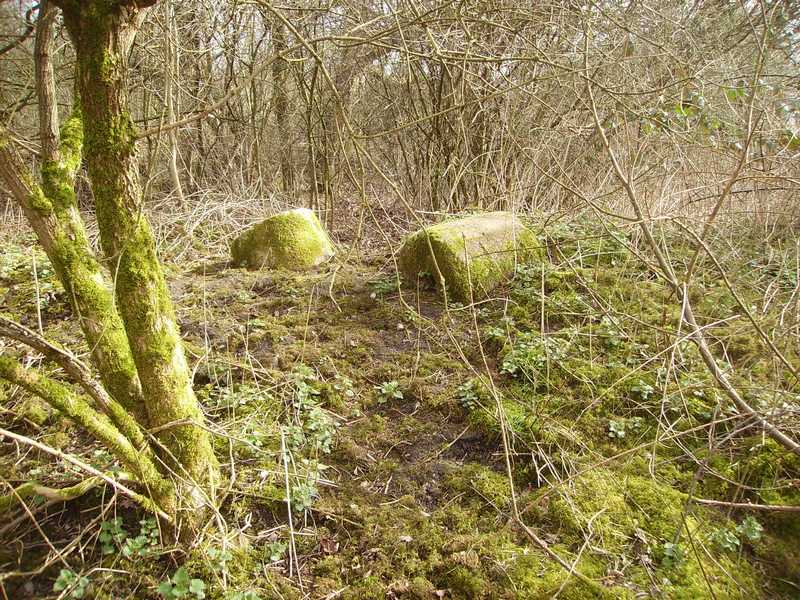
One of a few large concrete blocks close to one another.

good5.jpg
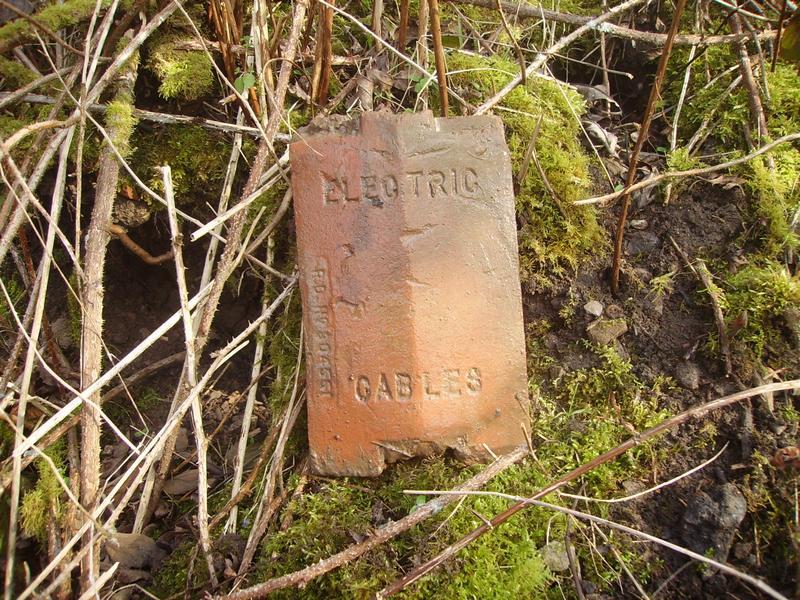
Underground Electrical Cable ‘Location Marker’ Tile. These type of tiles were connected together & laid ‘along’ the length of the electrical cables to ‘mark’ that electrical cables were present underneath them and also for protection
Electric marker Mary Ann.jpg
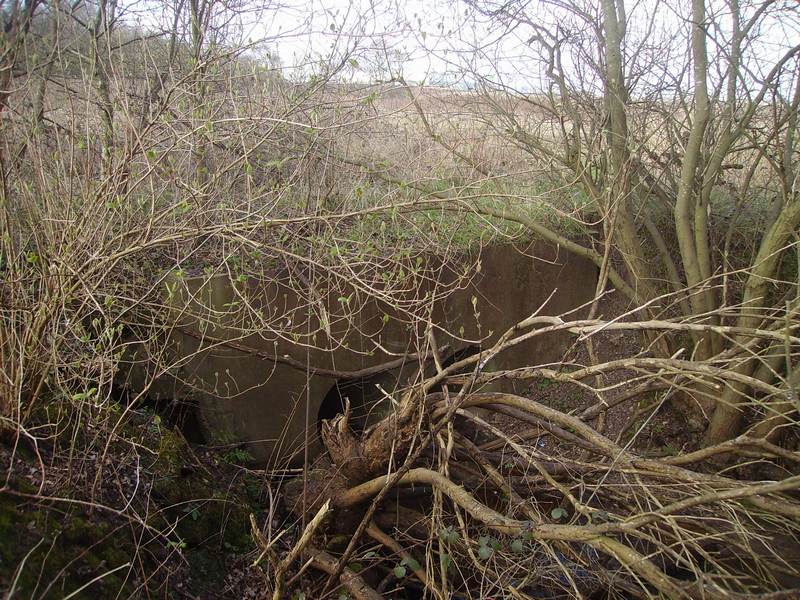
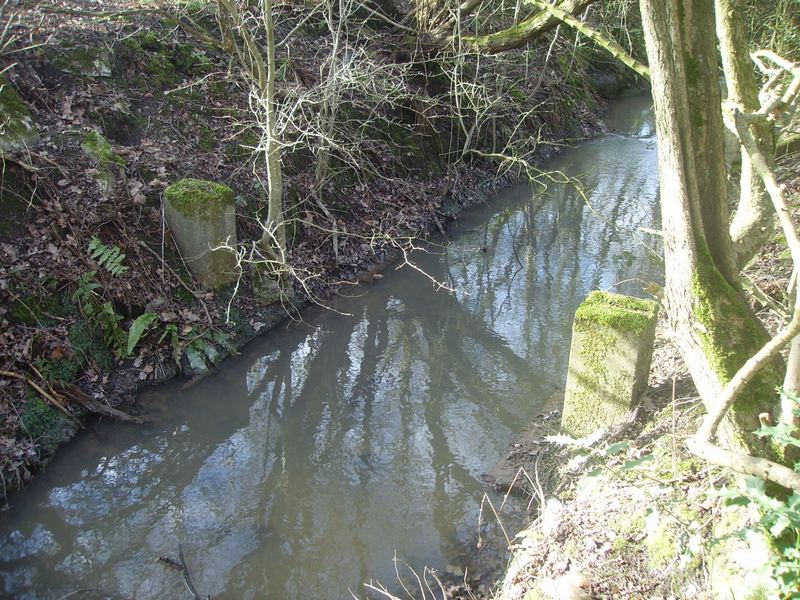
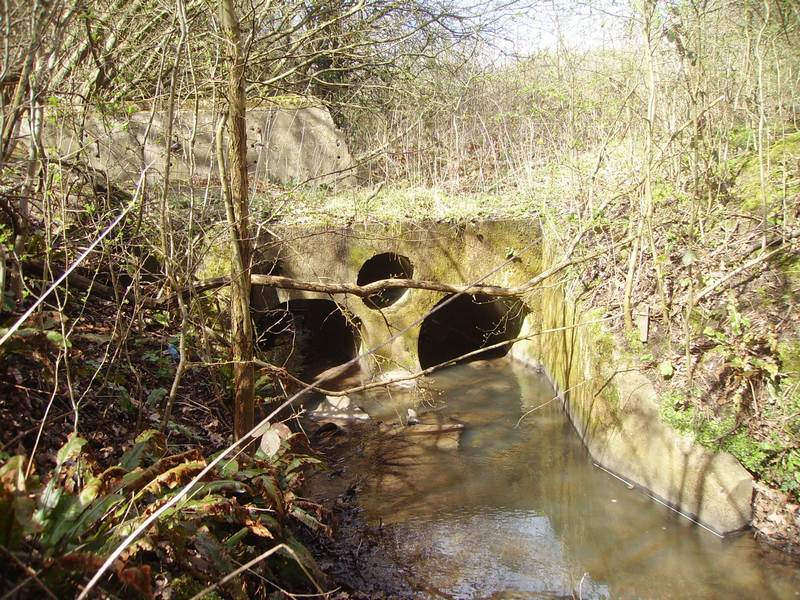
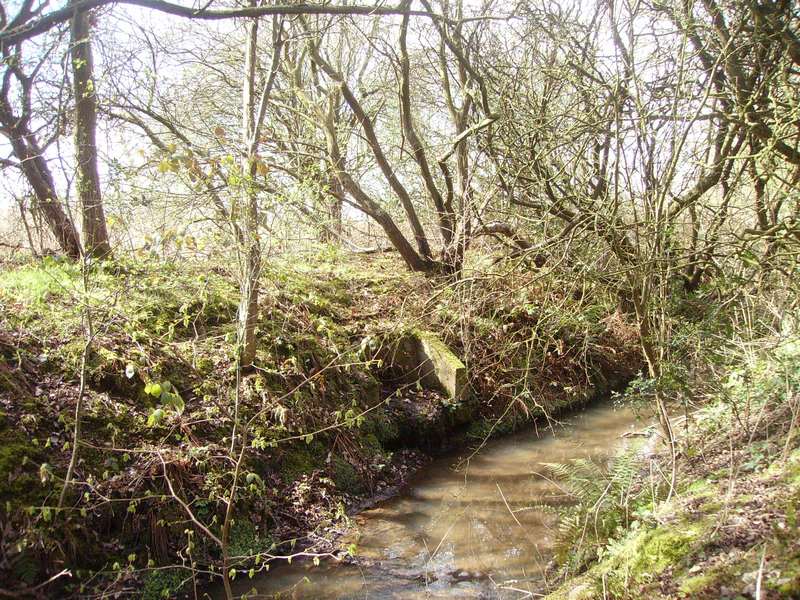
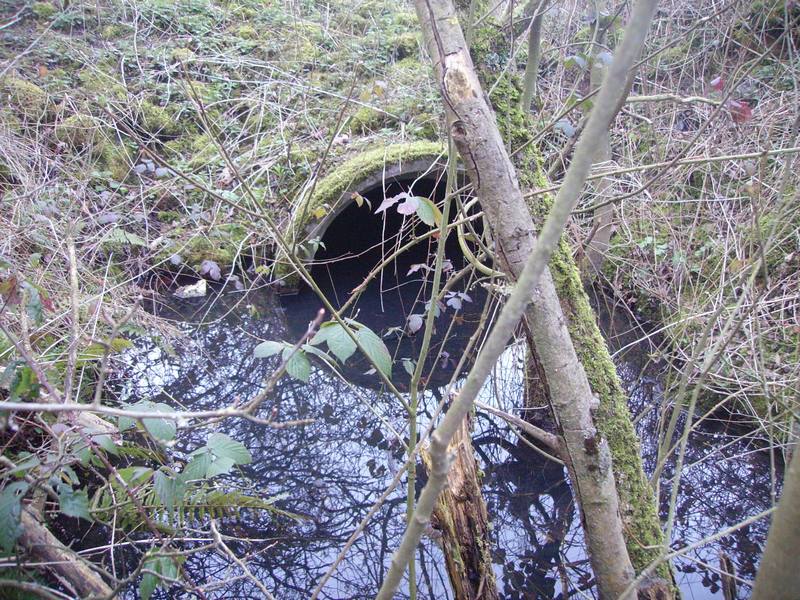
Mary Ann Site Had 2 Large Drainage Ditches & Each Drainage Ditch Had Numerous Culverts Along the Lengths of Each One Along With Many Discharge Pipes flowing into each ditch. Below is a Large Culvert Outlet Flowing East Across Mary Ann Site. This Then Flows Under Burtonwood Road & Through Mary Ann Woods.
Apron Culvent.jpg

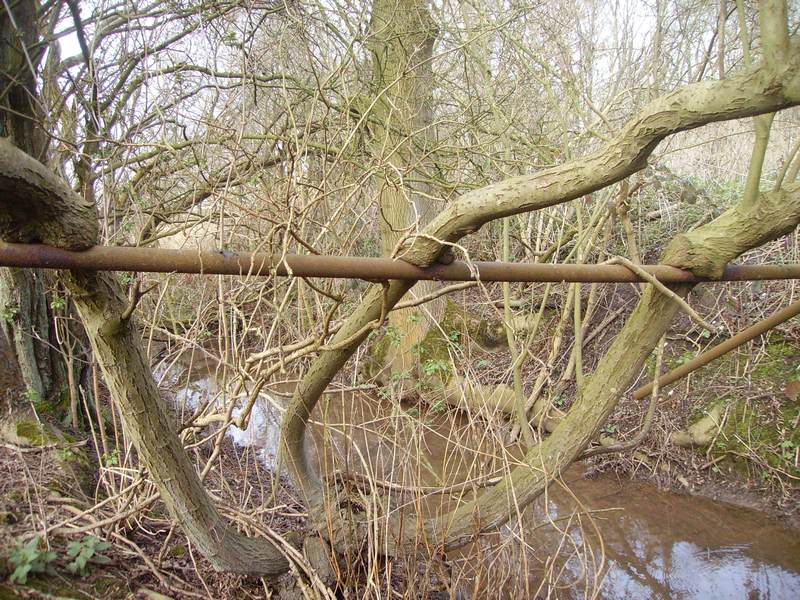
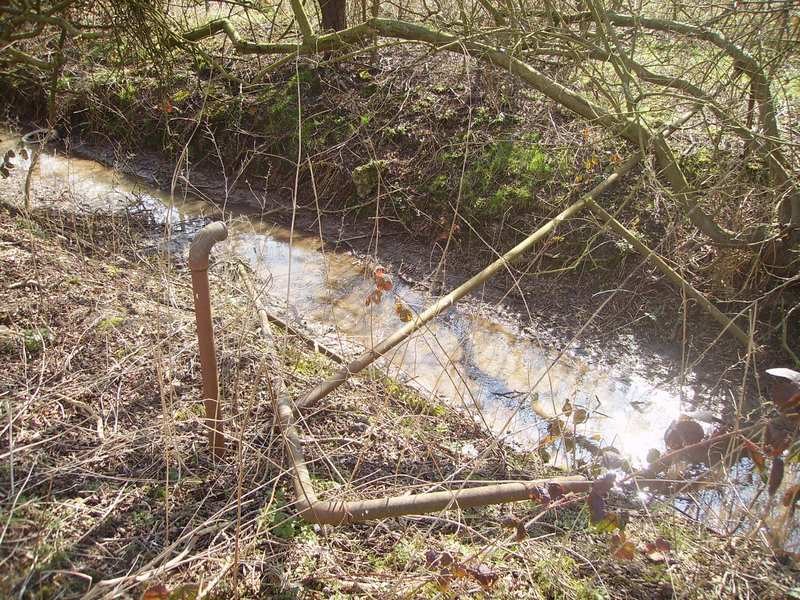
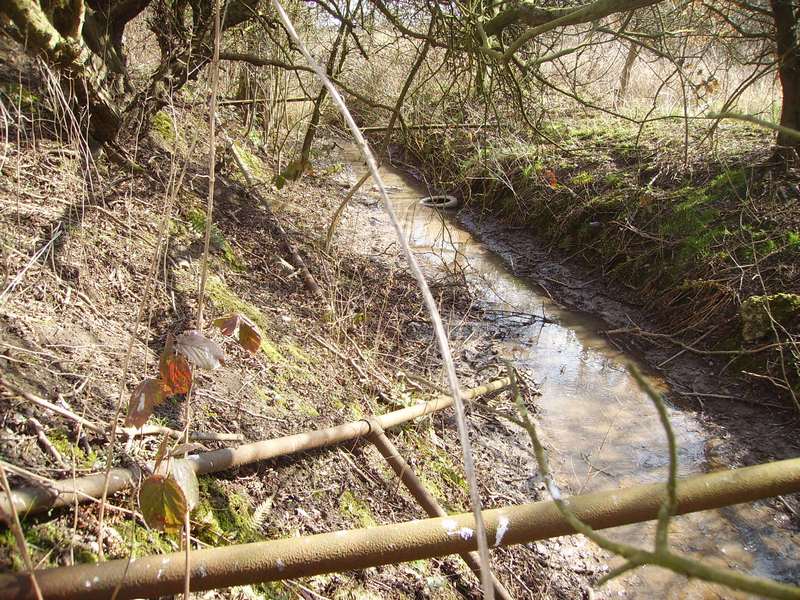
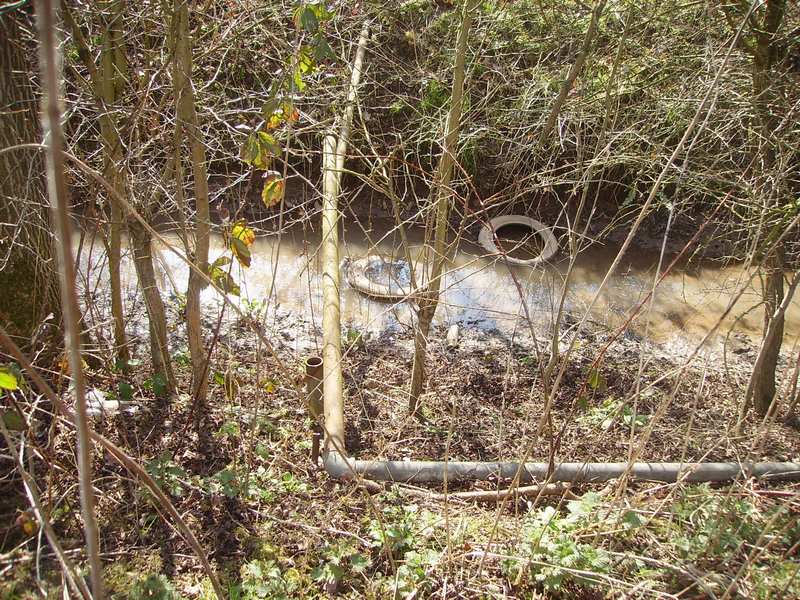
After the culvert, this discharge pipe system remains. The discharge pipe system is along the drainage ditch in front of demolished building 2 and along the side of demolished buildings 40, 42, 37 and 39. The system consists of 3 pipe ranges constructed of 1 inch and 1/2″ & 2″ steel pipe with threaded pipe fittings.

The ranges are supported across the ditc...

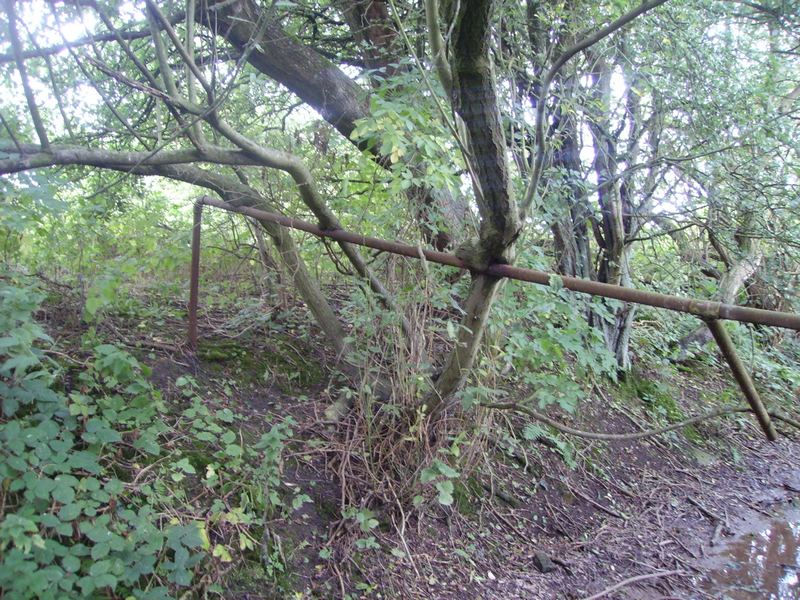
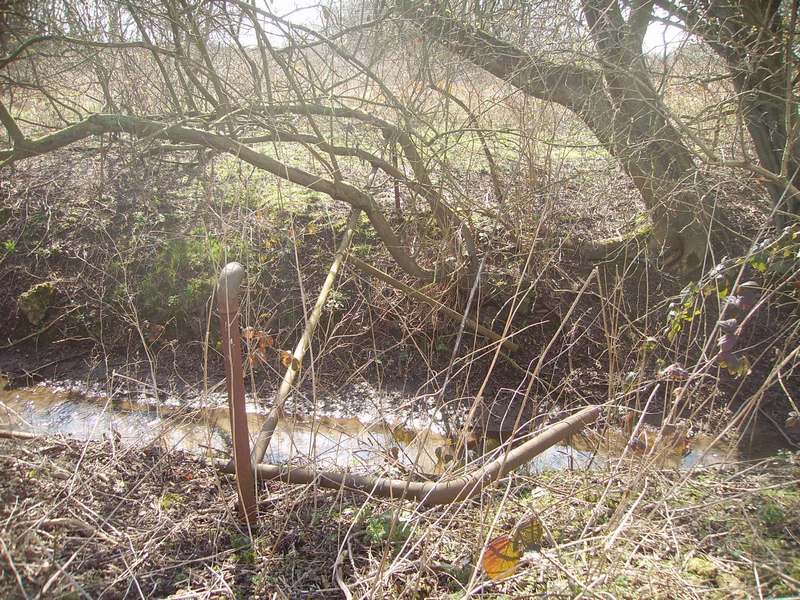
The ranges are supported across the ditch with the discharge outlets directed into the centre of the ditch. The 1st pipe range has become detached on 1 side of the banking. The 2nd pipe range has rusted and become detached and lays in the bottom of the ditch.

The 3rd pipe range (Photo Below) is supp...

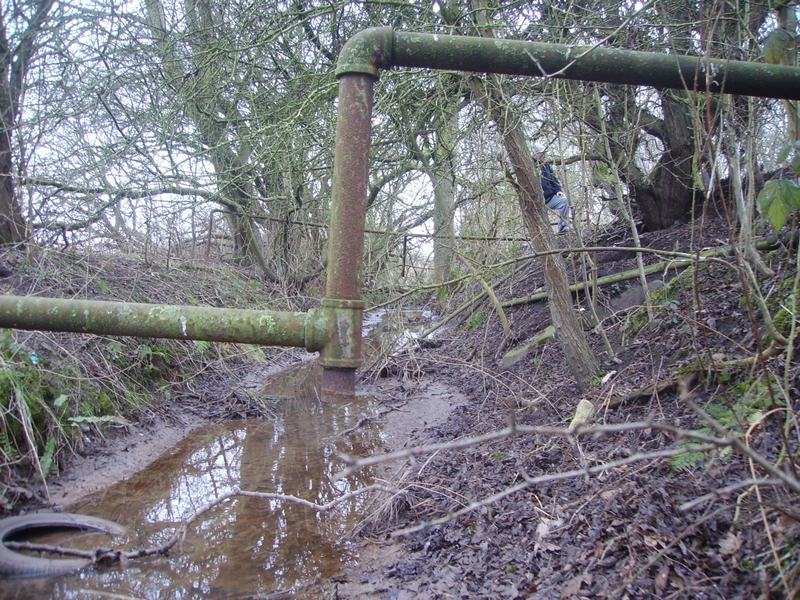
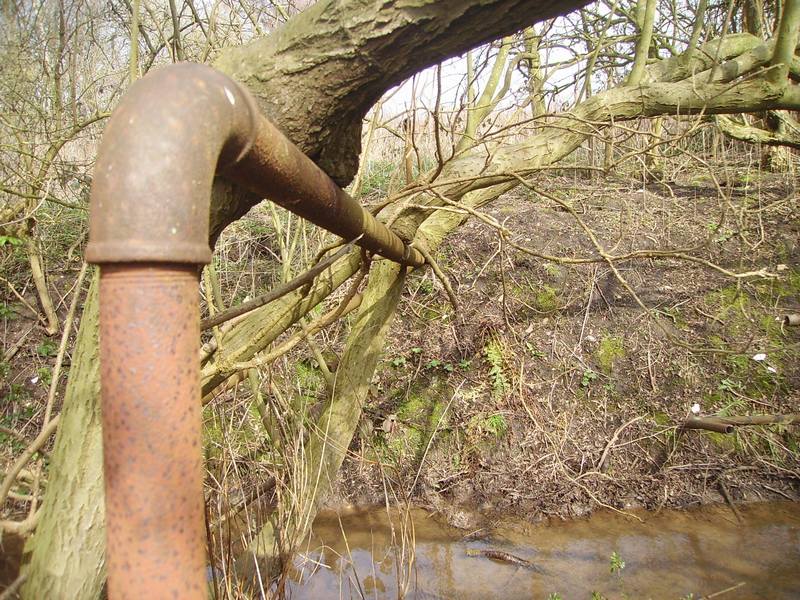
The 3rd pipe range (Photo Below) is supported lower than the other 2 and is connected to a 2″ steel pipe main The vertical section (going downwards) of the 1″ 1/2 pipe is the the discharge pipe. (1st Photo Below is an Overall View of the Pipe Ranges)
good4.jpg
The 1st Pipe Range This 1st Pipe has Become Detached From the Opposite bank (Note the three tree branches that have grown around the steel piping)
mary ann 3 trees 1.jpg
mary ann 3 trees 2.jpg
mary ann pipes.jpg
This Next Photo of The 1st Pipe Range (Taken From the Opposite Bank) Shows The Vertical Pipe Rising Out of The Ground That has Become Detached From The Pipe Crossing The Ditch
mary ann steam pipes %2814%29.jpg
This Photo Shows The 2nd Pipe Range (lying flat on the ground going into the drainage ditch) This Pipe Also Crossed the Drainage Ditch Next to The 1st Pipe (around 3 Feet apart)
mary ann steam pipes %2815%29.jpg
All 3 Pipe Ranges Can Be Seen From This Angle (1st Pipe Range in The Foreground, 2nd Pipe Range in the Drainage Ditch & the 3rd Pipe Range is in the Background)
mary ann steam pipes %2816%29.jpg
The 3rd Pipe Range This Pipe Range is the 2″ Main The Pipe Turning at a Right Angle is Following The Banking of The Drainage Ditch Towards the Large Culvert (we showed at the beginning) & Has Become Detached in Numerous Places. In the Middle of the Pipe Going Across the Drainage Ditch There is ‘T’ Pipe Fitting & This has a Discharge Pipe Directed Into The Drainage Ditch
mary ann steam pipes %2818%29.jpg

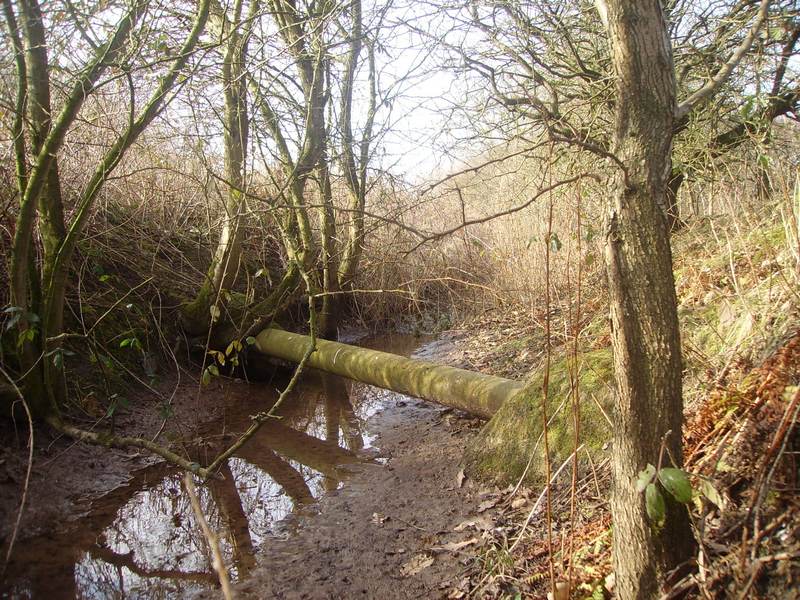
Large Steel Water Main

good6.jpg
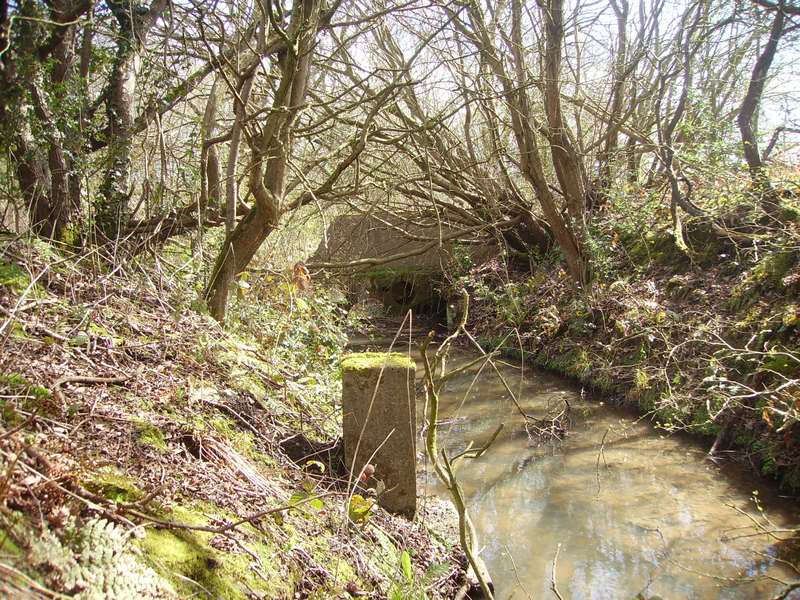
Following The Drainage Ditch Eastwards This Culvert Passes Underneath The Approach Road at the Rear of Mary Ann Site The Approach Road Was Originally a Perimeter Track to BRD Site During WW2
mary ann steam pipes %2845%29.jpg

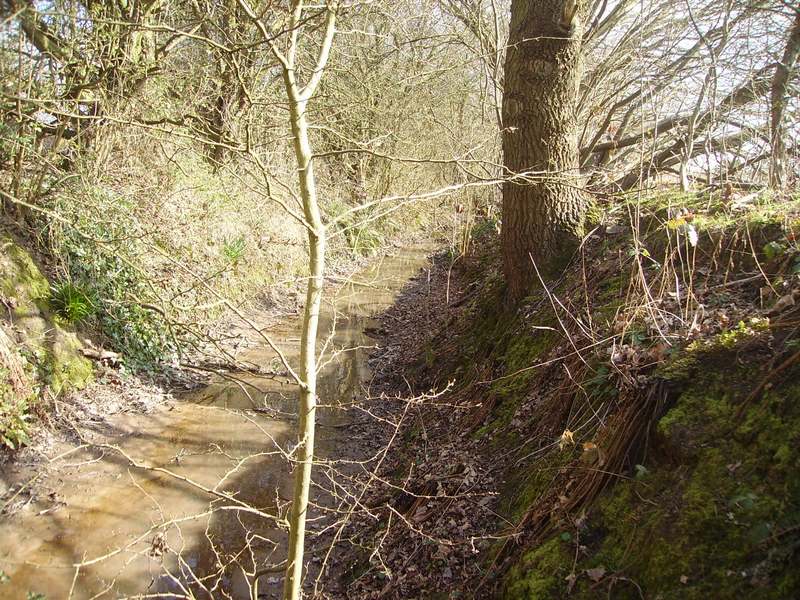
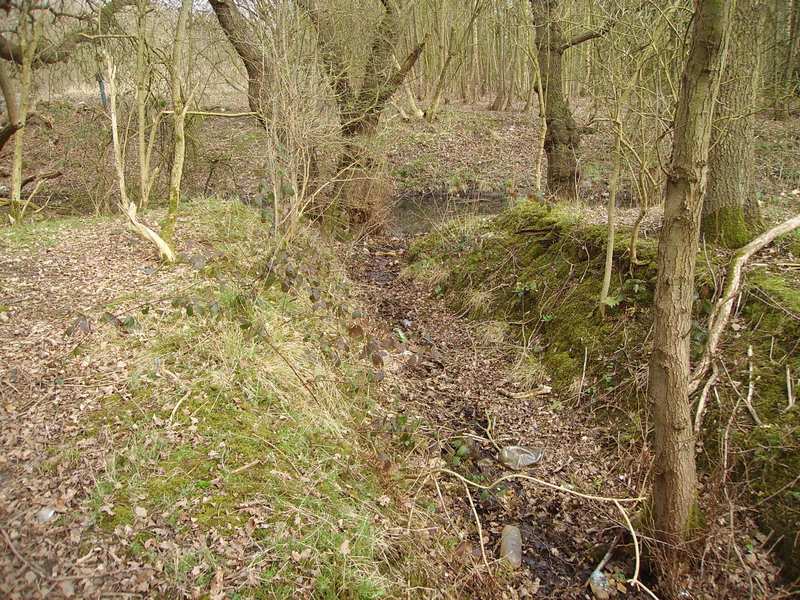
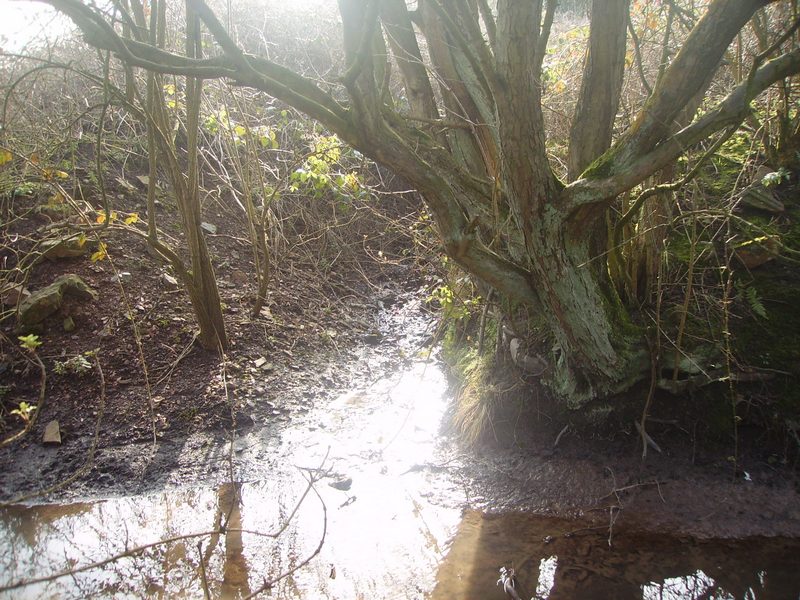
The View Looking From After the Culvert (Still Looking Eastwards) Along the Drainage Ditch

mary ann steam pipes %287%29.jpg
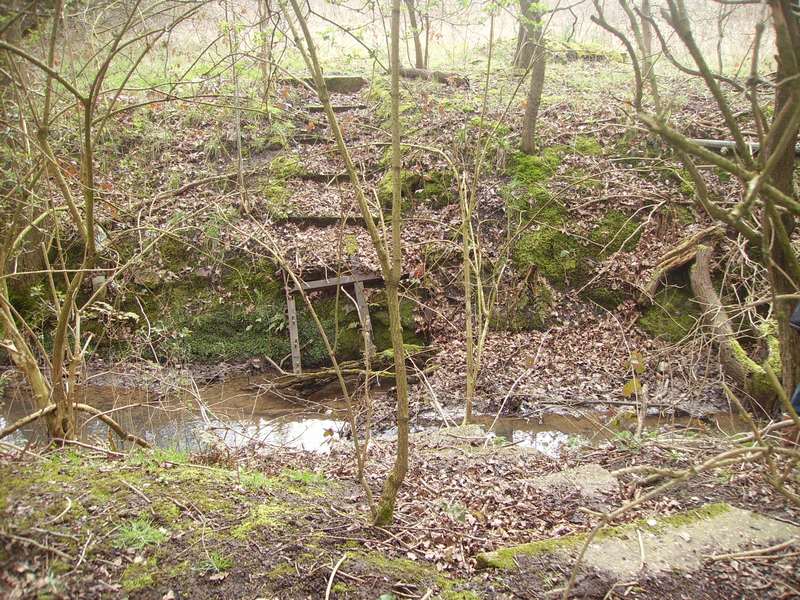
Slightly Further Along is An Older Type Pedestrian Bridge Crossing Across the Drainage Ditch with Steps Down & Up At the Bottom is the Remains of the Metal Frame Work Which Once had a Wooden Platform Located Close to the Demolished Headquarter Group Building (Building 7)
mary ann 3 trees 6 steins bridge.jpg
Just the the Right of the Metal Bridge is One of the Many Surface Water Drains Flowing into The Drainage Ditch
mary ann 3 trees 5.jpg

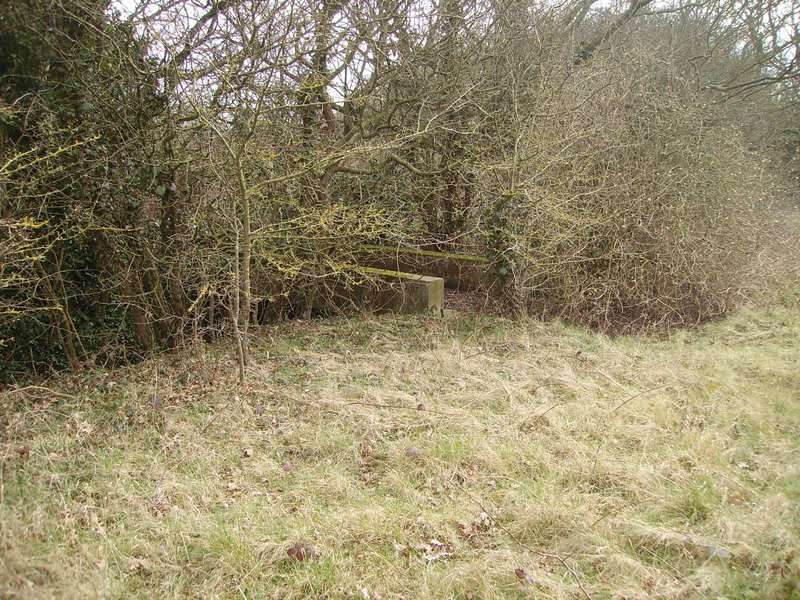
After the pedestrian foot bridge are 2 reinforced concrete pipe supports.

good3.jpg

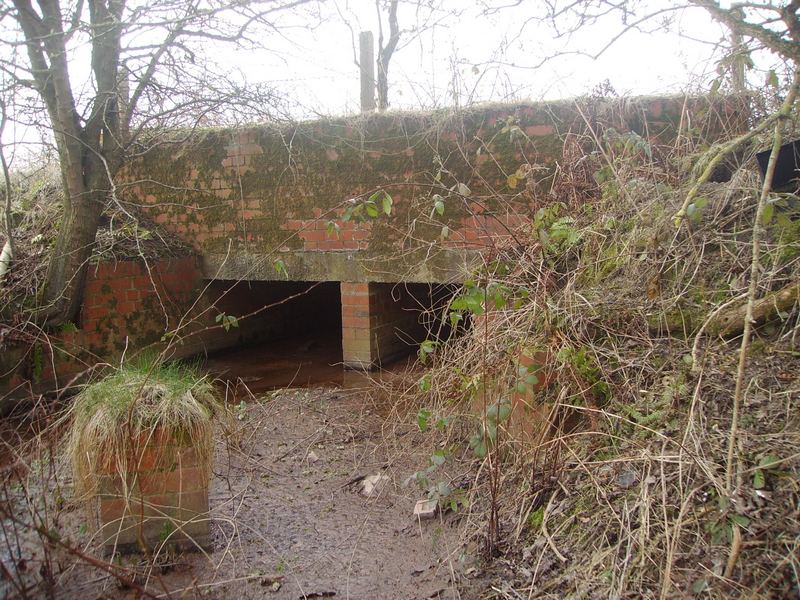
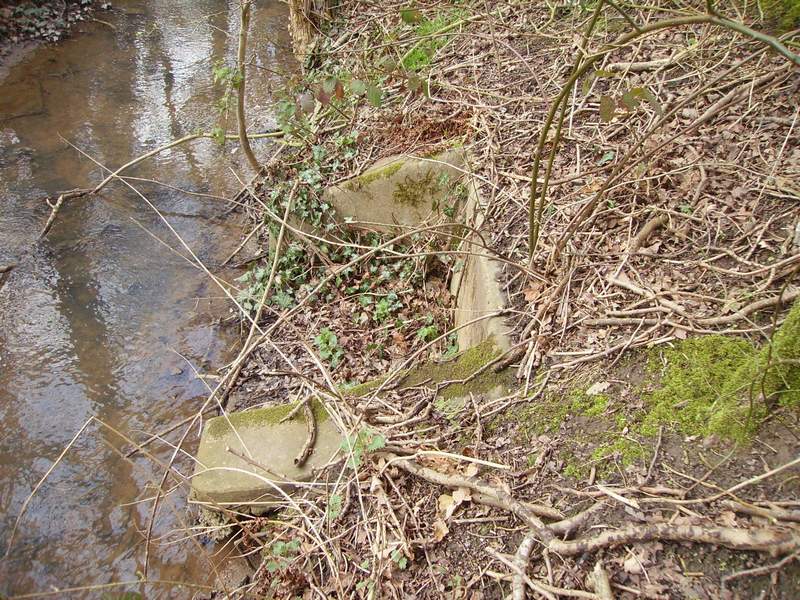
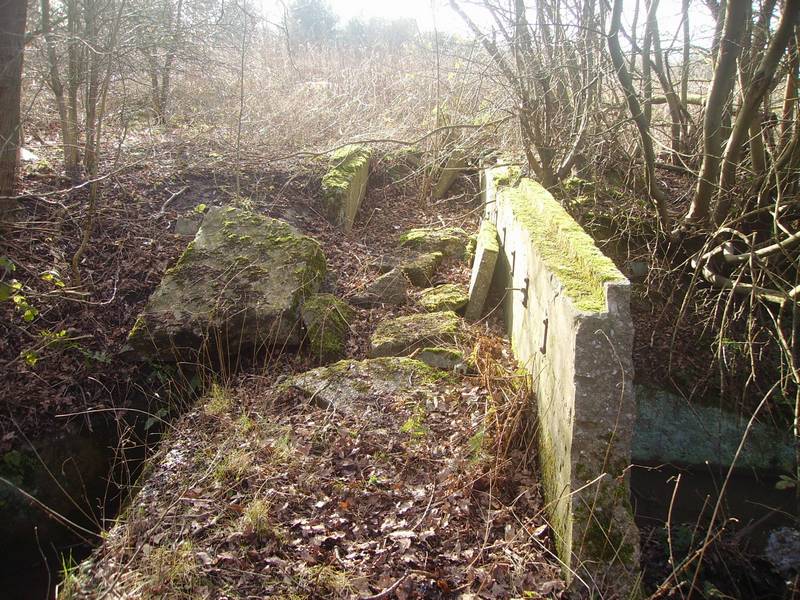
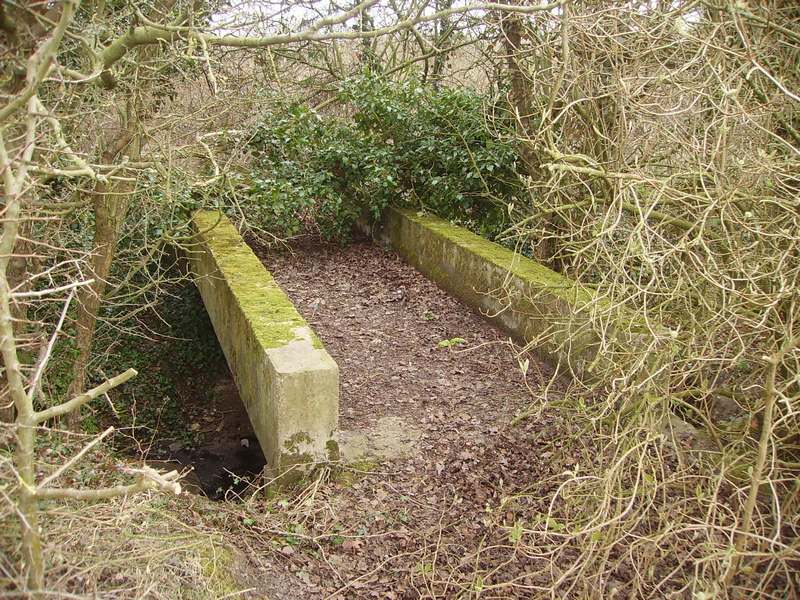
The Next Pedestrian Footbridge (Constructed of reinforced Concrete) is Partly Demolished (below)

mary ann bridge culvert 1.jpg

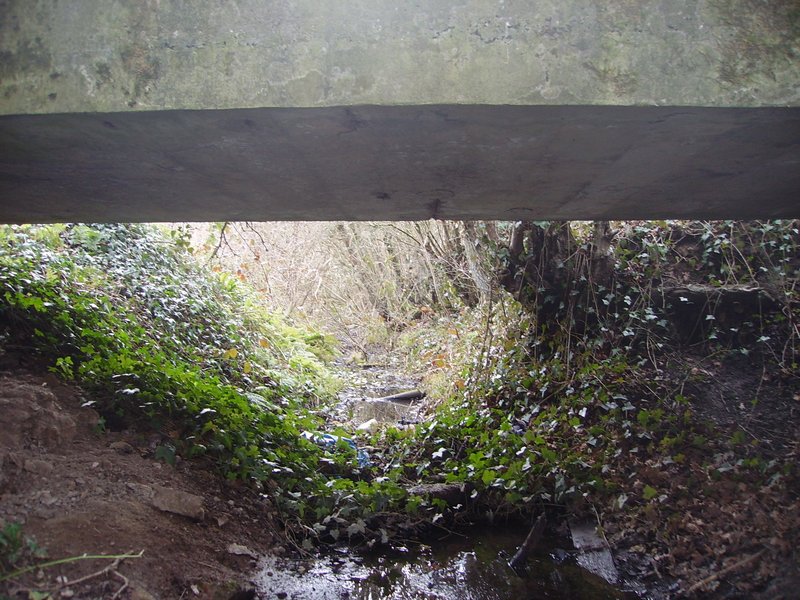
View of The Bridge (above) From Below From One Side

maryann ditch %2810%29.jpg

View of The Bridge From Below From the Other Side

maryann ditch %288%29.jpg
maryann ditch %289%29.jpg
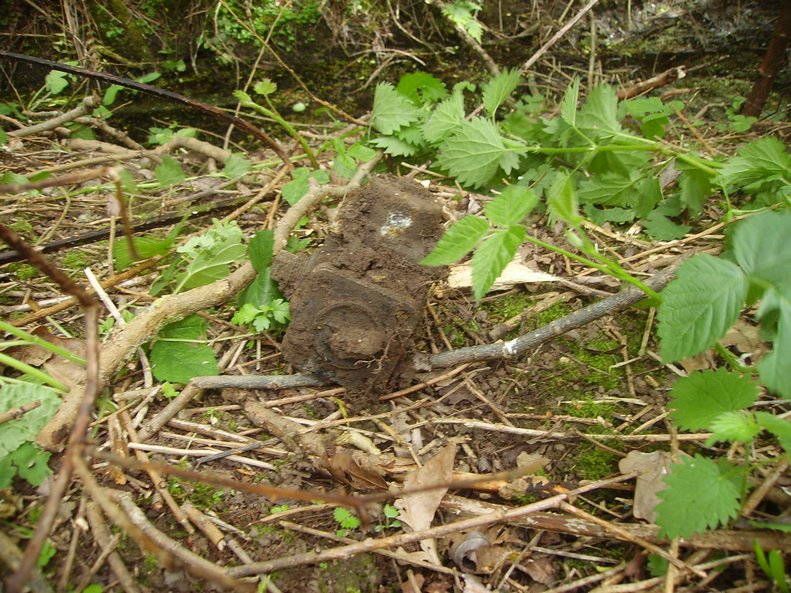
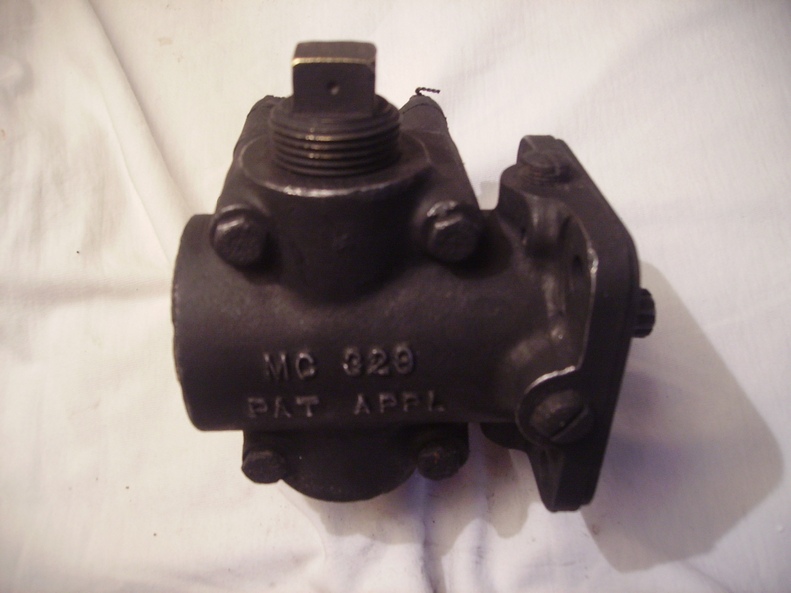
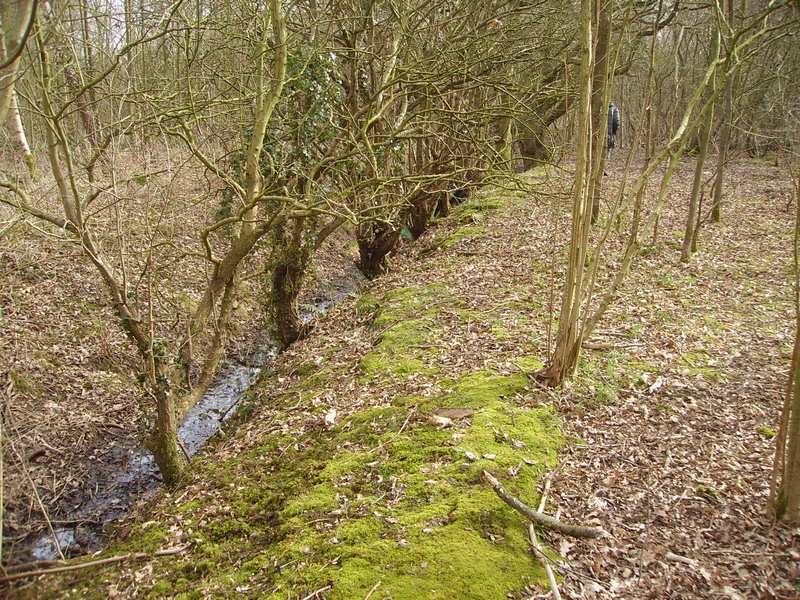
The 2nd Drainage Ditch on Mary Ann Site Flows out of a Culvert on the South East Corner Near Site 2. The Drainage ditch flows North Between Buildings 1 & 2 & Intercepts the East West Drainage Ditch next to the Approach Road Culvert. After the Culvert on the Banking of the Drainage Ditch We Found This Aircraft Engine Fuel Pump (CMC 329 GPH Aircraft Fuel Pump Designed by MC Manufacturing Company Detroit Found at Burtonwood)
burtonwoodpump6.jpg

This is The Aircraft Fuel Pump (Above) After Cleaning

burtonwoodpump1.jpg
Next to the Drainage ditch are a Number of Cylinder Type Concrete Ant-Tank Obstacles. These Concrete cylinders were utilised at Road Junctions & were painted white to indicate the Road exits.
maryann ditch %287%29.jpg
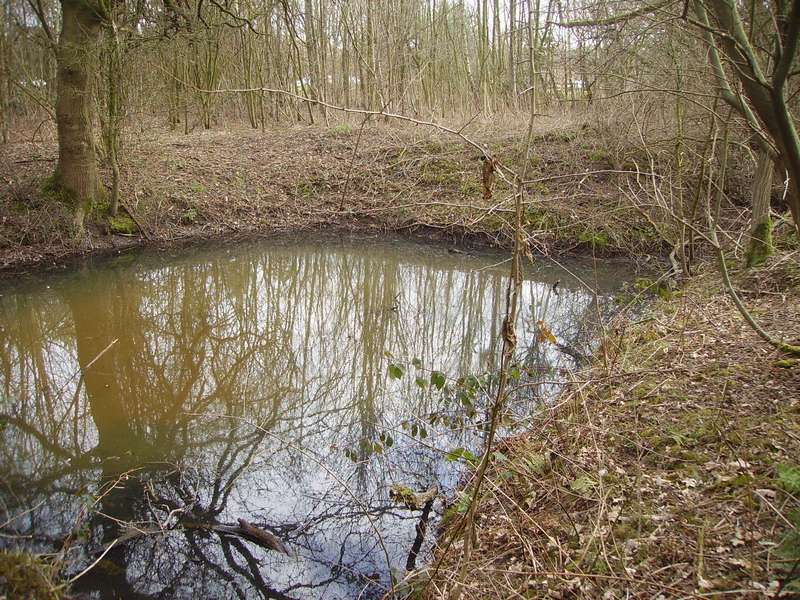
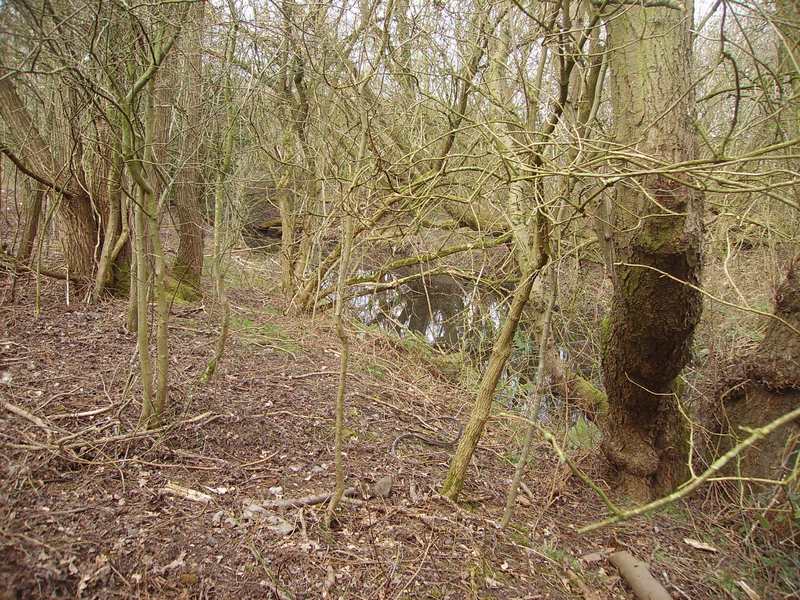
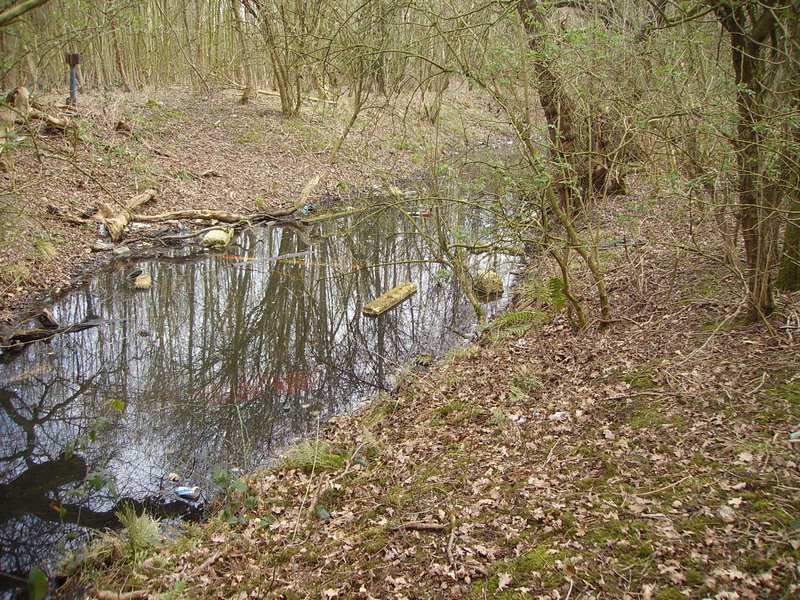
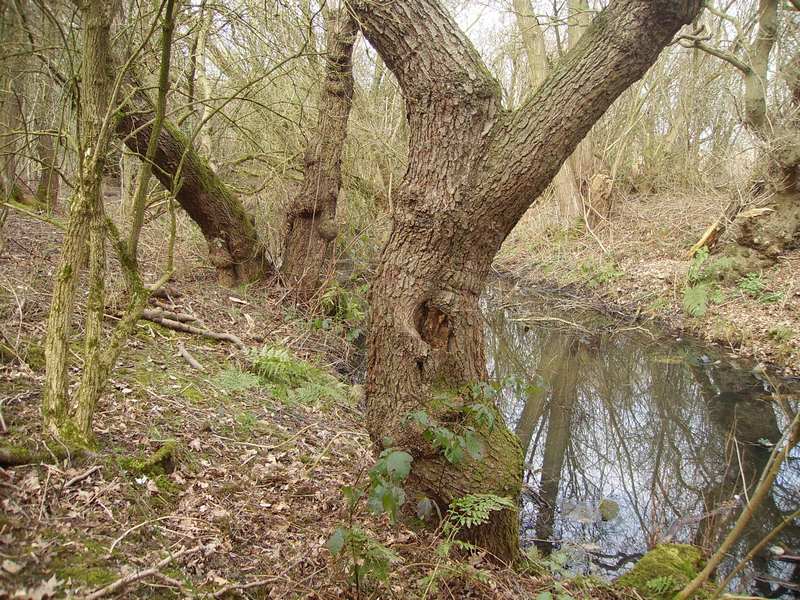
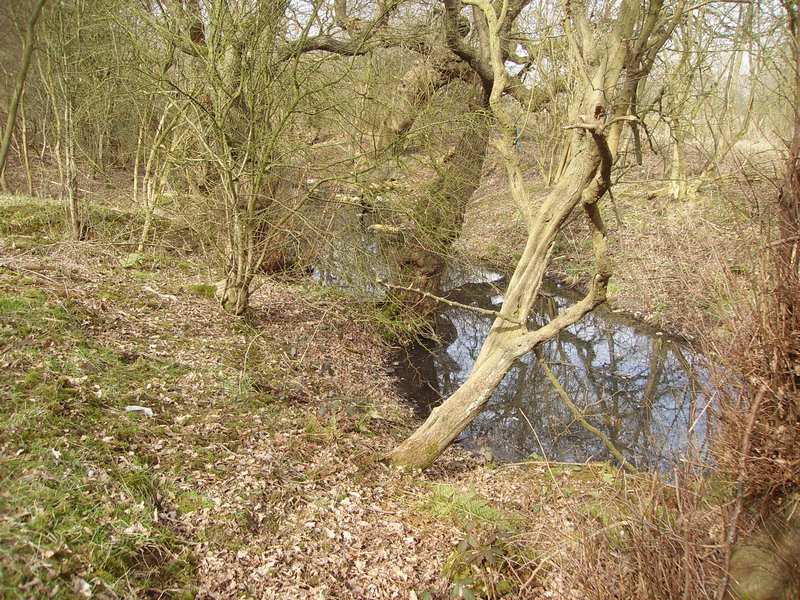
The Ditch is aligned to Keep this large Pond Full Of Water & was Probably Used as a Static Water Tank For Fire Fighting Purposes.
maryann ditch %2813%29.jpg
mary ann steam pipes %2827%29.jpg
mary ann steam pipes %2828%29.jpg
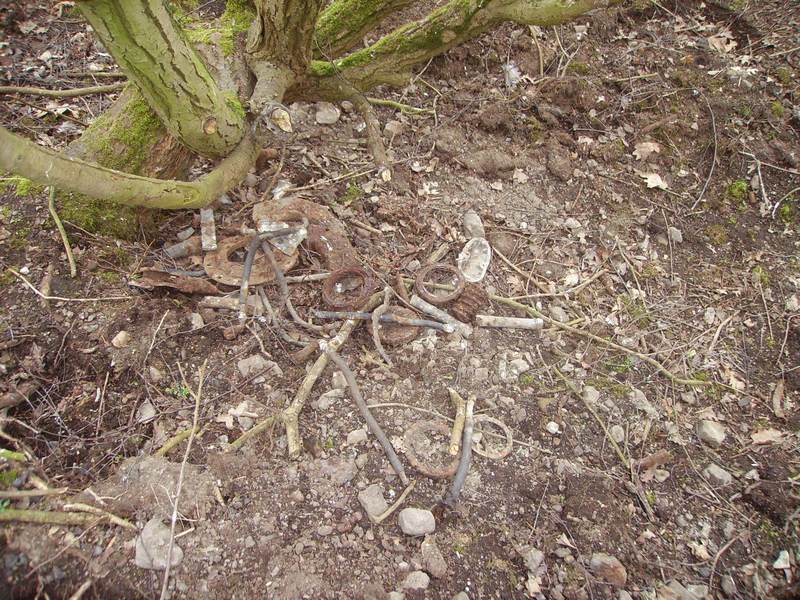
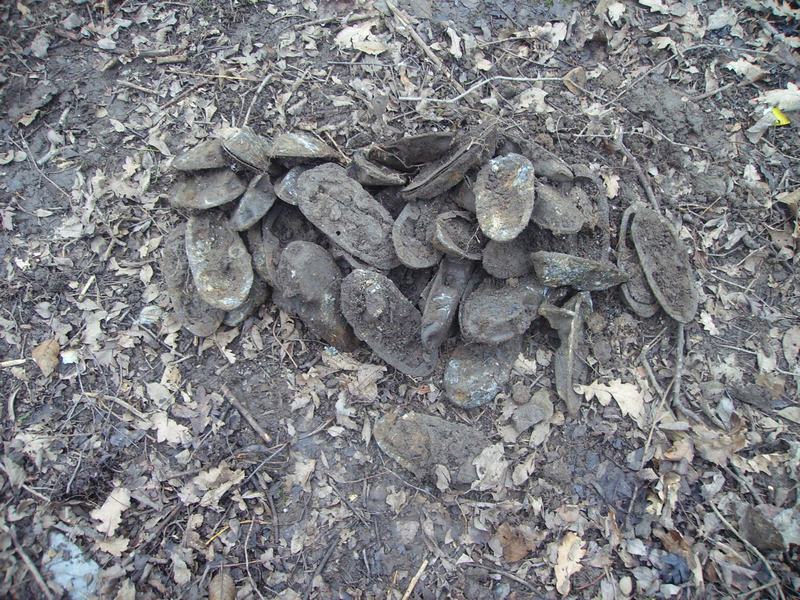
Rusting Remains (We found buried near the ditch) From WW2 Items Include: Ignition Leads, Rocker Valve Cover etc
ditchfinds.jpg

Numerous Aircraft Cylinder Head Rocker Valve Covers

burtonwoodrockercovers 1.jpg
mary ann steam pipes %2829%29.jpg

Drainage Ditch Teeing Into The Other Drainage Ditch (Above)

mary ann steam pipes %2830%29.jpg

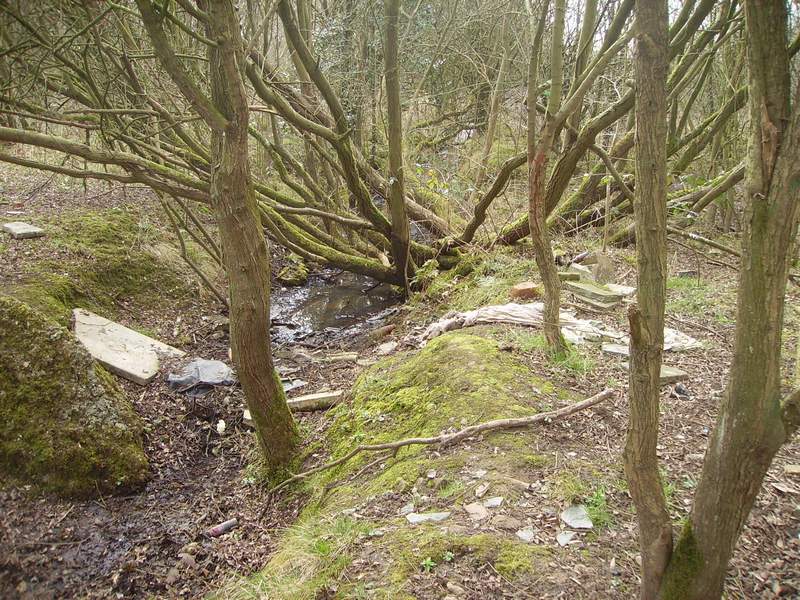
Drainage Ditch (Above)

mary ann steam pipes %2831%29.jpg
mary ann steam pipes %2832%29.jpg
mary ann steam pipes %2833%29.jpg

A Short Culvert Passing Under a Walkway

mary ann steam pipes %2834%29.jpg
mary ann steam pipes %2835%29.jpg
Pierced Steel Planking The remains of pierced steel planking (below) is alongside the drainage ditch between buildings 1 & 2 warehouse workshops. (Pierced Steel Plank, or PSP Mat, was developed by the US Army Corp in anticipation of our involvement in World War II. … The PSP mat was designed with holes to reduce the weight, improve aircraft traction and facilitate drainage)
burtonwoodpearcedsteelplanking.jpg
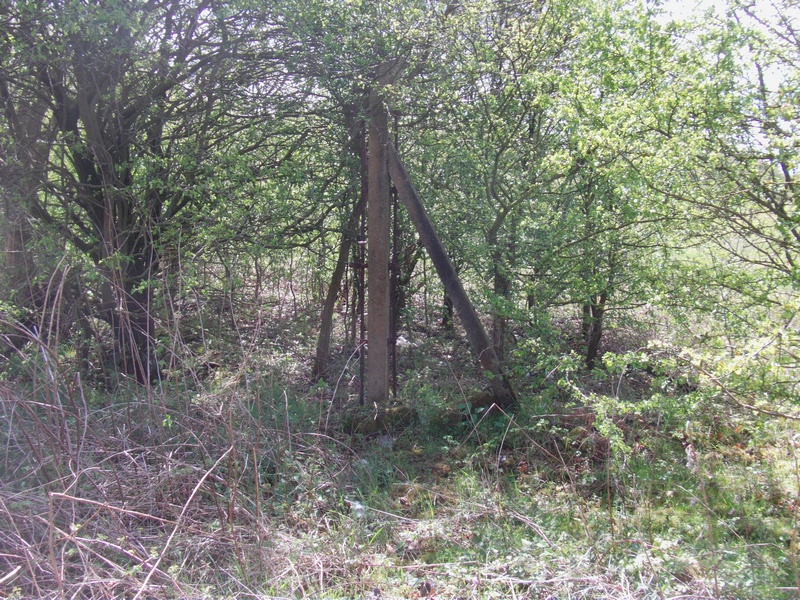
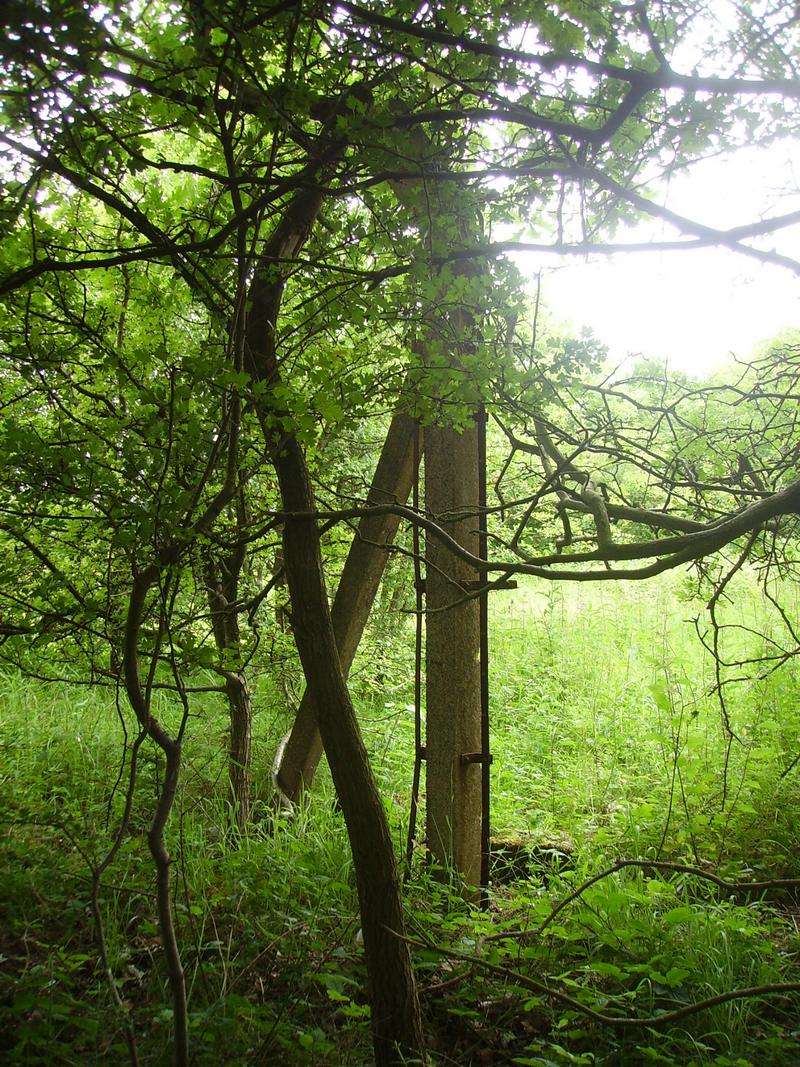
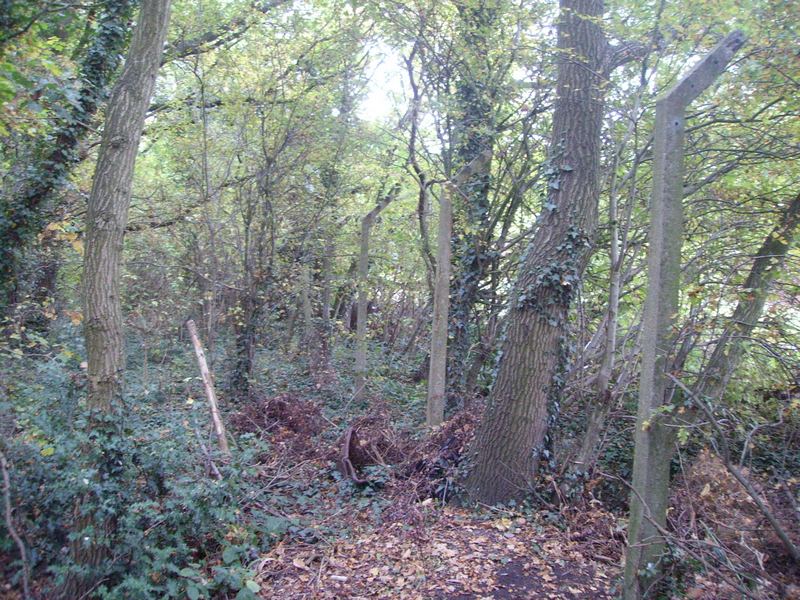
This is What Remains of the Inner Perimeter Fence Close to Where Warehouse Workshop 2 Once Stood It is Right Next to the Drainage Ditch
burtonwood ratchet post mary ann 1.jpg

(Same as Above but Taken from a Different Angle)

burtonwood ratchet post mary ann 2.jpg

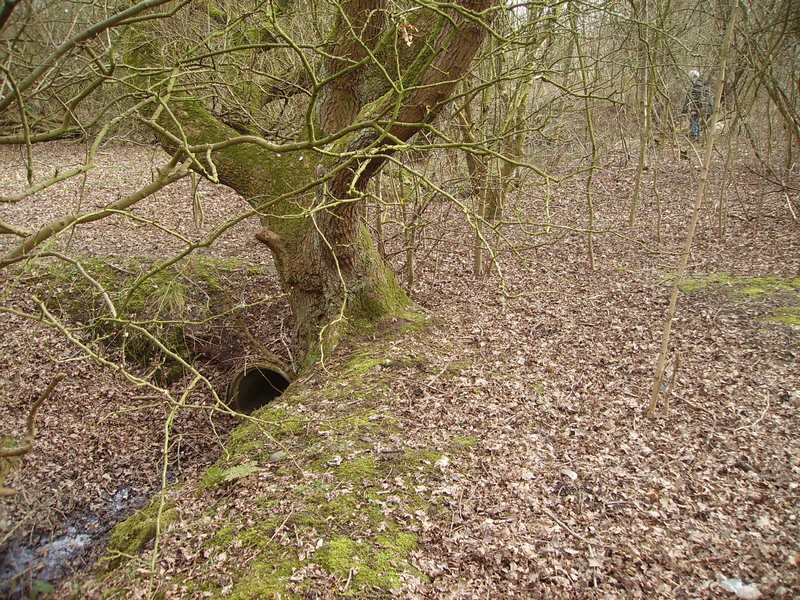
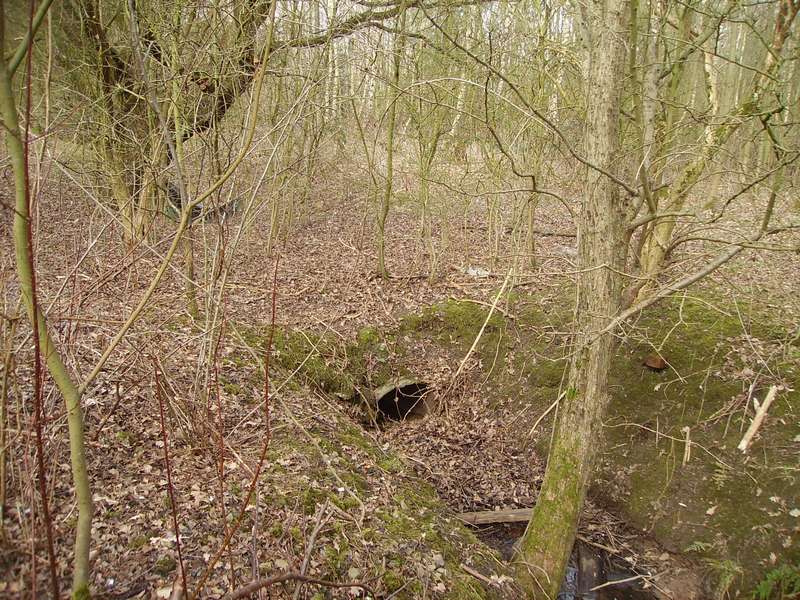
Long Culvert Next to Perimeter Fence Post (Above) Passing Under a Former Roadway

mary ann 3 trees 7.jpg

Man Hole Near The Culvert (Above)

mary ann 3 trees 8.jpg

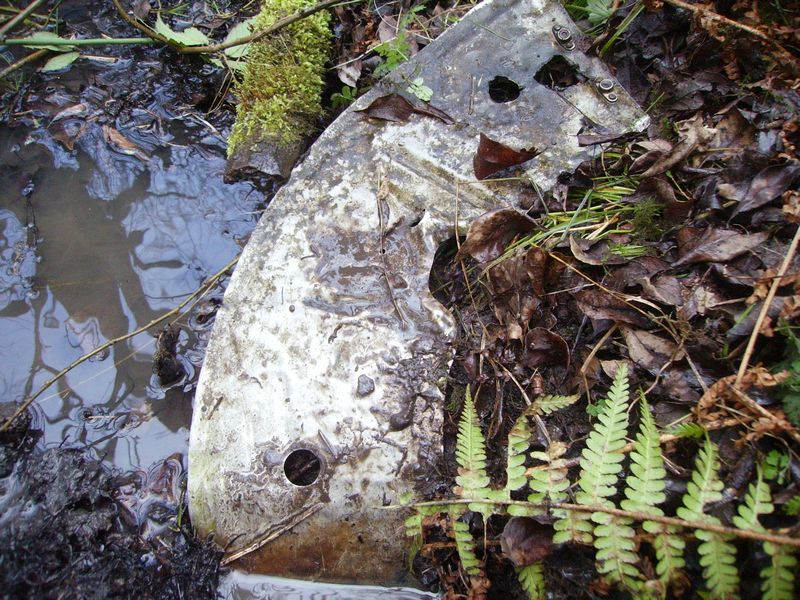
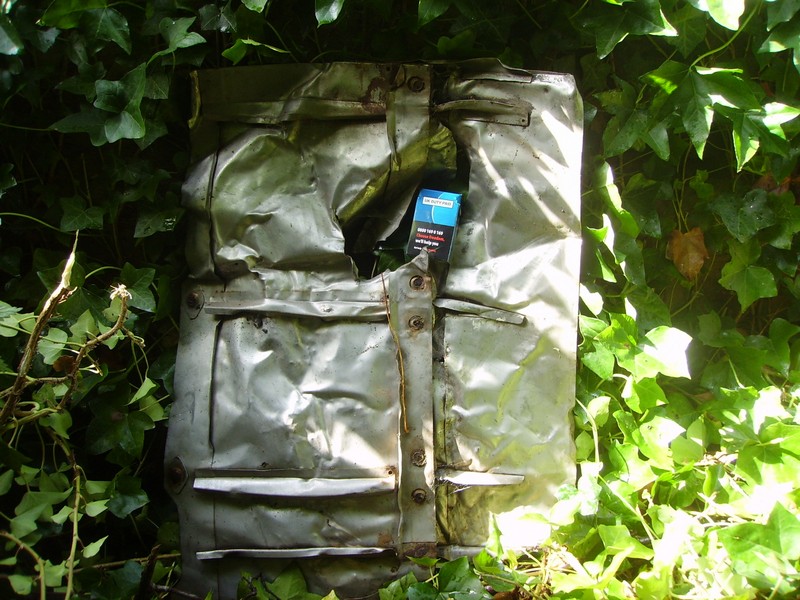
Aircraft Aluminium Embedded in The Drainage Ditch

mary ann 3 trees 4.jpg
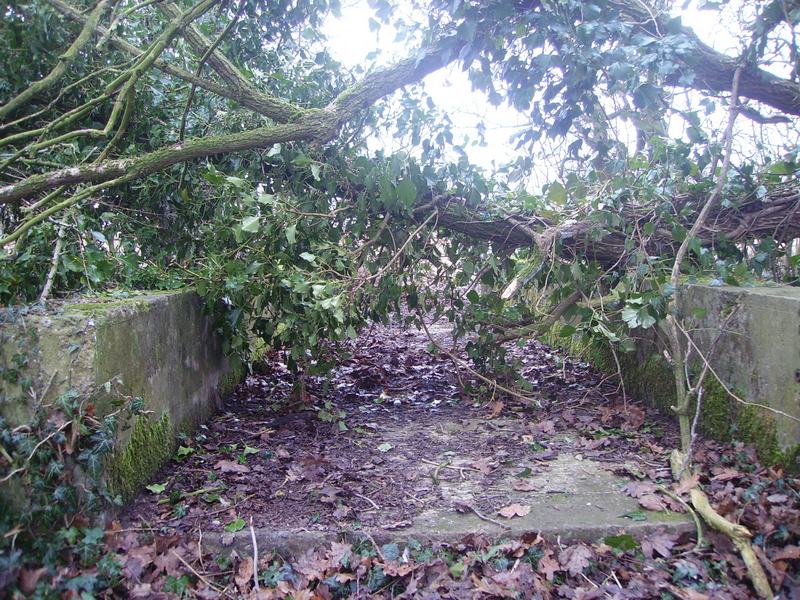
Reinforced Concrete Pedestrian Footbridge Located Next To The Front of Demolished Warehouse Building 2
mary ann steam pipes %2821%29.jpg

Closer View of the Footbridge

mary ann steam pipes %2826%29.jpg

On the Footbridge

good1.jpg

Under the Footbridge

mary ann steam pipes %2824%29.jpg

Here is Where the 2nd Drainage Ditch intercepts the East/West Drainage Ditch

mary ann culvent 2.jpg

Aluminium Airframe Part Near the Photo Above - No Factory or Part Numbers Visible.

photo6burton.JPG
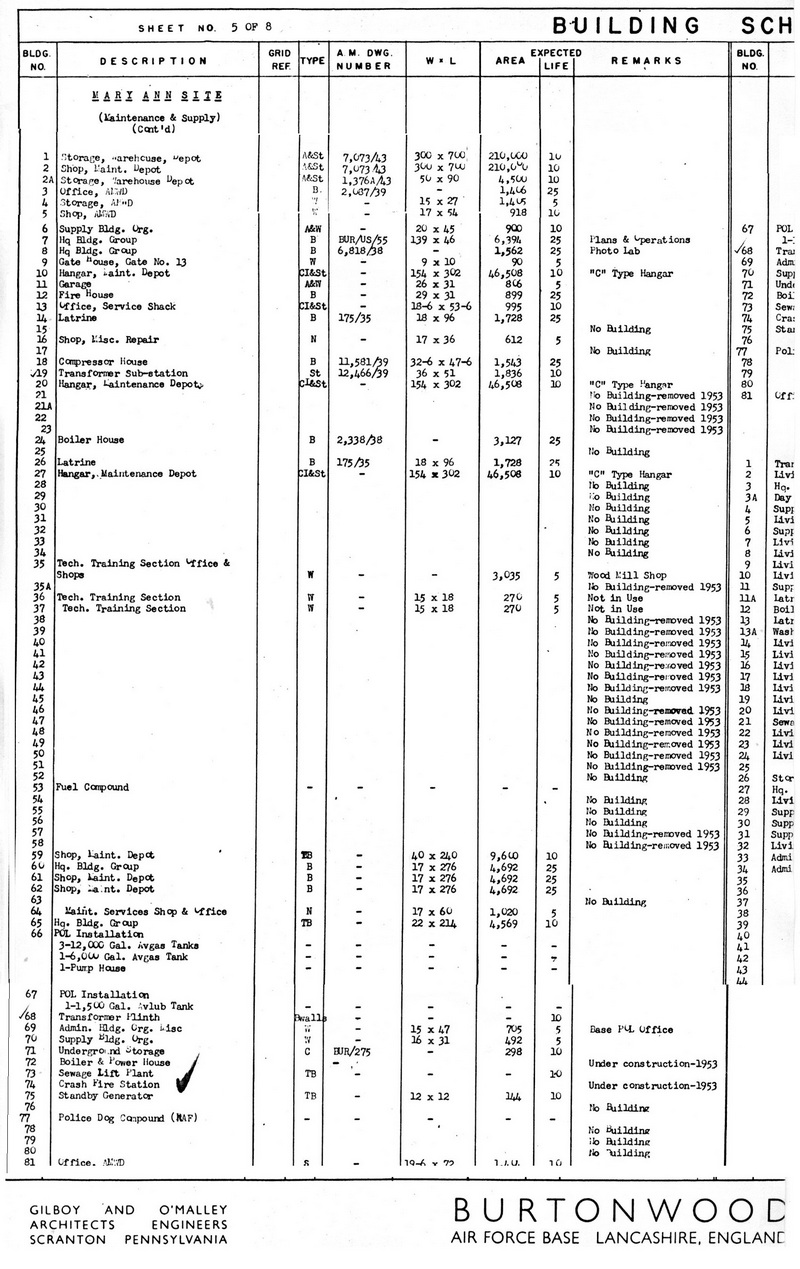
The Remains of the Foundations of Building 69. Administration Base POL (Petroleum Oil Lubricant) Office Type ‘W’ Width 15 feet x 47 feet Long Area = 705 Sq feet
burtonwoodmaryannfoundations.jpg
burtonwoodmaryannlampost.jpg

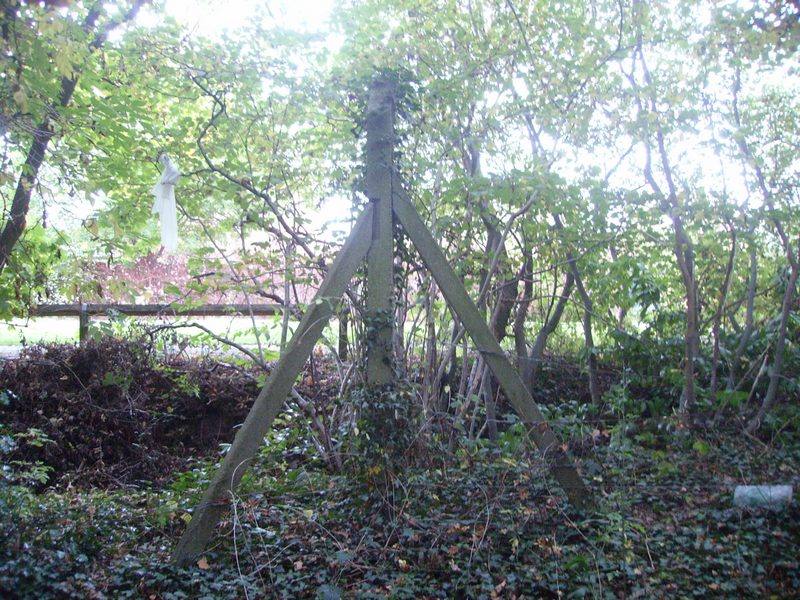
The Eastern Perimeter Fence in Mary Ann Wood Next to Burtonwood Road and Close to Gate 13

mary ann fence perimeter 4.jpg

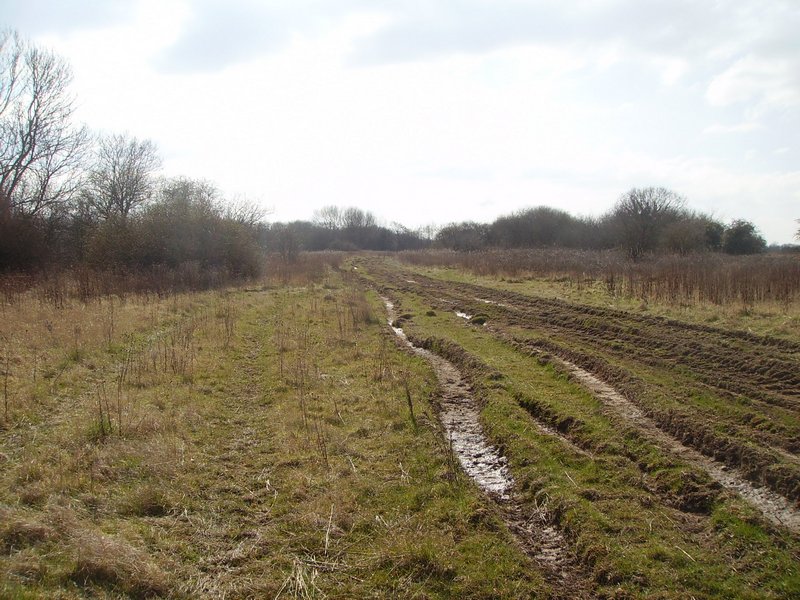
Mary Ann Wood Meadows

mary ann woods 1.jpg

Corner Post of the Perimeter Fence in Mary Ann Wood

mary ann fence perimeter.jpg

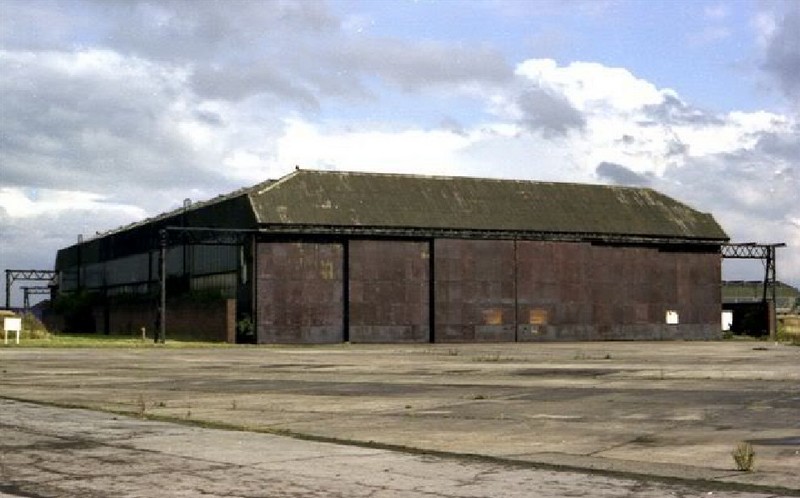
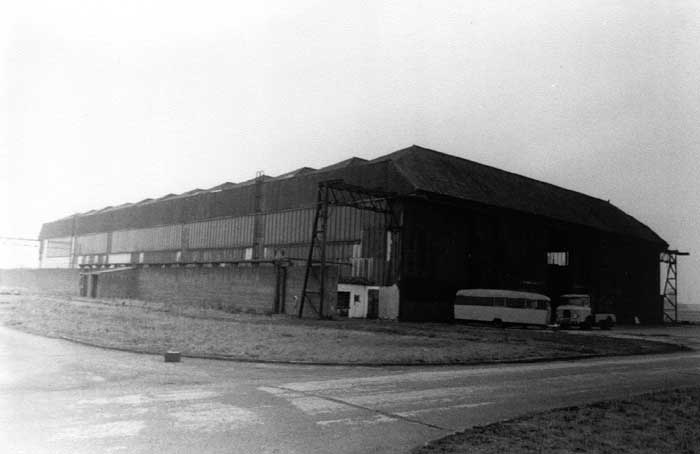
‘C’ Type Hangars The air ministry built 3 hangars on Mary Ann site called Type ‘C’ (protected Austerity design) to air ministry drawing numbers 8180/38 & 5533/39 1938 Type. This type of hangar was built to be more economical in materials & enabled it to be built much quicker than the previous 1934 gable type. This was achieved with a reduction of 5ft in clear height to 30ft & also another saving was the omission of the parapet wall hiding the roof trusses over the door bays.

The layout & planning of the hangars...

The layout & planning of the hangars line were built in arc’s as apposed to straight lines. This was intended to make it more difficult for an enemy bomber to hit all 3 hangars with a single stick of bombs. Also large windows ran full length of both sides of the hangars for natural light & to disperse the blast from a bomb if the hangar were to be hit.

Also blast walls run down both sides of

Also blast walls run down both sides of each of the hangar annexes. The 3 hangars were sited between the ends of runways 04 and runway 33 & they shared 1 large apron. The basic design structure of the ‘C’ type hangars is a steel shell.

Wall stanchions consisted of a pair of 1...

Wall stanchions consisted of a pair of 15inches x 6inches as RSJ’s joined together by riveted lattice bars. These have a total length of 41ft 3inches which gives a clear height of 30ft 4inches with 3ft 8inches allocated for foundations & the remainder connects with the roof girders. The roof was a steel structural frame, comprising of a series of primary trusses at 25′ centres, each with a clear span of 150′.

The primary trusses in turn support seco...

The primary trusses in turn support secondary trusses at 15′ centres. This structure forms the multi pitched roof arrangement with a primary truss aligned on each ridge. The secondary trusses span 25′ between the supporting trusses.

The truss depth varies along its span ha...

The truss depth varies along its span having a depth of 16′ 8″ at the supports and 4′ at mid span thus forming valley gutters. The hangar is 11 bays long plus 2 half bays at each end. Each end of the hangar provide a pitched cantilever roof above doors.

Two Lateral Wind girders were fitted and...

Two Lateral Wind girders were fitted and spanned horizontally across the width of the hangar and are located in the last structural bay at each end of the hangar. The roof was supported directly on the secondary trusses by roof timber sarking and purlins. The roof covering being of either asbestos, cement, slates or sheeting.

The hangar walls were built of concrete ...

The hangar walls were built of concrete or brick but only to the top of the windows, with asbestos cement cladding above windows to roof level. Windows were fitted across 2 or 3 structural bays. Runway Beams For ‘C’ Type Hangar Lifting Tackle 2 number 10″ x 4 1/2″ x 25 lb/ft RSJ runway beams traverse the width of the hangar.

They span between the secondary trusses ...

They span between the secondary trusses and support a safe working load of 1 and 1/2 tons. Similarly 2 number 10″ x 6″ x 40lb/ft RSJ with an additional top flange plate provides for runway beams capable of supporting a safe working load of 6 tons. Hangar Doors There are 6 sliding and overlapping doors at each end of the hangar.

Each door measures approximately 10.7 me...

Each door measures approximately 10.7 metres high x 8 metres wide and weighs in the order of 12.5 tons. They comprise of a series of 10′ x 3″ channels and 10′ x 4 and a 1/2″ RSJ’s which are externally sheeted in steel plate of varying thickness …. as follows: 1/4″ plate up to 6 metres high with an 1/8″ plate above it. The steel sheeting on both the front and rear faces of the door frames, are an integral part of the door structure.

The steel plates provide strength and st...

The steel plates provide strength and stability to the door frame members, and in the case of the lower diagonal bracing members, act as the gusset connection plates. The doors run on cast iron wheels in tracks set into a reinforced concrete footing. The tops of the doors run between guide rails which also provide lateral restraint.

The doors were filled with sand or grave...

The doors were filled with sand or gravel for protection against enemy air attack. The doors opened in 6 overlapping leaves, 3 each side out onto outrigger lattice frame gantries giving a full width opening of 150′ into the hangar. The length of the hangar is 300 feet and clear height of 30 feet with an open working area of 45,000 square feet.

Single Story Annexes Single story annexe...

Single Story Annexes Single story annexes surrounded by a blast wall were built down the length of both sides of the hangars. These provided accommodation for offices storage and workshops. The 3 hangars were numbered 4, 5 & 6 during World War 2 the USAAF added the initial AD before the hangar numbers meaning ‘Aircraft Dock’ thus being AD4, AD5 & AD6.

Also on Mary Ann Site 2 large buildings

Also on Mary Ann Site 2 large buildings were built as warehouses and workshops, numbered 225 & 226 and were built behind the 3 ‘C’ type hangars. The workshops were 700′ long x 300′ wide and were completed in May 1944. This gave the site 408,000 sq feet of workshop area.

Also at this time 24, 450 sq yards

Also at this time 24, 450 sq yards of concrete was laid for additional aircraft parking. Note: The Air Ministry Record Site Plan of 1955 shows these buildings numbered as 10, 20 & 27 for the ‘C’ type hangars & 1 and 2 for the warehouse workshops. They were numbered this way for the ‘legend’ on the plan, but the proper numbers were: Building number on Legend on Plan Correct Building number Hangar 10 AD4 (‘C’ Type Hangar) Hangar 20 AD5 (‘C’ Type Hangar) Hangar 27 AD6 (‘C’ Type Hangar) Building 1 226 (Warehouse Workshop) Building 2 225 (Warehouse Workshop) Workshop Warehouses During WW2 in 1943 work began on the construction of 2 large warehouse workshops & each one had 210,000 square feet of floor space, was 300 feet wide, 700 feet long & was built to Air Ministry drawing number 7073/43 Also, building 2A was a smaller storage warehouse with a width of 50 feet & was 90 feet long & covered 4,500 Square feet of flooring area & was built to Air Ministry drawing number 1376A/43 A memory book of hangar AD4 1943 – 1945 Hangar AD4 was located at Mary Ann site, being one of the three C-type hangars constructed there.

Each of these Hangars measured 150 feet ...

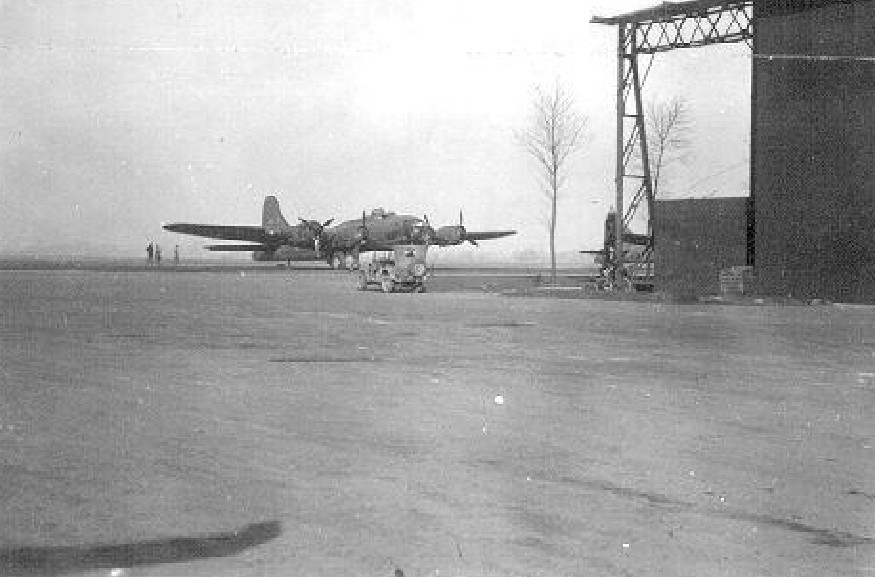
Each of these Hangars measured 150 feet wide x 300 feet long with an open working area of 5,000 square feet. Mary Ann site was also part of BRD-site. B17 Outside one of the ‘C’ Type Hangars on Mary Ann Site WW2

burtonwood WWII 032-L.jpg
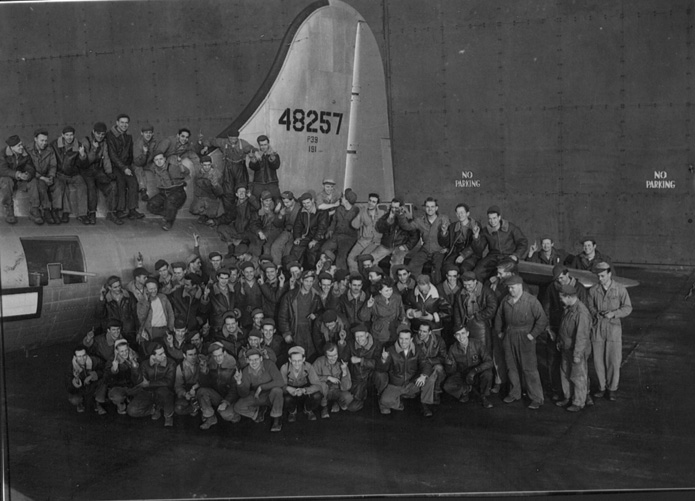
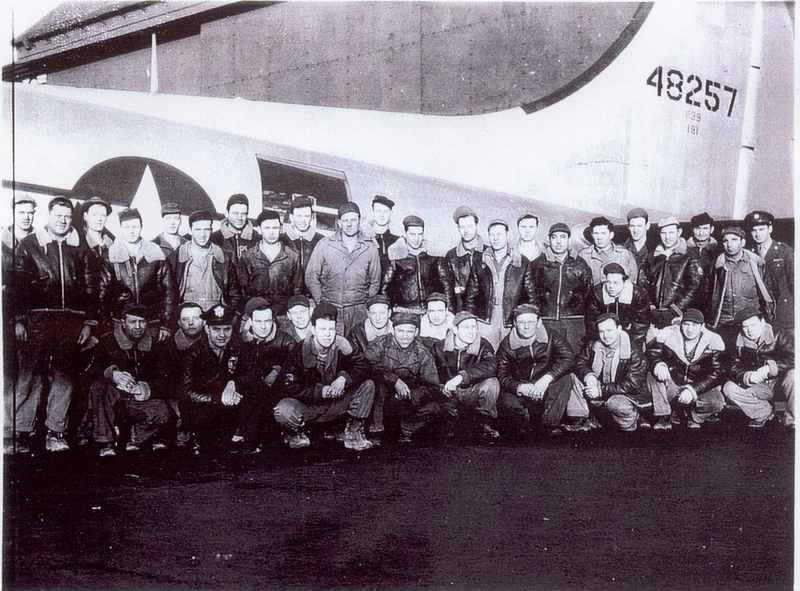
Photo outside hangar AD6 of the’DAY’shift on Mary Ann Site celebrating the 1,000th B17 through it’s doors on the 9th of September 1944. The aircraft is 48257 of the 482nd bomb group. (Note: The personnel are raising 1 finger to indicate that this aircraft was the 1,000th through hangar AD6) (Photo by Jim Varroza)
b 17 mary ann site hangar 6 set 1944 1000 b17 through hangar 6 482nd b.g. photo jim varrozza.jpg
Same Photo outside hangar AD6 of the’NIGHT’shift on Mary Ann Site celebrating the 1,000th B17 through it’s doors on the 9th of September 1944.
hangar 6 mas same b17 night shift personel photo jon stephens.jpg
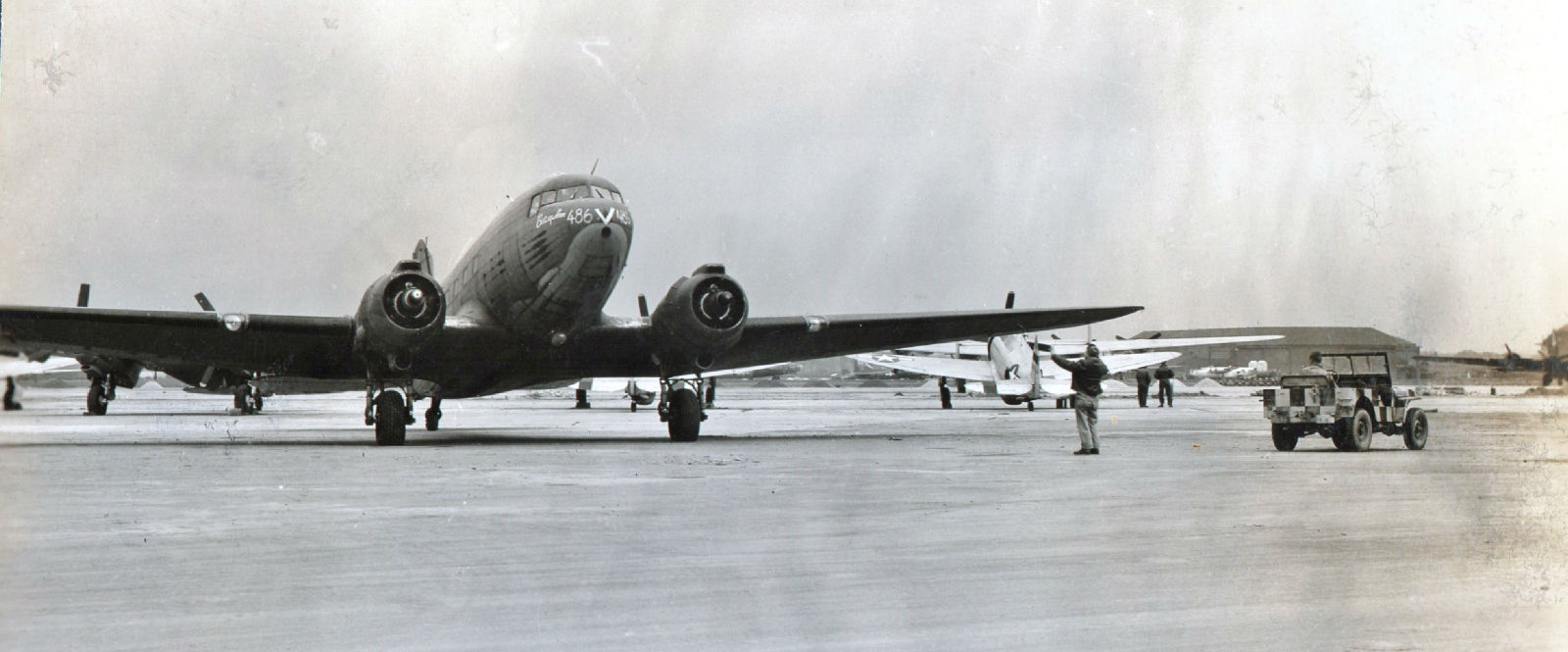
A Busy Day at Burtonwood – The Aircraft in the Foreground is a C47 In the Background You Can See 1 of the ‘C’ Type Hangars on Mary Ann Site WW2
Burtonwood Mary Ann.jpg

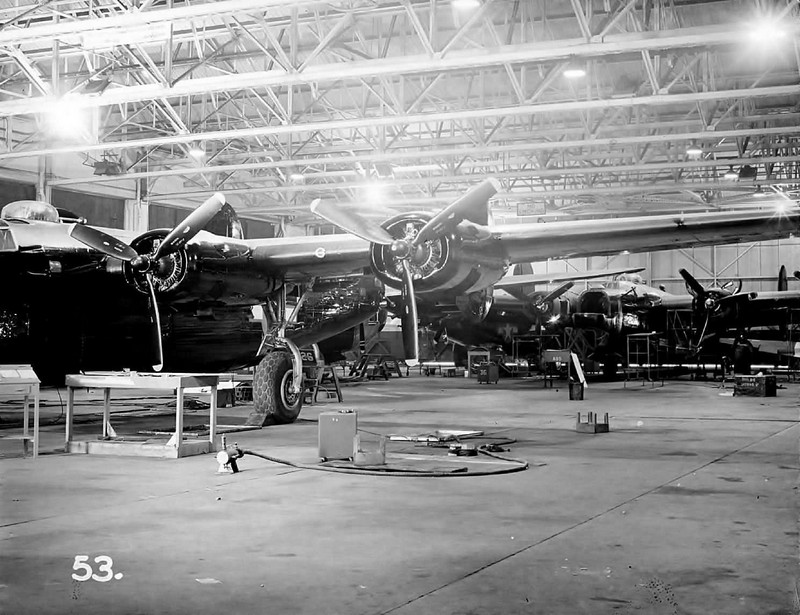
B24 Liberator 1944 inside One of the 'C' Type Hangars on Mary Ann Site

b24carpetbagger1944 INSIDE ONE OF THE C-TYPE HANGARS ON MARY ANN SITE.jpg
B-24 Liberator in one of the C-type hangars on Mary Ann Site Being Modified for Carpetbagger Operations. The Aircraft is Being Painted Black to Fly in Moonlit Nights and also the Ball Turret was Removed for the Dropping of Arms, Ammunition & Supplies to Resistance Fighters
b-24s in c type hangar mary ann site.jpg
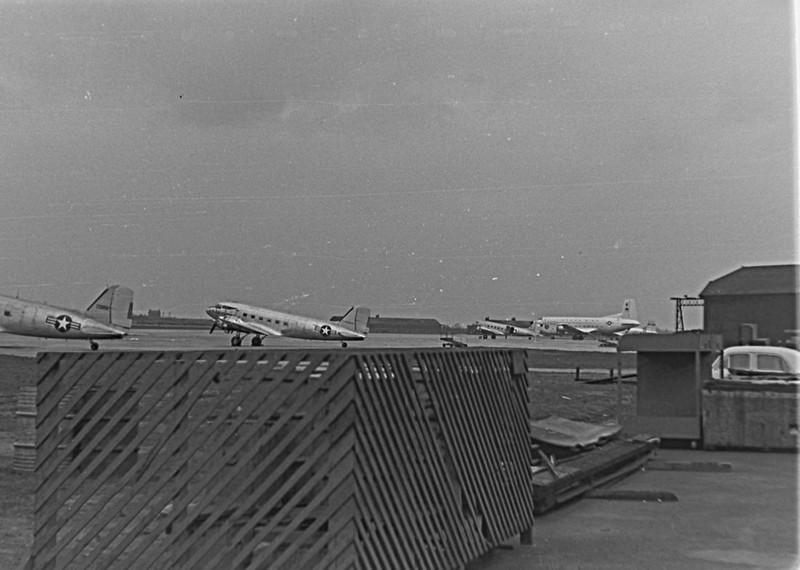
Below is a Douglas C47’s & the Large Aircraft in the Background is a Douglas C124 Globemaster Heavy Lift Transport Aircraft on Mary Ann Site Apron. ‘A’ Site can be seen in the Background with the 2 ‘K’ Type Hangars. ‘C’ Type Hangar 6 Can be Seen on the Right of the Photo Just Behind the Car. The Aircraft were operated by Military Air Transport Services.
burtonwood 285-XL.jpg

The 'C' Type Hangar AD6 on Mary Ann Site

Mary Ann C Type.jpg

One of the 'C' Type Hangars (Note the Blast Wall Running Down the Side)

mary ann ww2.jpg
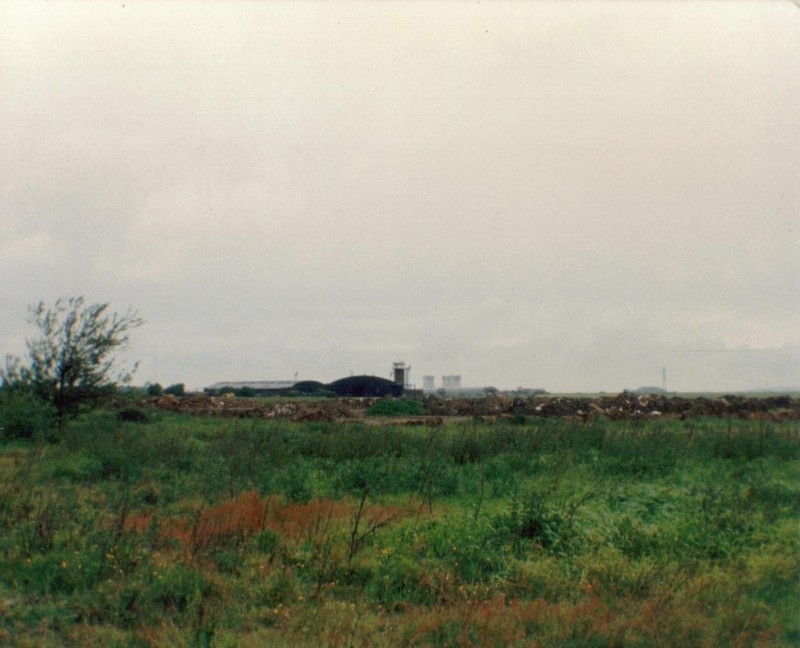
Mary Ann Site Looking Across Towards Technical Site August 1987. (Note: Bold power station in the background – now demolished)
Technical Site Taken From Mary Ann Site Bold Power Station Background Old Photo.jpg
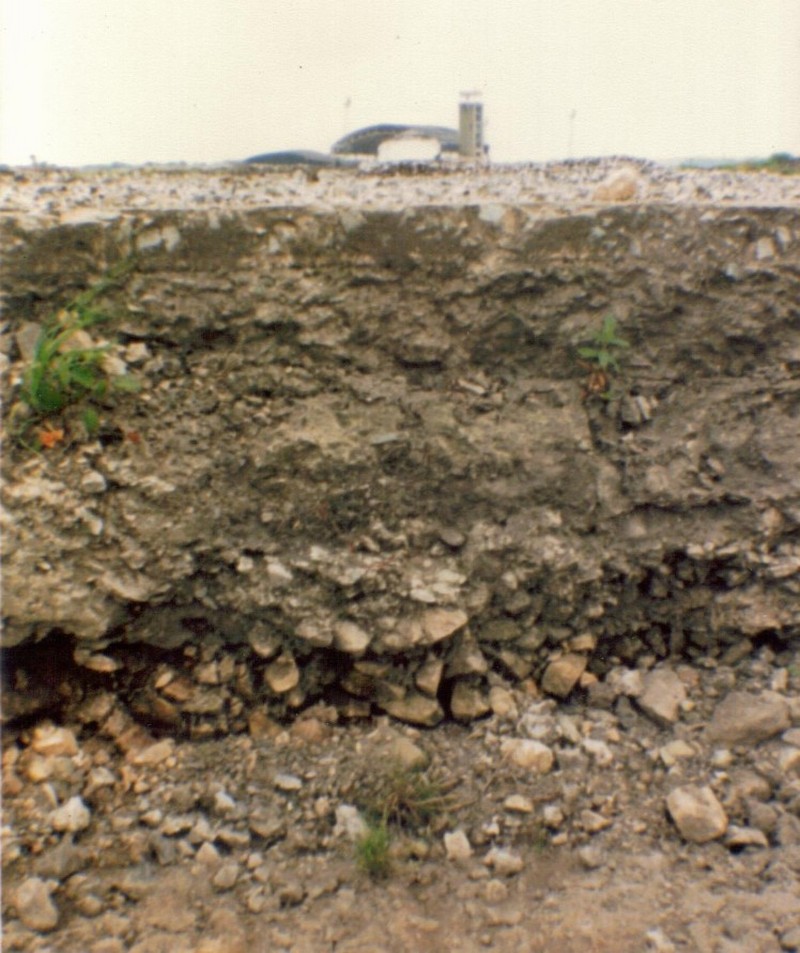
A Cross Section of the Excavated Apron on Mary Ann Site November 1987 Looking Towards Technical Site in the Process of Hangar ‘J’ Being Demolished.
Mary Ann Apron Old Photo.jpg

A Close Up View of the Demolition of the 'J' type Hangar (above) on Technical Site November 1987.

tech %2810%29.jpg
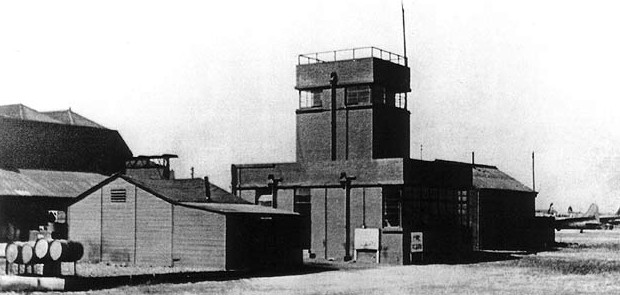
1st Control Tower WW2 1st Control Tower – to be built was a ‘Fort’ type on Mary Ann Site and this was to air ministry drawing number 207/36 concrete, as building of the airfield progressed it became apparent that the view of the main runway became obscured and therefore the 1st control tower was demolished.
USAAF 1942.jpg
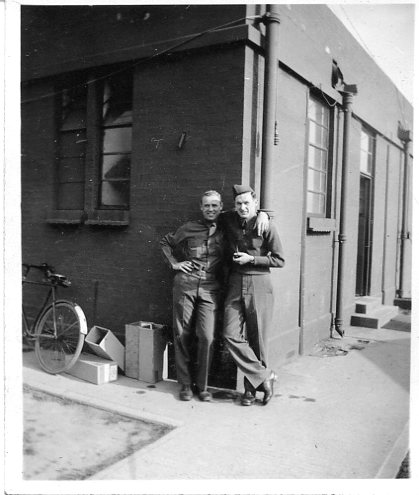
Burtonwood – Flying Control personnel – 1 May 1943 Cpl Snellinger & S Sgt Zimmerman by original control tower (Photo From The American Air Museum in Britain – Ray Zimmerman Collection via Aldon Ferguson)
burton22.jpg
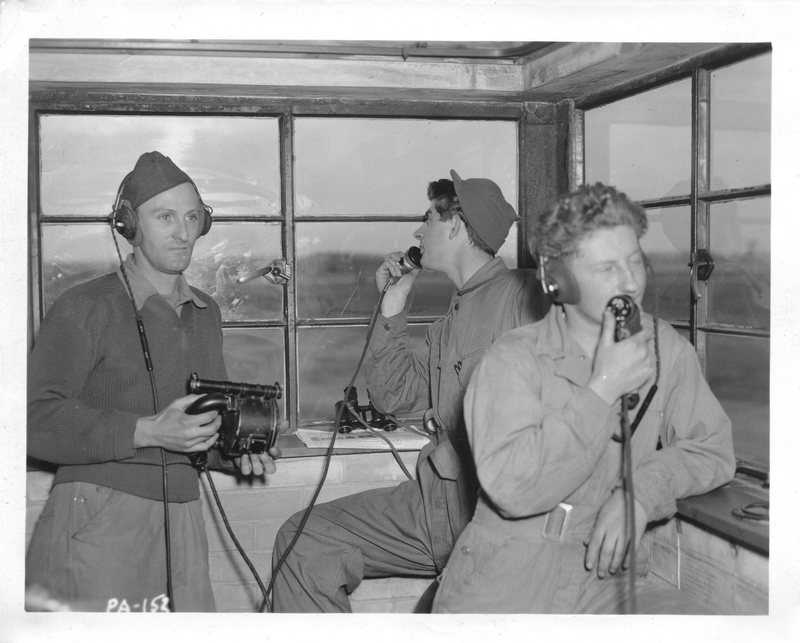
Burtonwood Flying Control original control tower, 20th April 1943. L-R Pfc Roser, Pfc Demos, S/Sgt Howard Fitch (Photo From The American Air Museum in Britain – Ray Zimmerman Collection via Aldon Ferguson)
flying control mary anne site 20april 1943 l-r pfc roser -pfc demos  -s%2csgt howard.jpg
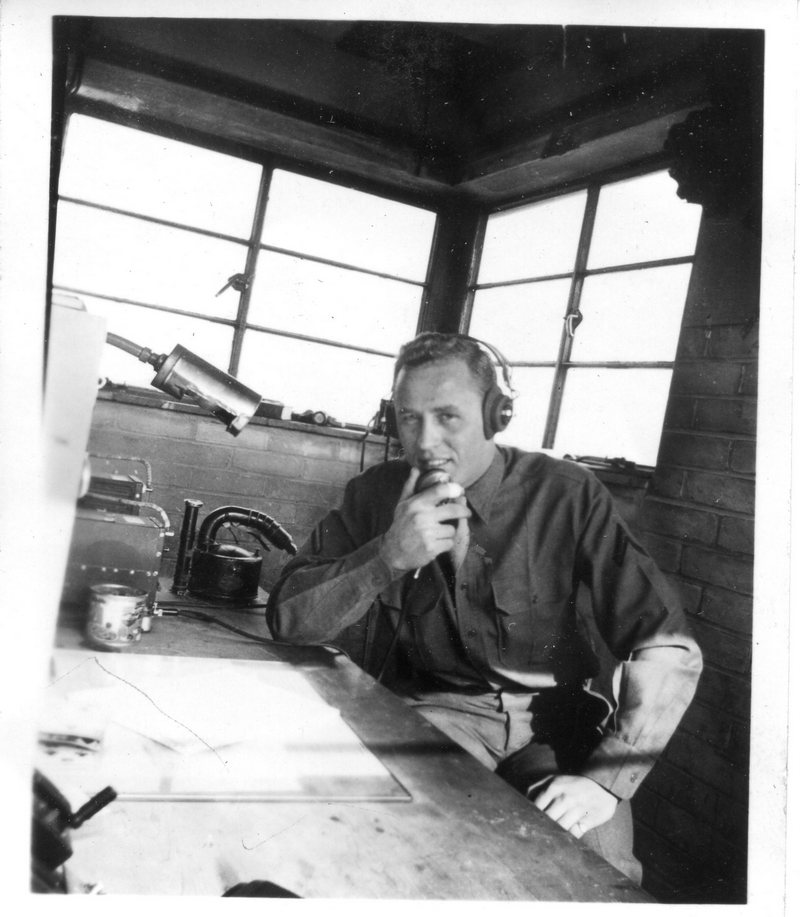
Burtonwood Flying Control 1943 inside original tower Mary Ann Site (Photo From The American Air Museum in Britain – Ray Zimmerman Collection via Aldon Ferguson)
mary anne site control tower 1943.jpg
AICMyers, AIC Orfananni & James Jones 7559th Maintenance Group 1953 James Jones in the Vehicle Production Control – 7559th Maintenance Group 1953 Miss Margaret Topping was a very kind lady who worked in the canteen at Mary Ann site for over 5 years during world war II
photo 5 burtonwood mary ann site hangar 6  g alex.jpg
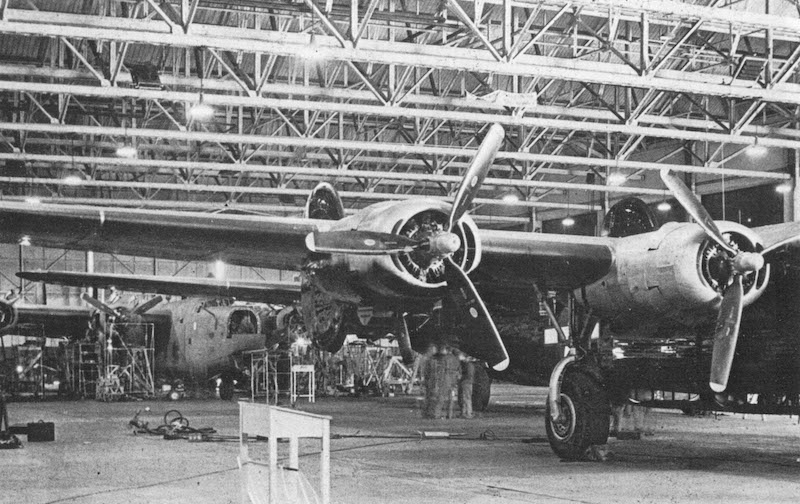
Consolidated B-24 Liberators undergoing maintenance and modification in one of the C-Type hangars at Mart Ann Site during WWII
photo 6 burtonwood good lib c type mary ann site alex.jpg
Rest break outside building 225 supply warehouse and workshops at Mary Ann Site in WWII In the background are the chimneys of the site’s boiler house and C-Type hangar AD6
photo 7 burtonwood mary ann work shop warehouse building 225 alex on left and boiler plant in background.jpg
Aircraft Maintenance workers having a rest break along the side of the blast wall of hangar AD6 that they are working in at Mary Ann Site during WWII Photo credit Robert Weynand
photo 8 burtonwood mary ann site hangar 6  h alex.jpg
A 1947 photo of RAF Burtonwoods Mary Ann Site 3 C-Type hangars were constructed to Air Ministry Drawing numbers 8180/38 and 5533/39 The USAAF added the initial AD before the hangar numbers meaning Aircraft Dogk thus being AD4, AD5, and AD6 The length of the hangar is 300 feet and the width is 154 feet Burtonwoods C-Type hangars were of the Austerity design and had the height reduced from 35 feet to a clear height of 30 feet with an open working area of 45,000 square feet The C-Type hangars were constructed to Air Ministry Drawing numbers 8180/38 and 5533/39 Also 2 supply warehouses with workshops buildings numbered 225 and 226 were constructed to drawing number 7,073/43 They were built With a width of 300 feet and length of 700 feet and a floor area of 210,000 square feet
photo 11 mary ann alex.jpg

A program from Saturday the 19 May 1956 of the public open day at Mary Ann Site

photo 12 burtonwood sat 19th may 1956 open day alex.jpg
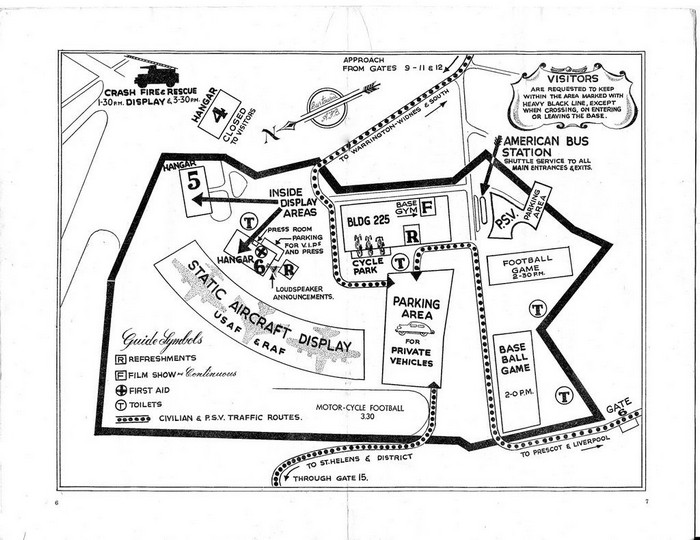
Below is a plan (from out of the programme) of Armed Forces Day on Mary Ann Site on the 17th of May 1958.
8 open house 17 may  1958.jpg
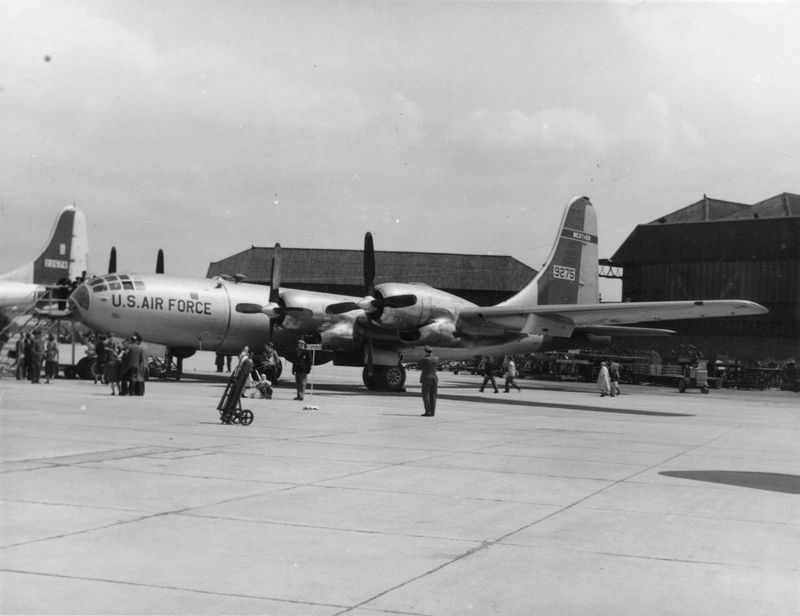
Boeing WB-50 9275 of the 53rd Weather Reconnaissance Squadron at the Open Day on the 19th of May 1956 on Mary Ann Site with Type ‘C’ Hangars in the Background. AD5 is on the Left in the Background & AD6 is on the Right. The 53rd Weather Reconnaissance Squadron was a Resident Unit at Burtonwood & Maintained & Operated their Aircraft From Mary Ann Site (These Hangars Above)
boeing wb-50%2c9275 of the 53rd wrs open day 19 may 1956 on mary ann site  c type hangars in the background.jpg
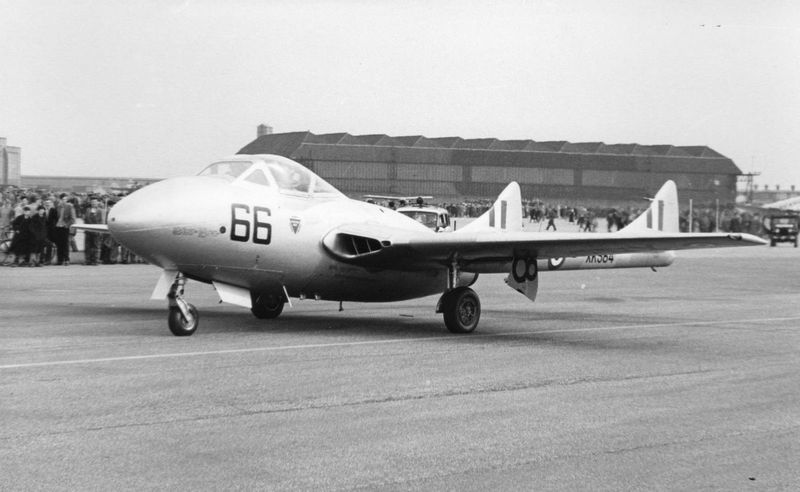
FTS Vampire T.11 XK584 66 17th of May 1958 open day. (Please note the distinctive multi pitched roof of one of the ‘C’ Type hangars can clearly be seen on this photo below)
57.jpg
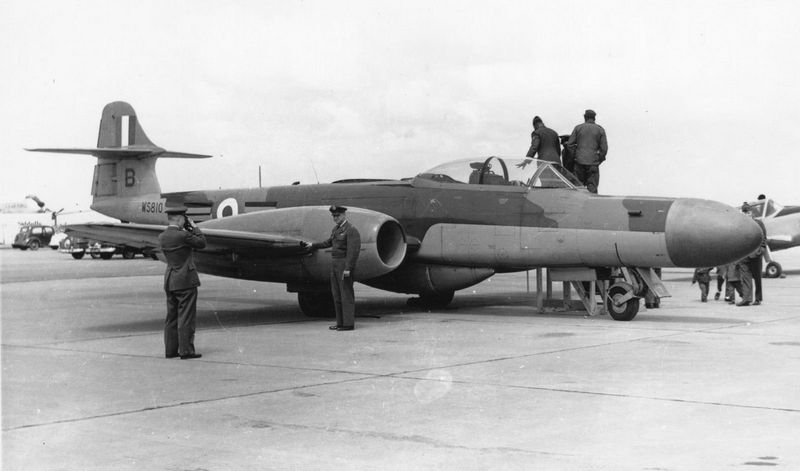
Meteor of 264 Squadron NF.14.WS810B Open House May the 18th 1957
mary ann site meteor of 264 sqd  nf.14.ws810 b open house may 18 1957.jpg
© Historic Aviation Military — All rights reserved Non Commercial — Non Profit Website / Organisation