Fire Section Crew at an Unidentified Location Within RAF Burtonwood Airfield - Date Unknown?


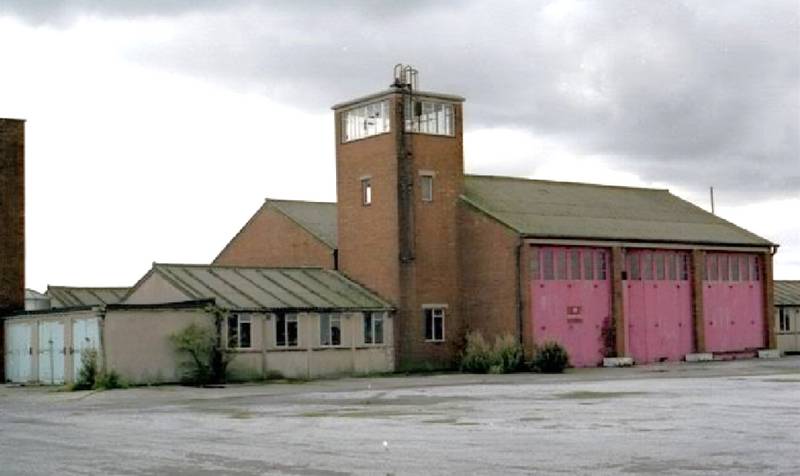
The Crash Fire Station is Being Used as a Vintage Bus Club, Dave Long.

Note the Crash Fire Station Observation Tower.
Martin Baker Ejection Seat Safety Pins That Came From The Crash Fire Station.


A Photo of the 635 Squadron Gliding School Cadets Sitting on the J-Type Hangar Annex Roof.


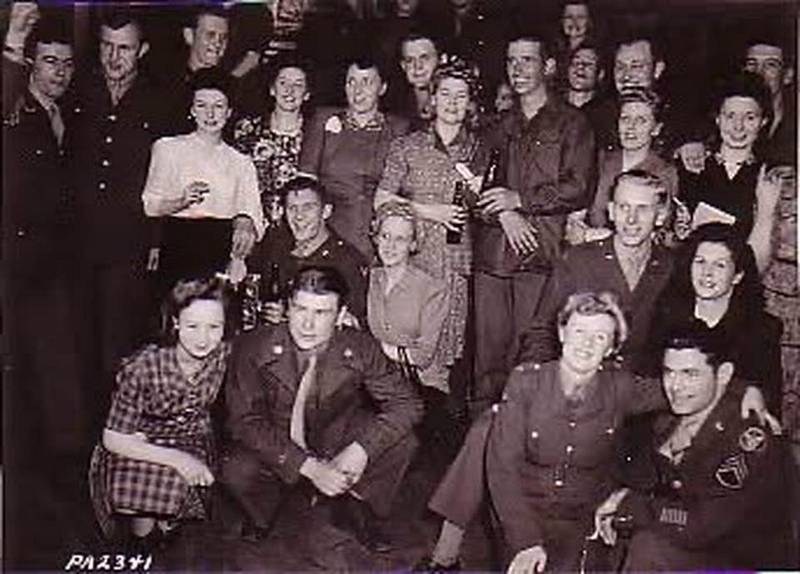
VE-Day celebrations in Hangar 8, RAF Burtonwood.
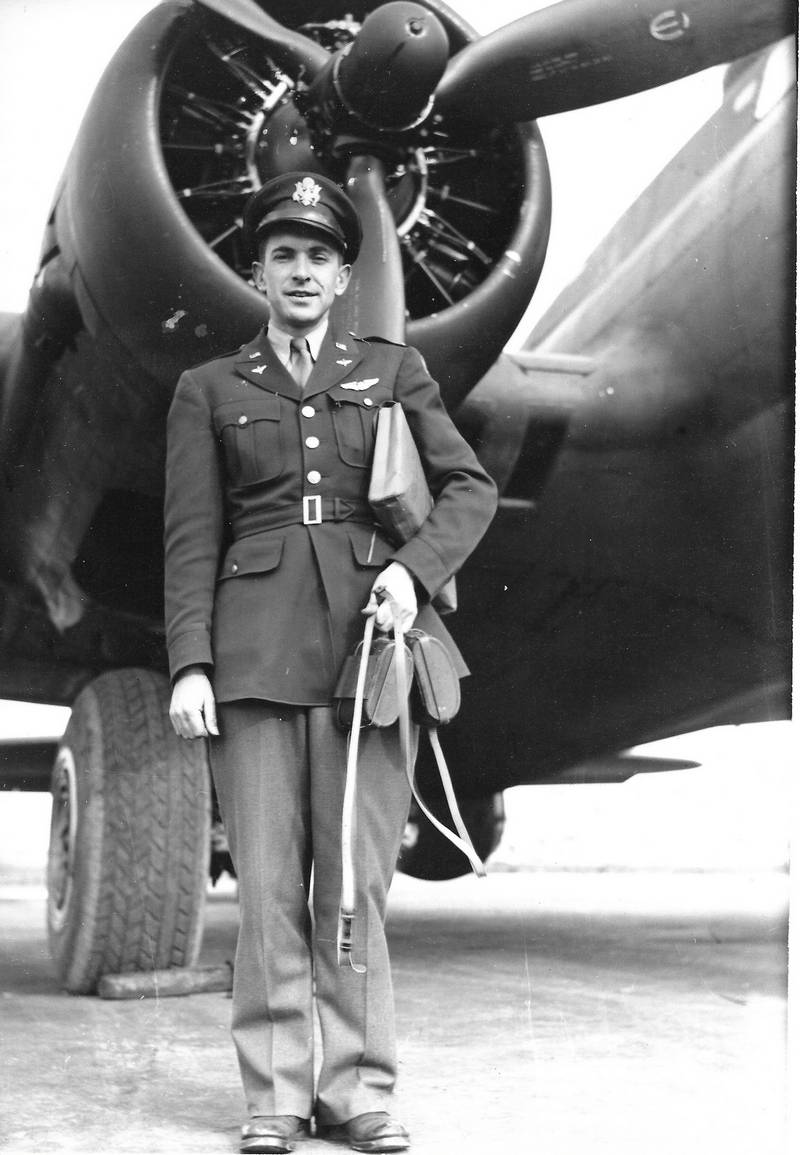
Ready for delivery — Jake Eckert, 310th Ferrying Pool Squadron, Burtonwood airfield.
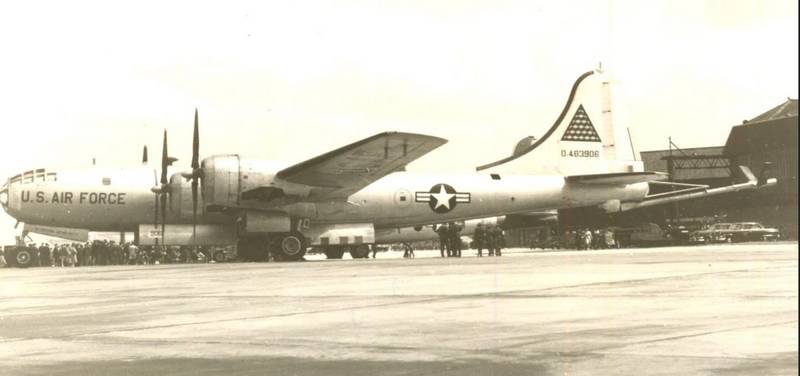
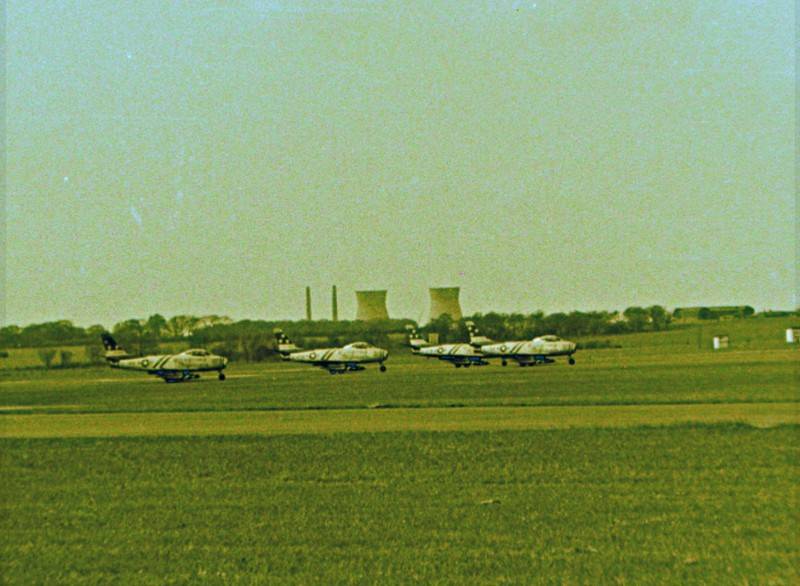
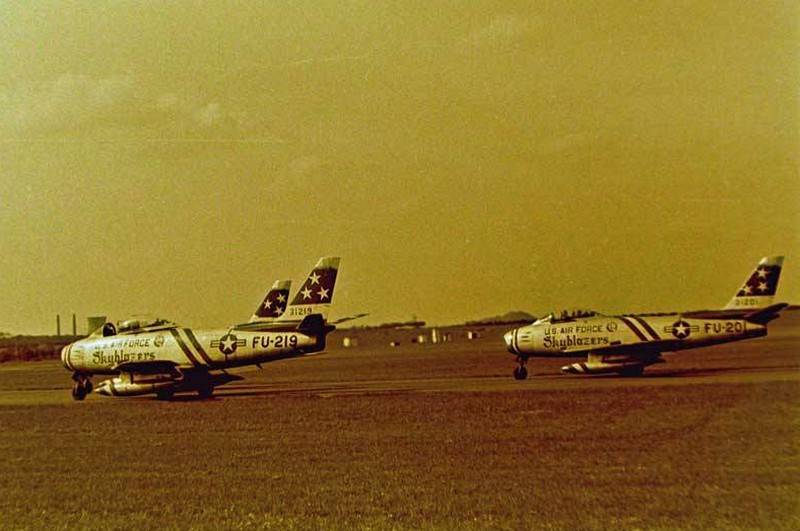
United States Air Force Precision Flying Demonstration Aerobatic Team Skyblazers at RAF Burtonwood, During the Mid-1950s. The Aerobatic Team Flew The North American F-86 Sabre. In the spring of 1949, the first flights of the Skyblazers Air Demonstration Team took place in the skies over Europe at the airbase in Furstenfeldbruk, Germany.
The pilots were part of the 22nd fighter
The pilots were part of the 22nd fighter squadron from the 36th Fighter Wing as part of the USAFE (United States Air Forces in Europe). The USAFE headquarters instructed the team to create an aerobatics team using F-80B aircraft and perform demonstrations throughout Europe. Soon afterwards the team was given modified F-84E Thunderjet aircraft.
The 50-calibre machine guns were removed...
The 50-calibre machine guns were removed from the front of the aircraft for better handling in the demonstrations. By the summer of 1952, the team had performed more than 260 air demonstrations in more than 12 countries. In 1953 the team came under the command of the 48th Fighter-Bomber Wing based in Chaumont, France.
Soon after that, they moved on to the
Soon after that, they moved on to the F-86F Sabre jet for the next 3 years. During this time the team continued to perform air demonstrations throughout Europe using the F-86. In 1956 they were moved back to the 36th Fighter Wing and stationed at the airbase in Bitburg, Germany.
During this time a new air demonstration...
During this time a new air demonstration team based in the U.S. called the Thunderbird had been formed. In 1962 with the development of mid-air refuelling, the Thunderbirds were able to make the trip to Europe for demonstrations. This eliminated the need for a team based in Europe and the Skyblazers were officially disbanded .
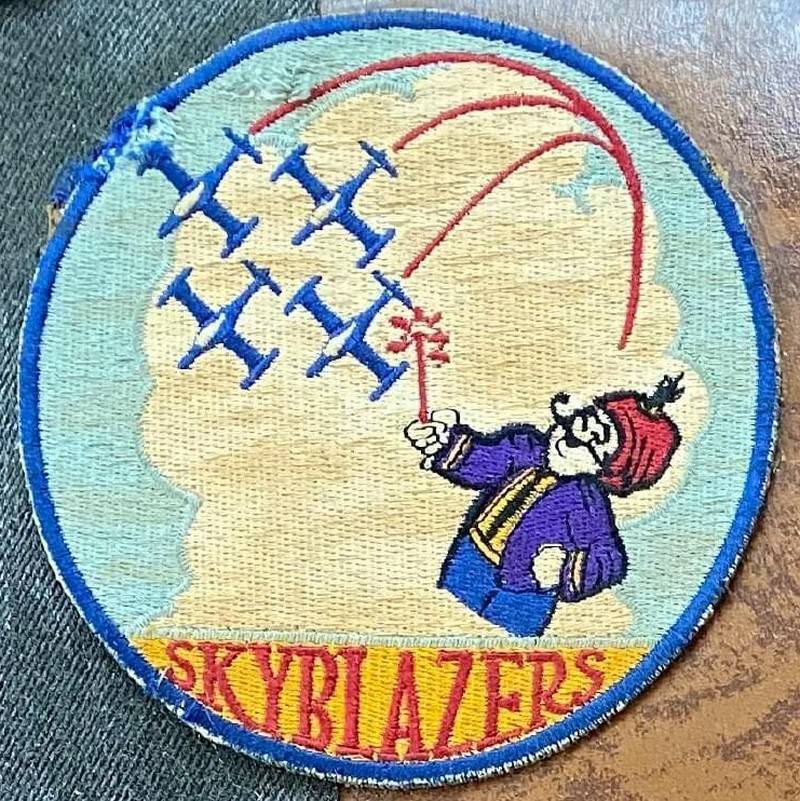
Skyblazers display team patch
Skyblazers display team patch
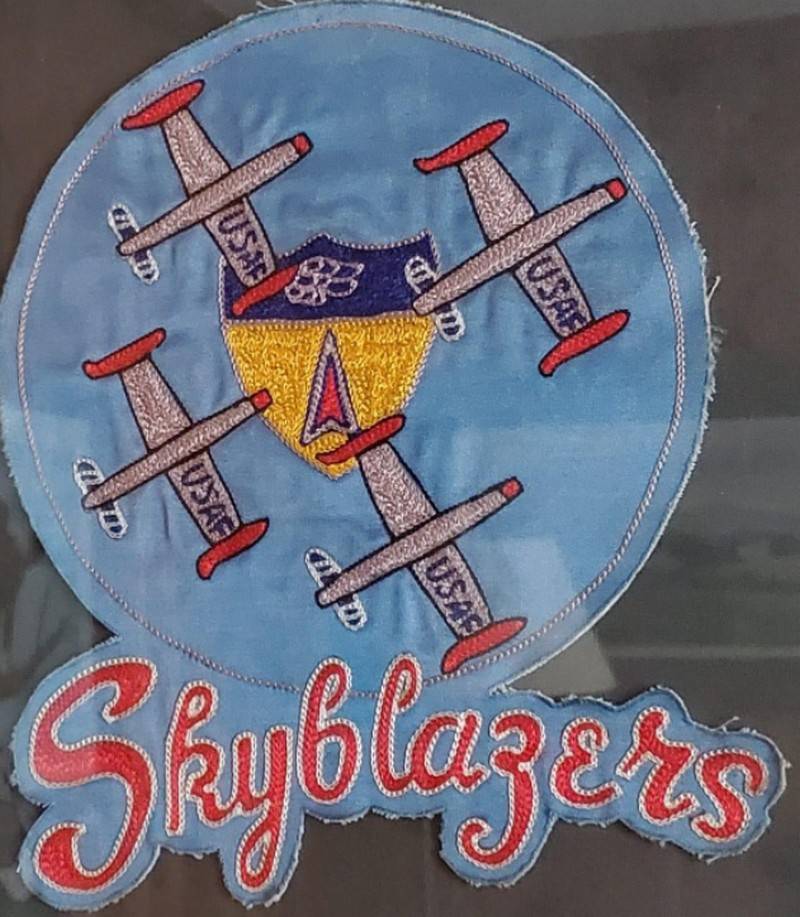
Skyblazers display team patch
Skyblazers display team F-86 Sabres waiting for take-off.
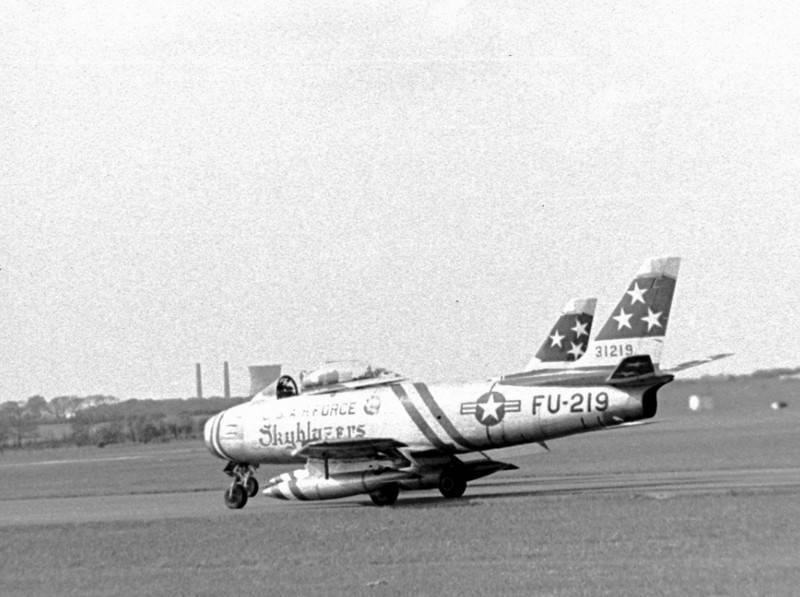
Skyblazers display team F- 86 Sabres 31219 FU-219 At the West of the airfield.
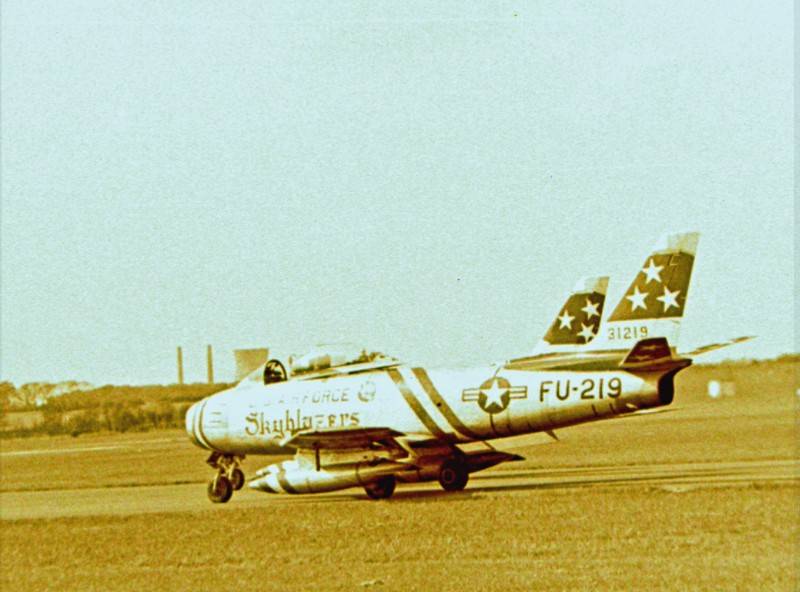
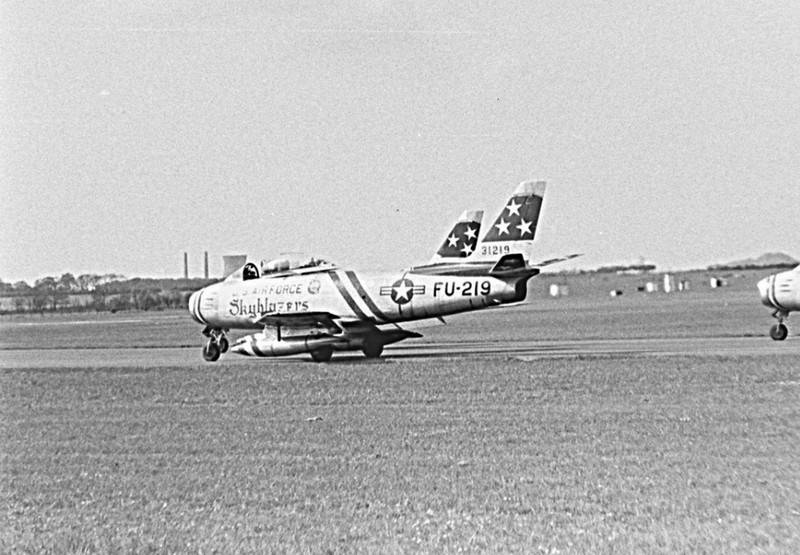
Skyblazers display team F-86 Sabre 31219 FU-219.
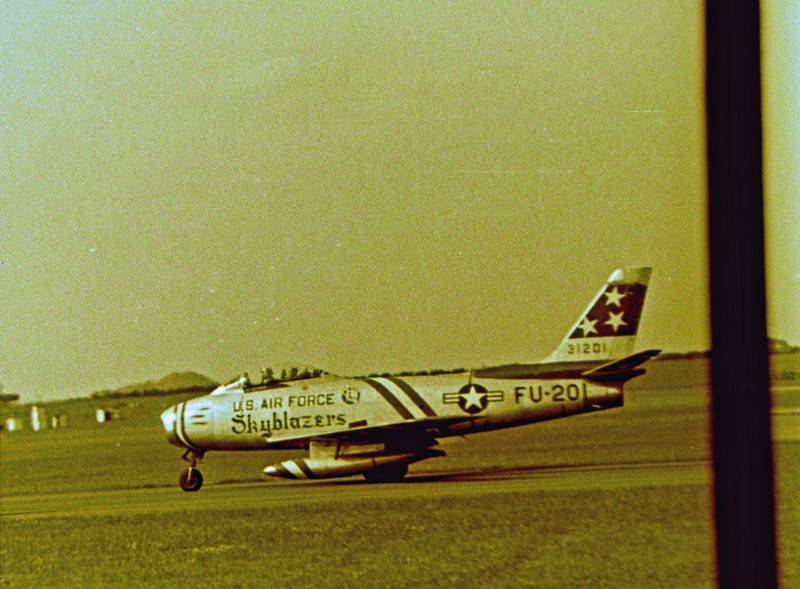
History of Sabre 31201/ FU-201 as seen in the Burtonwood photos above.
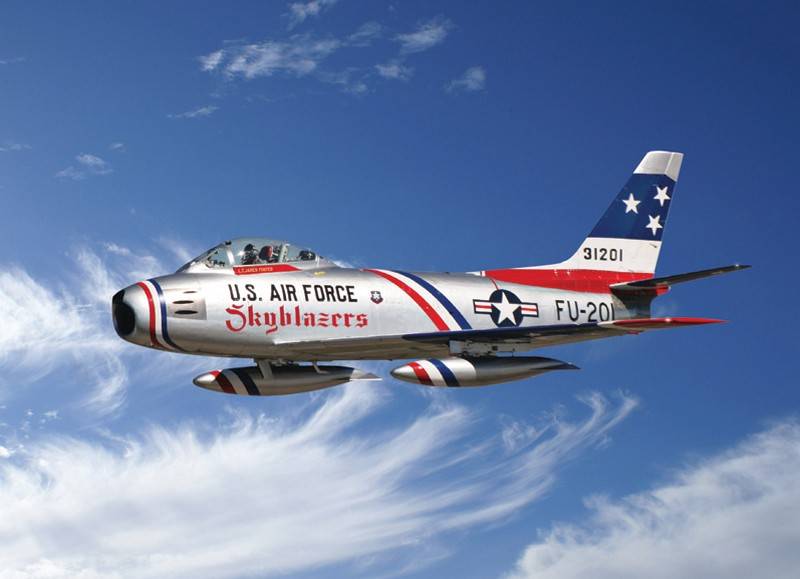
Delivered to United States Air Force as 52-4959, 19??. Delivered to FA Argentina as ???, 19??. Recovered from Argentina and assembled at Coleman, TX, 1989.
World Wide Aircraft, Miami, FL, Septembe...
World Wide Aircraft, Miami, FL, September 1990-1992 – Registered as N105BH. – Flown in a camouflage scheme. Airplane Exchange Co, Miami, FL, June 1992-1995. Thomas Righetti, Miami, FL, September 24, 1997-2002. – Registered as N86FR. – Flown as USAF/Skyblazers/31201/FU-201.
F86 LLC, Coconut Grove, FL, 2003-2005. -...
F86 LLC, Coconut Grove, FL, 2003-2005. – Flown as USAF/Skyblazers/31201/FU-201. Update on the huge P-38 Lightning memorial at RAF Burtonwood


While the Burtonwood Rehabilitation program was welcomed by all, a few have fully appreciated and made use of the improvements are more than Stubby. Stubby pays no Taxes, no dues to the NCO or officers club, has never been known to buy anyone a drink, but is welcomed everywhere. Stubby is an ordinary backyard variety of a dog.
The only outstanding feature about him i...
The only outstanding feature about him is that he has only three legs, and this is not a natural phenomenon. Back in February 1949, Stubby, then known as Fido or hey you or something, was brought to the base dispensary with a badly mangled right hind leg. A Veterinarian might have thrown in his syringe and ordered an Execution for the little dog’s own good.
Still, the Doctor on duty was used to
Still, the Doctor on duty was used to working on human beings, on whom mercy executions are taboo. He administered an Anaesthetic and proceeded to amputate the injured Leg. Stubby came out of the Anaesthetic feeling the call of nature, and it was when he accosted a nearby tree that he discovered his fate.
After the initial shock, the little Mong...
After the initial shock, the little Mongrel quickly put his canine ingenuity to work. “If Stubby didn’t like what Site 2 was serving, he could hop on a bus to Site 5.” To his delight, he discovered the airbase’s Bus system and through this medium, he found that there was more than one mess hall on the airbase. If he didn’t like what Site 2 was serving, he could hop on a bus to Site 5. In short order, Stubby learned all the Bus stops and was soon known to everyone.
An article in the wing newspaper introdu...
An article in the wing newspaper introduced him to the British press, who promptly tagged him an arithmetician [drop one and carry three]. A newspaper that specializes in hatchet murders, in mind and spirit, with the rest of the airbase. Sex and Dogs sent a reporter and photographer out to do a feature on him.
Stubby could not be found. In succeeding...
Stubby could not be found. In succeeding weeks, official base photographers tried to capture him on film, but each time he was seen A bus would appear and take off with Stubby aboard. Not long ago, he was seen near the headquarters, and an NCO was dispatched to capture him.
A bus appeared and hauled him away, as
A bus appeared and hauled him away, as usual, but the NCO managed to overtake the bus. Stubby refused to get off, but the enterprising sergeant cannily removed the pups lady friend, a long-haired brown little bitch, and Stubby followed. “Unless you speak to him first, he will pass you by.” In the office, the only way they could get Stubby to pose was to hide his lady friend under a low desk. By this means, the three-legged pup was finally recorded on GI film.
Since that time, he has continued his da...
Since that time, he has continued his daily rounds of the four air bases’ mess halls. Stubby is never obnoxious and never tries to force your attention toward him. Unless you speak to him first, he will pass you by.
A friendly word, and he comes to you
A friendly word, and he comes to you with tail wagging, it used to be amusing to see a bus stop and nobody get on or off except Stubby. No one knows how the little dog knows the bus stops or just when to get off. There is only one recorded incident where Stubby showed up for sick call one morning with a side injury, someone had kicked him so the wing veterinarian reported.
He gave Stubby a shot of penicillin and
He gave Stubby a shot of penicillin and marked him in quarters. When the pup felt better, he hobbled off again. From the service point of view, he is the ranking dog on the air base.
He has seen all the changes on the
He has seen all the changes on the air base, from the mud and the muck, the roar of airlift planes, the rise and fall in personnel strength, to complete rehabilitation. He has taken it all in stride on three legs, he seems to have crown healthier in mind and spirit with the rest of the air base. Sweet Memories of Ethel Mary Wilkinson laid to rest at Warrington Cemetery on June 3rd 1945


Major Frederic Austin Borsodi A new road on the residential part of Omega has been named in memory of Major Frederic A Borsodi, USAAF, who tragically died whilst flying an experimental jet plane over Burtonwood airbase in January 1945. Borsodi Boulevard is set to be officially unveiled on May 26th as part of a Burtonwood airbase reunion event. The new ‘R3’ spine road through the residential part of Omega, extending from the signal-controlled junction at Burtonwood Road / Kingswood Road, down to the Green Heart) is being named ‘Borsodi Avenue’ in memory of the American WW2 Test Pilot who died towards the end of the war whilst flying an experimental jet plane.
Although built, the road is not yet open
Although built, the road is not yet open to the public. To coincide with this year’s Burtonwood Association reunion, an official opening ceremony is proposed for Thursday, 26 May. Major Frederic A.
Borsodi (November 4, 1916 – December 28,...
Borsodi (November 4, 1916 – December 28, 1945) entered US Army Air Corps service in Connecticut and served from 1941 to 1943 as a second lieutenant in the African, Sicilian, and Italian campaigns, completing 130 missions as a P-40 pilot. His flying experience with the P-40 in the Mediterranean area probably formed his basis of comparison of the Bf 109G-6/trop and the US Army Air Forces fighters. He became chief of fighter testing from 1943-45 at Wright Field in Ohio.
He was the first man to witness the
He was the first man to witness the compressibility shock wave on an aircraft wing while diving a P-51 plane from 40,000 feet. On January 28, 1945, when testing YP-80A Shooting Star 43-83026, the engine exploded and the aircraft crashed approx three miles west of Burtonwood airfield, pilot, Major Borsodi was killed and the aircraft completely destroyed. This aircraft was the first US jet-propelled fighter and one of two jets on the field.
Both planes had received a first flight ...
Both planes had received a first flight check; this plane crashed during a routine second flight. As a result, the YP-80A was temporarily grounded. Had he survived WWII, he would almost certainly have been a candidate to fly the Bell X-1 and be the first man to exceed the speed of sound.
Major Borsodi is buried at the US Milita...
Major Borsodi is buried at the US Military Cemetery at Cambridge: Plot C, Row 4 Grave 73. His awards were: Distinguished Flying Cross with Oak Leaf Cluster, Air Medal with six Oak Leaf Clusters Thanks to Gary Skentelbery of Warrington Worldwide for this Article. The crash site of VP80A, 44-83026 Shooting Star at Bold on January 1945

Burtonwood fire pits on the 17 May 1958 open day

American servicemen at Warrington Walking Day on the Town Hall lawn in the 1950s

Burtonwood living site in the Snow during 1952, an unknown site

Catering hatch at a Burtonwood unknown location


John Dever Parents at USAF Burtonwood Air Base (photo published 7 Aug 2021, credit to John Dever)


The New Arrival of the Douglas C-54 Skymaster at the USAAF Burtonwood


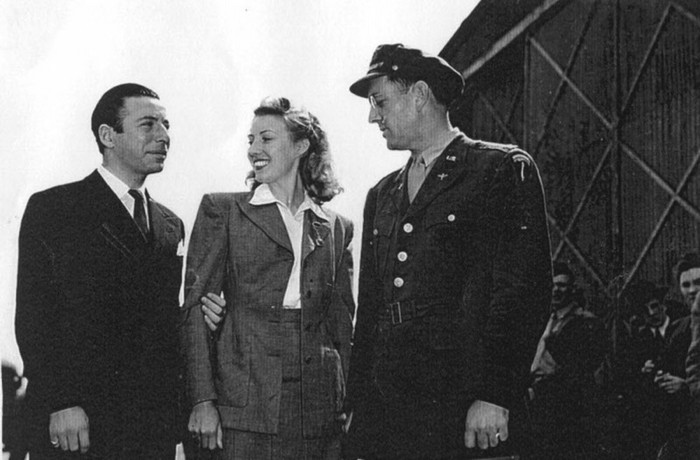
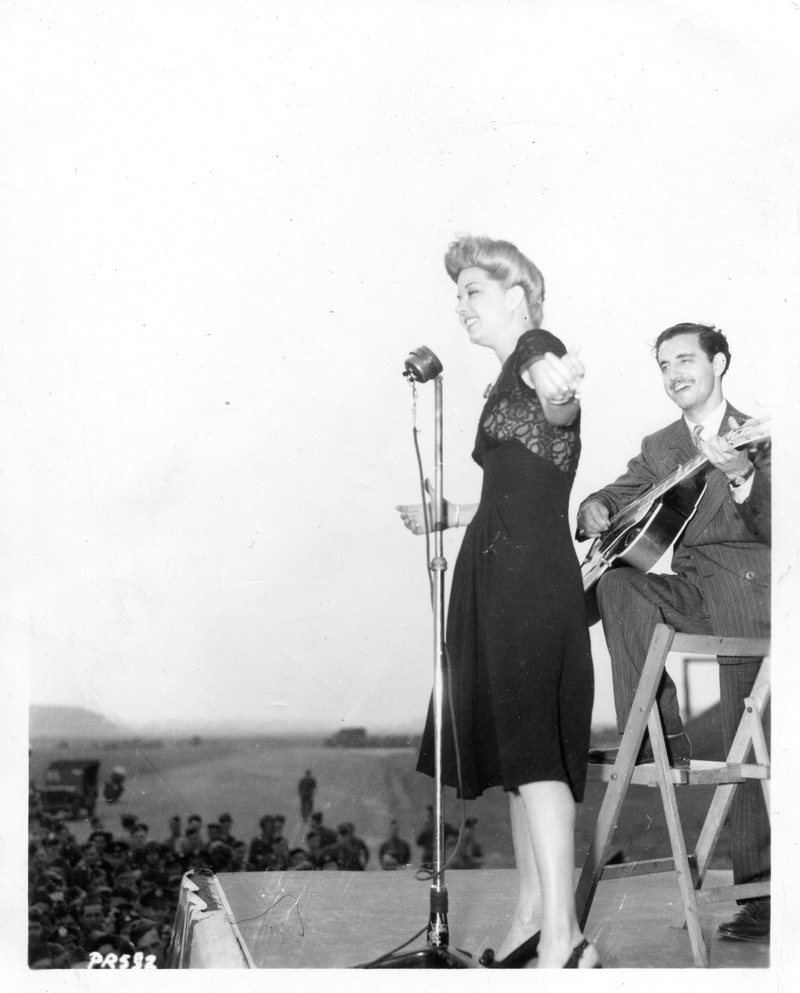
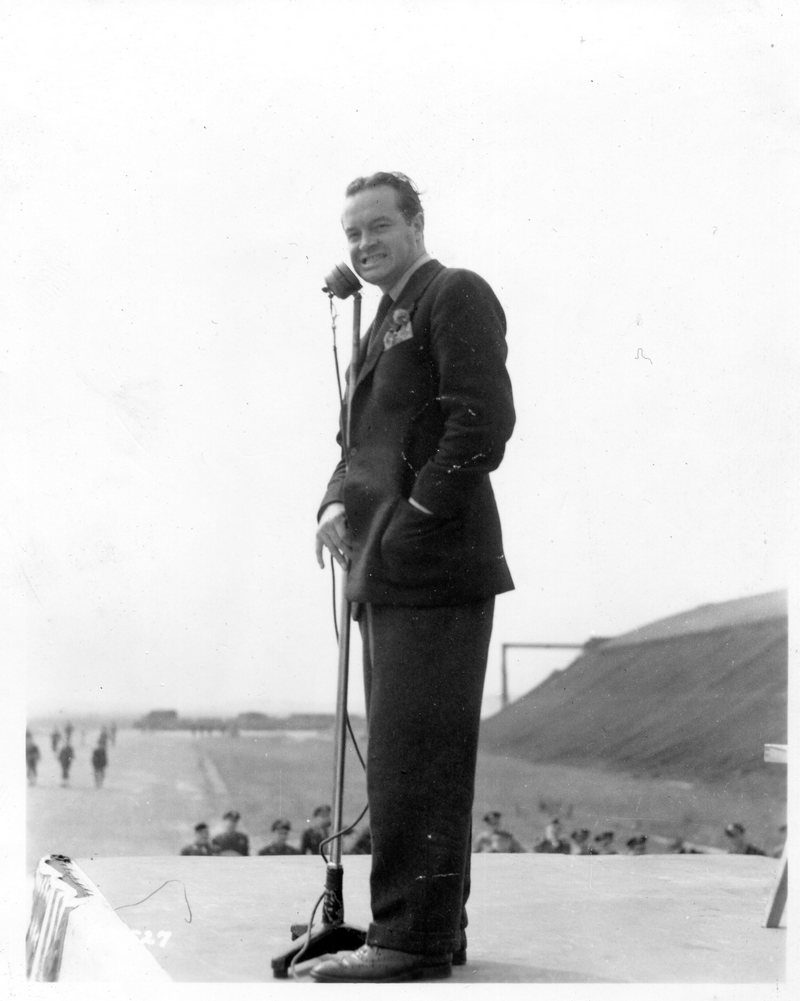
A visit by Bob Hope to the USAF Burtonwood on the 30th December 1948

Below The Photo is An Article by Paul Hampton from Warrington


CND March at Burtonwood Road alongside the airbase Perimeter Fence in the 1970s

Burtonwood CND Protest outside of site 8 in the 1980s


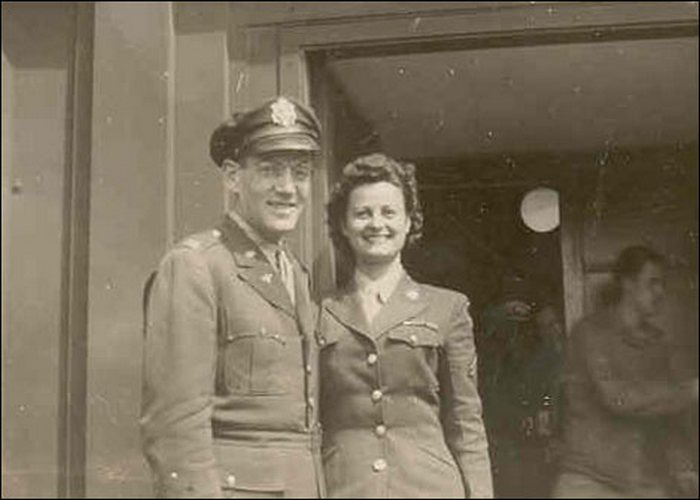
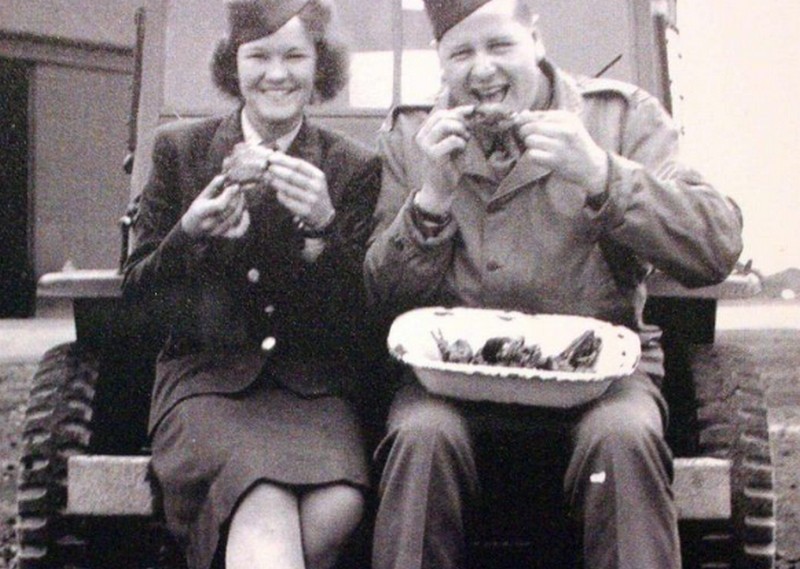
Army Air Corps Cpl Jeannie Lumpkin and an unknown American soldier in 1943

Glenn Miller at Burtonwood in WW2

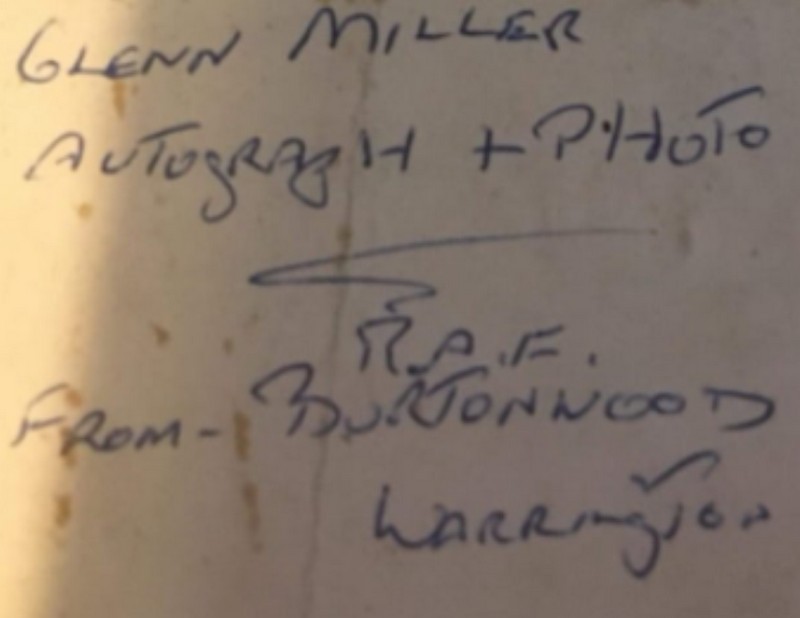
Glen Miller Text for photo


Maintenance work on Engine number 4 of a Consolidated B-24 Liberator

Consolidated B-24 Liberator flying over Bruche Hall Dispersed Living Site at Warrington

A Busy Corner of Burtonwood during World War 2, with B-24, C-47, P-47 and B-17 Aircraft


Vehicle check and paperwork Presented for Examination


The Passing Away of: Colonel Wayne C. Pittman, Jr USAF March 16, 1937- October 5, 2015
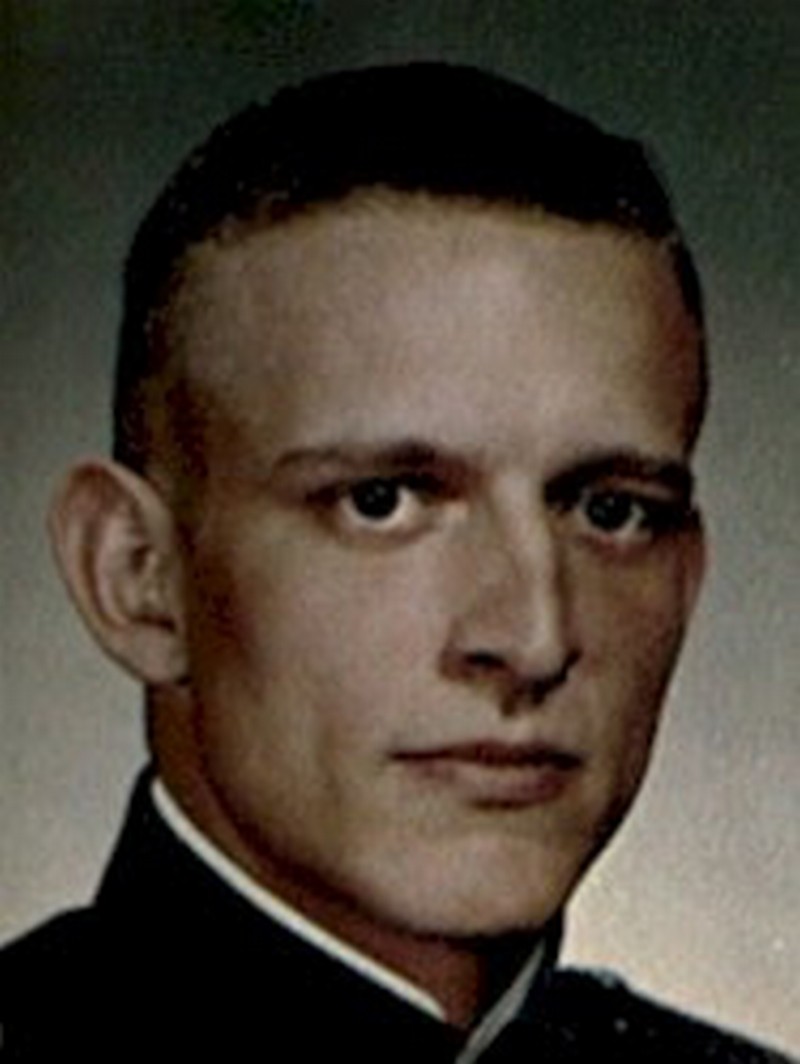
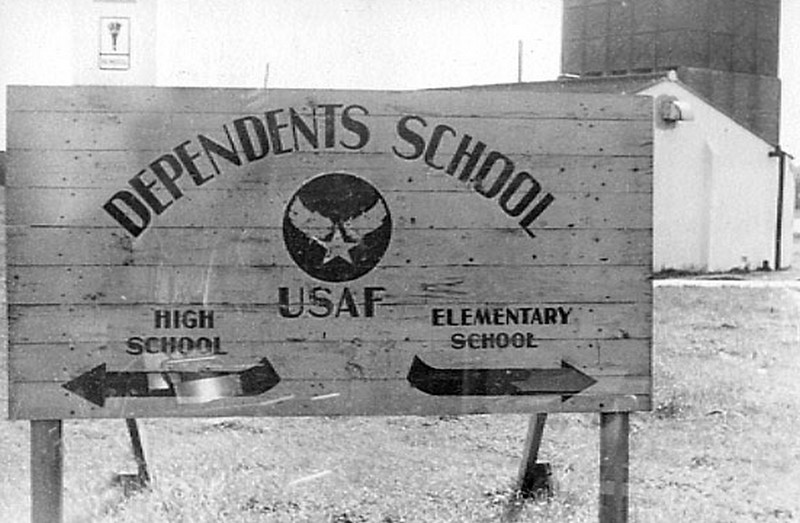
Wayne C Pittman arrived at Burtonwood with his family in the early 1950s, Wayne then attended the Dependents School located at Site 1 Burtonwood, where he became a member of the junior Air Police. On duty, they wore their distinctive white hats and armbands, Wayne Pittman was from Alexandria, Louisiana. America.
The U.S. Air Force in Britain has enroll...
The U.S. Air Force in Britain has enrolled 15 children in their Air Police. They are all under 16 and have been formed in an Air Police Squadron.
Their duties include keeping discipline ...
Their duties include keeping discipline among their fellow pupils, giving first aid to children, and enforcing road safety. The squadron is stationed at Burtonwood, the American airbase in Lancashire. All the boys and girls are the children of servicemen of the U.S.
Air Force. After returning home, Wayne j...
Air Force. After returning home, Wayne joined the US Air Force. He was in the first graduating class of the US Air Force Academy at Colorado Springs in 1959.
March 16, 1937 — October 1, 2015 Wayne
March 16, 1937 — October 1, 2015 Wayne and Karen retired to Dayton, Ohio in 1989 following 34 years of service in The United States Air Force. He was in the first graduating class of The United States Air Force Academy. During their years in Dayton, they became involved in many aviation activities including volunteering with the Wright B Flyer Association, The National Museum of The United States Air Force, Wright State University Special Collections and Archives, Aviation Trail, 2003 Committee, and the Archives at Carillon Park.
While he was at The National Museum of
While he was at The National Museum of The United States Air Force he was involved in the first WWI Fly-in. Wayne was the founder of the B-52 Stratofortress Association. A gathering will be held at Newcomer Funeral Home, Beavercreek Chapel, on Friday, October 23, 2015, from 4:00 pm-5:00 pm with a memorial service at 5:00 pm.
In lieu of flowers, donations may be mad...
In lieu of flowers, donations may be made to the Hospice of Dayton Colonel Waynec. Pittman

Silver Star Vietnam War Service: United States Air Force Rank: Captain Batallion: 12th Tactical Reconnaissance Squadron Action Date: June 17,1968 Headquarters, 7th Air Force, Special Order G-2683 (August 29, 1968) The President of the United States of America, authorized by Act of Congress July 9, 1918 (amended by an act of July 25, 1963), takes pleasure in presenting the Silver Star to Captain Wayne Creekmore Pittman, Jr. (AFSN: 0-55581), United States Air Force, for gallantry in connection with military operations against an opposing armed force as Navigator Systems Operator of the 12th Tactical Reconnaissance Squadron, in action in Southeast Asia on 17 June 1968. On that date, Captain Pittman flew an unarmed reconnaissance aircraft deep into hostile territory to obtain vital intelligence data. Despite intense and accurate anti-aircraft and automatic weapons fire which damaged his aircraft, he completed his mission completely disregarding his own personal safety.
The information gained through his coura...
The information gained through his courageous act contributed directly and materially to the Allied intelligence collection effort in Southeast Asia. By his gallantry and devotion to duty, Captain Pittman has reflected great credit upon himself and the United States Air Force Wayne Creekmore Pittman Jr Wayne Creekmore Pittman Jr March 16, 1937- October 5, 2015 Cemetery: U.S. Air Force Academy Cemetery Wayne Pittman graduated from the U.S.
Air Force Academy at Colorado Springs, C...
Air Force Academy at Colorado Springs, Colorado, Class of 1959. He retired in 1989 as a U.S. Air Force Colonel.
Biography of Wayne Pittman Colonel Wayne...
Biography of Wayne Pittman Colonel Wayne C Pittman retired from the United States Air Force in 1989 after 34 years of service, beginning as a cadet at the Air Force Academy in 1955. As a navigator, he spent most of his career in operations, starting out as a crew member in the B-52 Stratofortress, where he eventually logged more than 2300 hours. In Southeast Asia, he flew tactical reconnaissance in the RF04 Phantom out of Tan Son Nhut Air Force Base, Vietnam, completing 186 combat missions.
Awards Received - Silver Star - Vie...
Awards Received – Silver Star – Vietnam War A gathering will be held at Newcomer Funeral Home, Beavercreek Chapel, on Friday, October 23, 2015, from 4:00 pm-5:00 pm with a memorial service at 5:00 pm. In lieu of flowers, donations may be made to the Hospice of Dayton Colonel Wayne c. Pittman Biography of Wayne Pittman Colonel Wayne Pittman retired from the United States Air Force in 1989 after 34 years of service, beginning as a cadet at the Air Force Academy in 1955.
As a navigator, he spent most of his
As a navigator, he spent most of his career in operations, starting out as a crew member in the B-52 Stratofortress, where he eventually logged more than 2300 hours. In Southeast Asia, he flew tactical reconnaissance in the RF04 Phantom out of Tan Son Nhut Air Force Base, Vietnam, completing 186 combat Missions.


Wearing their distinctive white hats and their armbands, two members of the Air Police at Burtonwood, they are Wayne Pittman of Alexandria, Louisiana, and Carol McGingan of Long Island, New York. American Children Join Air Police: The U.S. Air Force in Britain have enrolled 15 children in their Air Police.
They are all under 16 and have been
They are all under 16 and have been formed in an Air Police Squadron. Their duties include keeping discipline among their fellow pupils, giving first aid to children, and enforcing road safety. The squadron is stationed at Burtonwood, the American airbase in Lancashire.
All the boys and girls are the children
All the boys and girls are the children of servicemen of the U.S. Air Force. when on duty they wear an armlet and distinctive white berets
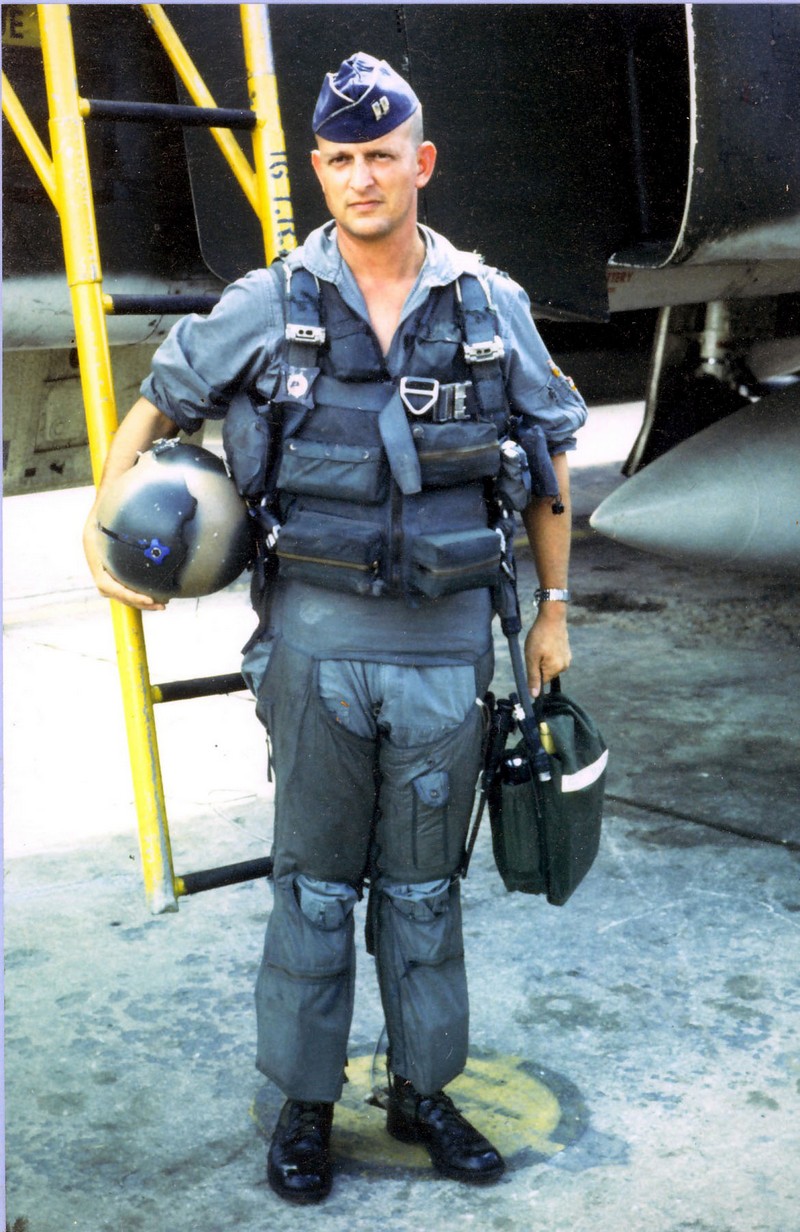
Colonel Wayne Pittman, 12th Tactical Reconnaissance Squadron From March 1968-March 1969, Capt. Wayne Pittman, 12th TRS, flew on 186 RF-4C combat missions over North Vietnam, South Vietnam, Laos, and Cambodia. He could not reveal his classified missions over Cambodia, so he had this patch made as SEA MISC (Southeast Asia Miscellaneous). (U.S.
Air Force photo) The date of the i...
Air Force photo) The date of the image is unknown. Below is a Letter by Carole Hertel about her Father Sgt. Louis A.
Schaefer
Schaefer

“My Dad was an airplane engine mechanic at RAF Burtonwood from August 1943 – August 1945. His name is Sgt. Louis A.
Schaefer and I only recently discovered ...
Schaefer and I only recently discovered this is where he was during the war. My Dad passed in 1988 and I hope to learn more about his time there. He had his A&P license from Rutgers University in New Jersey and worked for Wright Aircraft in Paterson NJ before the war.” Photos of Sgt. Louis A.
Schaefer in front of a crashed B-17, and
Schaefer in front of a crashed B-17, and in his best uniform.


"RAF Burtonwood: The 8th United States Army Air Force, Station 590 Base Air Depot 1.

Above is a photo of a B-17 from RAF Burtonwood Warrington during WW2. This B-17 Only served the last few weeks of the war. Assigned 8th AF on 6th March 1945.
Lieutenant Combs on oil consumption B. U...
Lieutenant Combs on oil consumption B. U. S.
Flight photo shot by Baxter in the other
Flight photo shot by Baxter in the other B-17 during WW2. Credit to James B. Tunison.
Visit to Burtonwood by Bob Hope
Visit to Burtonwood by Bob Hope


United States Army Air Force Douglas C-47-DL Skytrain (MSN 4769) to USAF 25 October 1942, bailed to the Aeroplane and Armament Experimental Establishment (A&AEE), Boscombe Down, Wiltshire late 1942. To Oran, Algeria on 22 January 1943. Allotted to the 43rd Troop Carrier Squadron, 315th Troop Carrier Group, Ninth Air Force, at RAF Spanhoe (Station 493). – 8th AF, UK 14 May 1943.
In a landing accident at the USA de...
In a landing accident at the USA depot RAF Burtonwood, UK (Station 590) on 16 April 1943 and condemned by 31 October 1944. Photograph date late 1942, whilst at the A&AEE. Date: 1942 A photo from Helen Wakefield Cook My grandfather Ralph Crosby at USAAF Base Air Depot 1 station 590 Burtonwood from 1943
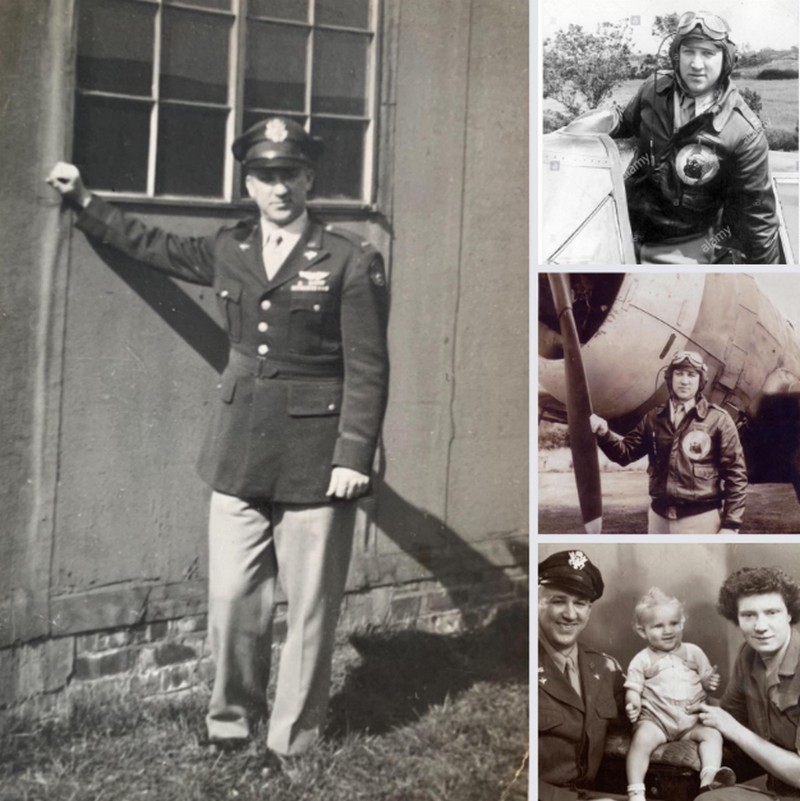
Photos below received from Lynn Bennett BRD Site Ken Wards toolbox June 1945 Photo Credit Ken Ward

Left to Right - Jinx Falkenburg, Bob Hope, Dolores Hope, RAF Commanders' Wife, Irving Berlin 1948


Ken in the Hydraulics Section June 1945

Machine Lathe June 1945


The Soda Fountain bar
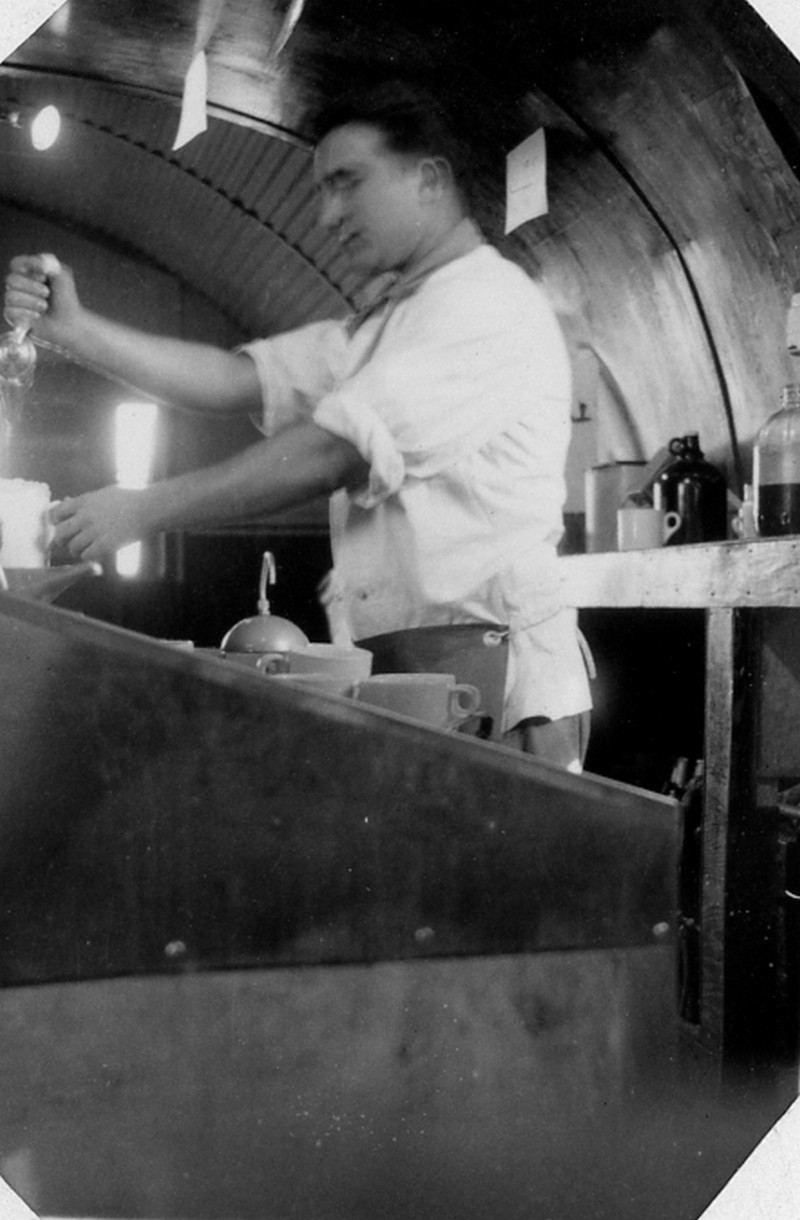
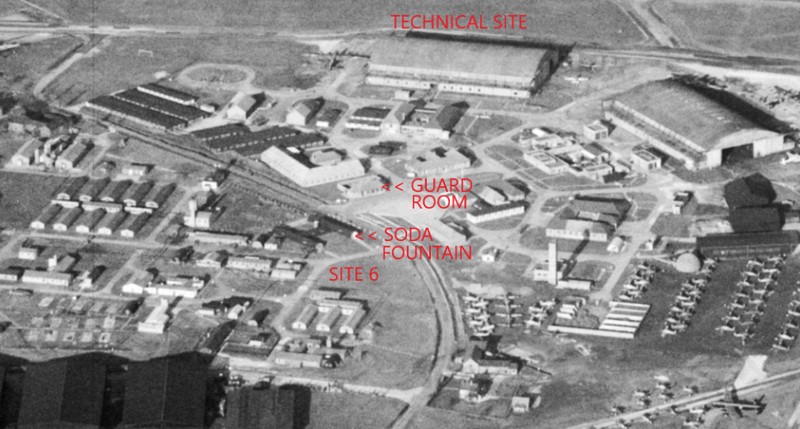

Paul D. Neumann recalls… “I was trained as an electronics technician by the Air Force and shipped to England in the largest convoy ever to sail up to that time. It consisted of 22 troopships, 16 destroyers, and the battleship Arkansas.
I did some research a few years ago
I did some research a few years ago to get all the information I could about the convoy (designated UT-3). We landed in Liverpool on 18 Oct. 1943. Some of the Air Force people were sent to RAF Burtonwood near the town of Warrington.
The buildup leading to the great bombing...
The buildup leading to the great bombing missions soon to come brought more troops than the base could accommodate and hundreds of us were billeted in aircraft hangers in which double-deck bunks were jammed. They were cold and drafty so colds and other ills were common. RAF Burtonwood was the name of an aircraft maintenance and repair depot built by the British in 1938-41.
When the U.S. entered the war and began
When the U.S. entered the war and began sending Air Force units to England in preparation for the air war and it was decided to use this large base for the supply and repair of U.S. aircraft. The first units arrived about 11 April 1942. The base was officially handed over to the 8th Air Force in October 1943, a few days after I arrived from the U.S.A.
It grew into a huge operation that repai...
It grew into a huge operation that repaired aircraft, manufactured parts, and rebuilt engines on a huge scale which served all of the U.S. air services in the EAME Theater. I am told that at one time there were 18,000 people at work there, including British civilians, members of the RAF, and of course American civilians and members of the 8th Air Force. On the evening of 5 June 1944, I was drafted, along with many others at RAF Burtonwood, to help load C-47 transports and CG4A Waco Gliders with men and equipment.
This went on far into the night. Most
This went on far into the night. Most of them took off before daylight on 6 June. There was more of the same early in the morning of 6 June.
We got some rest, food, and sleep late
We got some rest, food, and sleep late in the afternoon. The base was returned to British control soon after the war but was used again by the U.S. during the Berlin Airlift and served American air and other services until it finally closed in 1993. I served at Burtonwood (BAD#1) for most of the next 26 months with short tours of temporary duty (TDY) at BAD #2, Wharton, BAD #3 at Langford Lodge near Belfast Ireland, and with the 390th Bomb Group at Parham, Suffolk.
In October 1945 I was transferred to the
In October 1945 I was transferred to the 2003rd Ordinance Maintenance Company, which operated a bomb dump near Sharnbrook in Bedfordshire, in order to get a ride home. I left Southhampton on 5 December 1945 on the Queen Mary, was discharged at Fort McCoy, Wisconsin on 22 December, and reunited with my 3-year-old son on the 23rd, just in time for Christmas. Paul D.
Neumann Donald L Kramer at USAAF Station...
Neumann Donald L Kramer at USAAF Station 590 Burtonwood During WWII "WE KEPT EM FLYING"
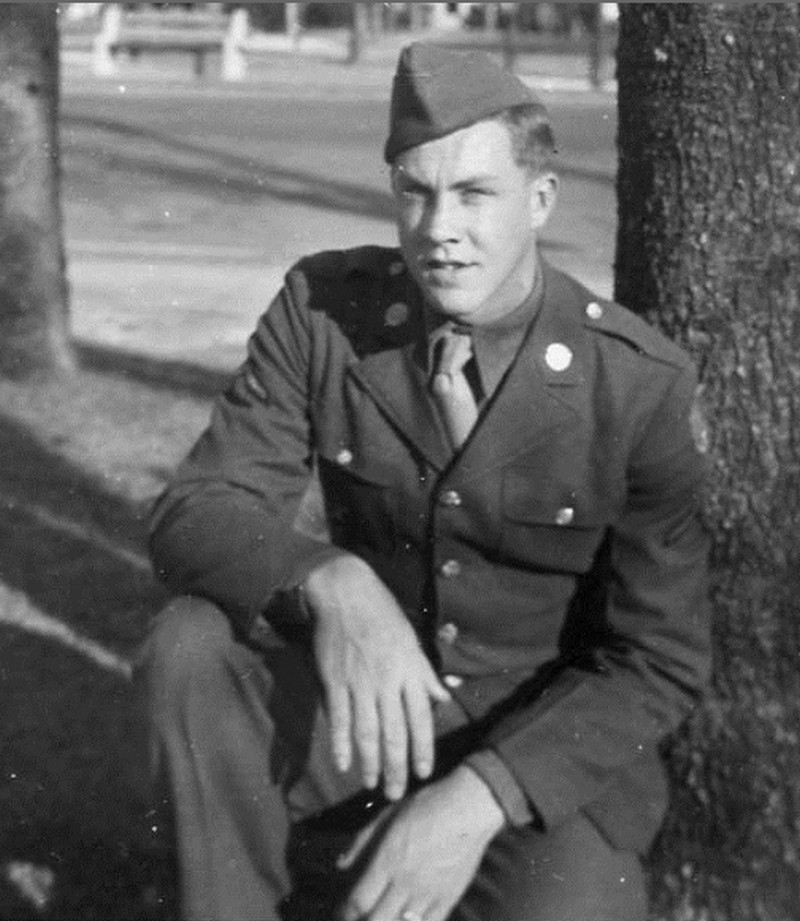
Donald L. Kramer sailed to England in the spring of 1943 aboard the liner Queen Mary along with 18,000 troops and a crew of 3,000, crossing the Atlantic in 4 ½ days. Upon arriving in England, he was assigned to the 16th Depot Repair Group at Burtonwood No. 2 near Warrington, about halfway between Manchester and Liverpool.
The Army Air Force had just established ...
The Army Air Force had just established this massive service depot operation to support the Allied air offensive against Germany, labeling the two depots Burtonwood No.1 and Burtonwood No. 2 “The airplanes would come into the depot, and all of the parts that needed to be overhauled would be taken off the plane and sent to the various shops. I worked at both depots fixing carburetors, so I worked in the engine shops. One depot worked on inline engines for fighter planes like the P-51, while the other worked on radial engines for the B-17s and B-24s.
We retrofitted 700 or 800 P-51s with a
We retrofitted 700 or 800 P-51s with a water injection system which gave them a short-term burst of power. It was a lot like working in a factory, just like back home. Once the various shops finished their work, the plane would be re-assembled and flown back to the fighter or bomber group.
We kept ‘em flying,” ... he re...
We kept ‘em flying,” … he remembered. A snapshot showing one of the endless poker games in the barracks at Burtonwood No. 2 Kramer remembered that as a staff sergeant, he “got a cot right next to the stove. It didn’t put out too much heat but it kept the ice off the windows.” The poor G.I. on the cot in the foreground looks cold (he’s wearing his jacket) and utterly exhausted: he is fast asleep despite the rowdy card game going on just a few feet away


Then (above) and now (below)


United States Air Force ceremonial handing over of the US flag at Warrington Town Hall 1950s


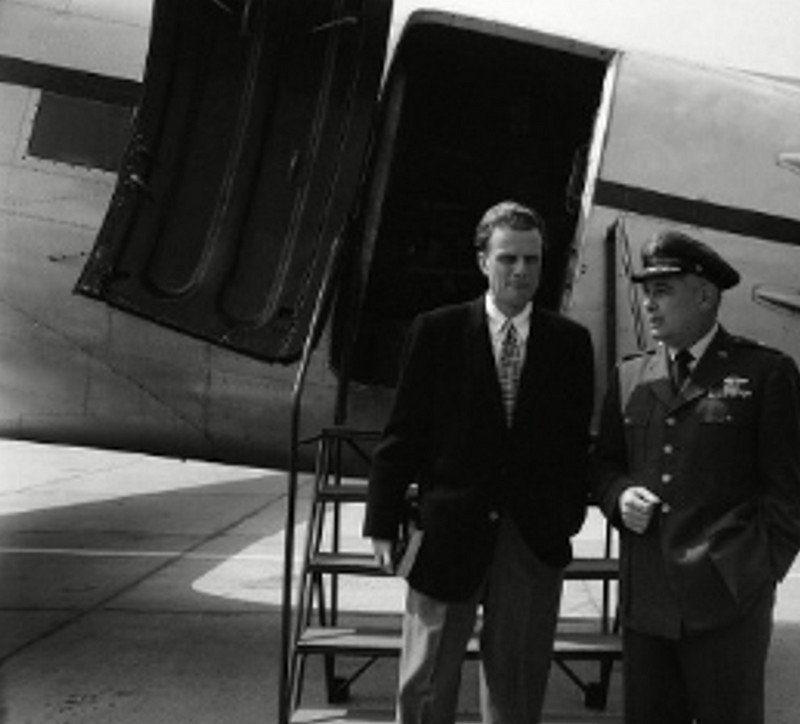
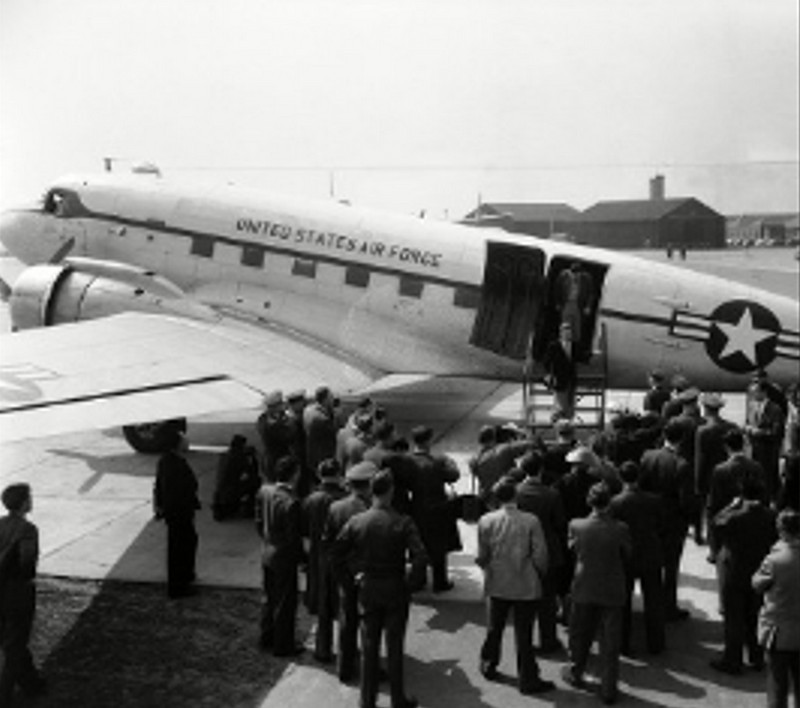
William Franklin Graham Jr. (November 7, 1918 – February 21, 2018) was an American evangelist and an ordained Southern Baptist minister who became well-known internationally in the late 1940s. He was a prominent evangelical Christian figure, and according to a biographer, was “among the most influential Christian leaders” of the 20th century. Graham held large indoor and outdoor rallies with sermons that were broadcast on radio and television, with some still being re-broadcast into the 21st century.
In his six decades on television, Graham...
In his six decades on television, Graham hosted annual crusades, evangelistic campaigns that ran from 1947 until his retirement in 2005. He also hosted the radio show Hour of Decision from 1950 to 1954. He repudiated racial segregation and insisted on racial integration for his revivals and crusades, starting in 1953.
He later invited Martin Luther King Jr. ...
He later invited Martin Luther King Jr. to preach jointly at a revival in New York City in 1957. In addition to his religious aims, he helped shape the worldview of a huge number of people who came from different backgrounds, leading them to find a relationship between the Bible and contemporary secular viewpoints. According to his website, Graham preached to live audiences of 210 million people in more than 185 countries and territories through various meetings, including BMS World Mission and Global Mission.
Graham was particularly close to Dwight ...
Graham was particularly close to Dwight D. Eisenhower, Lyndon B. Johnson (one of Graham’s closest friends), and Richard Nixon.
He was also lifelong friends with Robert...
He was also lifelong friends with Robert Schuller, another televangelist and the founding pastor of the Crystal Cathedral, whom Graham talked into starting his own television ministry. Graham’s evangelism was appreciated by mainline Protestant denominations, as he encouraged those mainline Protestants who were converted to his evangelical message to remain within or return to their mainline churches. Despite his early suspicions and apprehension, common among contemporaneous evangelical Protestants towards Catholicism, Graham eventually developed amicable ties with many American Catholic Church figures and later encouraged unity between Catholics and Protestants.
Graham operated a variety of media and p...
Graham operated a variety of media and publishing outlets. According to his staff, more than 3.2 million people have responded to the invitation at Billy Graham Crusades to “accept Jesus Christ as their personal savior”. Graham’s estimated lifetime audience, including radio and television broadcasts, topped 2 billion by 2008.
As a result of his crusades, Graham prea...
As a result of his crusades, Graham preached the gospel to more people in person than anyone in the history of Christianity. Graham was on Gallup’s list of most admired men and women a record 61 times. Grant Wacker writes that by the mid-1960s, he had become the “Great Legitimator”: “By then his presence conferred status on presidents, acceptability on wars, shame on racial prejudice, desirability on decency, dishonor on indecency, and prestige on civic events.
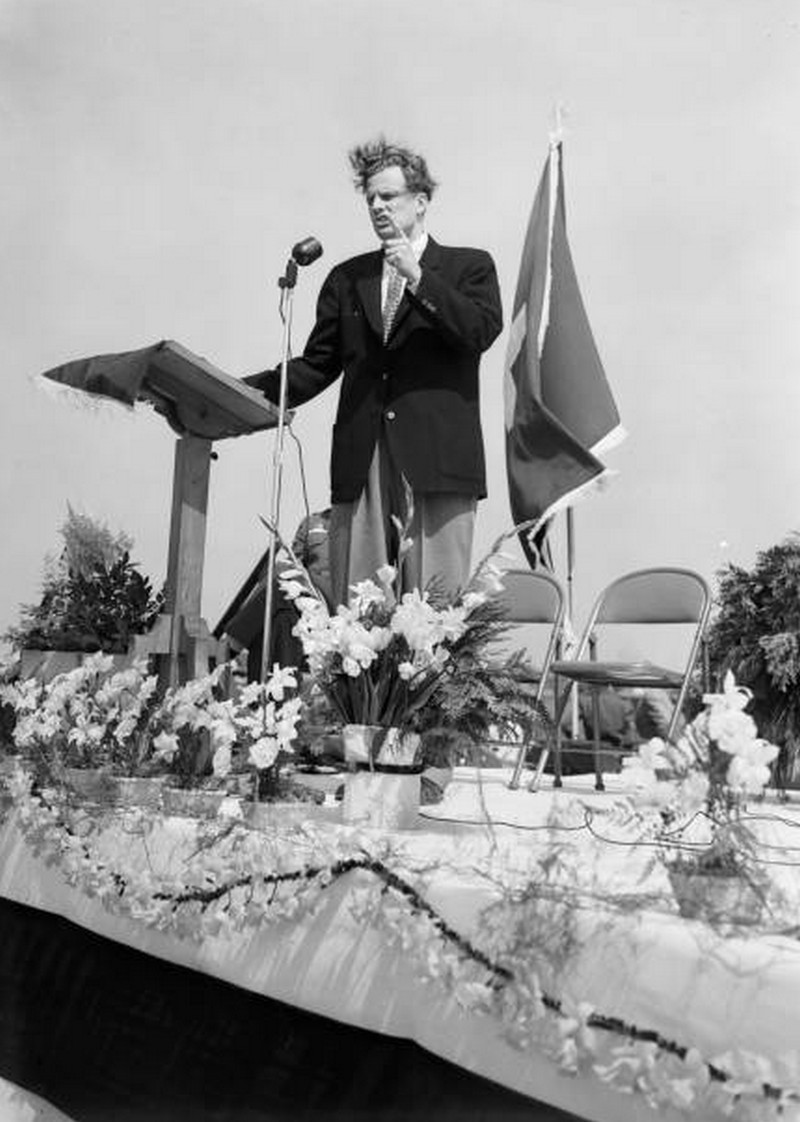
Billy Graham on an outdoor stage at Burt...
Billy Graham on an outdoor stage at Burtonwood Preaching the Gospel of Jesus Christ Graham preached to some 215 Million people throughout the world in his lifetime.



A close-up of the crowd that attended the Billy Graham Event
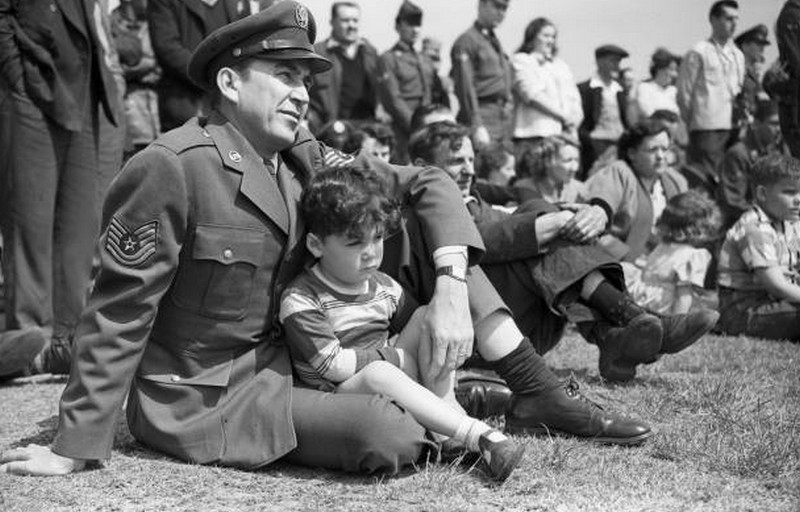
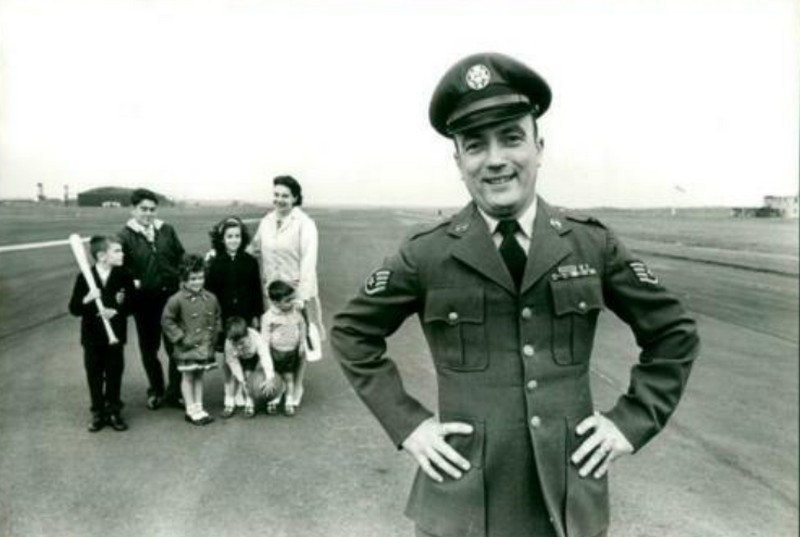

A group of Warrington women, who became known as the Burtonwood GI Brides are pictured at the White Hart pub, prior to embarking on a new life across the Atlantic. Now Aldon Ferguson, founder and UK President of the Burtonwood Association, is seeking help in identifying the women ahead of next year’s UK Reunion. Aldon said: “The photograph shows a group of GI Brides who married GIs from Burtonwood but had to wait until after the war before they could travel across the Atlantic. “It was taken in the White Hart Hotel in Warrington in late 1945.
They travelled to the US in large groups
They travelled to the US in large groups, many on the Queen Elizabeth or Queen Mary, to New York where they were initially met by their husbands. “The authorities then stopped that and told the husbands not to travel to New York to meet them. Instead they gave the brides, often with children, train tickets and sent them all over the US to their new homes. It must have been quite an ordeal as they had never left home before, never been to the US and many had never seen their husbands in civilian clothes as they were always in uniform. “They had a new family to go to and could only communicate with home by letter.
Most marriages survived and we still hav...
Most marriages survived and we still have many GI brides as members of the Burtonwood Association. They do however, tell stories of how hard it was at first although they were generally welcomed into the family. The only problem would be when the GI told them he lived in a huge ranch in Texas and they found him in a poor district in Chicago or similar!” Aldon added: “Of course many , many marriages continued after the Americans came back to Burtonwood in 1948 and still continued right into the 1980’s to the US Army personnel there. “We are having our next Reunion in Warrington in May 2020 with the slogan ‘2020 – Looking Forward’ and we will have several GI brides join us then. “It would be wonderful if anyone can name any of the brides on this photo.
The photograph came from Edith Kratzer (...
The photograph came from Edith Kratzer (front row, 4th from left) who married in 1951 but she entitled it ‘War Brides 1945’ so the date is questionable. She was nee Astle, married Mack Kratzer Jr (7540th Maintenance Group Depot, Feb 49 – Feb 52) at Warrington Registrar’s Office on 4 October 1951. Edith worked on the base as a telephone operator for four years 1948 – 1952.
Mack died 3 Oct 1996. Edith was last
Mack died 3 Oct 1996. Edith was last known to be living at, Kokomo, IN. Does anyone recognize these Warrington ladies?


William Richardson's Letter of Promotion

Various Photos of the Goose Bus with William Richardson & Personel


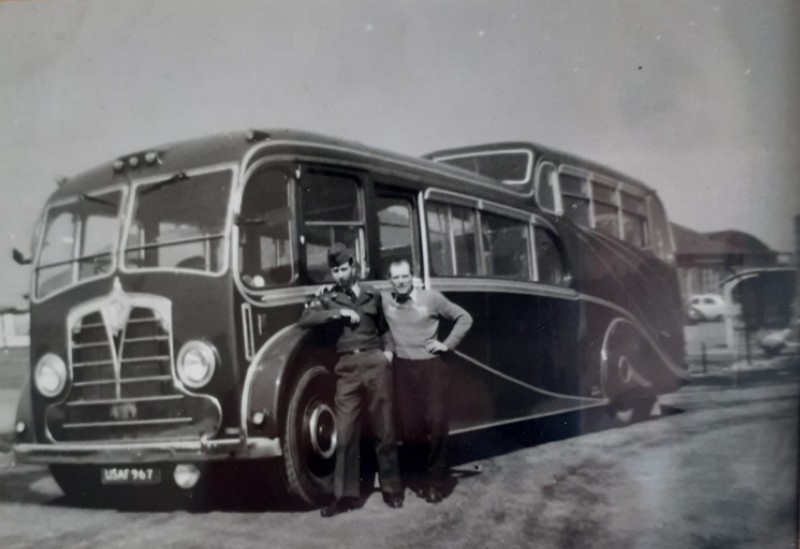
Emergency Mirror

Mark Richardson at the Terminal

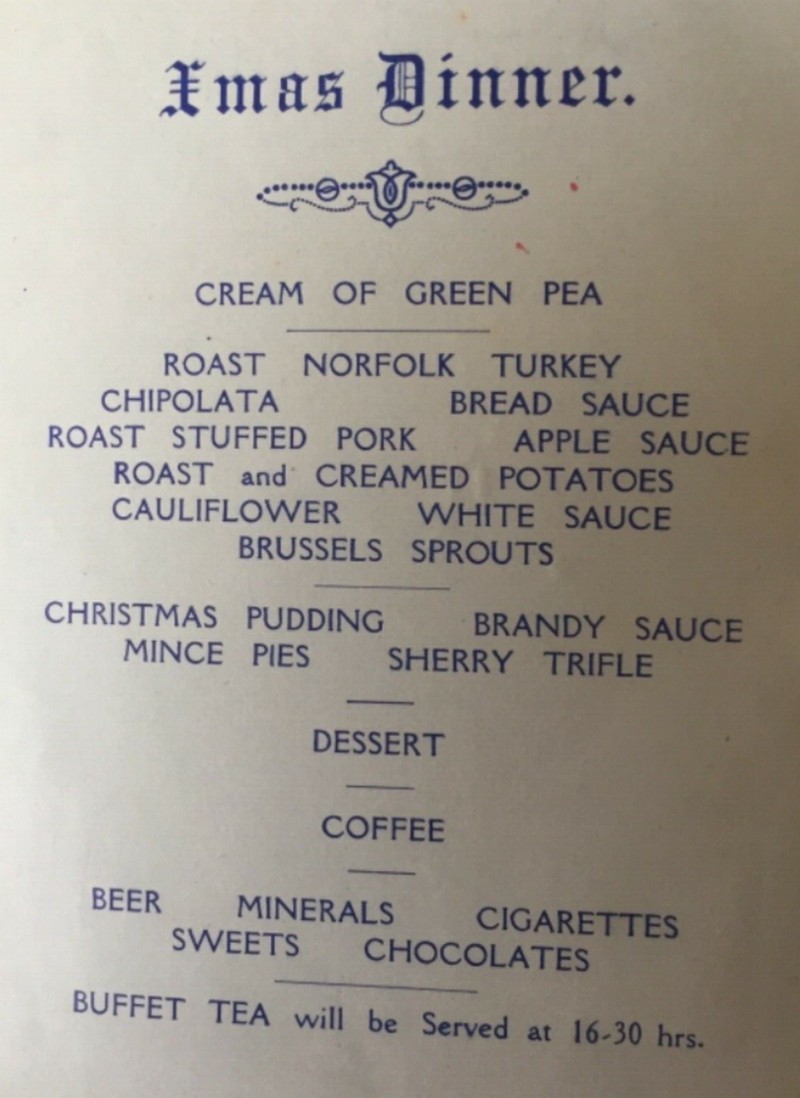
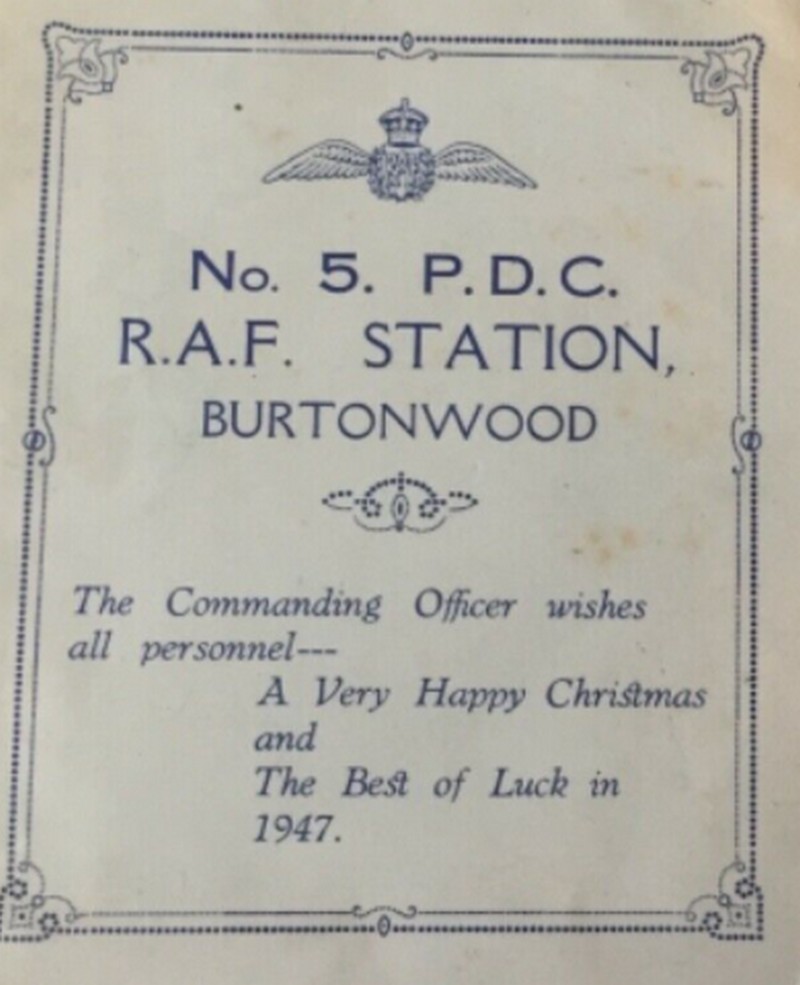
Non Commissioned Officers Club Xmas Menu 1950's

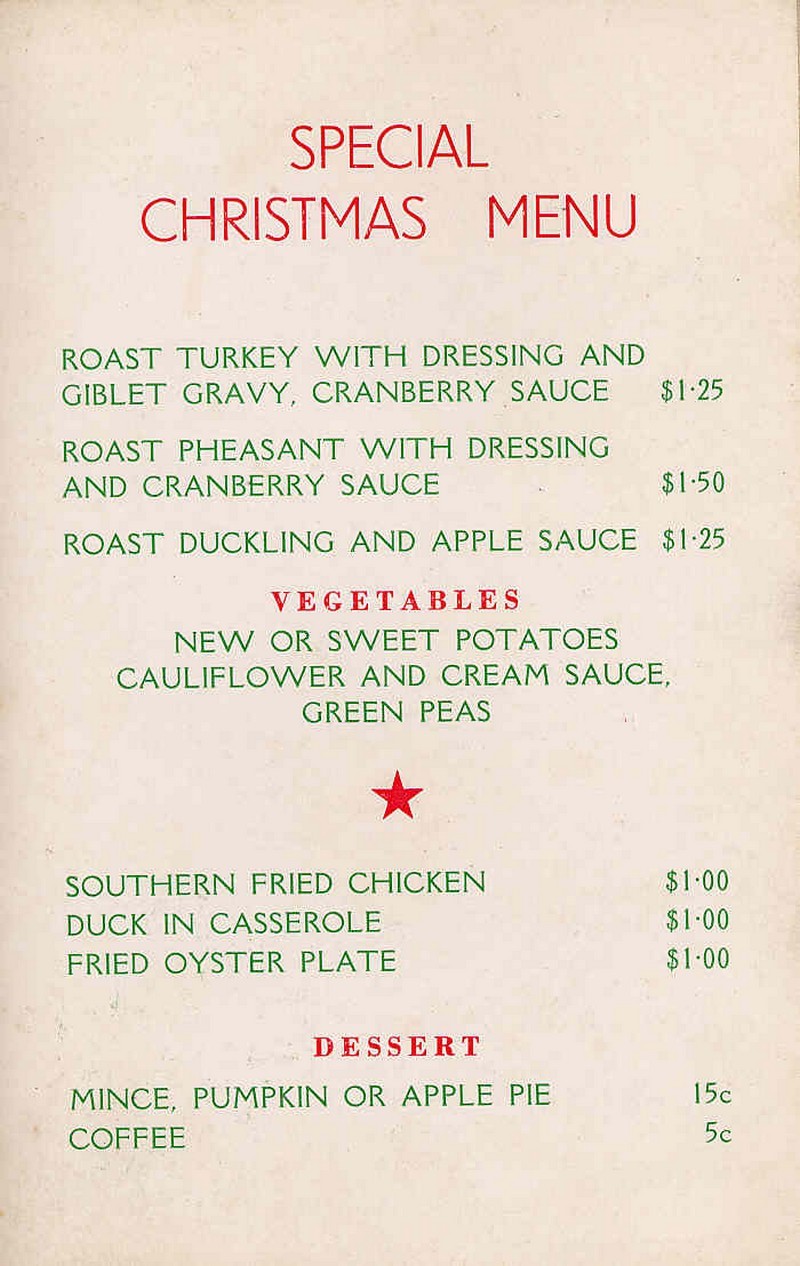
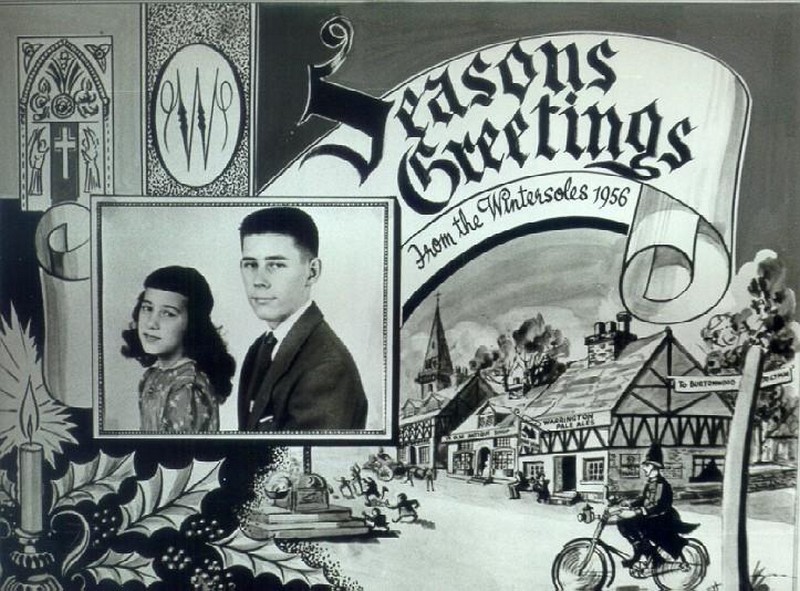
Family Xmas Card 1956
Louise Carey Rockey Graduation at Scripps College June 1942

First Lieutenant Louise Carey Rockey Evans. WAAC/WAC, Serial Number L903406, U.S.A., and England 1942- 1946 Louise Carey Rockey was born in Portland, Oregon, in November 1921. Her family had lived in Portland for three generations.
Her maternal grandfather, Judge Charles ...
Her maternal grandfather, Judge Charles H. Carey, was a noted lawyer, author, and historian; her paternal grandfather, Dr. Alpha Eugene Rockey, was an early Portland physician.
Carey wanted to join the Women’s Army Au...
Carey wanted to join the Women’s Army Auxiliary Corps (WAAC) but was unable to do so because she was not yet 21. After graduation from Scripps, to mark time until her November birthday, she attended the San Francisco School of Fine Arts. She signed up in San Francisco for the WAAC on 2 December 1942, receiving a call-up in January 1943 In England, Carey was assigned to Headquarters HQ 8th Air Force Bomber Command in Earls Colne, Essex (about 60 miles NE of London.
The Command flew primarily Martin B-26 M...
The Command flew primarily Martin B-26 Marauders (medium bombers) and A-20 light bombers. She had very little seniority and was an administrative officer there. Following D-Day, Carey was reassigned to the 8th Air Force at RAF Horsham St.
Faith near Norwich on England’s east coa...
Faith near Norwich on England’s east coast (about 120 miles northeast of London), the home of B-24 heavy bombers. There, she was attached to the 458th Combat Bombardment Group, 8th Air Force. As operations officers, Carey and three other WACs performed administrative work, such as keeping track of where the aircraft was.
Carey was on duty in the operations offi...
Carey was on duty in the operations office on 18 August 1944 when a pilot named Charles S. “Sam” Evans miraculously landed his B-24 with a broken wing on an emergency runway at RAF Woodbridge about 40 miles south of Horsham (CPT Evans was returning from a bomb run over France), while she was still stationed at Horsham, Carey met up with Sam Evans and they began seeing each other. and were later to get married. First Lieutenant Louise Carey Rockey, Mess Officer at RAF Burtonwood England 1944

In the fall of 1944, flying was reduced enough that four WACs were not needed in the operations office. Carey was transferred in October to RAF Burtonwood in Warrington, halfway between Manchester and Liverpool on the west coast, and about 170 air miles northwest of Norwich. At Burtonwood, she was promoted to First Lieutenant and appointed mess officer (one of her jobs was to censor all letters written by her staff).
She overheard an enlisted serviceman rem...
She overheard an enlisted serviceman remark to another, “Well, we got us a new mess officer and it’s a damn lady.” More than 3,500 meals were prepared and served every 24 hours Upon Carey’s transfer to Burtonwood, they visited as often as they could. Carey would take the train to London where she would meet Sam, or from London on to Horsham (Norwich) where they would meet. She would do the reverse to return to Burtonwood (Warrington).
Sam and a few of his crew members
Sam and a few of his crew members once tried to fly her from Horsham to Burtonwood in a B-24. The weather was so bad over the Burtonwood airfield that after circling it for about 20 minutes, he flew back to Horsham, meaning that Carey had to take trains, via London, back to her base at Burtonwood. Sam and Carey were married on 6 September 1946 in Portland.
They moved to Richmond, California, to f...
They moved to Richmond, California, to finish college. He obtained his bachelor’s degree in liberal arts at the University of California at Berkeley; she earned a Master of Fine Arts, also at Berkeley. Taking advantage of the GI Bill, they lived on stipends of $125 per month each.
In 1949 they settled, and have since res...
In 1949 they settled, and have since resided, in Portland. During his time in the USAAF, Sam Evans became the rank of Captain and carried out 30 combat Missions, and earned 2 Distinguished flying crosses. Charles Sam Evans passed away on 31 December 2016 Louise Carey Rockey Evans passed away on 6 October 2019 They left 4 Children, 6 Grandchildren, and 1 Great-Granddaughter.
Pilot Charles Sam Evans 1st on the left-...
Pilot Charles Sam Evans 1st on the left-back row in front of their Consolidated B-24 Liberator at Horsham St Faith England May 1944. Charles was Assigned to the 8th Air Force, 458th Bombardment Group Heavy, of the 753rd Squadron

USAAF (RAF) Burtonwood (Cheshire/Lancashire)
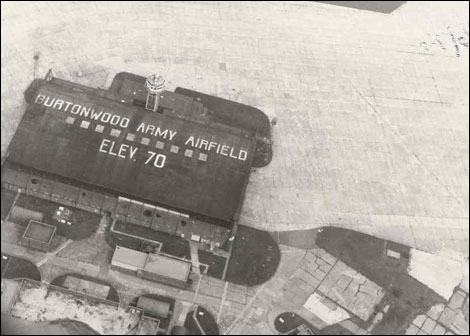
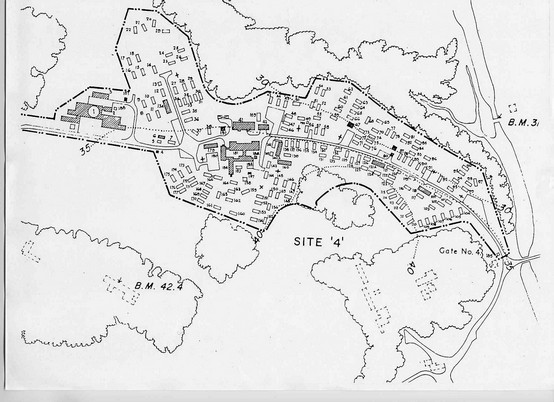
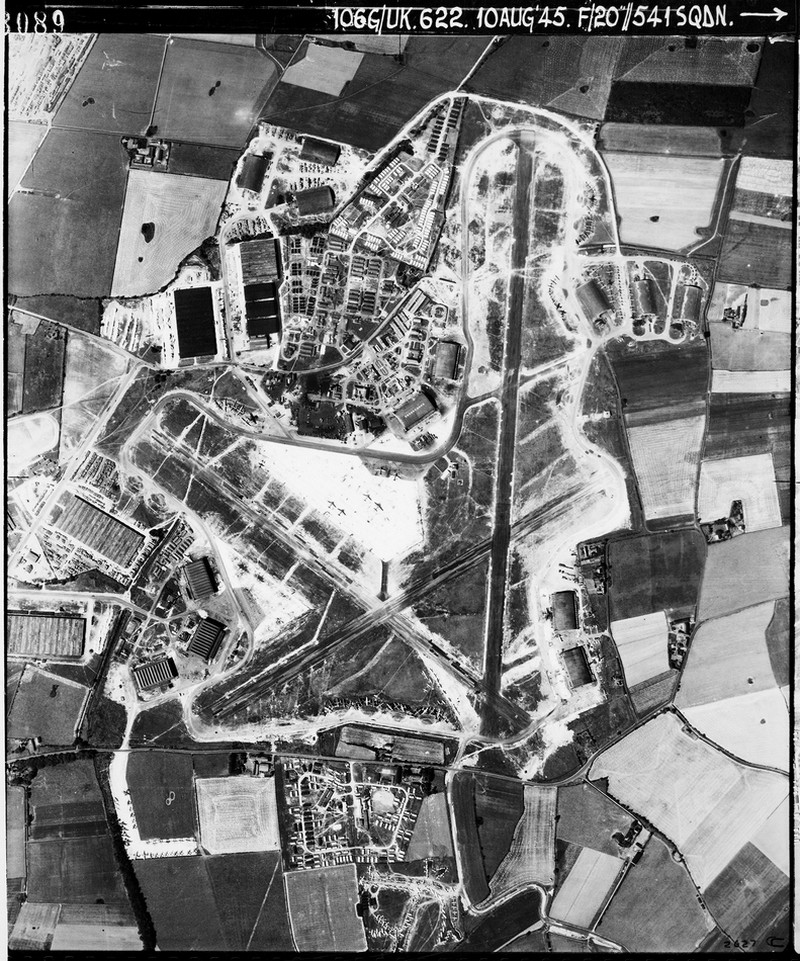
Aerial Image of USAAF Burtonwood on the 10th of August 1945 by 541 Squadron
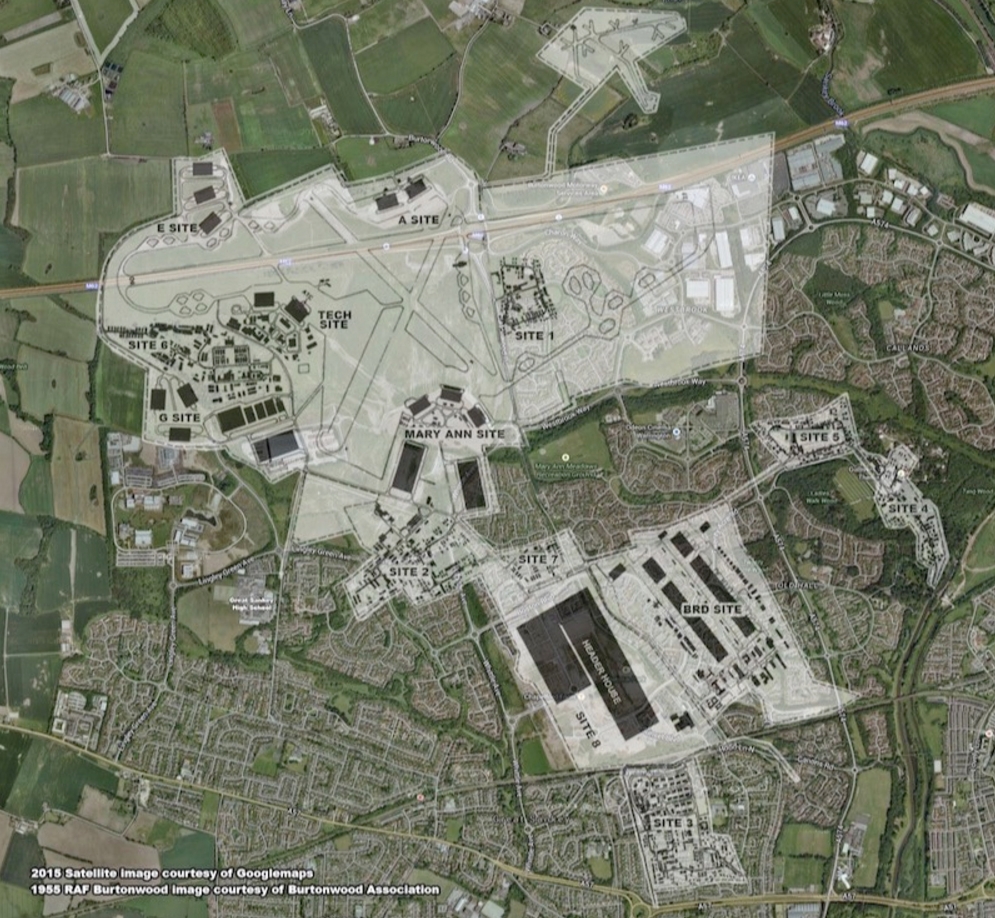
Overlay of 1955 USAF Burtonwood Airfield Plan On Top of 2015 Google Aerial View
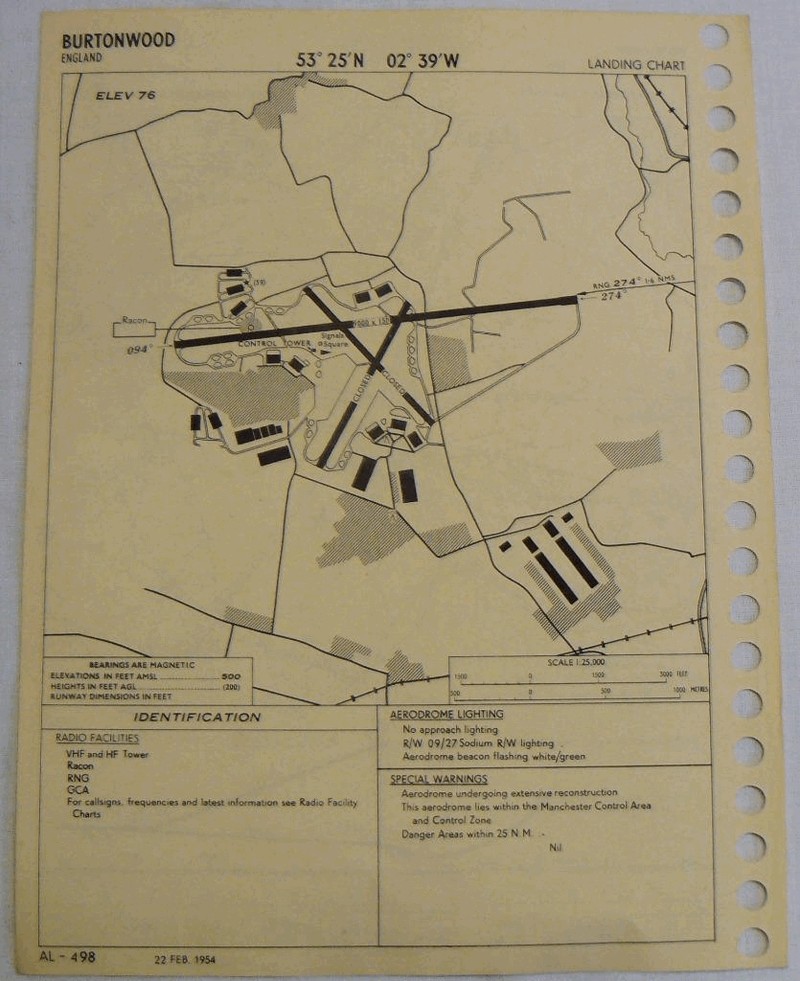
Landing Charts
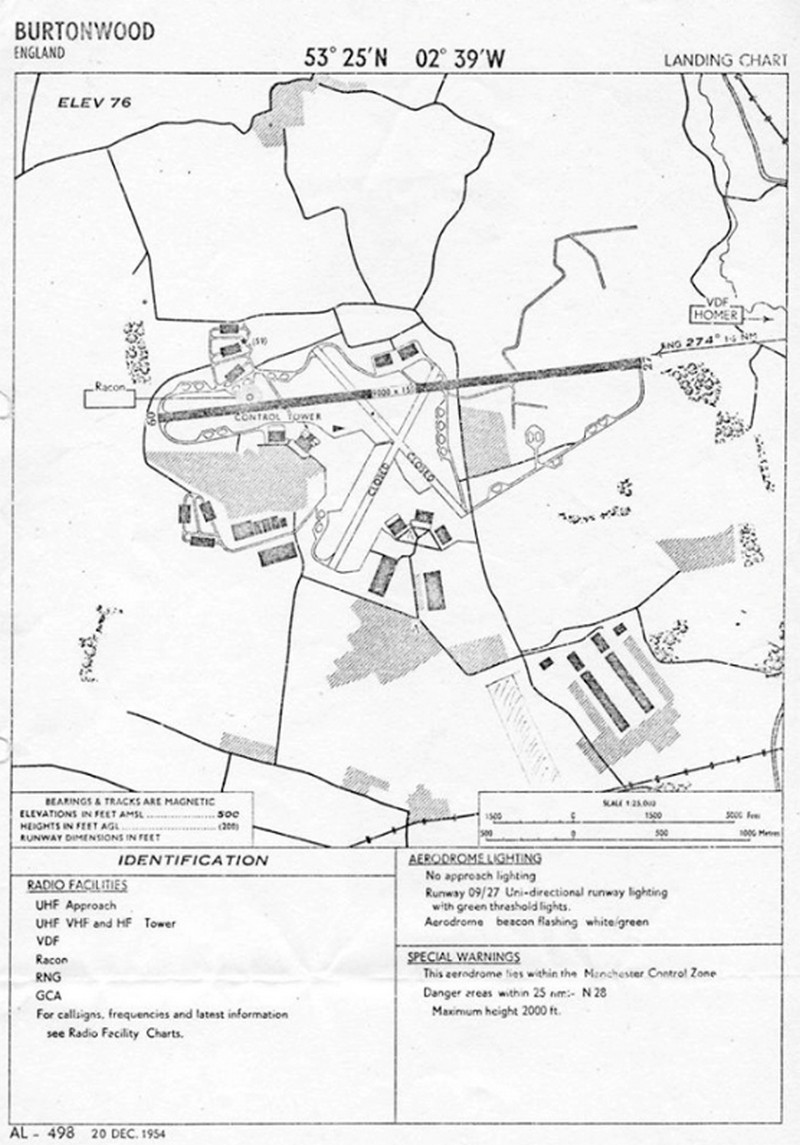
Landing Charts

Burtonwood Landing Chart - September 1951

Burtonwood Landing Chart - December 1954
Burtonwood Range Chart - September 1951
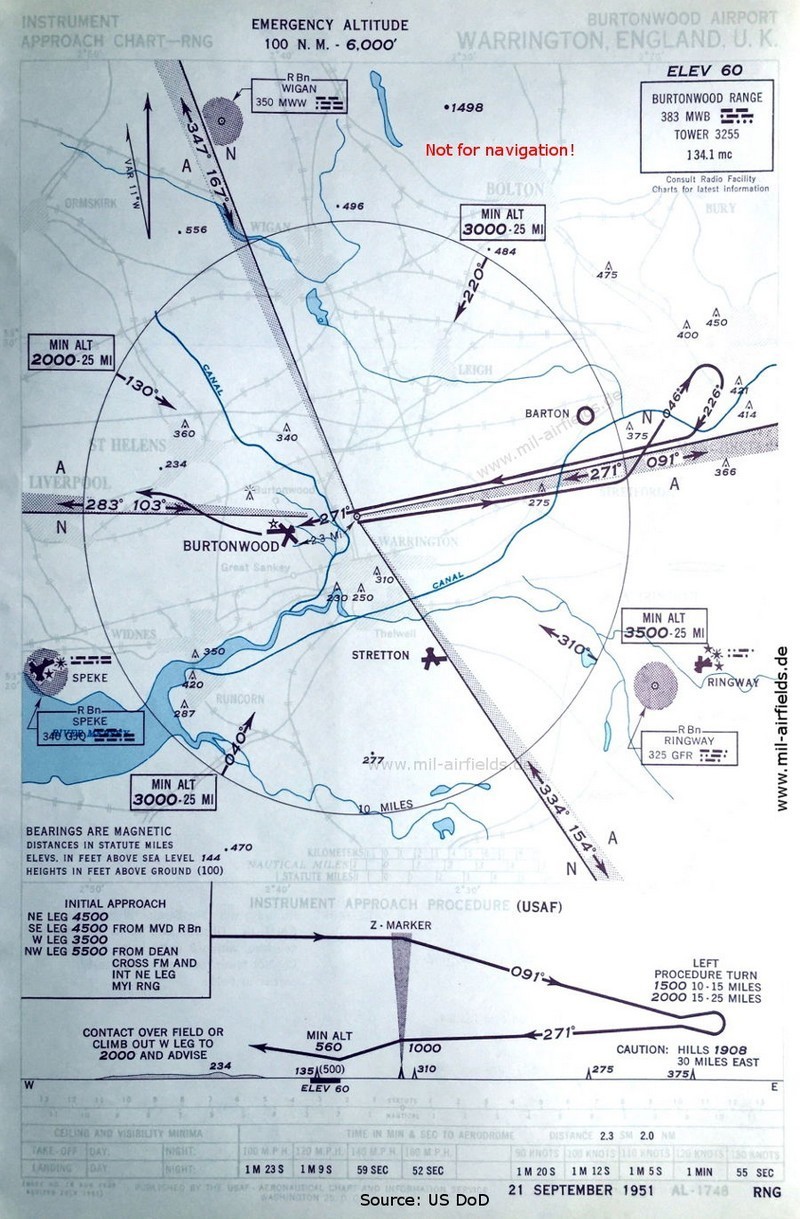
There are different approach charts for each of the runways at Burtonwood The chart shown here is for runway 27 which was the most used due to the prevailing wind. The chart shows to arrive overhead on a heading of 275 degrees, with the height dictated in the chart to the bottom left it shows the Procedure to fly east on 275 degrees for ten miles, then initiate a rate of one turn to the left onto 046 Degrees then a 180 turn onto 226 degrees. Then turn right onto 271 degrees, descending to be at 1,000 feet above the overhead marker radio beam pointing upwards and also looking ahead to land.
If the ground could not be seen at
If the ground could not be seen at 560 feet the instruction is to climb and go around again. The 10-mile circle on the chart is only to judge the distance and is not indicating a zone. Note this chart is dated before runway 09/27 was extended to the East, and also no localizer beacon was installed at Burtonwood at this time period.
Target Dossier For Burtonwood Lancashire...
Target Dossier For Burtonwood Lancashire England German Luftwaffe target maps of RAF Burtonwood Warrington Lancashire England Date 1942 Image credits to the Imperial war museum for Non-Commercial use
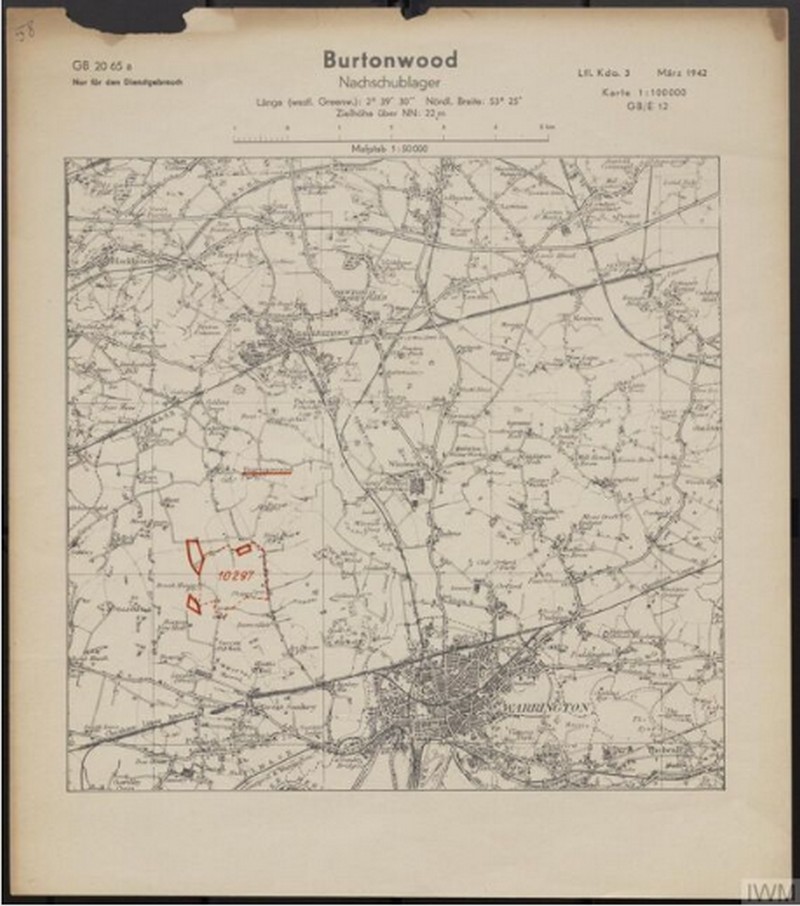
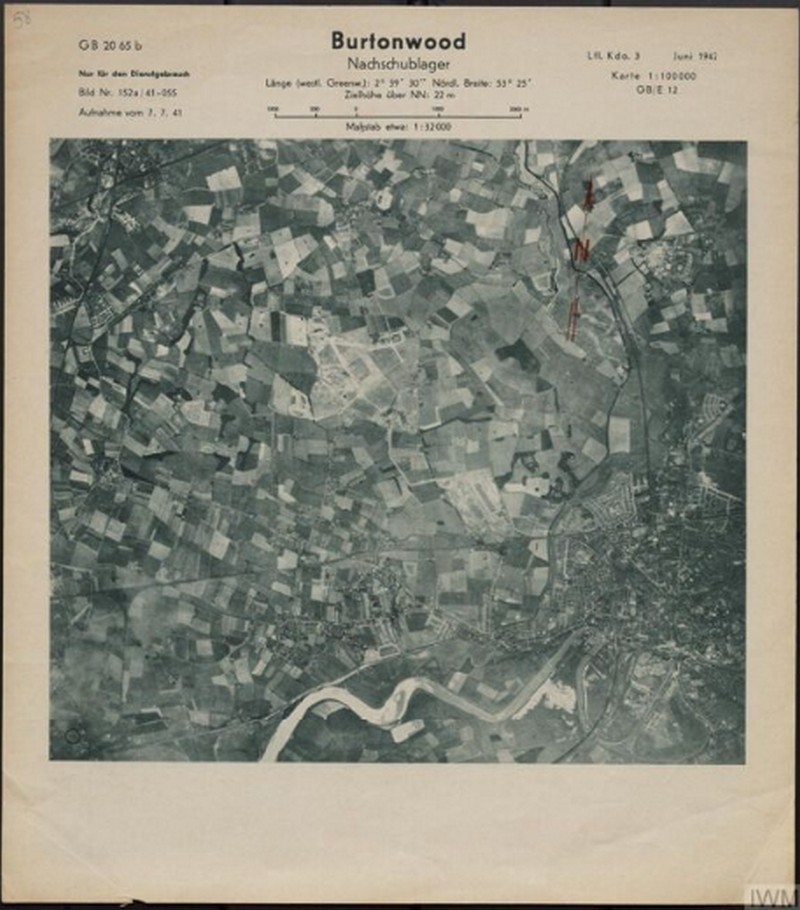
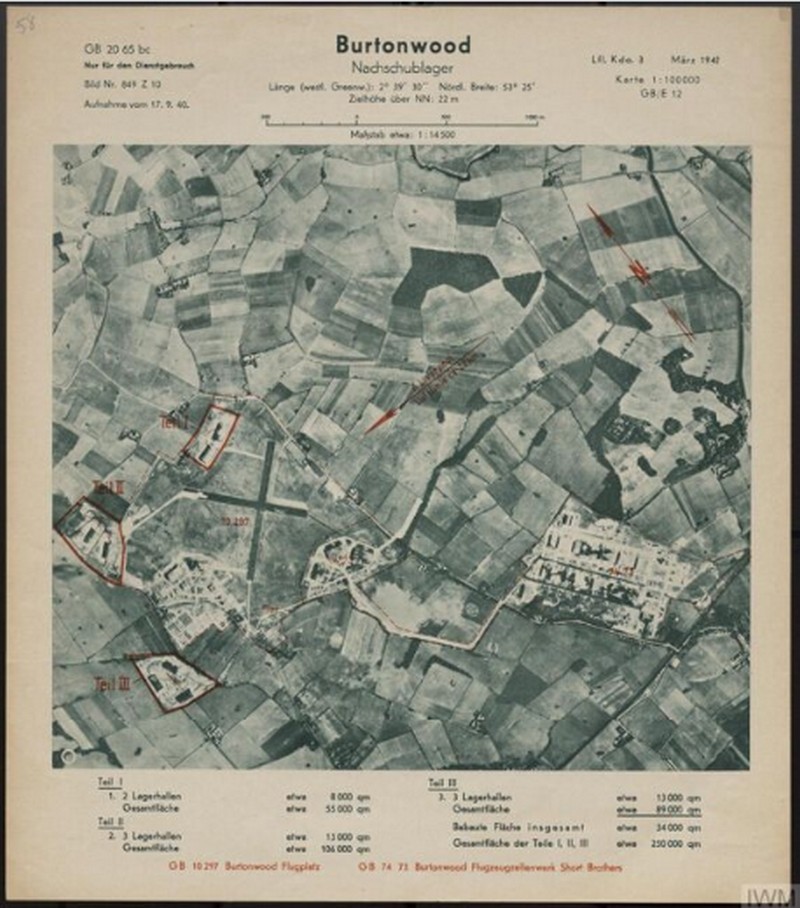
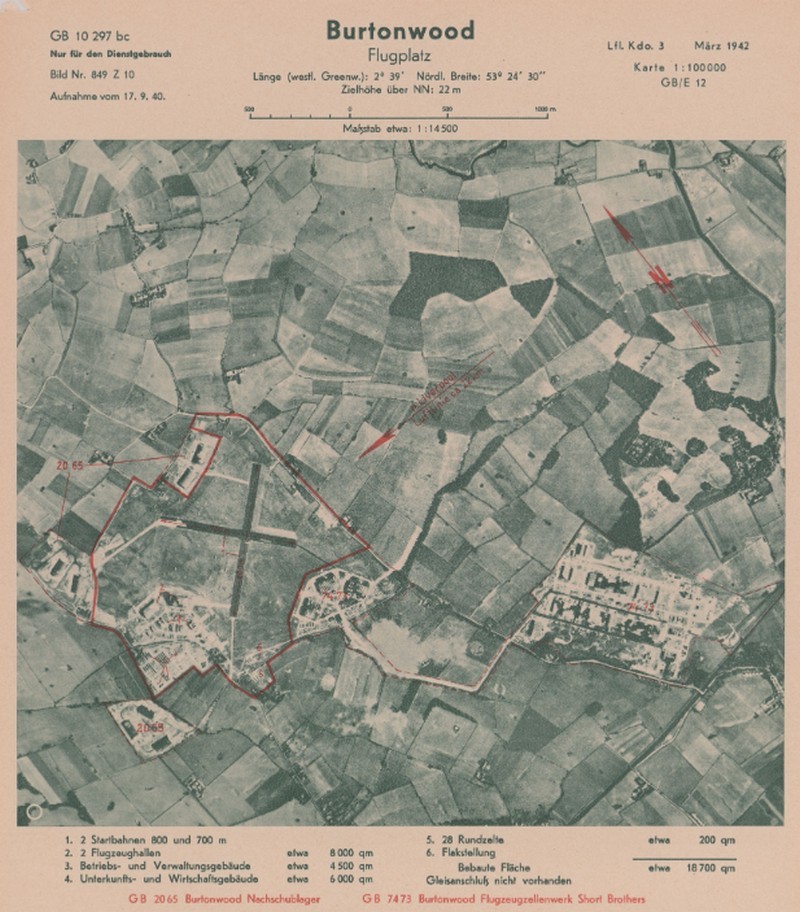

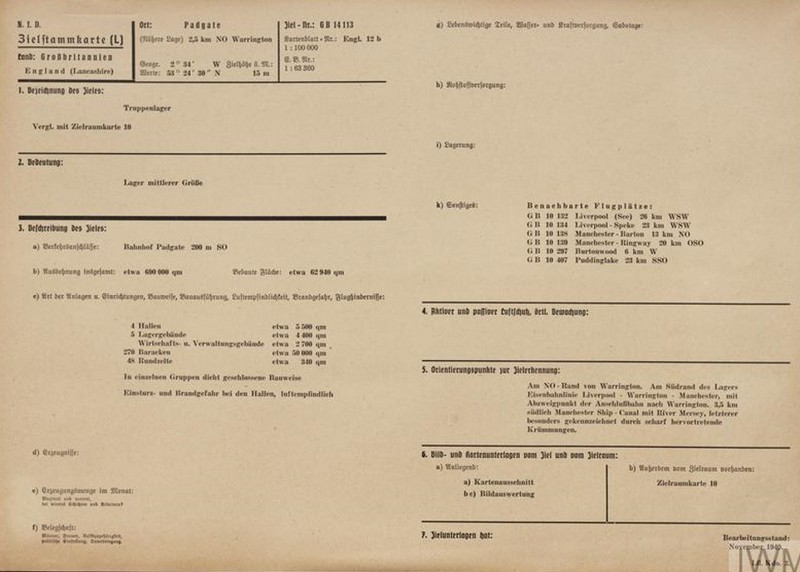

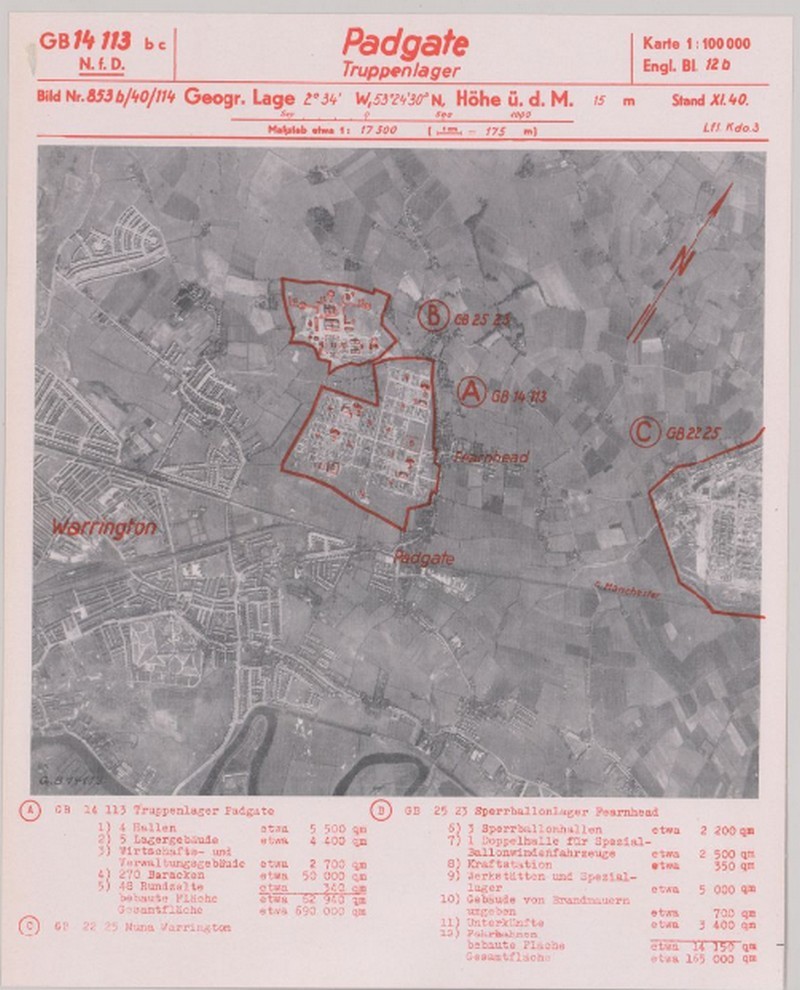
1st Basic Air Depot Burtonwood
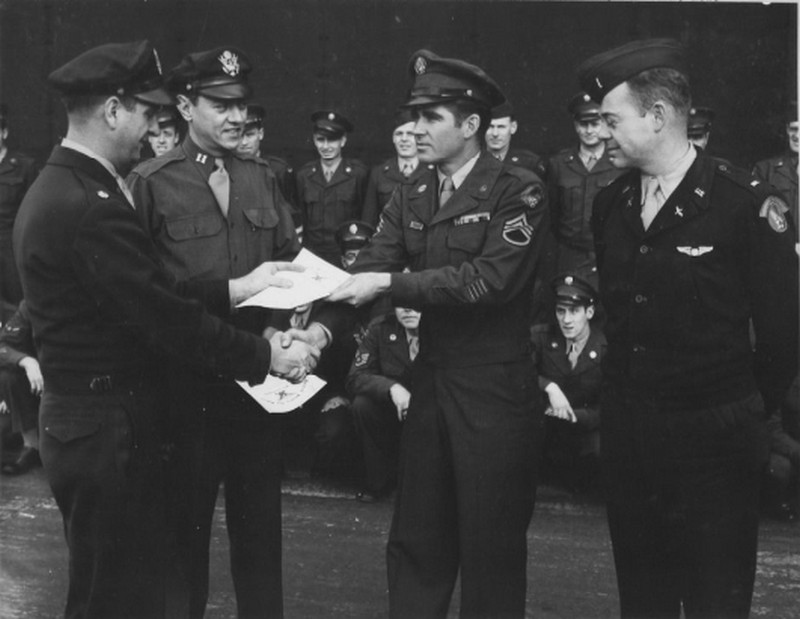
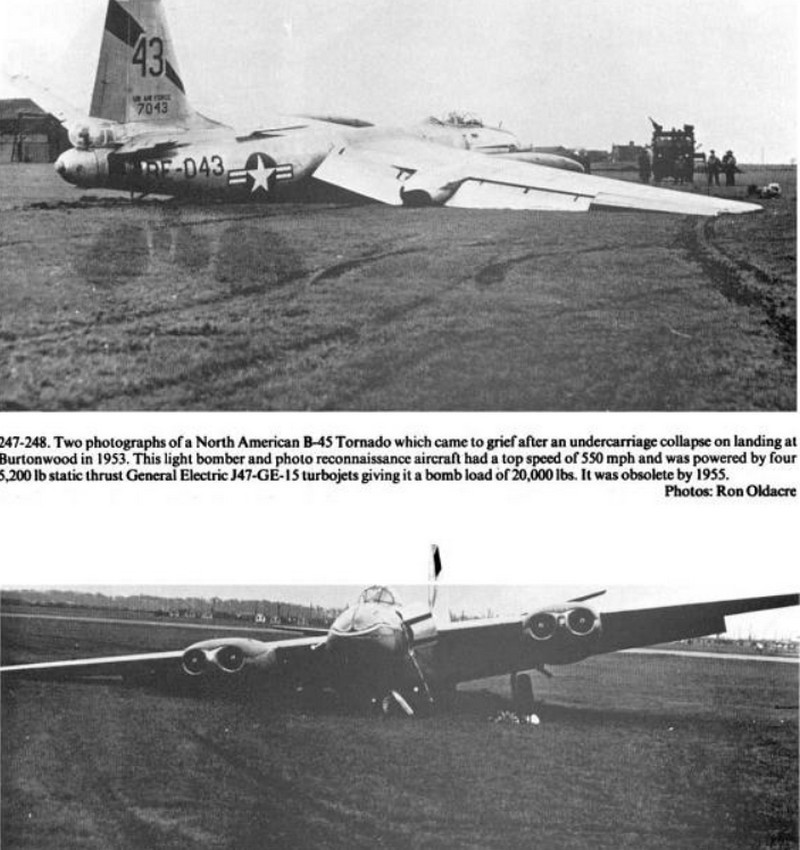
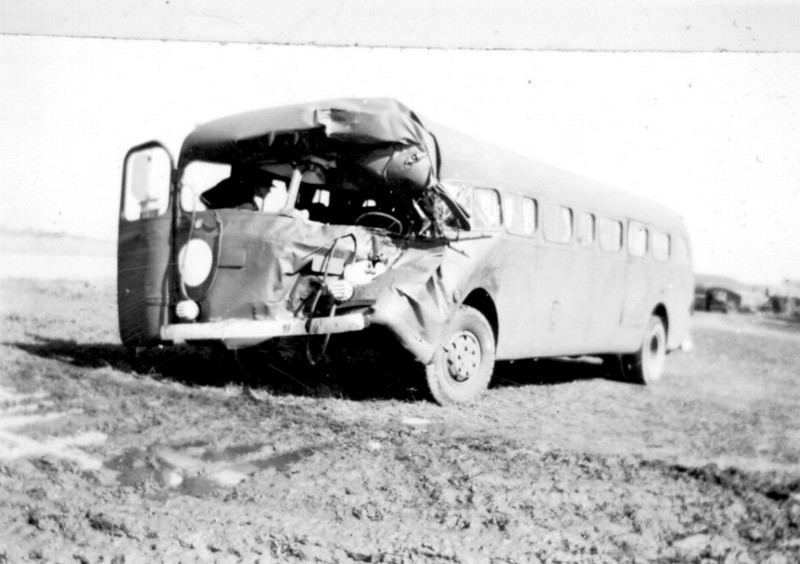
Burtonwood group photo Credit to Victor Davies

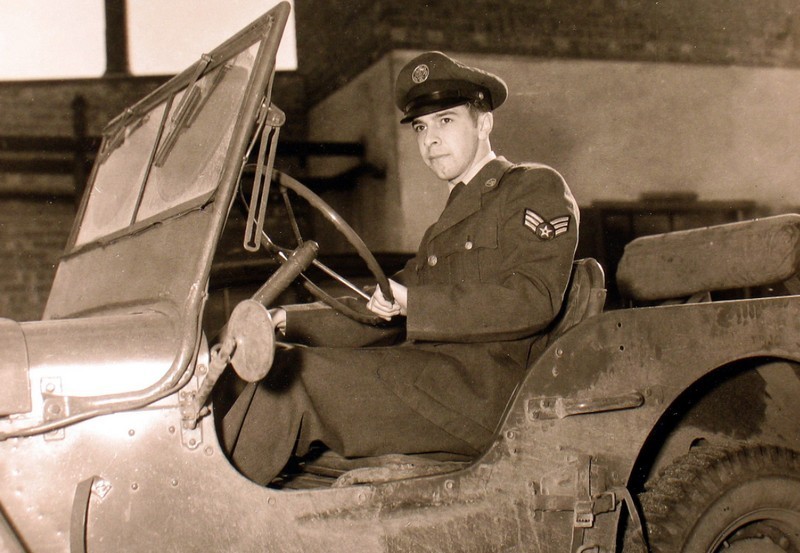


All our photos that we took in the RAF Burtonwood Airfield . For more information about RAF Burtonwood visit the RAF Burtonwood Archive on the ‘Airfield Findings’ page. Where is it?
RAF Burtonwood is just outside the town ...
RAF Burtonwood is just outside the town of Warrington. What is it? RAF Burtonwood was an expansion programme airfield.
It was constructed as an aircraft storag...
It was constructed as an aircraft storage and repair depot. What were the main sites? There were 5 main sites on the airfield : A site with 2 K type hangers, E site with 3 L type hangers, G site with 3 L type hangers, Tech site with 1 K type hanger and 1 J type, and Mary Anne site with 3 C type hangars.
There was also a site off the airfield
There was also a site off the airfield known as BRD site, it was constructed as a factory. What about the Runways? There was 3 runways at RAF Burtonwood : 04/22 was 4200 FT long, 09/27 was 5280 FT long, and 15/33 that was 4248 FT long What about the Sub sites?
There were also 7 sub sites for living
There were also 7 sub sites for living accommodation. Site 8 Header house was opened in 1954 as a warehouse. What about the Control towers?
There were 3 control towers : One was
There were 3 control towers : One was a fort type 207/36 and was made of concrete. Another one was a watch office for all commands. Its reference number is : 12779/41, it had small windows to 15371/41 The last one was a post war USAF tower.
Can you give us some Brief History about
Can you give us some Brief History about RAF Burtonwood? The airfield first opened on April 1940, with 37 maintenance unit moving in . The USAAF moved in on the 15th July 1942 and was called Base Air Depot 1 for repair and modification of aircraft.
The airfield returned to RAF use on June
The airfield returned to RAF use on June 1946. Controll was handed back to the USAF in September 1948. In 1951 the USAF expanded the base with extensions of runway 09 / 27 to 9000 FT and 250 FT wide , a new controll tower was constructed in 1953 on Tech Site.
What is RAF Butonwood like now? RAF Burt...
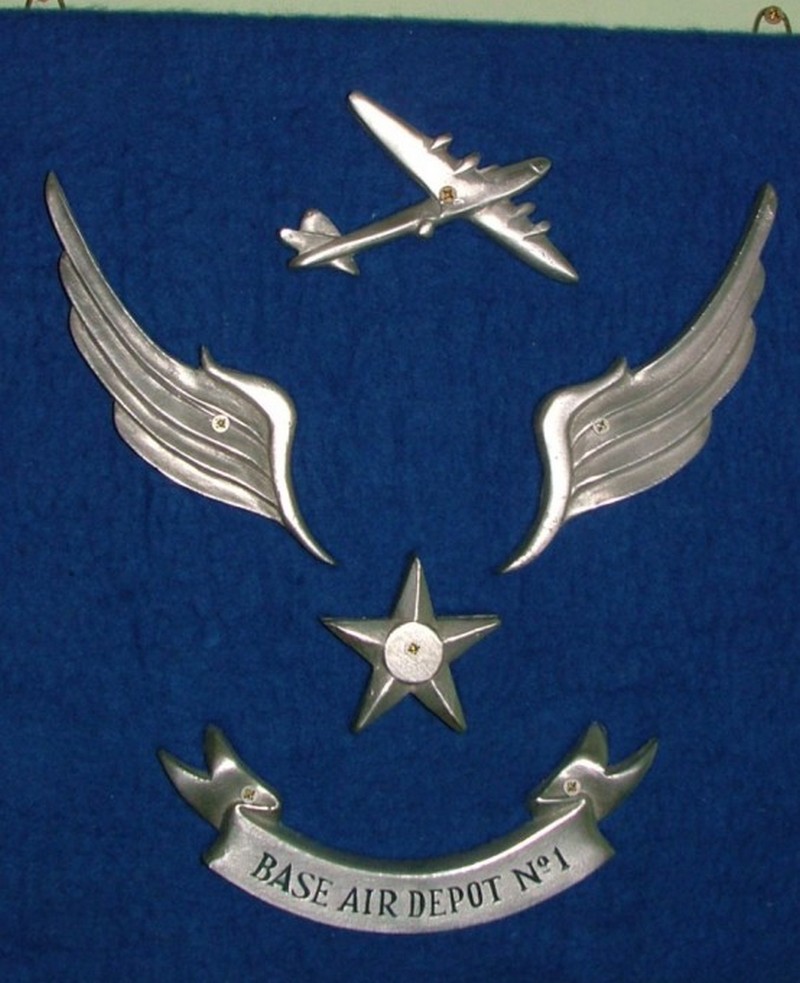
What is RAF Butonwood like now? RAF Burtonwood is now completely demolished apart from taxi ways between E and A sites and the odd bit of fencing. WWII USAAF BAD1 Burtonwood Trench Art From One of Our Members Early this week we received an email from one of our members and he told us about an aluminium sign that he says was made from WWII aircraft alloy that he has in his possession.
So we asked him to send us a
So we asked him to send us a photo of the item and he has given us permission to publish it along with his message below. “Hello Sir , I’m Nigel , and I’ve just spent a good while perousing your great website. Very interesting . I write Sir ,because I have a nice item from the old Burtonwood Airfield.
It's a Sign basically or the raised elem...
It’s a Sign basically or the raised elements from said sign. It’s made from scrapped USAAF Aircraft Aluminium that much we know , it features a B-17 in semi profile the wings and star of the USAAF and banner logo with the legend “Base Air Depot No1” all as seperate parts and is roughly sand cast made locally on base the whole assembly is around 2-3 feet square . I have the parts mounted on a piece of felt covered MDF just for display now, but would love to know if You might know where abouts on the airfield it was originally?
We've had it a long time. And I'm
We’ve had it a long time. And I’m keen to know a little more about it if possible . I’d be glad to send photos if you’d be interested in seeing it .
Many thanks for Your Time Sir, and Very
Many thanks for Your Time Sir, and Very best regards Nigel."
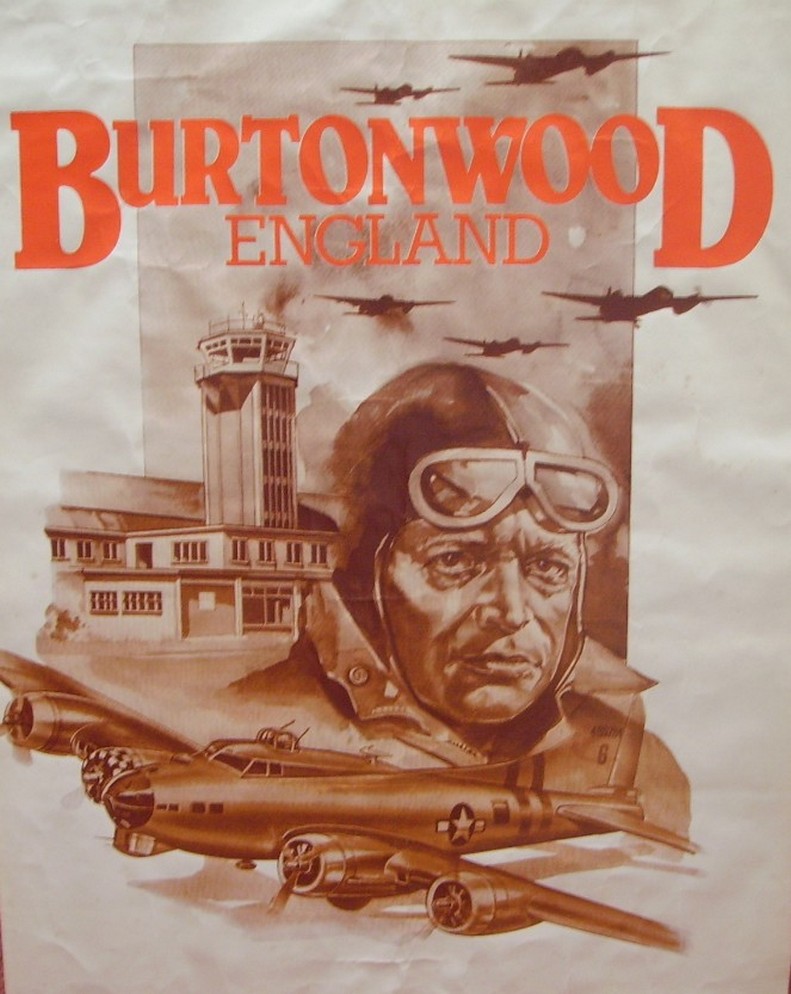
The administration department at Burtonwood


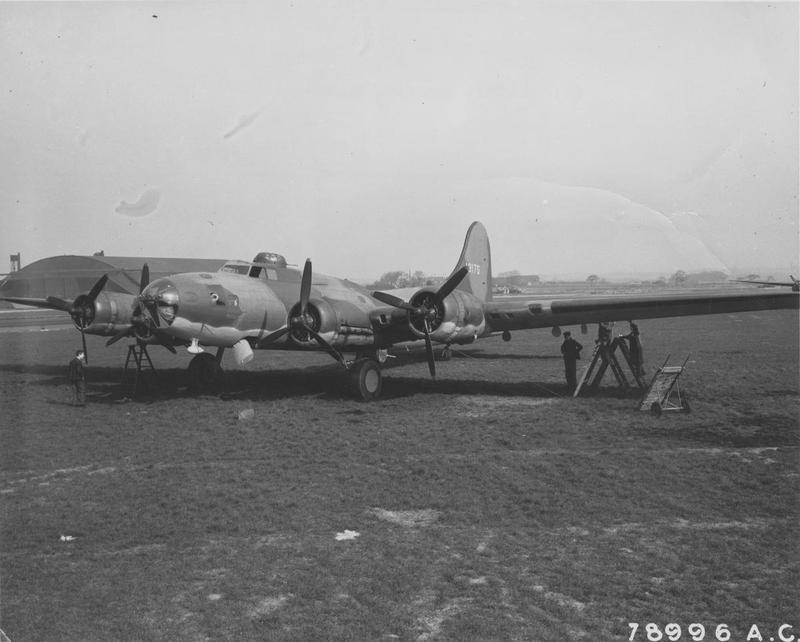
Boeing B17E - 41-9175 on the 16th of March 1943 with 'A' site in the background. Photo USAAF
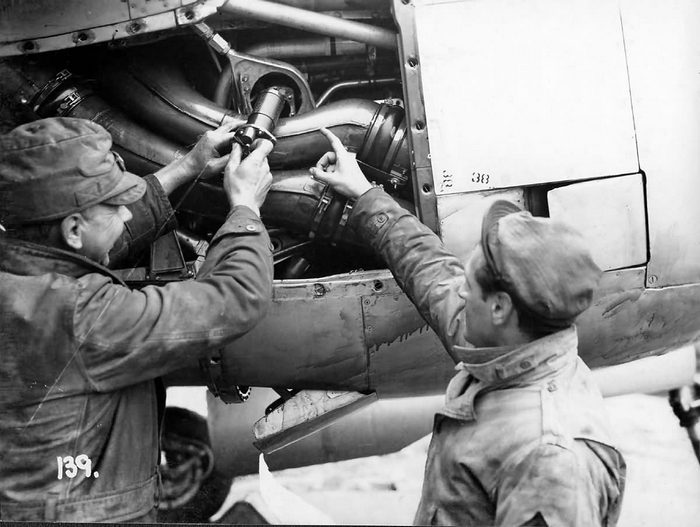
P38 Lockheed Lightning During Maintenance
P38 Lockheed Lightning During Maintenance
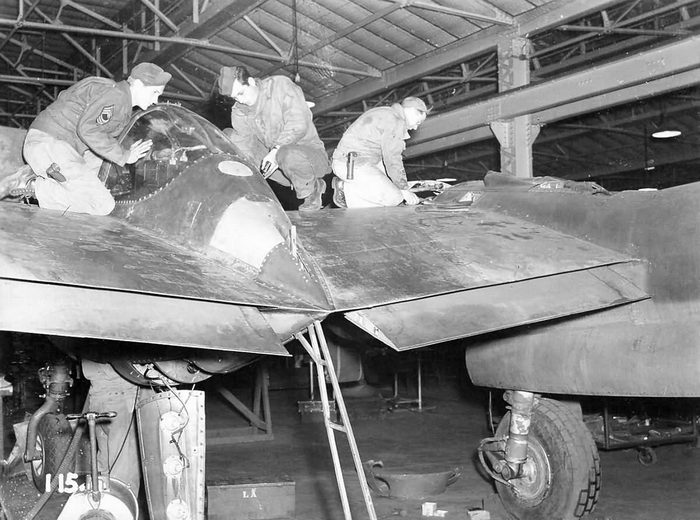
P-38 Lightning Maintenance Burtonwood England
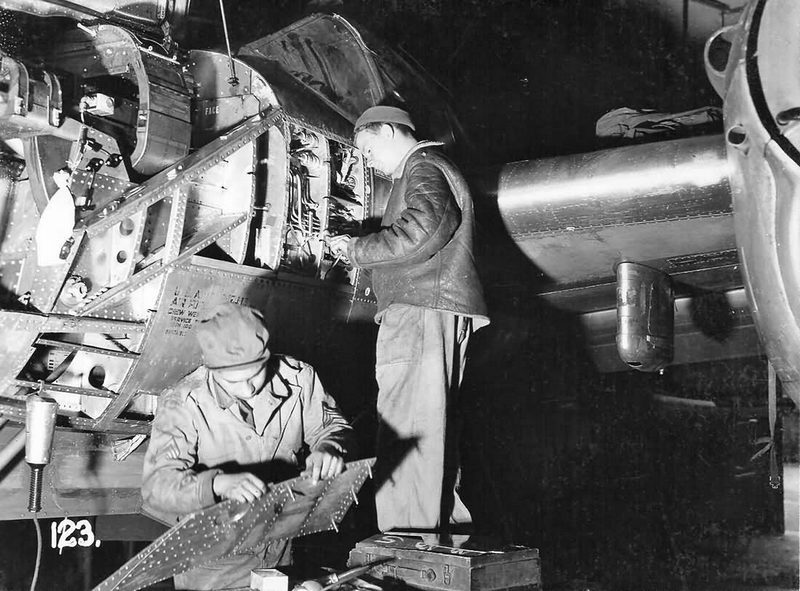
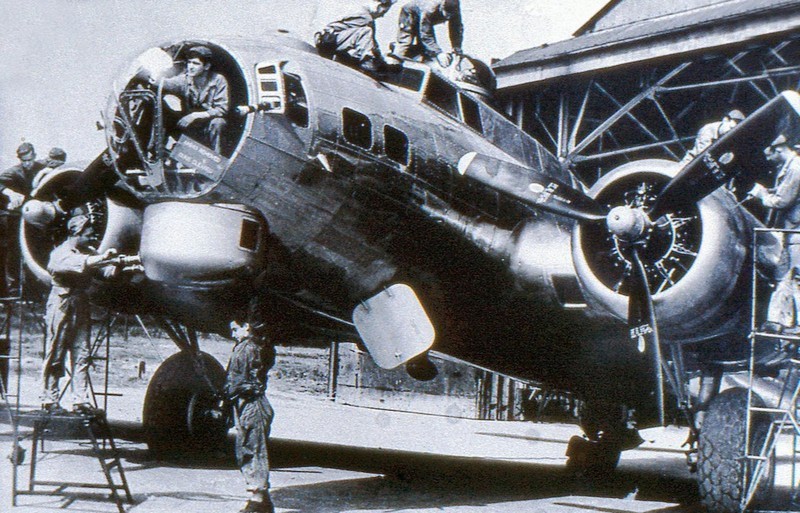
Boeing B-17 Flying Fortress undergoing Maintenance at Burtonwood during world war II
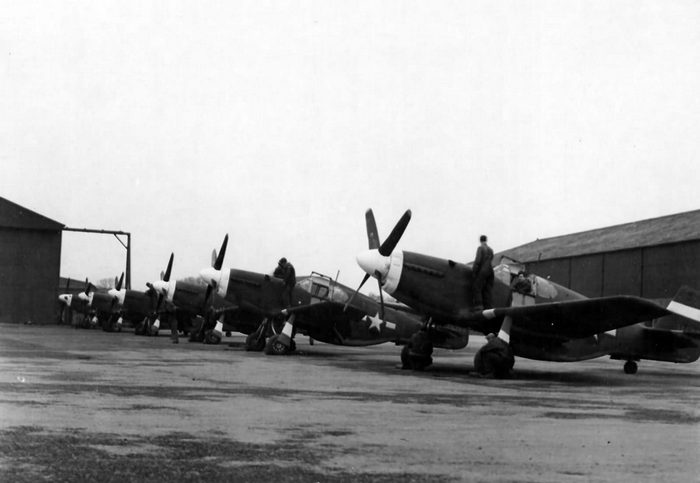
P-51 Mustangs Lancashire England 25th of February 1944
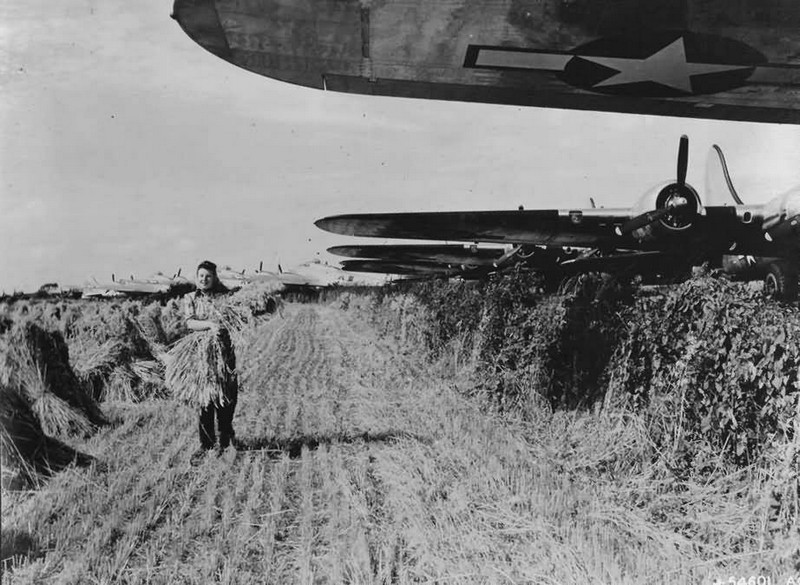
B17's on Dispersal



Glen Miller Photos Credit Jerry Migoski

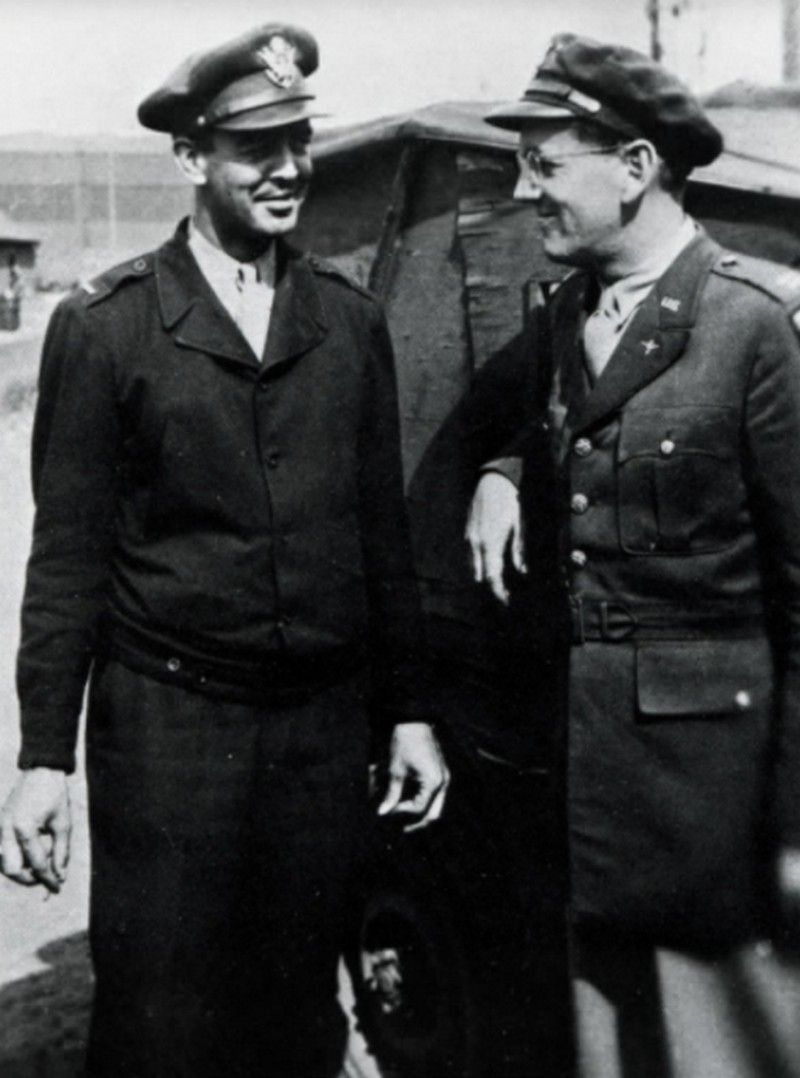
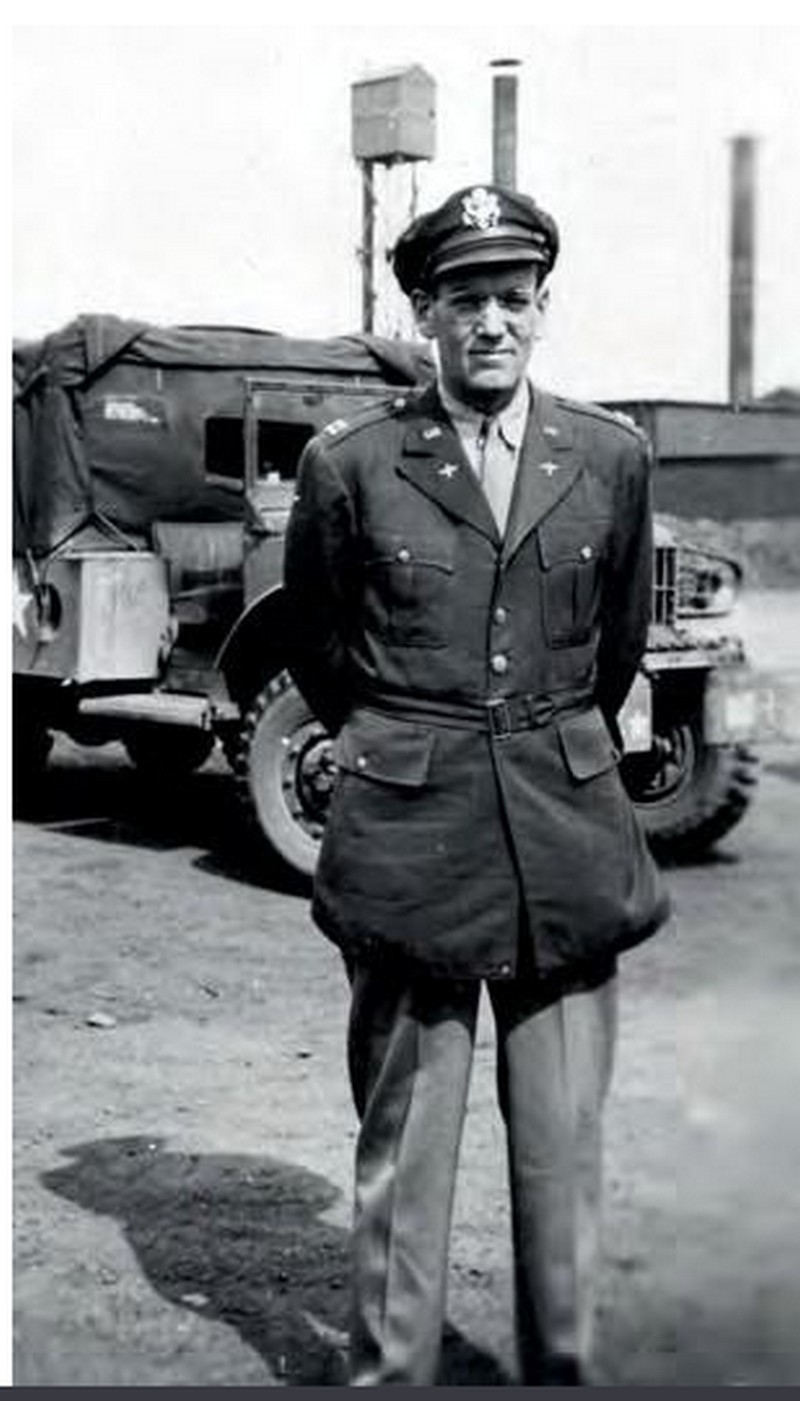
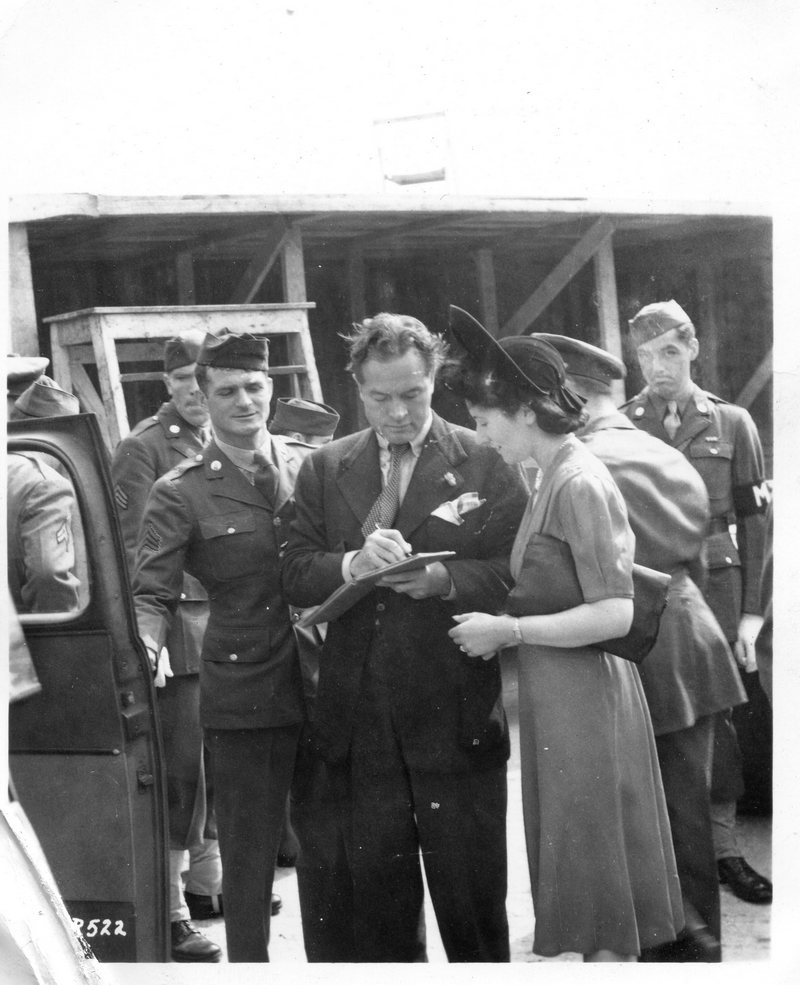
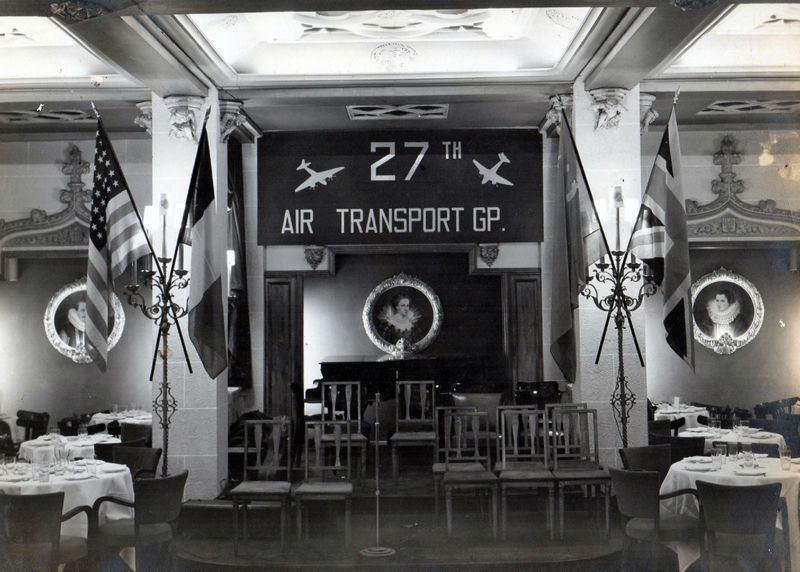
The Dining Room of the USAAF 27th Air Transport Group 8th Air Force Service Command.
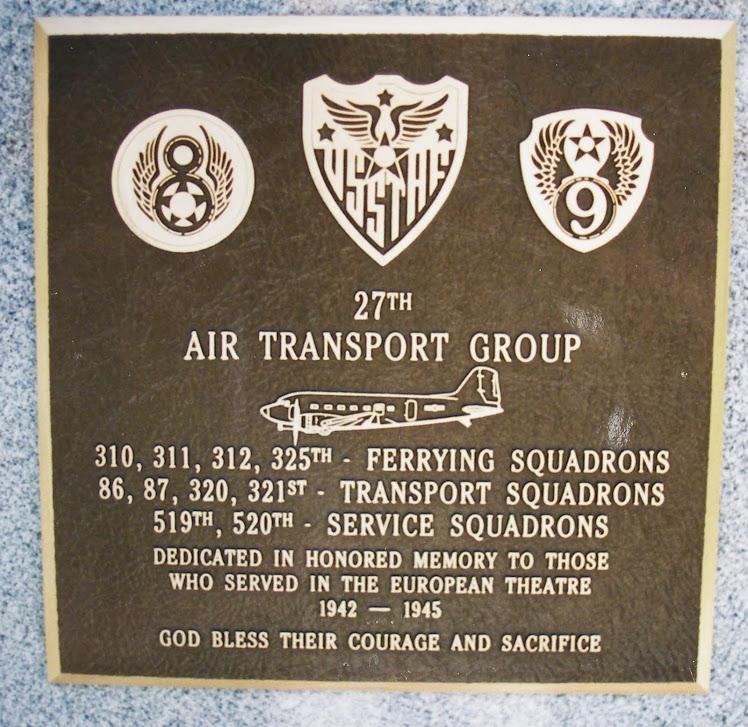
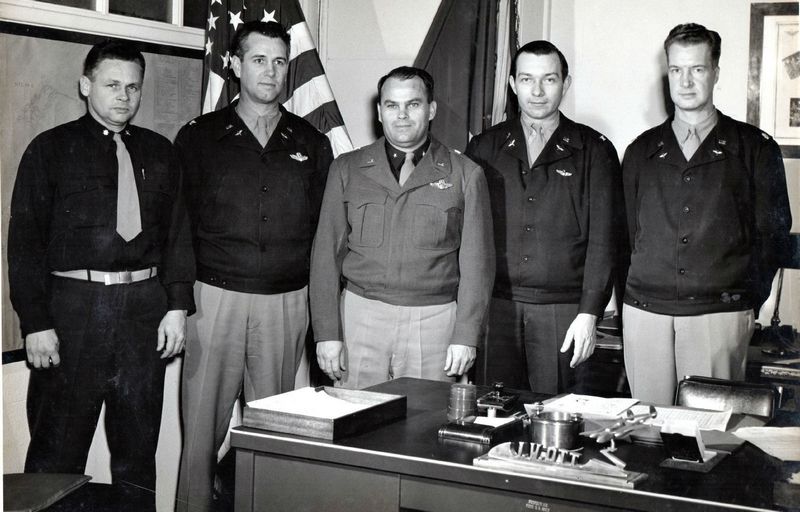
We received the following message/update from one of our readers ‘Leullier Patrick’ regarding the photo above, “Hello Sir, The Person on the right of Brig Gen Isaac ‘Ike’ Ott( center ) of this picture Is Colonel Martin Ansel Bateman Commanding officer of the 302 Transport Wing. And to my Maternal Grandfather ( Robert J.Byron) how served under him as a Sgt 405 Clerk Typist in Grove GB, Paris France in the HQ HQ SQ of the 302 Transport Wing in 1 Rue de Tilsitt, and in Namur Belgium. So I suppose that my Maternal worked too in Burtonwood? but without any certitudes. You got a very interesting site.
Best regards from Normandy France. Leull...
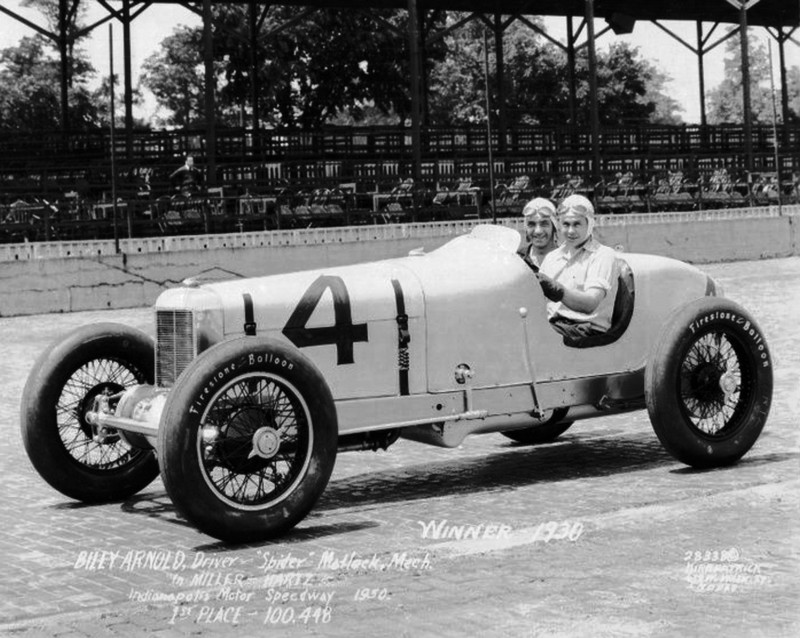
Best regards from Normandy France. Leullier Patrick” Thanks to Aldon Ferguson and Also Herbert Anastor (Feature Writer of Area Auto Racing News) for the following info: A David Loska has also been working on the infrastructure of BADA and BAD#1 at Burtonwood during World War II and came up with the narrative below about Bill Arnold, which reflects your own research. The Officer in the centre of the photo you post is Brig Gen Isaac ‘Ike’ Ott who had overall responsibility for ALL 8th Air Force supply and maintenance and this expanded to providing aircraft and equipment to the 9th Air Force which was the occupational USAAF element in Europe after the June 1944 invasion. He was based at Burtonwood. Ike’s cousin, Col ‘Dewey’ Ott, was Chief of Flight Test.
I knew him well and he always spoke
I knew him well and he always spoke in glowing terms of the achievements of both Ike and Billy in England during the War. Lt Col Billy Arnold, Chief of the Maintenance Division was uniquely experienced at leading both of the mainland depot operations having transferred from Warton to Burtonwood 15 Feb 1944. Arnold’s Maintenance Division Weekly Activity Reports to HQ BADA, never missed an opportunity to highlight base or intra-theatre production record-breaking metrics and output. Arnold’s unique origin and technical background made him unusually adept to the rigours and undaunting pace of depot operations.
Before joining the Army, a week after th...
Before joining the Army, a week after the attacks at Pearl Harbor, Arnold earned a PhD from Michigan Tech and was employed as an engineer for the Chrysler Corporation. Years earlier, Arnold took up car racing after studying for a baccalaureate in mechanical engineering at the University of Illinois. Between years 1930 and 1932, Arnold led almost every lap he raced at the Indianapolis 500.
In 1930 at age 24, Arnold became the
In 1930 at age 24, Arnold became the first to win the 2.5-mile Indianapolis Motor Speedway in under 5 hours and the first to finish at a greater than 100 mph average speed without relief help. He also led all but the first two laps of the around the race, 198 out of 200 or 99% of the total laps (back then it was brick-paved), a record and metric that has yet to be surpassed even to the day of this writing. In addition, he was also the American Automobile Association’s National Champion for 1930.


Test pilots give there final approval on the Boeing B-17 called JEZEBEL after the repair work is done. The men are left to right, W/O Marlyn P. Cory of Salt Lake City,Utah Captain.
W.W. Ott of Osyka, Mississippi.and first...
W.W. Ott of Osyka, Mississippi.and first Lieutenant.David C. Cook of New Albany, Miss.

“Feather Merchant” (RE – Q) B-24H-1-CF Liberator s/n 41-29178 329th Bomb Squadron, 93rd Bomb Group, 8th Air Force. Declared ‘War Weary’ on December 24, 1944. Pictured at the Warrington Burtonwood Air Depot with the three of theirtest pilots on October 30,1943.
From left to right: 1stLt. Fred Casoli, ...
From left to right: 1stLt. Fred Casoli, Capt. W.W.
Ott and 1stLt. Aaron Z. Bessant
Ott and 1stLt. Aaron Z. Bessant.
These men took up the planes after the
These men took up the planes after the Air Depot had repaired battle damage on them, a job that could be almost as dangerous as combat flying. “Feather Merchant” is military slang for a civilian.


United States Ground Crewmen learn to operate the hydraulic system of a Boeing B-17. Cpl, A.P. Cooke from Bastrop, Louisiana operates the Emergency brake, which is used if the regular system has been shot out.
While Cpl, F. W.Shankle from Charleston,...
While Cpl, F. W.Shankle from Charleston, Mississippi, watches the operation. on the 1st April 1943. Photo credit by Fold.


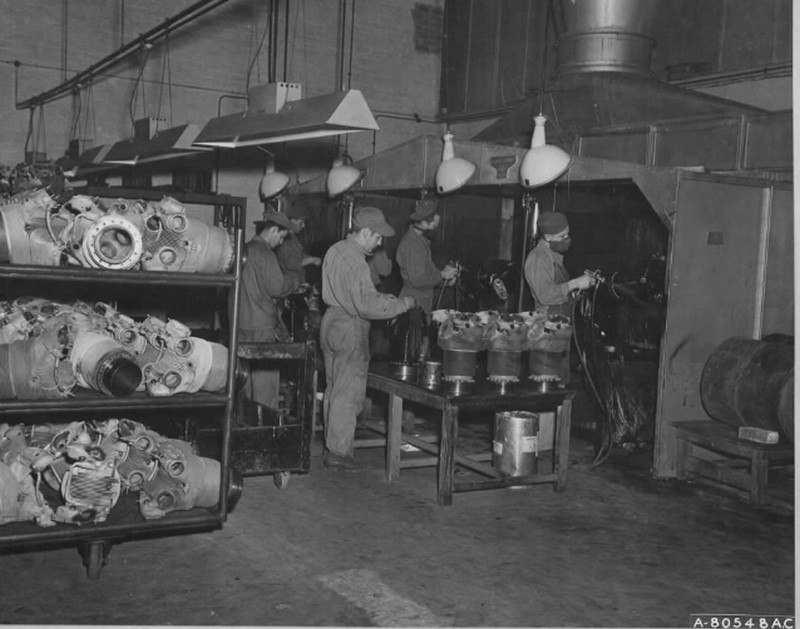
Cylinder spraying department 30th October 1943


Mechanics work on the main bearing of a Republic P-47 Thunderbolt 30th October 1943 Credit fold 3

Reconditioned B-17 Engine being lowered into a shipping box October 1943 Credit fold 3


Aircraft status maintenance board

Maintenance record board
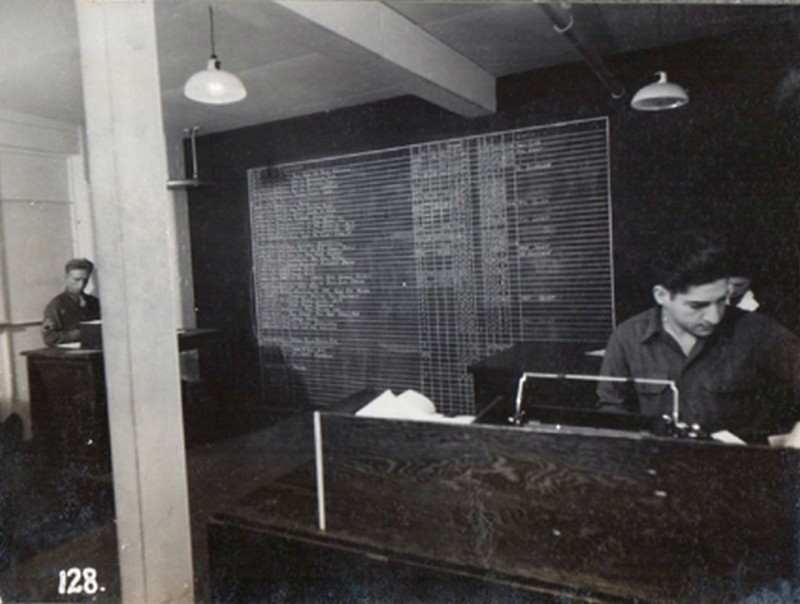
Maintenance record board

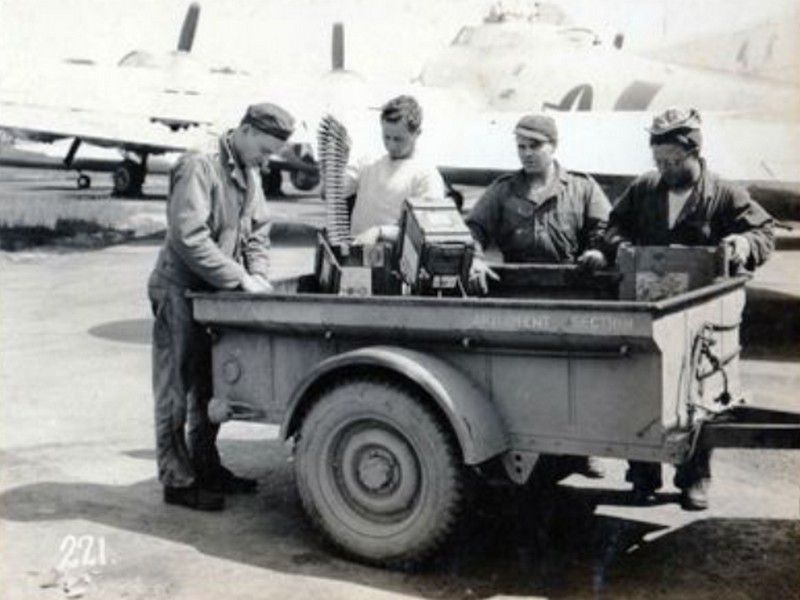
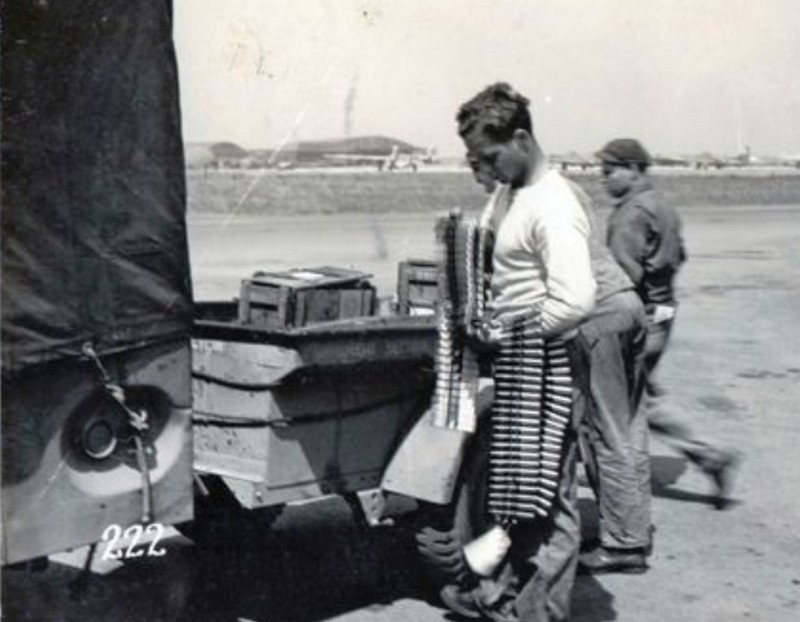
United States Army Air Force Armorers at work at Burtonwood during World War 2


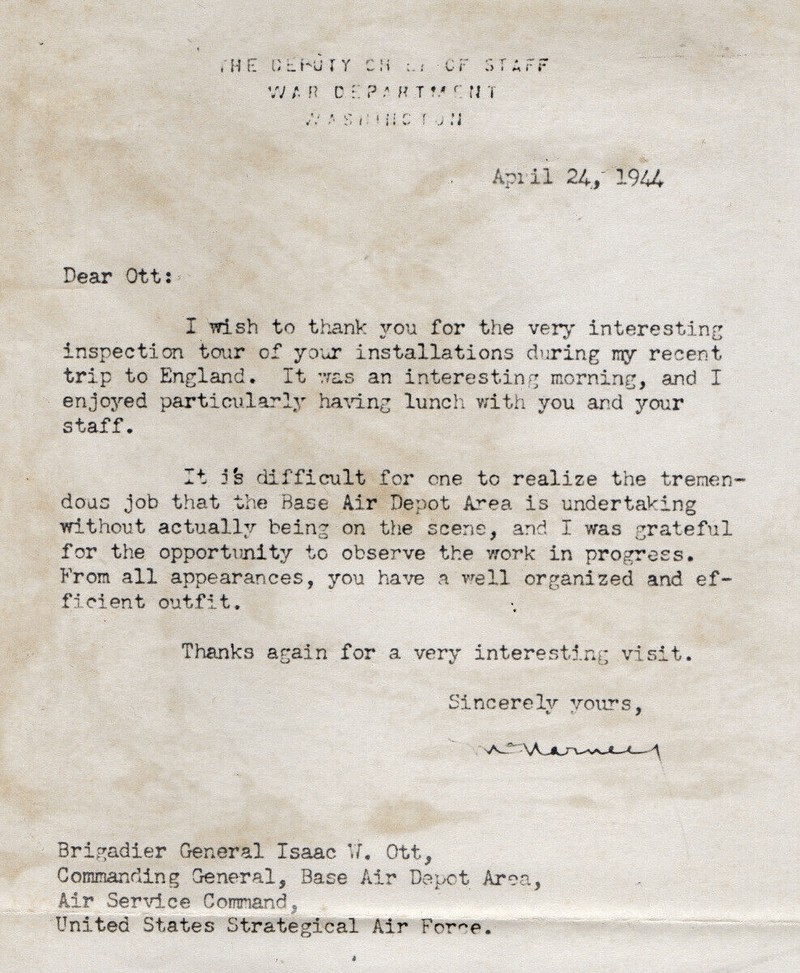
Letter From the Deputy Chief of Staff War Department to General Ott
From the Bangor Daily News, Bangor, by John Connel Jr managing editor, reporting at the USAAF Air depot station 590 Burtonwood Lancashire England 12th of August 1944 The greatest air depot in the world sounds like a lot of air depot, doesn’t it? well, that’s just what it is and there isn’t the slightest chance of exaggeration, criticism or fear of contradiction when one speaks this way of the place from which I have just returned. it is a heartening sight for an American to see the vast system of field hangars, shops and warehouses– the nerve centre of the Air service commands network throughout the European Theatre of operation–and to watch and hear the display of air striking power that we have already demonstrated the enemy will never be able to match. Over a month would be required to see it all, reams of paper would be used in attempting to tell the whole story of this stupendous overseas project and even then, to the average layman, it would be too fantastic to believe. The pity of it all, so little of what’s going on here can be told even now when our air power definitely has the enemy groggy.
Over 100,000 American soldiers have alre...
Over 100,000 American soldiers have already passed through this tremendous depot and many thousands of skilled workers– many of them completely trained since they entered the armed services will someday be returning to tell the story of the base air depot of the air service command. There are a large number of sub-depots scatted in places many miles away for witch this mighty depot is responsible for I saw planes, fresh from the factories of America on the runways, in the hangars and in the adjoining parking lots. Here at this depot, all the planes receive their final attention before taking off in search of the enemy or to do damage to installations of war; I was told that just prior to D-day there were thousands of more planes here. it doesn’t seem to be possible.
I never saw so many planes at any
I never saw so many planes at any one time or in one place ever. When a new plane arrives the protective sea covering is ripped off, wings and the fuselages are painted other skilled men go to work on modifications of the plane. Yes, it’s still a new plane, perhaps not six months out of the factory.
But, from every fighting theatre changes...
But, from every fighting theatre changes are continually being demanded in planes. There wouldn’t be time to have these made in America. it might disrupt the whole assembly Line there. Sometimes they are major jobs. but, every time they’re important. conditions peculiar to the area to which the plane is going dictate the needs.
After the planes have passed through ins...
After the planes have passed through inspection they are turned over to the test pilots for the next operation. P-38 Locheed Lightning Maintenance
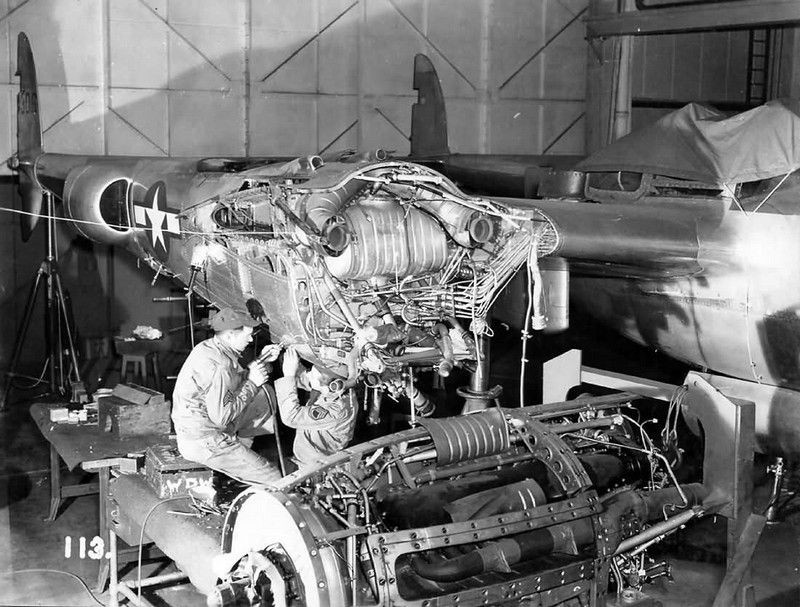
Bangor daily news, newspaper report August 13th 1944 part 2 Several thousand men carrying mess kits and marching in chow time formation three or four abreast-are on the way to dinner at close to midnight. that’s one more of the unusual sights you will see at the great air services command depot 1. The men at these bases work in two, 10-hour shifts for at least 20 hours every day the greatest mass production job that has ever been undertaken by American engineers grinds out new parts, repairs the worn out and damaged and does everything else necessary to keep our Air force supreme. At times when it is essential to do more than the regular day or nights work it is not unusual to find every man and officer in the depot command working from 16 to 20 hours at a stretch.
When figures are permissible and the his...
When figures are permissible and the history of this project is written [already done–Ed it will surpass anything within reach of the imagination of mankind. The men at this base work nights for one month and days the next, alternating. After writing yesterday’s article I tried to think of some way to impress upon Maine people the size of the main depot for air service command.
The huge gymnasium at the University of ...
The huge gymnasium at the University of Maine came to mind. If I recall correctly when this was built it was one of the three largest in the country. Well, one of about a dozen buildings at this base could still house a few Flying Fortresses after the University Gymnasium had been put in one end of the building.
Concrete aisles- about the width of some...
Concrete aisles- about the width of some of our streets and continuing on from the roads outside-run through the buildings from the ends and the sides. Others have tremendous doors which open to either side and permit any size of an aeroplane to be taxied in, to or three abreast if necessary. Yesterday we walked up and down the length of one building-over 1,200 feet long and nearly half as wide-and saw mass production at its best.
Every man has one job to do in
Every man has one job to do in this particular building. A huge motor enters at one end of the building for overhauling, it is taken down on an assembly line and when it reaches the middle of the building it has been completely disassembled. Every part is checked, repaired or replaced and then the motor moves along and each man has one new operation to complete.
It keeps moving along and when it reache...
It keeps moving along and when it reaches the other end of the building it is ready for packing and loading on to freight cars which are there waiting to take it to sub-depots in the European Theatre. Behind all this great setup here is Brigadier General Isaac W Ott’s magnificent leadership, the highly trained aircraft engineers he has gathered around him and the efforts of thousands of air service command mechanics and technicians assigned to the jobs. General Ott has risen from the ranks of Army flyers, he was an engineering officer, a test pilot and a group commander before he was given the job of organising this network of American air depots in the United Kingdom.
Chief of maintenance at the depot and in
Chief of maintenance at the depot and in charge of this end of work for the whole setup is Lieutenant Colonel William H Arnold-to those outside the military,” BILLY” Arnold Indianapolis speedway champion. Testimony of the success of Arnold’s work thus far lies in the fact that aircraft modification and repair records of every kind have been broken over and over again. In the few minutes that Col Arnold took from his busy job to accompany us around two of the main projects in his plant, we saw at least two more records that will be shattered again this month.
The results of the first 10 days of
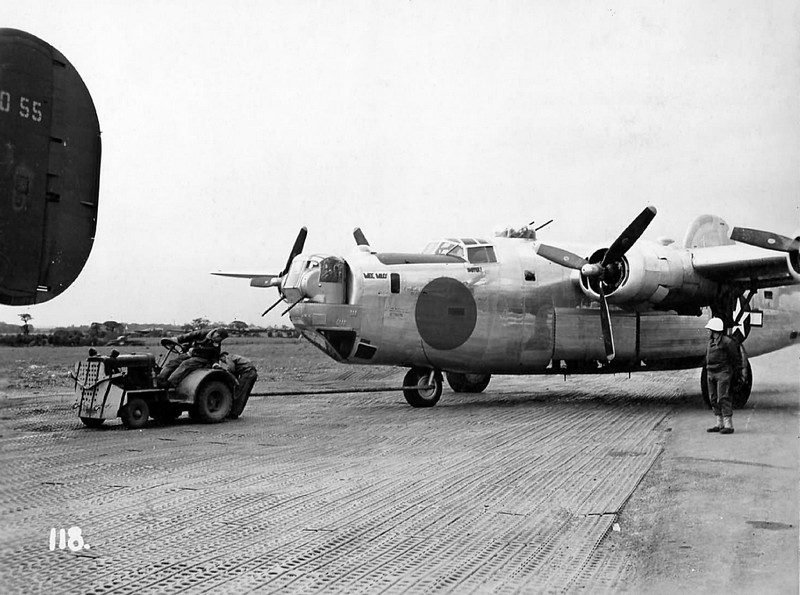
The results of the first 10 days of this month indicate that a new record – over 1,200 plane engines overhauled-will be chalked up for August. There are 14,292 parts in an aircraft engine, a minimum of 200 engines are kept on the line at all times to keep production at a normal level, is there any wonder that General Ott was the recipient of the Legion of merit award. Consolidated B-24 Liberator on P.S.P. (Pierced Steel Planking) Dispersal.
August 14 1944 Ships of every description from tiny observation planes to Thunderbolts, Fortresses and Liberators, fast fighters and huge transports climb and dive at this base which sees the heaviest air traffic in the world. We have been writing about this depot located in Northern England for several days because there isn’t any other place where more is being done to win this war right here. We just can’t seem to stop thinking and talking about the Air Force soldiers -men bent over mortars, damaged plane bodies and tail assemblies-who, without all the fanfare of shining buttons and knobby uniforms, keep the planes in the air.
We have always known that for every ''ho...
We have always known that for every ”hot” pilot there must be 21 of these unsung heroes on the ground working frantically to keep him hot but never until now have we seen their reasons. With Lieut D S Roper, assistant to Lt Col William Arnold, the maintenance chief, we have been privileged to see things during the past few days that must be kept a dark secret until the final chapter of this war is completed. There will be a day when all America will gasp at some of the things that have been done and are being done every day at this depot.
There is one ASC depot that is called
There is one ASC depot that is called the ”Willow run of the European theatre operations” we have seen it and it has its own GI operated railroad with three king size engines and all the necessary equipment. During our inspection, we saw everything that can be manufactured for an aeroplane either made or being made. Even rubber Lifebelts, life- rafts, parachutes, flares, water containers and some clothing needs are among the more than 200,000 items of aircraft supplied and handled through an aircraft base depot.
Some time ago this base put a number
Some time ago this base put a number of cracked up Fortresses back into the air in nine weeks. A few have in lately that were pretty damaged. We looked a little perplexed as the Colonel explained that ”those ships will be back on the line soon”.
Then we were reminded that the ''Dotty j...
Then we were reminded that the ”Dotty j”, which made an emergency landing some time ago was brought into this depot to be condemned. It had 389 bullet and flak holes in the fuselage and tail. It came into the depot on two engines and none of the crew expected it could be repaired.
It was repaired, turned over to a mobile
It was repaired, turned over to a mobile unit and put back into flying condition. Before I report on some more Maine boys I found at this depot I want to speak for one order that was received here just before D-Day that shows how this unit operates. Not more than a week before D-Day, the base received orders for 80,000 paint brushes and 37,000 gallons of black and white paint.
This meant some hustling around, there w...
This meant some hustling around, there was no time to contact America.Every source was checked, one British firm was able to furnish a good part of the order and then the balance was gathered up here, there and everywhere, the order was filled. As a result, every American airplane used in the invasion on D-Day had a new and easily distinguishable black and white marking on the belly and wings of the aircraft. This was to aid our own troops in identification.
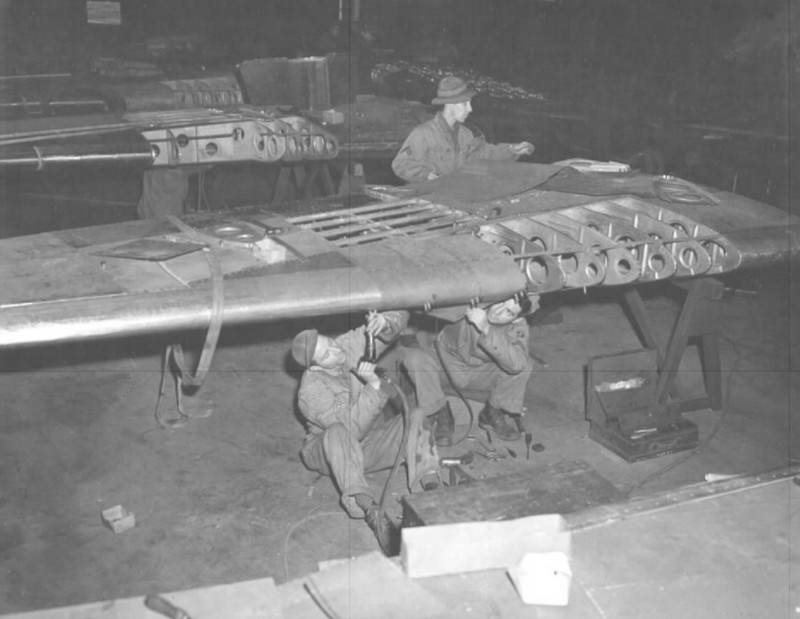
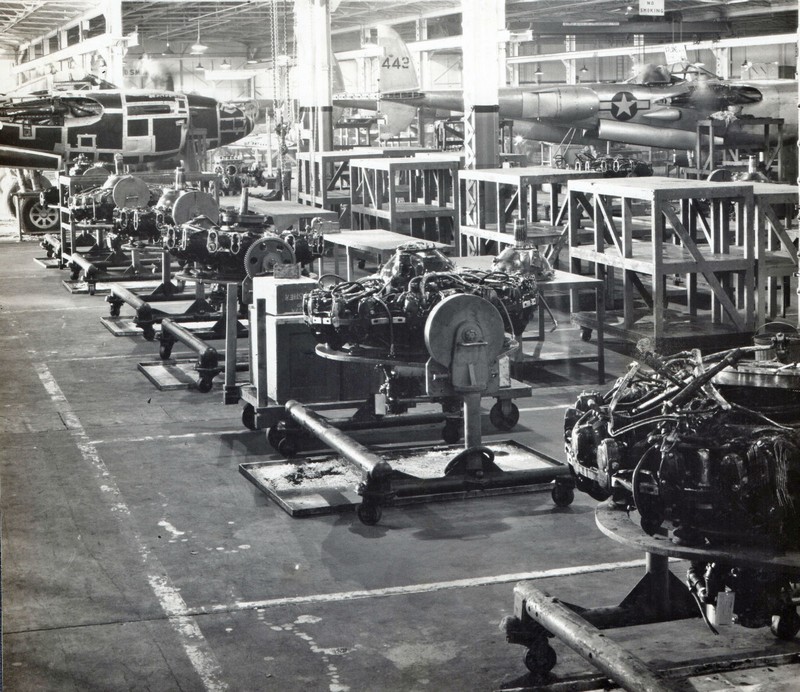
B.R.D. Airframe Erection Workshop
B.R.D. Airframe Erection Workshop
August 15, 1944 After seeing from the air and ground the greatest Air service Command Depot in the world and writing several articles on it and its personnel, I shook hands with a Bangor boy, Charles F Guild Jr, bade goodbye to him and a public relations officer who had accompanied me to the airplane stepped into a giant C-47 and was on my way. In the few days that I have been here, I have seen new inventions – some already in operation, others still a mystery not only to our enemies but also to our own people – the new radio devices, the latest modifications in bombers and fighters and I have given a birdseye view of Great Britain turned into a veritable fortress of air- power with the largest American contingent, as Mr Churchill himself revealed some time ago – being American. As I take off I am thinking of an expression I heard while at the depot ”The impossible things we do quickly, the miracles take a little longer”.
No words tell more nearly the story of
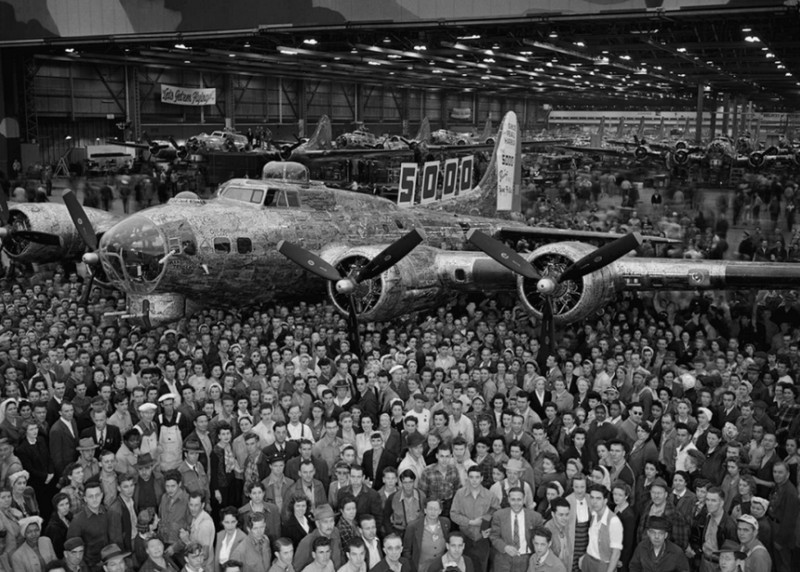
No words tell more nearly the story of what General Ott, Lt Col Arnold and their corps of assistants and workers are doing at the Base Air Depot of the Air Service Command. B17 5,000 grand at Boeings plant 2 in Seattle Washington B17 5,000 grand at Boeings plant 2 in Seattle Washington seen here during ww2 surrounded by her builders, riveters, and designers. The aircraft was signed inside and out by the names of Boeings workers.
This plane was built at Boeings Seattle ...
This plane was built at Boeings Seattle Plant 2 the 5,000th B-17 Flying Fortress bomber to be built by Boeing during WWII and named “5 Grand. To commemorate it, all the workers who worked on it being built wrote their names on it!
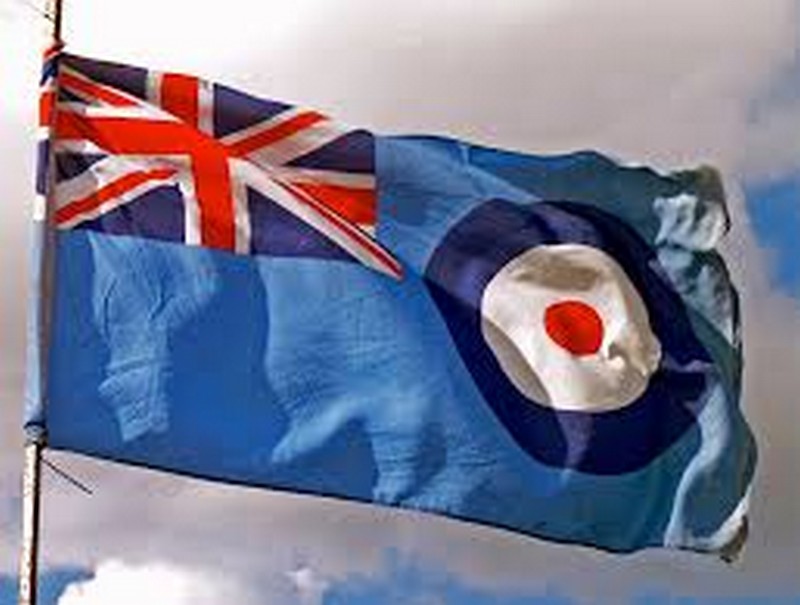
The Emblem (Roundal) of The Royal Air Force
Burtonwood Airfield 2 miles west of the town of Warrington was ideally suited being nearby to the industries of Manchester and Warrington & also close to Liverpool docks and the main line railway. The site was selected in 1938 as a decision made in 1936 to build aircraft repair depots (ARD) with engine repair depots in the expansion periods inner war Years. Building work began in 1938 with no 37 maintenance unit Royal Air Force moving in on the 1st of April 1940.
On the 11th of June 1942 USAAF arrived
On the 11th of June 1942 USAAF arrived. The USAAF were handed complete control of the air depot. Work began on the construction of 6 large warehouse workshops with a total of 734,000 square feet of floor space.
Work also began on an additional aircraf...
Work also began on an additional aircraft parking apron at a cost of approximately $2,000,000. By 1944 18,500 US personnel were stationed on Burtonwood being the largest USAAF base in Europe. The airfield was now known as 8th USAAF base air depot 1 (BAD1) station 590, although an RAF presence continued until 1943.
BAD1 became the centre for flight testin...
BAD1 became the centre for flight testing, overhaul, modification and repair of all USAAF aircraft in Europe in World War 2. 30,386 aircraft engines were overhauled and over 11,500 aircraft processed between 1943 and 1945. Celebrities to visit the base were film actor James Cagney, Bing Crosby, Bob Hope, Vera Lynn and Glenn Miller. By April 1945 the base contained: 2.5 miles of runway 3.5 miles of perimeter track 4.05 miles of railway track 18 miles of roadway 1,823 buildings (total area of the buildings and all that is listed above = 1,253 acres) 4,006, 852 square feet of covered facilities for supply and storage, workshops and technical operations 7,096,181 square feet of open facilities Total value = $50,000,000 Living site accommodation for 18,063 personnel.
By 1958 the base motor pool carried 25,0...
By 1958 the base motor pool carried 25,000,000 passengers covering 11,000,000 miles, 23,381,200 gallons of petrol was consumed. 6,500 American’s married English girls. The base at this time contained: 13 hangars 22 warehouses 1,054 nissan huts 18 miles of surface roadway covering an area of 3,535,990 square feet, 16.85 miles of fencing, with a total acres of 1,471 and 3,940,740 square feet of aircraft parking apron. The airfield had the standard 3 runway RAF Layout.
Runway 04/22 4,200 feet long Runwa...
Runway 04/22 4,200 feet long Runway 15/33 4,248 feet long Runway 09/27 5,280 feet long and was later (in January 1953) extended to 9,000 feet by 250 feet wide by the USAF 3 x control towers were built. The first was on Mary Ann Site and was a fort type built of concrete to AM (Air Ministry) drawing number 207/36. This tower was demolished due to bad visibility of the main runway and the 2nd to be built was ‘watch office’ for all commands and was built to AM drawing number 12779/41 with small windows to 15371/41 to the main runway at techsite.
The 3rd control tower was the 80 feet
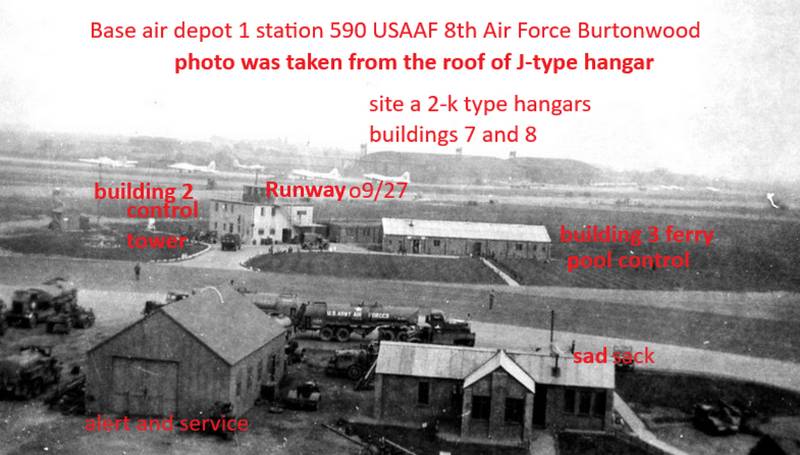
The 3rd control tower was the 80 feet high USAF tower next to the ‘J’ type hangar on tech site built in 1953. Airfield Hangar Sites. The airfield had 5 main hangar sites.
Mary Ann Site had 3 'C' type hangars
Mary Ann Site had 3 ‘C’ type hangars and 2 large storage workshops. Technical Site had 1 ‘J’ type and 1 ‘K’ type hangars. ‘G’ Site had 3 ‘L’ type hangars, 3 bellman hangars and 2 storage workshops. ‘E’ Site had 3 ‘L’ type hangars. ‘A’ Site had 2 ‘K’ type hangars. Also, 20 ‘robin hangars’ were dispersed around the airfield.
BRD Site (Burtonwood Repair Depot) A fac...
BRD Site (Burtonwood Repair Depot) A factory site was also built off Burtonwood Road and was known as BRD Site. It was erected in 1939 and occupied in 1940 under the control of the air ministry (NOT the RAF). It was later taken over by the ministry of aircraft production (MAP) and in 1942 transferred to the USAAF.
Living Quarters On site living quarters ...
Living Quarters On site living quarters were constructed on 6 sites built from the 1st of November to the 31st of December 1943. The buildings were mostly nissen and gerrard type huts and temporary brick rendered finish. Also, additional off site living quarters were taken over at Bruce Hall & Canada Hall east of Warrington.
The Americans were taken to and from Bur...
The Americans were taken to and from Burtonwood in military trucks each day. After WW2 Bruce Hall & Canada Hall were never required again by the military. Bruce Hall became a police training college and Canada Hall became the site of Padgate teachers training college.
Post World War 2 Scotia North, and ex
Post World War 2 Scotia North, and ex Royal Navy camp at Lowton near Leigh was opened in September 1950 to provide additional accommodation for servicemen and their dependants. Also another ex Royal Naval camp was taken over by the RAF called RAF Croft at Lady Lane near Warrington. The site became tenanted by the USAF in 1955 as a processing point for military personnel when Burtonwood was assigned the additional function of Military Air Transport Services (MATS) terminal for passenger flights between the United States and the United Kingdom.
United States Army Air Force units assig...
United States Army Air Force units assigned to Burtonwood during WW2
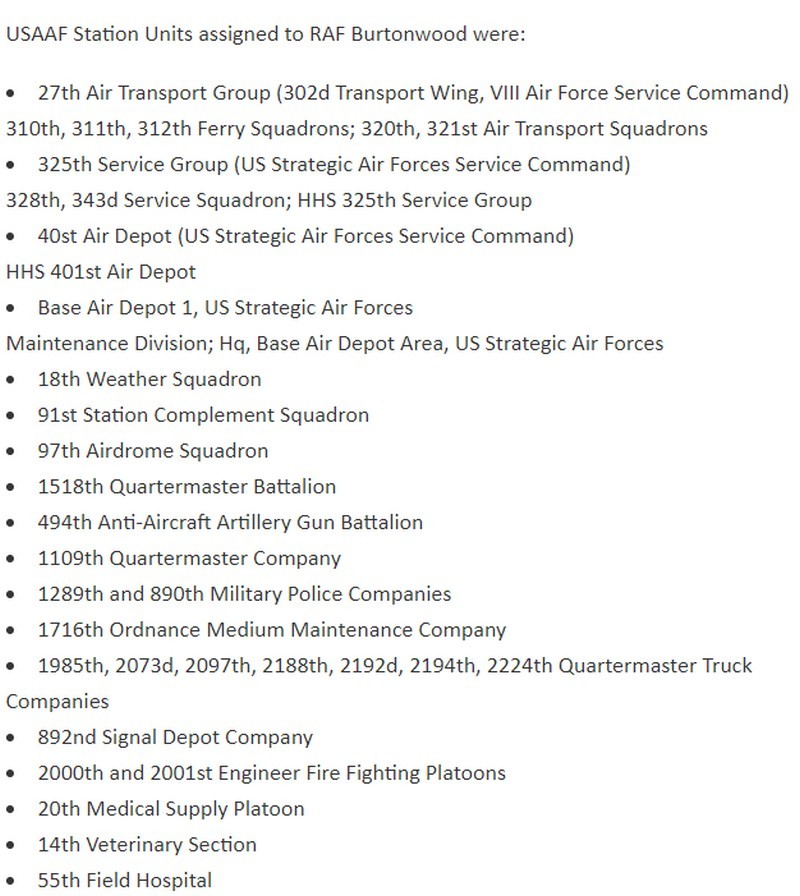
Satellite Stations & Associated Bases (To Burtonwood) in WW2 As well as the 8th army air force, Burtonwood was also responsible for the support of the 9th, 12th and 15th army air forces in WW2. 18,500 personnel worked on the base and an additional 37,545 personnel worked on sub sites, depots, satellite stations and associated bases throughout the United Kingdom for which BAD1 Burtonwood was responsible for. Al these sub sites had unit code names, but these were normally used for telecommunications only. However, each United States Army Air Force location was identified by a station number.
These stations are listed in the list be...
These stations are listed in the list below: Army Air Forces Station Number Assigned. The Official Name of The Installation. Location of County.
Principal Unit(s) Assigned To The Instal...
Principal Unit(s) Assigned To The Installation. 127 Little Staughton Bedfordshire Advanced Air Depot For 1st Bomb Wing 158 Sudbury Staffordshire Signal Storage Depot 169 Stansted Essex Detachment ‘K’ Supply Division Tactical Air Depot 237 Greencastle County Down Northern Ireland 496 Fighter Group, 12 Combat Crew Replacement Centre 362 Ford Sussex 2 – Detachment 14 Fighter Group 375 Honington Suffolk Advanced Depot 446 Taunton Somerset Detachment Ordnance Supply Division Base Air Depot 1 – Supply Depot 473 Bristol Gloucestershire (in WW2) 1512 Quarter Masters Truck Battalion 502 Tostock Park Suffolk 1516 Quarter Masters Truck Battalion Combat Support Wing 513 Liverpool Docks, Kirby House, Silcocks Warehouse Lancashire (in WW2) Port Intransit, Depot 1, Base Air Depot Area (BADA) 514 Kirkby Lancashire (in WW2) Warehouse Site, Port Intransit, Depot 2, Base Air Depot Area (BADA) 515 Warley Common Gloucestershire Port Transit Depot 3. Base Air Depot Area (BADA) 516 St Mellons Monmouthsire Wales Port Transit Depot 4. Base Air Depot Area (BADA) 517 Barnham (Little Heath Site) Suffolk 754 Chemical Depot Company (Aviation). 765 Chemical Depot Company (Aviation). 520 Melton Mowbray Leicestershire 1720 Ordnance Munition Company. 1961 Ordnance Depot Company. 1962 Ordnance Depot Company.
V111 Air Force Service Command. 521 Bray...
V111 Air Force Service Command. 521 Braybrooke Northamptonshire 2107 Ordnance Battalion Aviation 522 Smethwick Staffordshire 892 Signal Depot Company. 908 Signal Company. Signal Supply Base Depot 1 524 Southport (Sunnyside Hotel) Lancashire 8 (BADA 1) Base Air Depot Area. 526 Bures Essex 2108 Ordnance Ammunition Battalion Aviation Special 527 Leicester Leicestershire Detachment – 892 Signal Depot Company 530 Haydock Park Lancashire Base Air Depot Area – Combat Support Wing – Detachment L Supply Division. 541 Risley Bedfordshire 756 Chemical Depot – 763 Chemical Depot. V111 Air Force Service Command. 545 Earsham Norfolk 1916 Ordnance Ammunition Company Aviation. 2217 Quarter Master Truck Company Aviation. 549 Nascot Lodge Watford Hertfordshire Headquarters Combat Support Wing Provisional. 1584 Quartermasters Battalion Mobile Aviation. 550 William Strip Park Gloucestershire 2106 Ordnance Ammunition Battalion. 552 Huyton Lancashire (WW2) 1511 Quartermasters Truck Regiment – Air Service Command. 564 Egginton Derbyshire Headquarters 1519 Quarter Masters Battalion Mobile Aviation. 571 Poynton Cheshire Station Compliment Squadron – 2189 Quarter Masters Truck Company Aviation – 304 Gas Defence Attachment. 572 Melchbourne Park Bedfordshire Ordnance Auto Motive Depot – Base Air Depot Area. 581 Wortley Yorkshire 1912 Ordnance Ammunition Company – 2002 Ordnance Ammunition Company. 582 Warton Lancashire Base Air Depot 2 (BAD 2) 583 Sharnbrook Bedfordshire 2107 Ordnance Ammunition Battalion 587 Barnham (Warren Woods Site) Suffolk 2106 Ordnance Battalion Aviation – V111 Air Force Service Command 590 Burtonwood Lancashire Main Headquarters Base Air Depot 1 (BAD1) 592 Groveley Wood Wiltshire 1925 – 1927 – and 1929 Ordnance Company Aviation – Combat Wing 597 Langford Lodge County Antrim Northern Ireland Base Air Depot 3 (BAD 3) 802 Baverstock (Dinton) Wiltshire Base Air Depot 4 (BAD 4) 375 Honington Suffolk Advanced Depot ———- Aintree Lancashire Detachment A, 1960 Ordnance Depot Company Aviation – Base Air Depot Area. ———- Cardiff Docks Glamorgan Detachment D, Supply Division. ———- Barry Docks Glamorgan Detachment Supply Division. ———- Glasgow Docks Scotland Army Air Force Detachment G Maintenance Division – Detachment N Supply Division. ———- St Morgan Cornwall Detachment N Supply Division After WW2 After the defeat of Germany the USAAF started to clear the air base up ready to hand it back over to the RAF.
The USAAF decided it would be cheaper to
The USAAF decided it would be cheaper to scrap all aircraft and spares on site rather than ship it all back to the United States. Aircraft flew from bases all over the United Kingdom into Burtonwood to be scrapped in this way. This work was so big of a job that the USAAF were still at Burtonwood in 1946.
A cold grey misty day at RAF Burtonwood
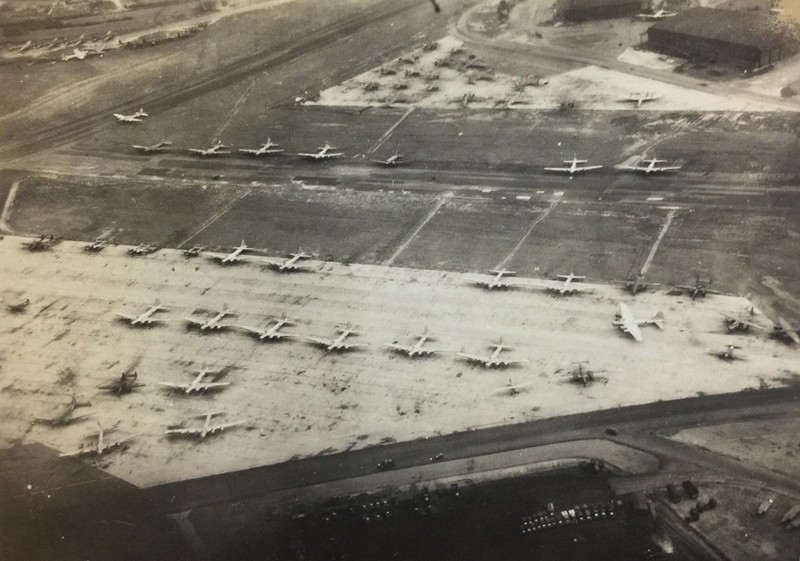
A cold grey misty day at RAF Burtonwood at the end of the war in Europe. B-17s awaiting scrapping photo.
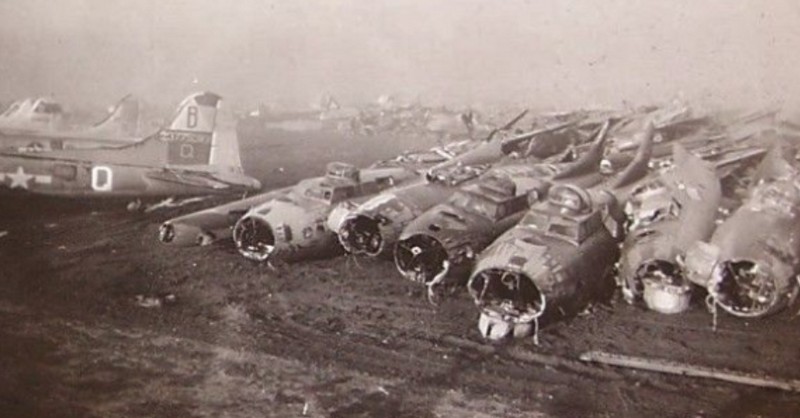
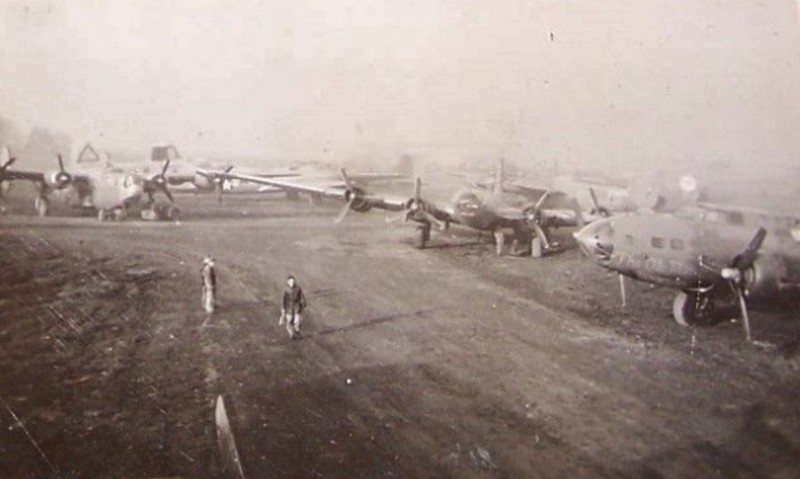
B-17s being broken up for scrap.
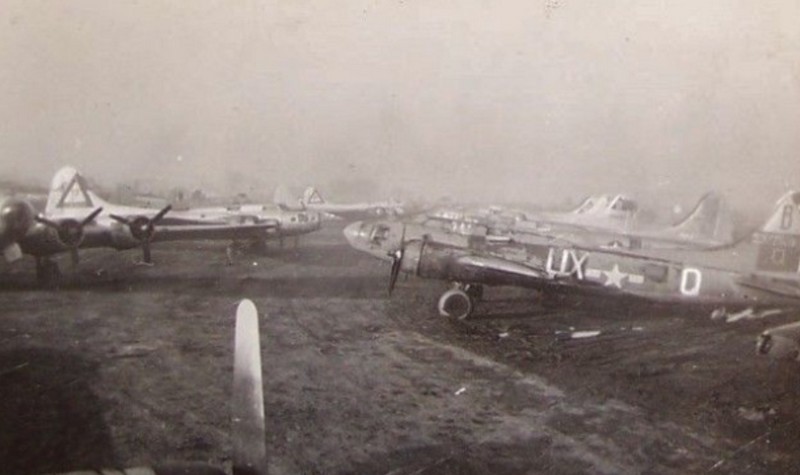
The hangars and warehouses contained 16,187 tons of stock valued at $120,000,000 which was handed over to the British. On the the 25th of May 1946 BAD1 AAF Station 590 was the last airfield in the UK to be handed over to the RAF. The Americans had left but would be back within 2 years.
In January 1946 No. 276 RAF Maintenance ...
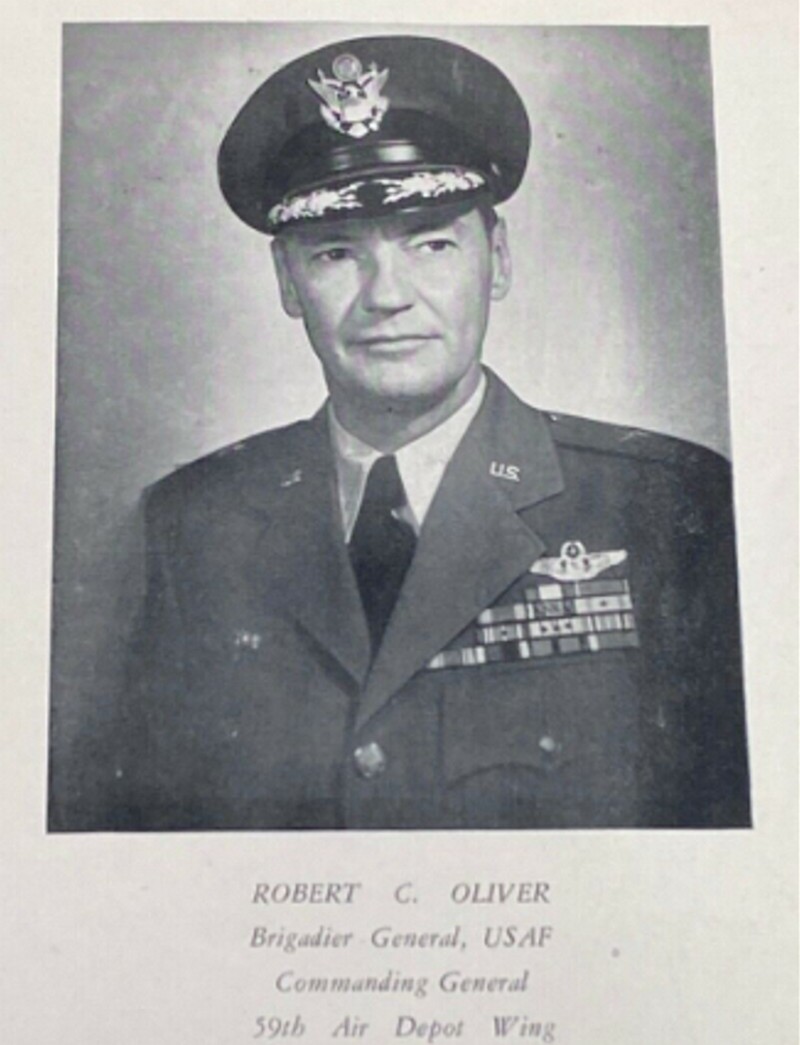
In January 1946 No. 276 RAF Maintenance unit was formed even though the Americans cleaning up parties were still there. Brigadier General Robert C Oliver became the RAF Burtonwood USAF Base Commander between January 1950 to June 1953.


Sixsmiths farm later Known as Tinker Hall


Ministry Of Defence police at a roadblock

A 20s waiting to be scrapped at Burtonwood at the end of world war 2

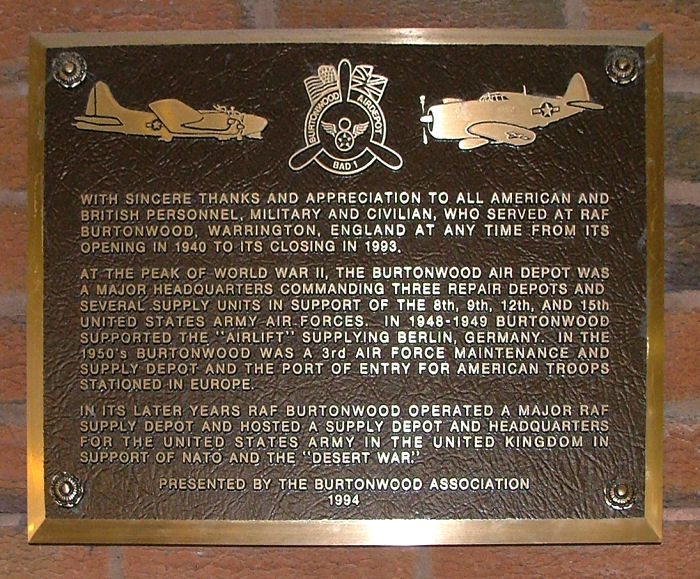
RAF Burtonwood Plaque Displayed at Warrington Town Hall.

Burtonwood Bridge Street Seven Stars Pub on right GI's outside about 1948/49 (by ray corcoran)
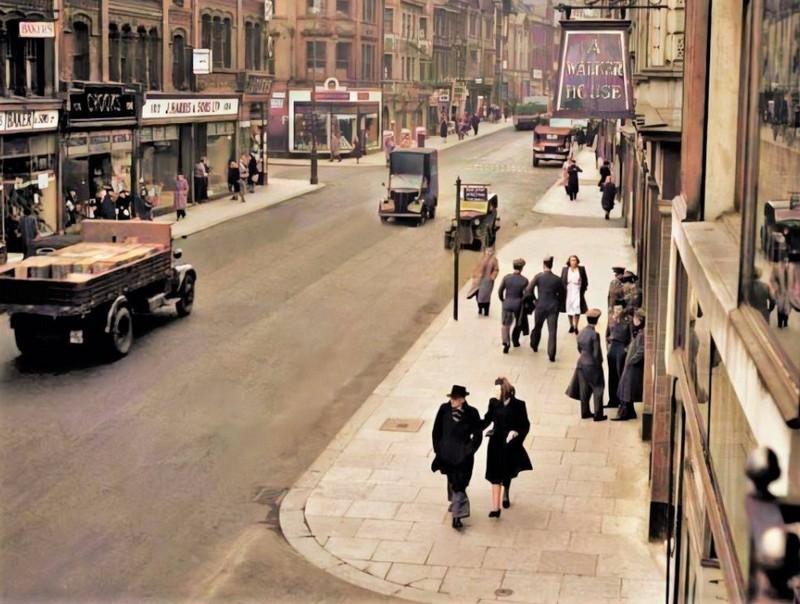

United States Air Force Vehicles from Burtonwood Air Depot in Warrington town center during 1949


Ten servicemen are pictured with ten teenagers from the church on the Town Hall lawn.
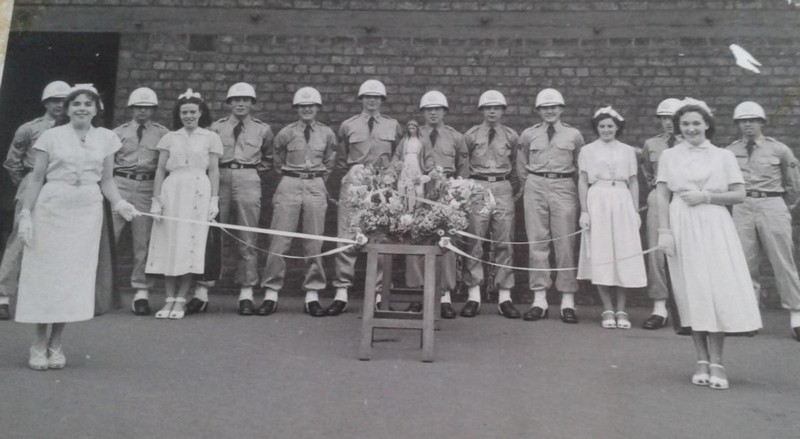
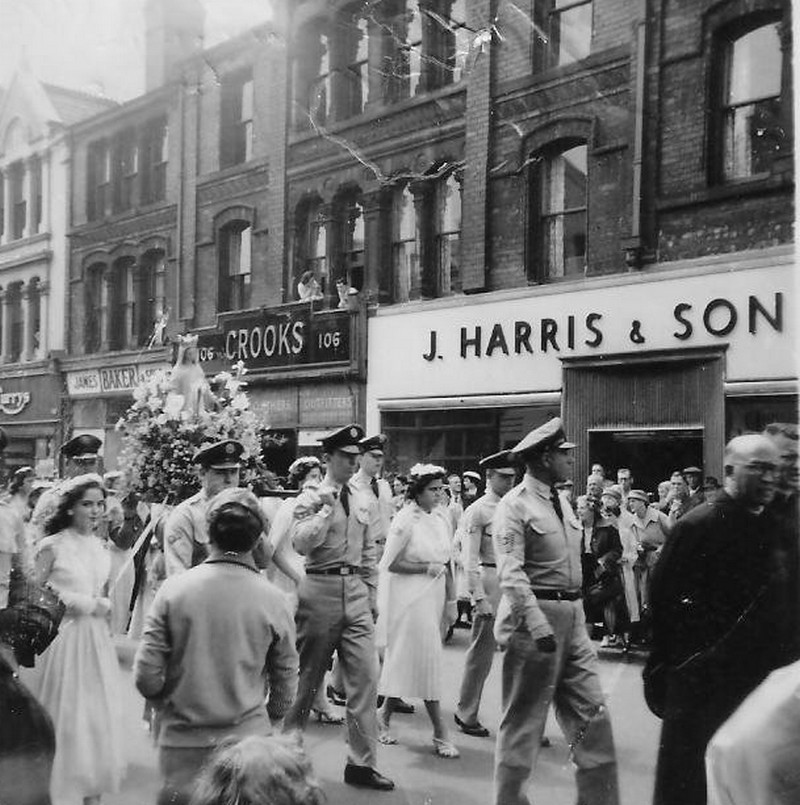

One of the girls from Sacred heart worked at RAF Burtonwood and was asked to have some work completed for the Friday- the walking day. She explained that she couldn’t be in that day because she’d be carrying the Statue with a bunch of other girls on the walking day. The Sergeant was so put out at the idea of young ladies carrying a statue around town, that on the walking day a dozen or more of the American Boys arrived at Sacred Heart to save the girls having to carry it.
This became the tradition of 'The Yanks'...
This became the tradition of ‘The Yanks’ (as they were fondly called in Warrington) to carry the statue on walking day. Photo from Lynn Pickersgill of some of the servicemen taking part in Warrington Walking Day. It shows her mum Winifred and her sister Eileen Laff outside the town hall golden gates in 1952.
They were walking with Sacred Heart and ...
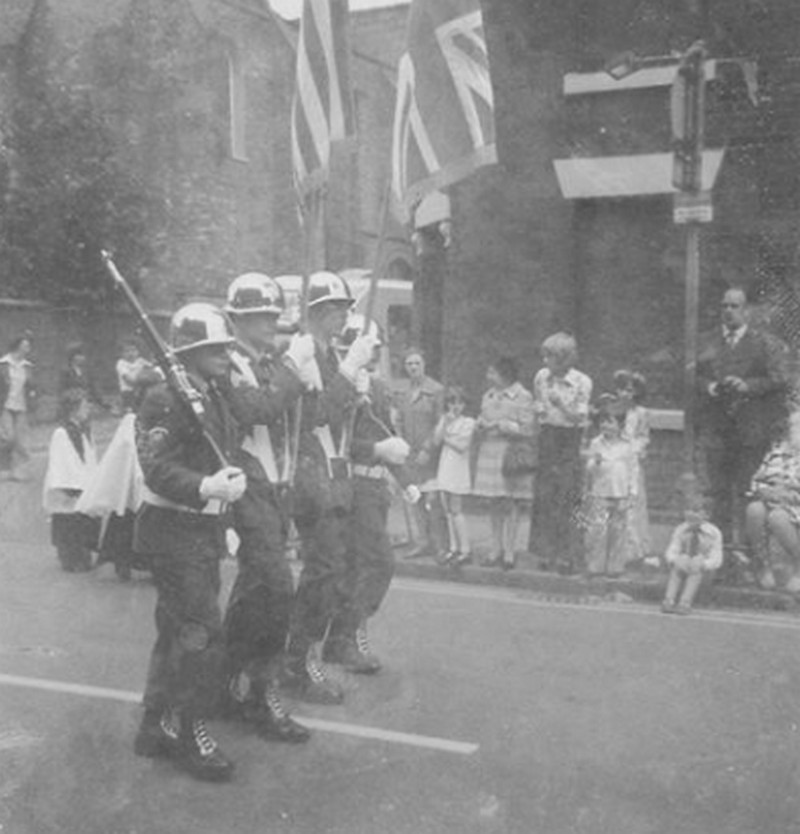
They were walking with Sacred Heart and were joined by members of the forces. It is believed the servicemen had a chance encounter with the priest at Sacred Heart who explained about the history of Warrington Walking Day and the Americans asked if they could join. American Soldiers from RAF Burtonwood at the town walking day with St Albans in 1975.
Berlin Airlift

During the cold war, the Soviets union blocked the western allies railway, road, and canal access to the sectors of Berlin under Western control stoping supplies reaching the people of West Berlin. RAF Burtonwood played an essential part in the Berlin airlift by carrying out 200-hour maintenance checks on 2 engined C-47s but mostly on C-54 Skymaster 4 engined transport aircraft of the USAF. The Airlift flights started on 26 June 1948 and continued until September 1949.
The transport aircraft supplied over two...
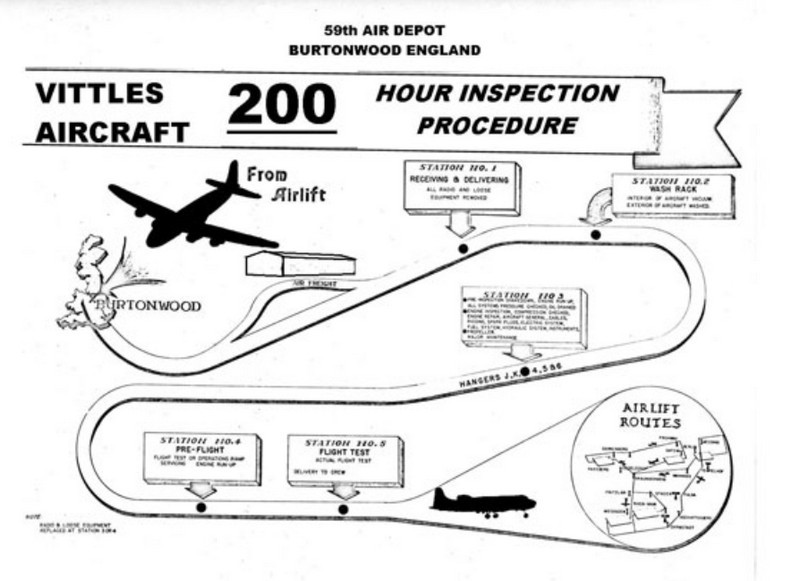
The transport aircraft supplied over two million people of West Berlin with fuel, water, medicine, clothing, and food. Allied aircraft took off or landed in west Berlin evry 30 Seconds, US aircrews made more than 189,000 flights totaling nearly 600, 000 Flying hours C-54 s alone exceeding 92 million miles By the end of the airlift, the transport aircraft had flown 300,000 flights and delivered 2,300, 000 tons of supplies, as you can see this is why the 200-hour maintenance checks were so important. 1,571 Aircraft were processed at Burtonwood in the 18 month period totaling over 147,000 man hours. When they arrived they went to Station 1, Receipt and Delivery.
Here all loose equipment was removed and...
Here all loose equipment was removed and all radio equipment. Station 2 was the K type hangars on ‘A’ Site used as the wash rack for internal and external cleaning.
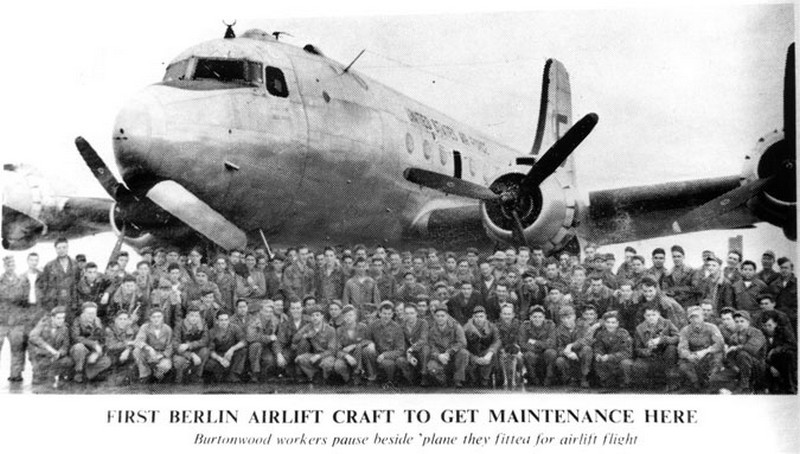
Then they moved to the C types on Mary Ann Site and hangars J & K on Tech Site. This was known as Station 3. This was a pre-inspection shakedown, engine run-up, all systems pressure checked, oil drained, engine inspection, compression checked, engine repair, aircraft general, control cables, rigging, spark plus, electric systems. fuel system, hydraulic system, instruments and prop maintenance, undercarriage and tyre check.
If engine replacement needed, done here....
If engine replacement needed, done here. Station 4 was a flight test or operation ramp servicing and engine run-up. Station 5 was the actual test flight and hand over to the crew to fly it back to Germany.
The USAF maintenance crews at Burtonwood...
The USAF maintenance crews at Burtonwood during the Berlin airlift lived up to there name as the 8th airforce did during ww2 before them, with the MOTTO, KEEP EM FLYING. Flight maintenance chart
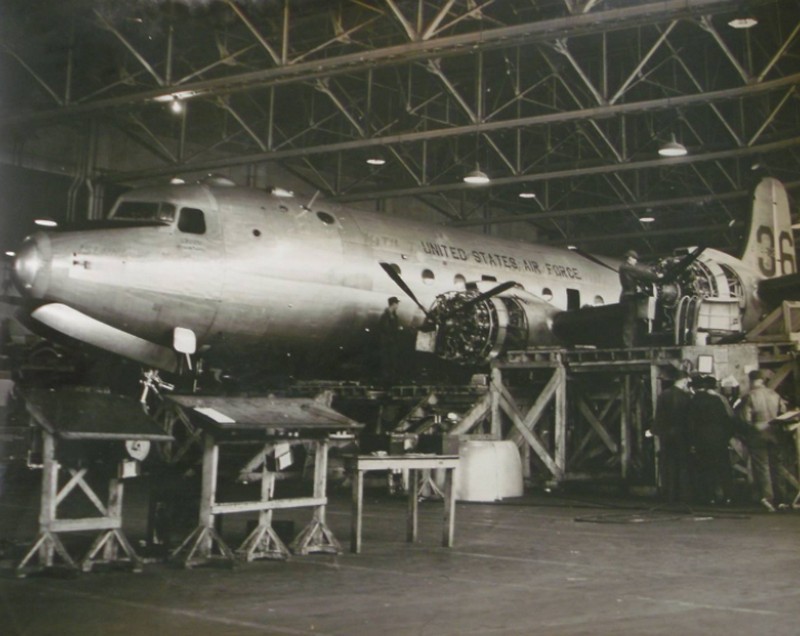
The photo was taken at the United States Air Force Base Burtonwood Warrington England. On the back of the photo, it says: “taken off from Tempelhof Berlin on the 6/5/ 1949 and landed at Burtonwood 2 and a half hours ago for the 200-hour inspection and maintenance procedure then was stripped and checked within 72 hours ready to fly again.” The photo was taken just 2 and a half hours into the strip down. The airlift was not without its fatalities 101were recorded killed including 31 Americans during the operation mostly due to crashes.
One such crash happened on the 7th of
One such crash happened on the 7th of January 1949 when C-54 Skymaster 45-543 of the14th TCS,61st, TCG, of the united states airforce, crashed at stake house fell in the forest of Bowland near Garstang. The aircraft had taken off at 13.12 hours from the Rhein-main airforce base near Frankfurt, Germany en route to Burtonwood for its 200-hour scheduled maintenance service. The aircraft was having poor radio communication and encounter poor weather conditions over the north of England, with low cloud and heavy rain.
The last contact with the Burtonwood con...
The last contact with the Burtonwood control tower was at 16.30 hours,the pilot was flying blind estimating his position by using his instruments. The C-54 Skymaster drifted off its intended course and struck the southern face of stake house fell. The 4 crew and 2 passengers were all killed in the accident.
Douglas C-54 Skymaster crash, cowlings/ ...
Douglas C-54 Skymaster crash, cowlings/ firewalls parts.
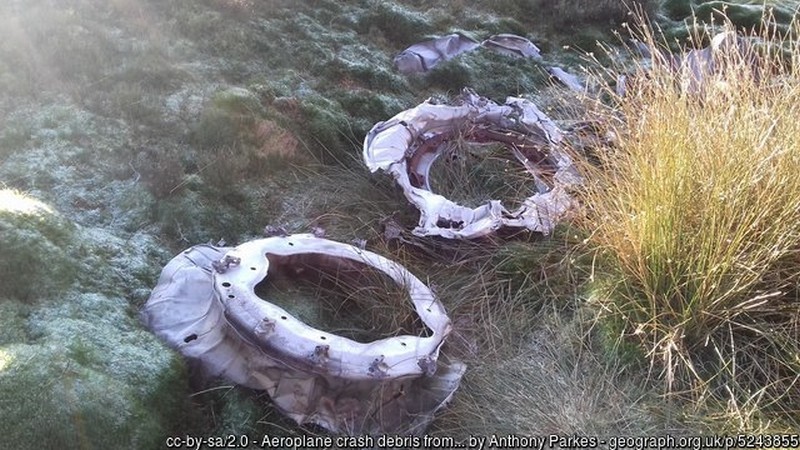
Douglas C-54 Skymaster crash, landing gear part.

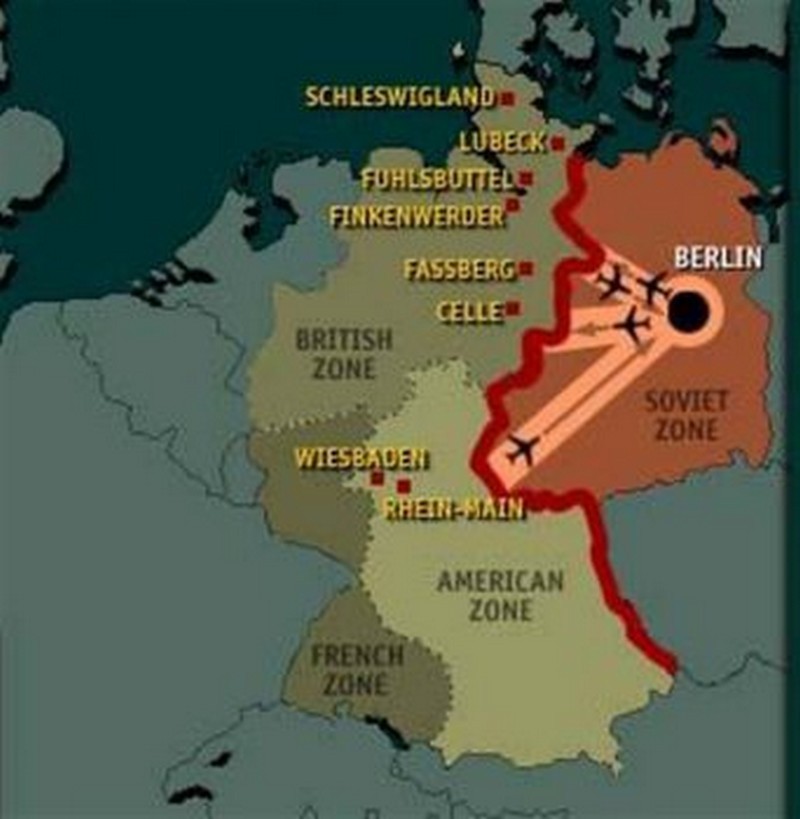
Map of the occupation zones and the air corridors during the Berlin airlift.
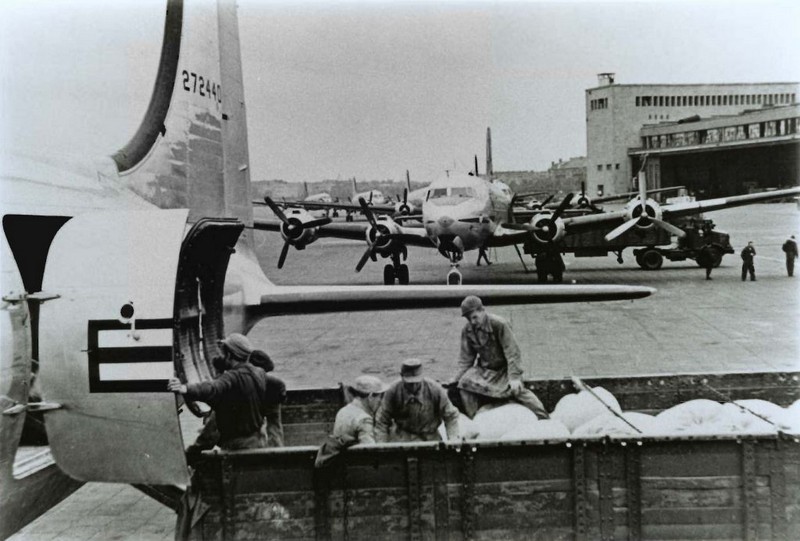
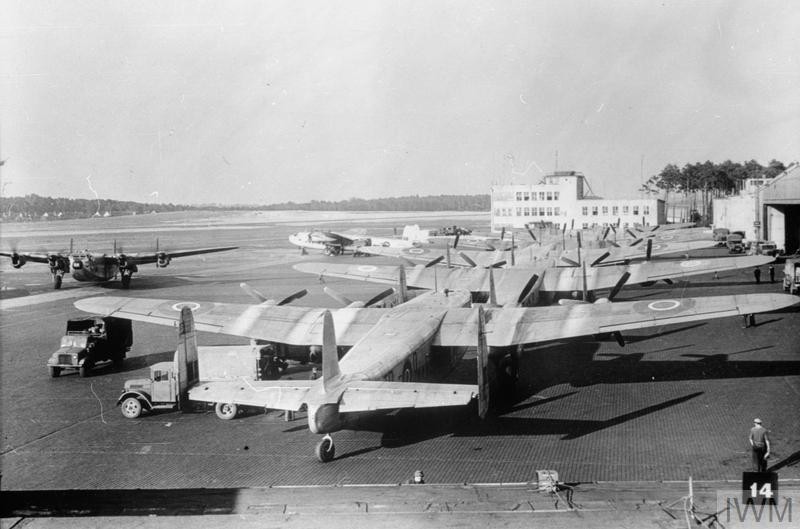
RAF Burtonwood group photo of maintenance personnel during the Berlin airlift.
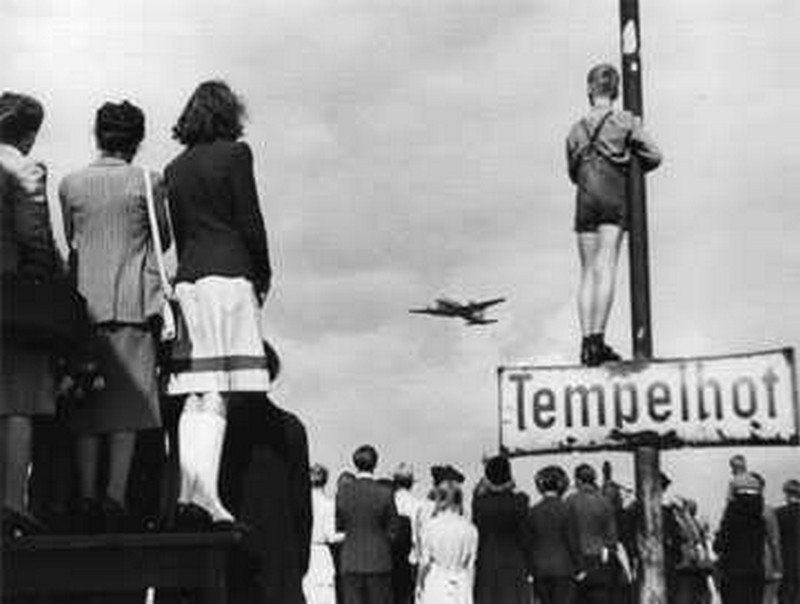
West Berliners watch the airlift at west berlin.
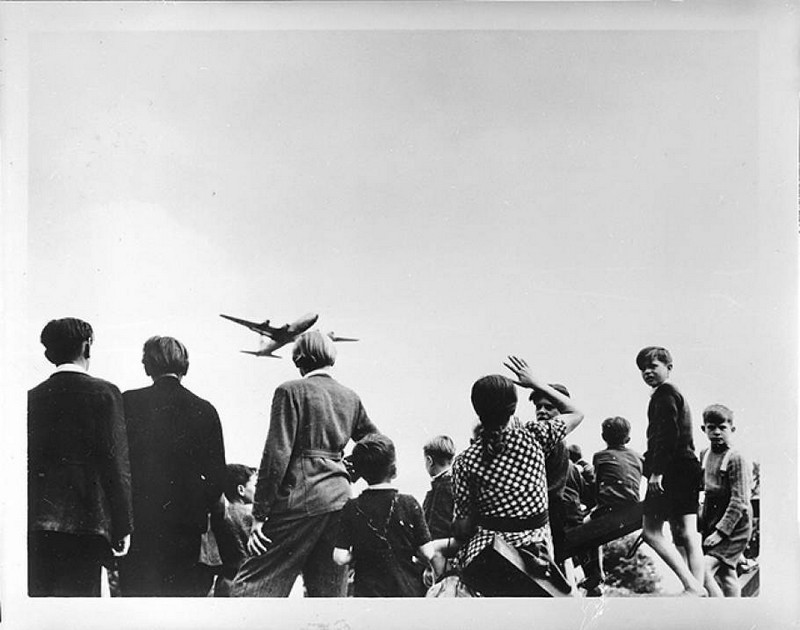
West Berliners watching the airlift at Tempelhof airport at west berlin.
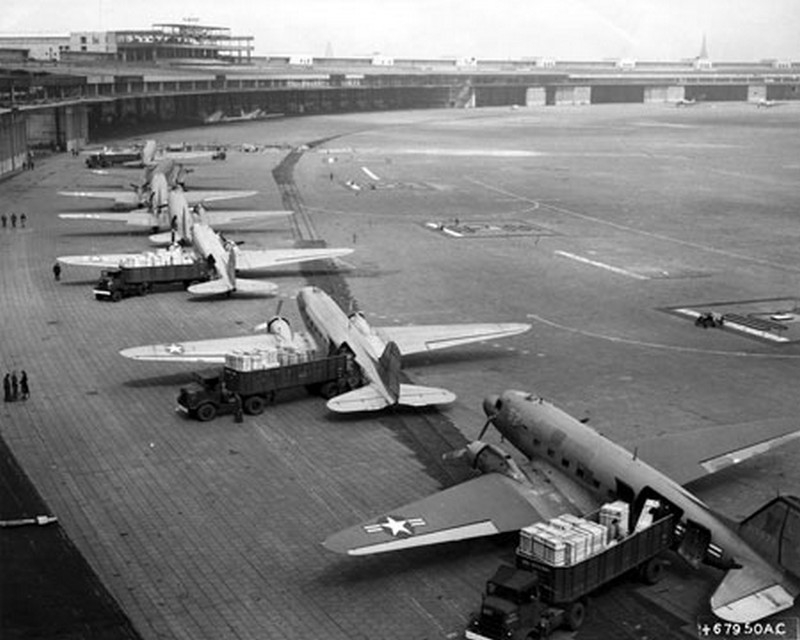
C-47s AT Tempelhof airport Berlin during the airlift in 1948.
West Berliners watch a Douglas C-54 Skymaster landing at West berlin.
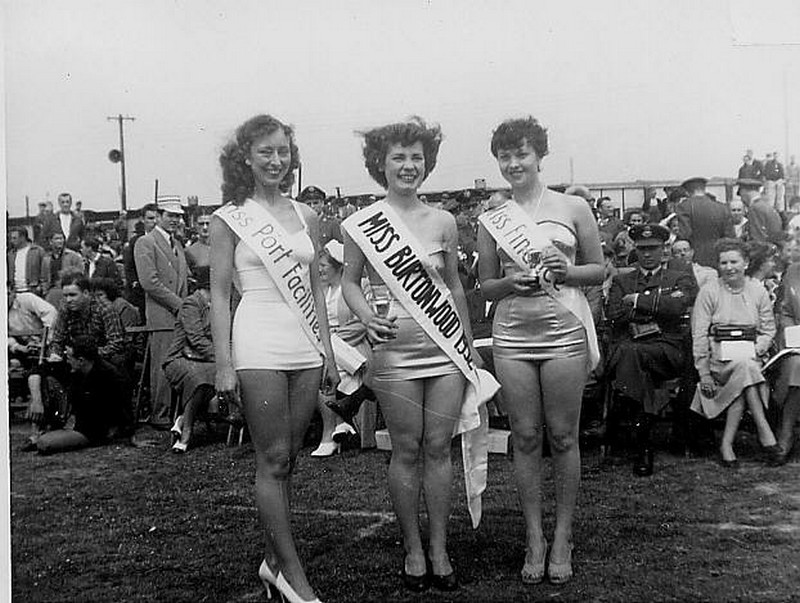
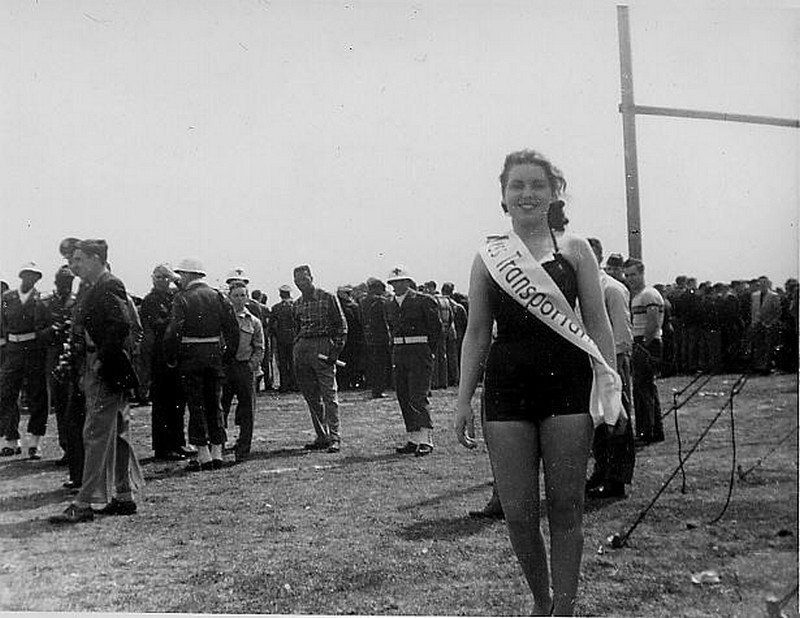
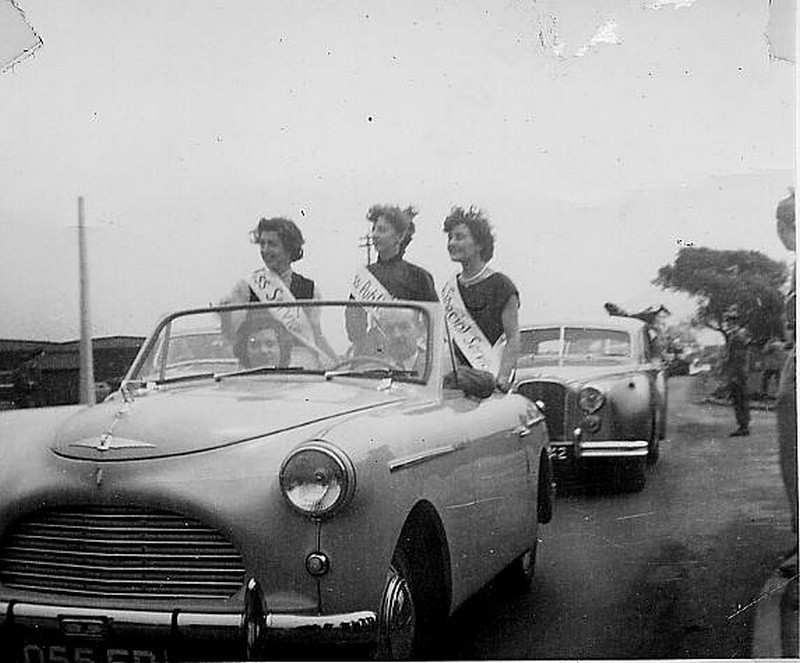
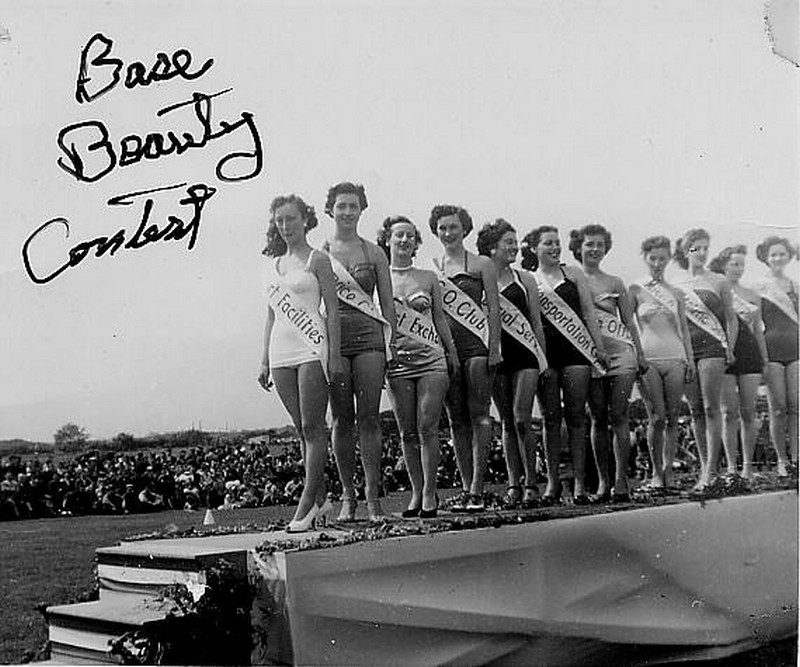
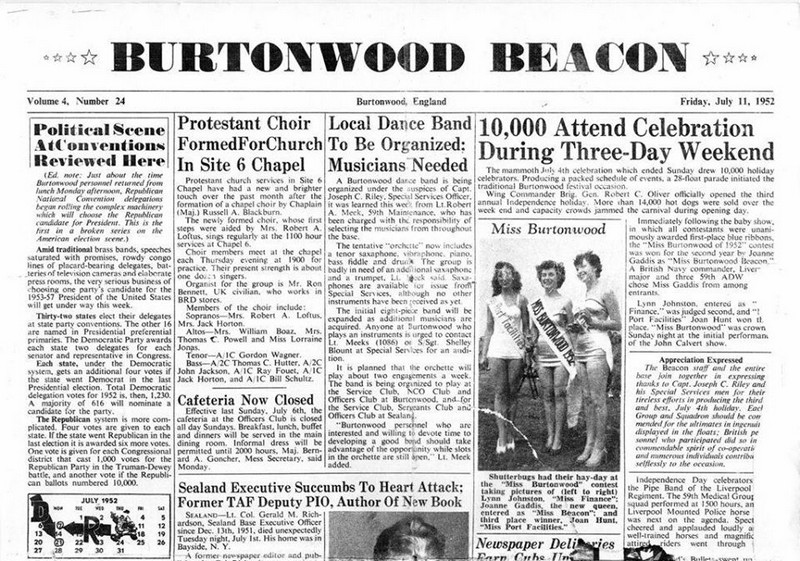
Joanne’s sister Carol Gladdis became Miss Club 59 in July 1950 but didn’t win Miss Burtonwood that year. The winner was Juanita Mullins, wife of Lt Bernie C Mullins. The final took place as part of the July 4, 1952 celebrations. 10,000 people attended the three-day weekend which included a 28-float parade. Over 14,000 hot dogs were sold over the weekend.
Immediately after the Baby Show, in whic...
Immediately after the Baby Show, in which all contestants were unanimously awarded first-place blue ribbons, the ‘Miss Burtonwood’ of 1952 final took place. Joanne Gladdis won it for the second year running. The judges included a British Royal Navy Commander from Liverpool and three from 59th Air Depot Wing.
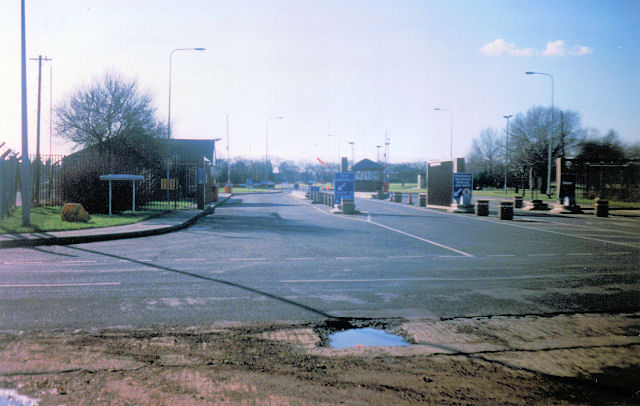
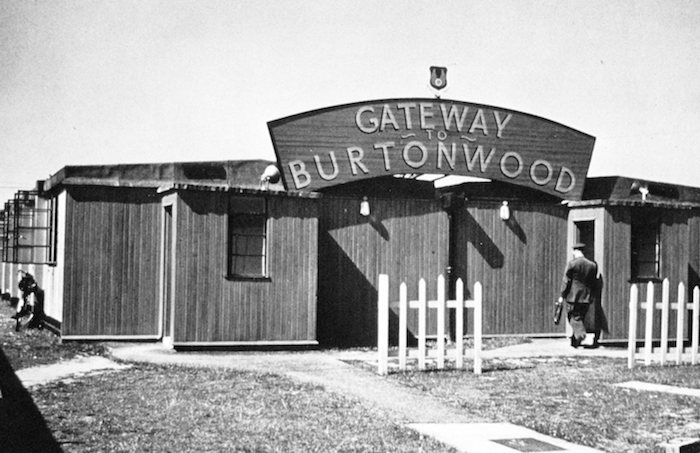
Main Entrance Gate 12 Burtonwood
The Badge of The United States Air Force
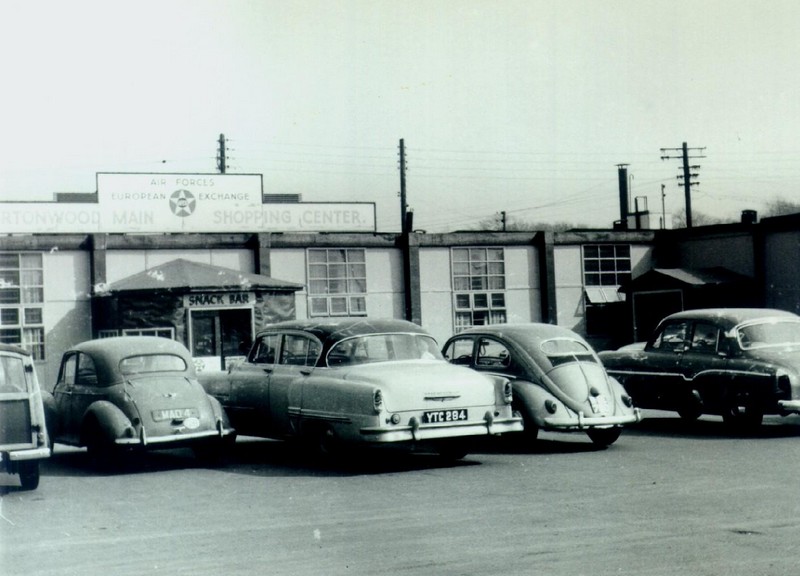
Air Forces European Exchange Main Burtonwood Shopping Center (Location Unknown?)
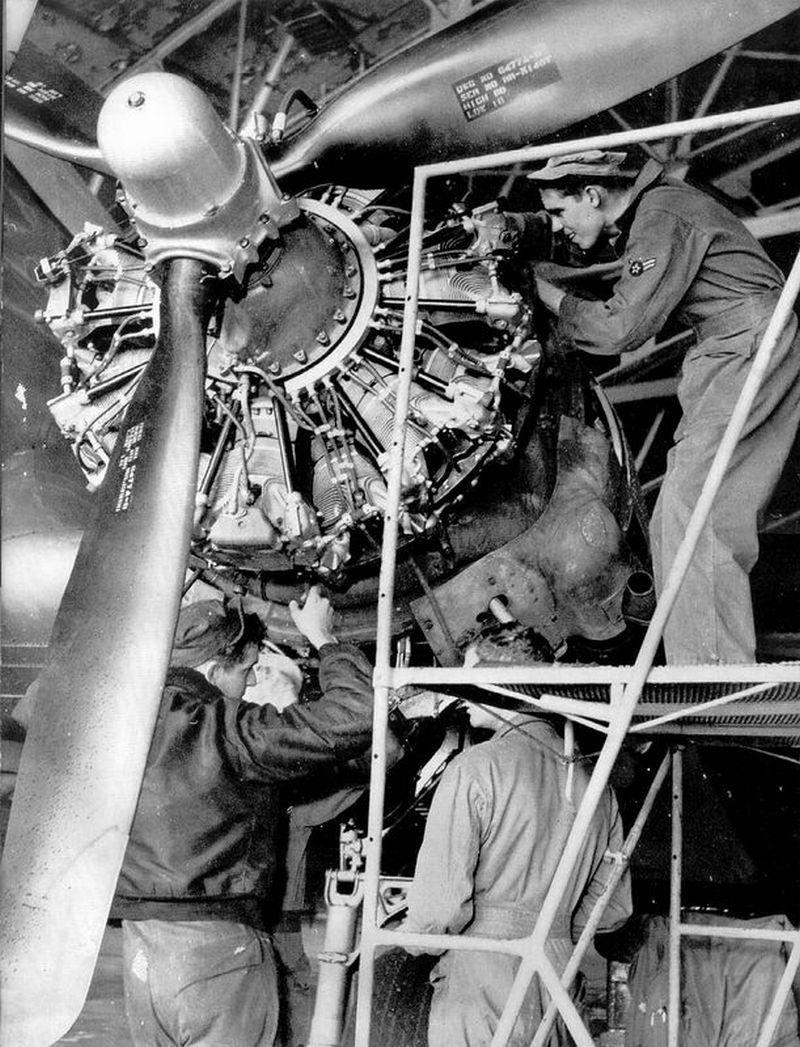
USAF Engine Technicians Working on a Radial Engine in the 1950's.
With the advent of the cold war the Unites States Air Force (USAF) needed a presence in Europe and Burtonwood was an obvious choice. In 1948 the USAF took over control of the air base in time to take part in the overhaul and maintenance of C54 skymasters taking part in the Berlin airlift. Each servicing taking over 700 man hours.
In 1949 when the soviet union backed dow...
In 1949 when the soviet union backed down over the Berlin airlift the USAF used Burtonwood as a primary stores and equipment base for its European operations. On the 1st of September 1953 the airbase was renamed Northern Air Material Area (NAMA) and their mission was to supply supplies to the USAF, Navy & Army. Also (MATS) Military Air Transport Services were responsible for all operations involved with flying.
Further building works were started in 1...
Further building works were started in 1951 with the extension to runway 09/27 the main runway to 9,000 feet and 250 feet wide. The 2 existing runways 22/04 and 15/33 from the WW2 days were used for parking the WB 50 weather aircraft on and as additional hardstandings. In 1953 an additional apron was constructed between the south taxi way and runway 04/22.
Also constructed was a new control tower...
Also constructed was a new control tower and passenger terminal. North of Mary Ann Site a new crash fire station was built next to the main runway. On site 8 a new warehouse was constructed in January 1953 and opened August the 16th 1954.
This was to become known as header house
This was to become known as header house. The warehouse was the largest in Europe being 1 mile long and over 3,000,000 square feet and even had its own private railway line connected to the main Manchester to Liverpool main line. The total cost to build this site was $12,000,000 and took 20 months to build.
The airbase was known as the gateway to
The airbase was known as the gateway to Europe to the American Military personnel and their families. The base was so large that it was nicknamed Lancashire’s Detroit and little America by the personnel stationed there. After 10 years of continuous building works Burtonwood was the biggest military base outside of the USA.
By 1959 the USAF had left Burtonwood for...
By 1959 the USAF had left Burtonwood forever although the USAF had several units there until 1965 and on the 18th of June 1965 control was returned to the RAF. The RAF built a ‘V’ Bomber dispersal parking hardstanding and was located next to the downwind end of the main runway (runway 27). 4 ‘V’ bombers would have been at full readiness at the dispersals in the event of a Nuclear War. These dispersals were built at many airfields across the UK & known as ‘scatter bases’.
The 'V' bombers would disperse and opera...
The ‘V’ bombers would disperse and operate between these dispersals making them small disperse targets. De Gaulle had quit NATO and told the United States to leave France. The US Army’s huge stockpiles in its stores in France had therefore to be transferred elsewhere, and Header house at Burtonwood was the ideal place to transfer it to.
Burtonwood Header House Site 8 - US Army
Burtonwood Header House Site 8 - US Army Storage Depot
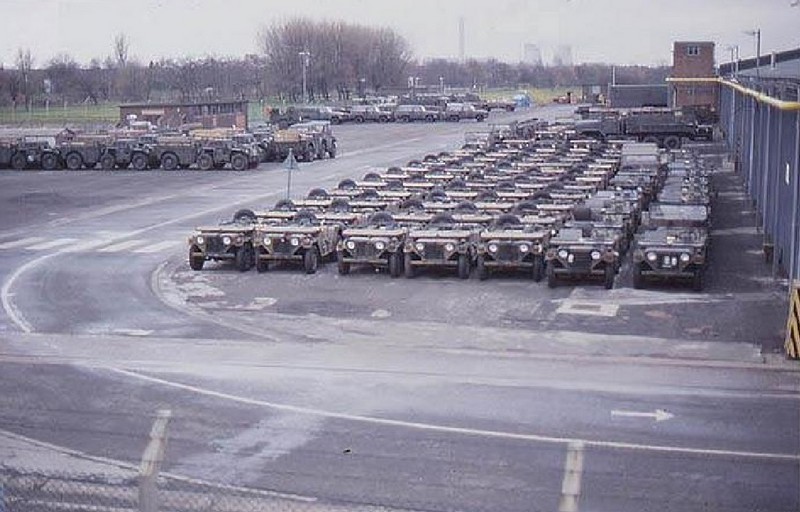
On January the 2nd 1967 the Americans (the United States Army NOT the USAF) were back at Burtonwood and renamed it ‘Burtonwood Army Depot UK’. On the 4th of January 1982 the depot was again renamed HQ47 Area Support Group UK. At the end of the cold war Burtonwoods Army Depot UK was declared Access to NATO requirements & was officially closed in 1994.
The US Army had no real use for
The US Army had no real use for the airfield, but at first they used ‘Mary Ann’ site & ‘G’ site to store vehicles and ‘Tech’ site to store some helicopters there for a while, but later concentrated on Header house at site ‘8’. The last fixed wing aircraft to use the airfield were the gliders of 635 Gliding School Air Training Corps. The gliding school opened in November 1959 & they used Kirby Cadet MK3 & Sedbergh Gliders launched by stationery winches.
The 'K' type hangar on 'Tech' site was
The ‘K’ type hangar on ‘Tech’ site was used to store the gliders & their equipment. When ‘Tech’ site was demolished the gliding school was stood down on the 25th of September 1983. At the end of the cold war, the US Army left Burtonwood & the Americans left this time forever & demolition work soon started & was completed in 2008. 635 Gliding School 1959 635 Gliding School was formed at RAF Burtonwood for the Air Training Corps in November of 1959.
The Gliding School used Kirby Cadet MK 3
The Gliding School used Kirby Cadet MK 3 and Sedbergh gliders launched by stationery winches. The School was located at the technical site of the airfield using the K -Type hangar there to store there Gliders and equipment there. The last fixed-wing aircraft to use the airfield was the Gliders of 635 Gliding School.
The Gliding School closed during 1984 af...
The Gliding School closed during 1984 after 25 years at Burtonwood and then being relocated to BAE Samlesbury, and stayed there for 24 years and then being reformed at Topcliffe North Yorkshire. The Gliders of 635 Gliding School were-Kirby Cadet MK 1- WE991 / Kirby Cadet MK 3-WT870/WT871/WT872/XN199 /XN244/XN245/XN248/XE791/XE801/XA282/XA302/XA306 Sedbergh – WB941/WB981/XM185/WT981/XN185/XN157/WB942. Kirby Cadet at Burtonwood (credit to Kevin Hughes for photo)
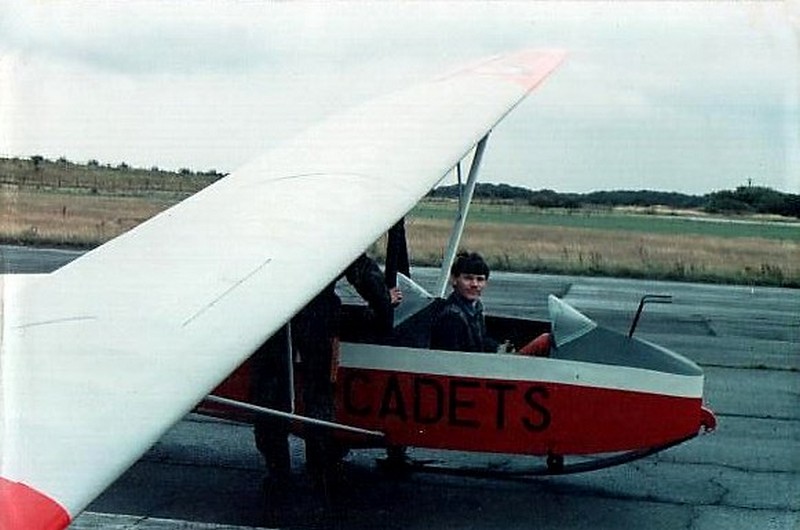
Kirby Cadet XE791 at Burtonwood (credit to Kevin Hughes for photo)
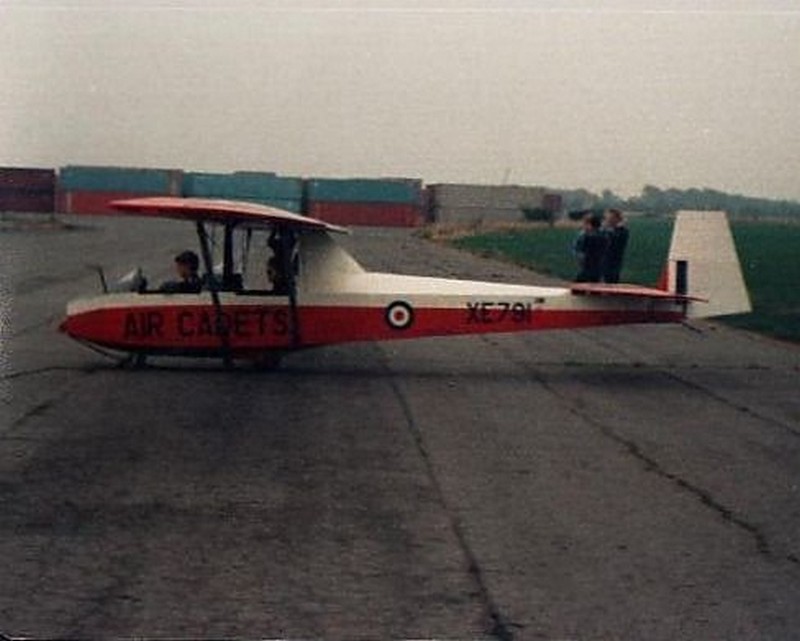
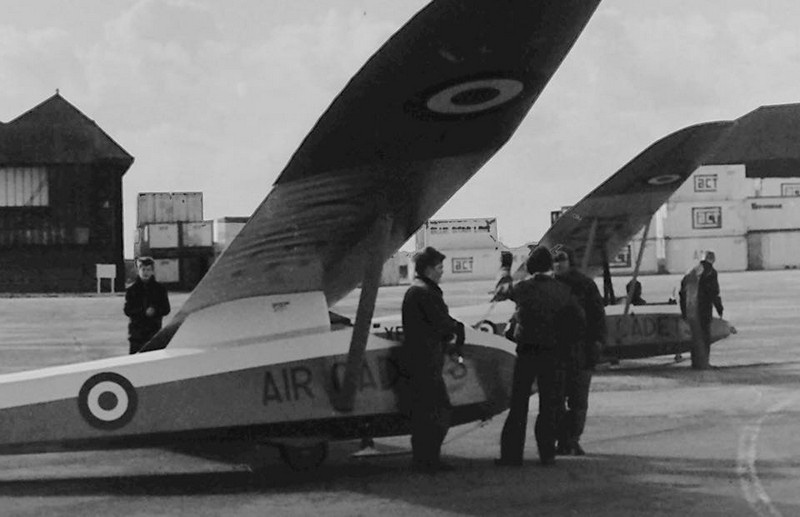
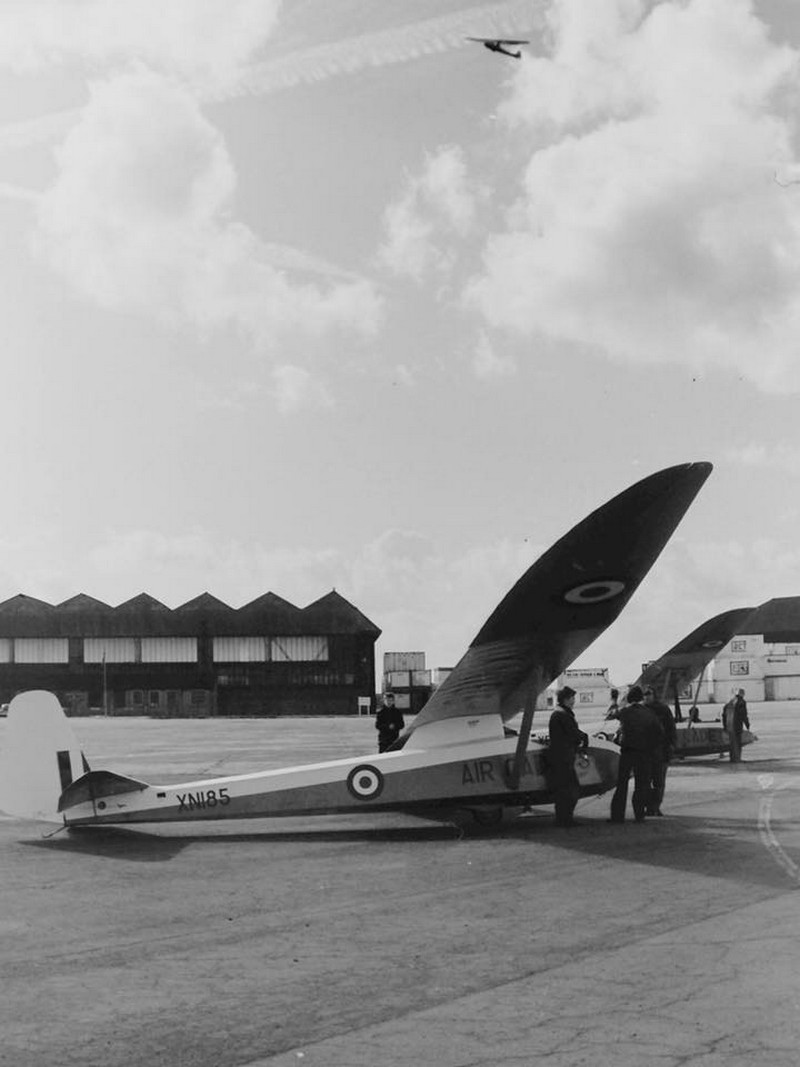
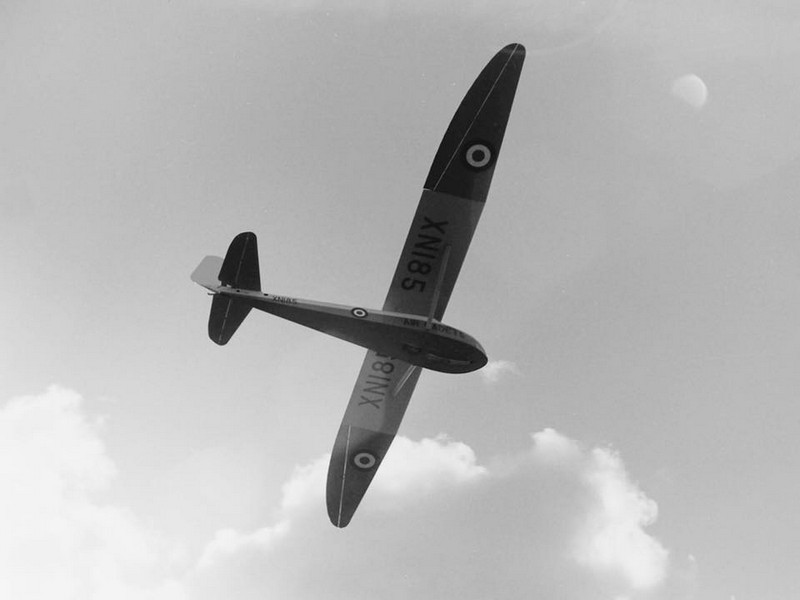

This is post WW2 Electrical & Mechanical Plynth near Mary Ann sites

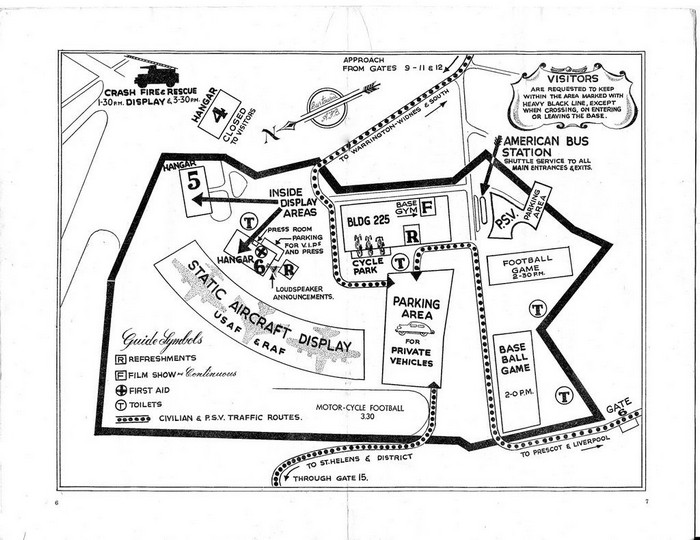
The first open day was held on the 15th of May 1954 with a public attendance of 100,000. Thereafter, the following open days were held: 19th of May 1956 with an attendance of 50,000. 18th of May 1957 with an attendance of 20,000. 17th May 1958 with an attendance of over 75,000. This was the last USAF public open day to be held at RAF Burtonwood.
The USAF left Burtonwood in early 1959, ...
The USAF left Burtonwood in early 1959, and the US Army arrived on the 2nd of January 1967. On the 20th of May 1967, the Burtonwood US Army depot held there first public open day. The next US Army public open days were held on Independence day celebrations, on the 2nd of July 1972.
The Royal Air Force Diamond Jubilee show...
The Royal Air Force Diamond Jubilee show was held on the 21st and the 22nd of July 1978. The US Army’s last open day was held on Saturday the 3rd and Sunday the 4th of July 1989. The US Army left Burtonwood for the last time on the 2nd of June 1993.
RAF Burtonwood public open day during th...
RAF Burtonwood public open day during the 1950s, Douglas C- 47D Number 43-49250, USAFon the Mary Ann site Apron In the background is one of the Depot Warehouse Workshops building 225. Each of these types of buildings was 300 feet wide and 700 feet long with a floor area of 210,000 square feet. The Air Ministry Drawing Number for this type of building is 7073/43.

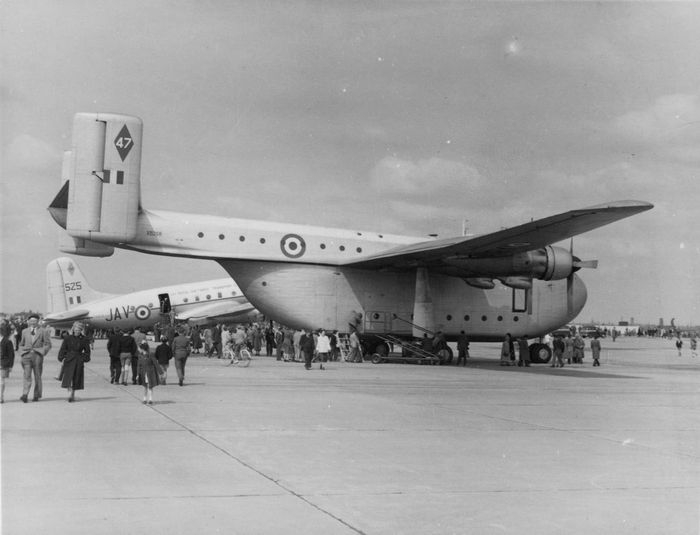

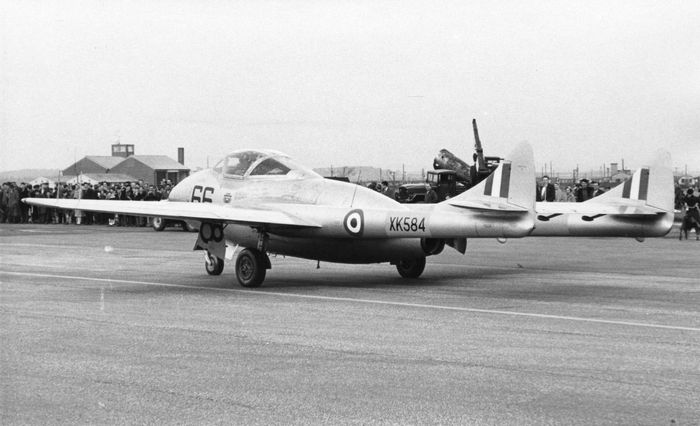
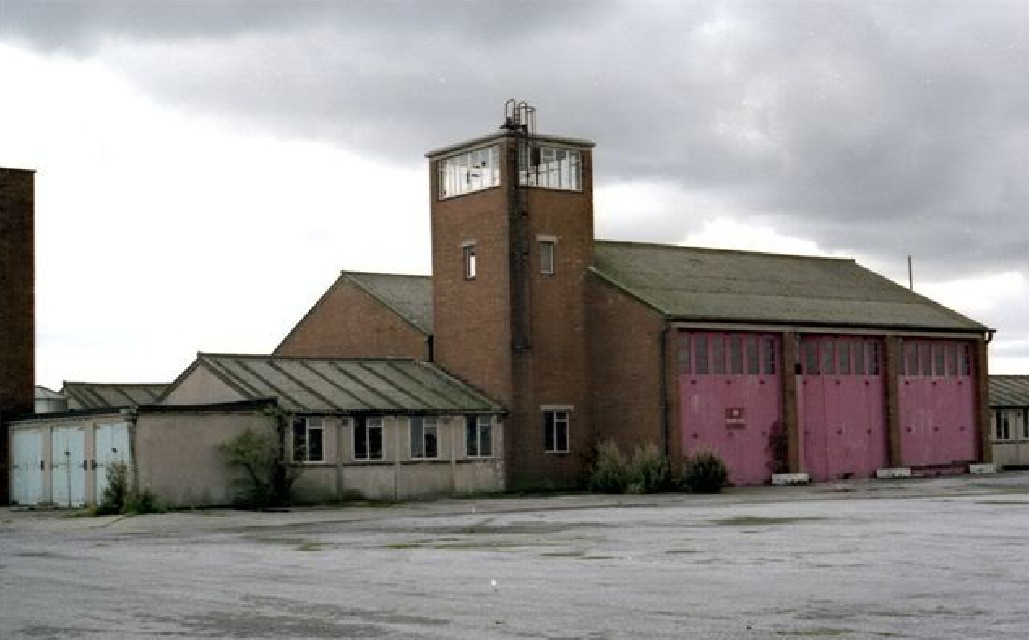
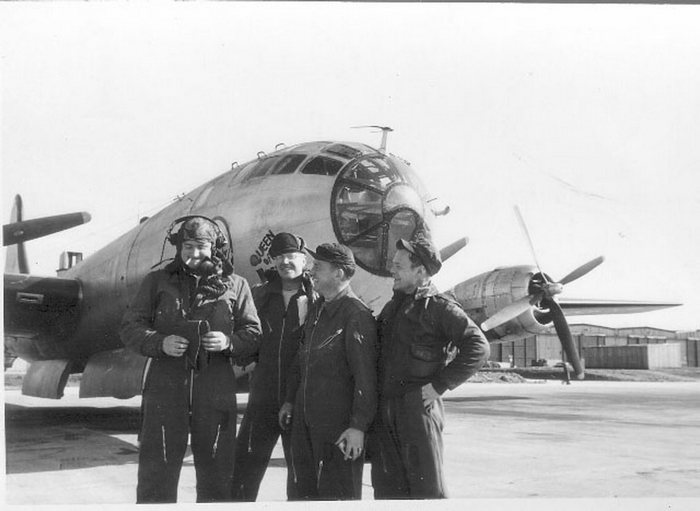
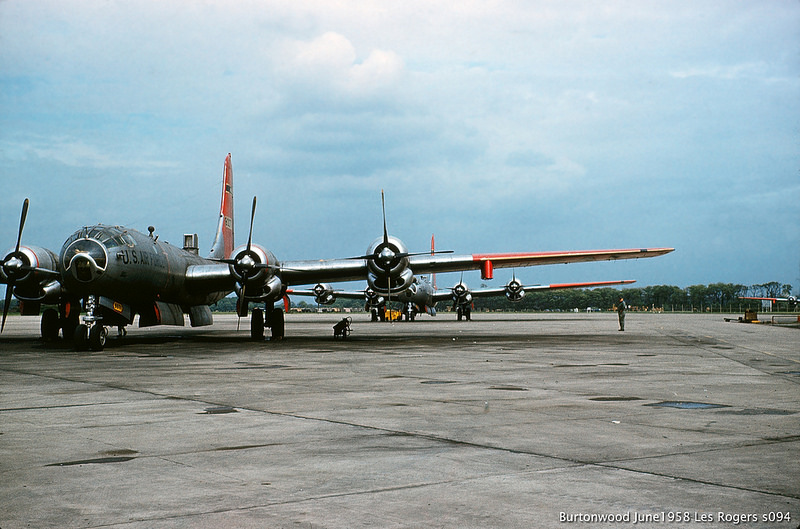
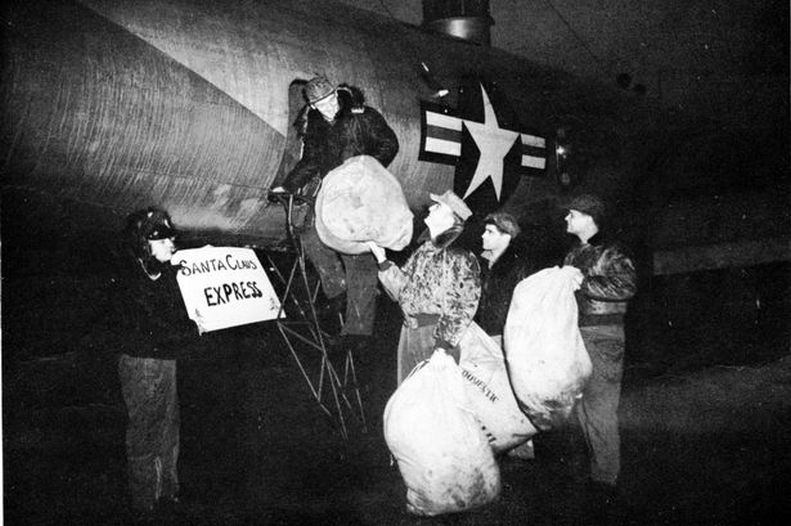
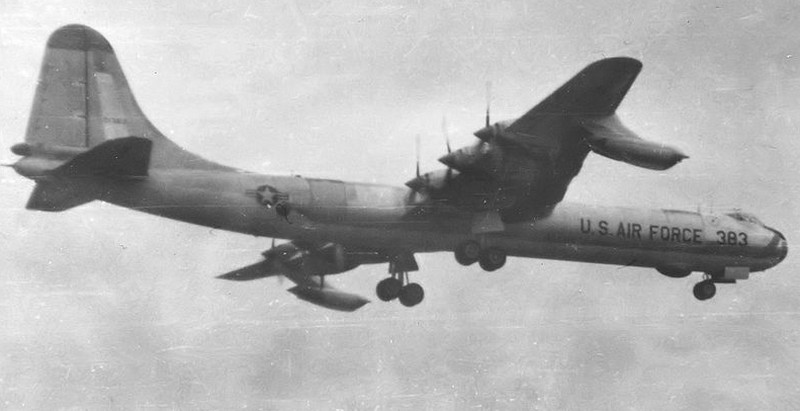
The largest aircraft to use Burtonwood was Convair B36 Peacemakers of the 11th Bomb wing Strategic Air Command (SAC). The aircraft had 10 engines, with 6 propellers and 4 jet engines. 16 of these bombers landed at Burtonwood between the 18th & 20th of October 1956. This size of aircraft were able to land and take off at Burtonwood because of the lengthening of the main runway.
The people of Warrington could hear the ...
The people of Warrington could hear the sound of the engines of these B36’s for miles and although they didn’t make any formal complaints regarding the noise they weren’t really pleased about it. Douglas C-117D (DC-3S) – USA – Navy Aviation Photo #1722395: Douglas C-117D (DC-3S) – USA – Navy US Navy R4D-8 of Fasron 200 communications squadron based at RAF Hendon on finals to RAF Burtonwood, Lancashire in 1956 It had been converted to ‘Super Dakota’ standard from R4D-5 c/n 12340 Photo was taken at Burtonwood in England United Kingdom in October 1956.

Summary There was talk at the time (1980’s) of trying to save 1 of the 2 control towers on Tech site and some of the hangars on ‘A’ site and ‘E’ site, but nothing was really done to save them and they were later demolished. Burtonwood Air Base, once the largest USAAF base in Europe and home to 1,000’s of American Service Personnel and their families is no more. The demolition contractors have destroyed all trace of this mighty base, but they cannot destroy the memories of the 1,000’s of personnel and their families who worked and lived there.
Even today (2015) one can still see, wit...
Even today (2015) one can still see, with a trained eye, rusting perimeter fences, some bases of buildings, the odd blast shelter on sites 2 and 4, and also the East/West Road to Tech site and site 6 and ‘G’ site. Photo Dated August 1987 – Main Route/Road Across The Airfield Looking West (Note the street lighting still in position) At the end of this road is a t junction and turning left leads to Gate 6 (Barrows Hall Lane) & Turning right leads to ‘G’ Site, Site 6 & Technical Site. Turning left in the foreground eventually leads to the Main entrance Gate 12.
Site 2 is the Largest Communal Site on
Site 2 is the Largest Communal Site on the Airfield. Site 2 is on the Left of this Photo (The green grassed area) and Stretched all the way over to Barrows Hall Lane Gate 6.
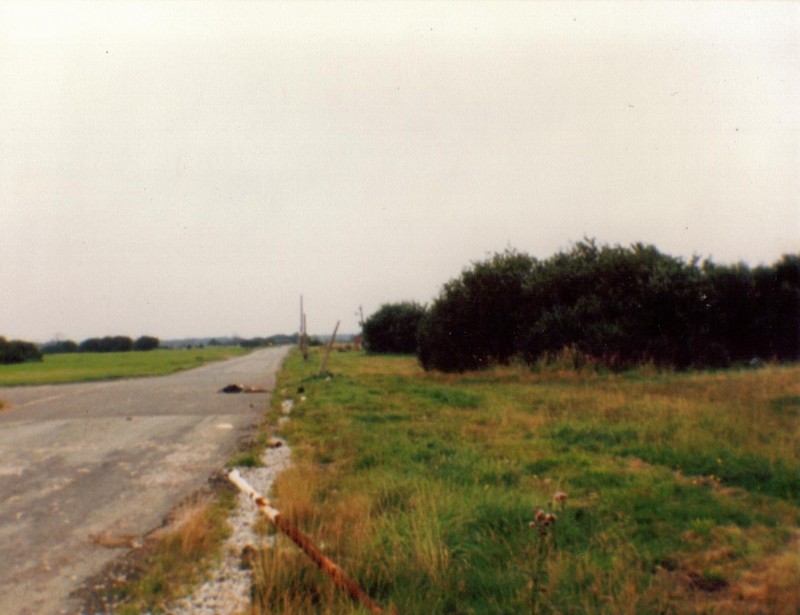
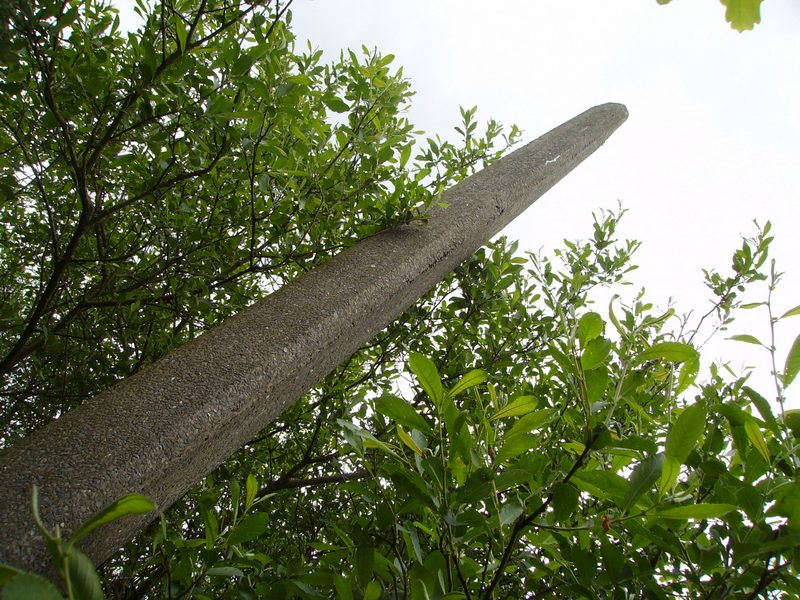
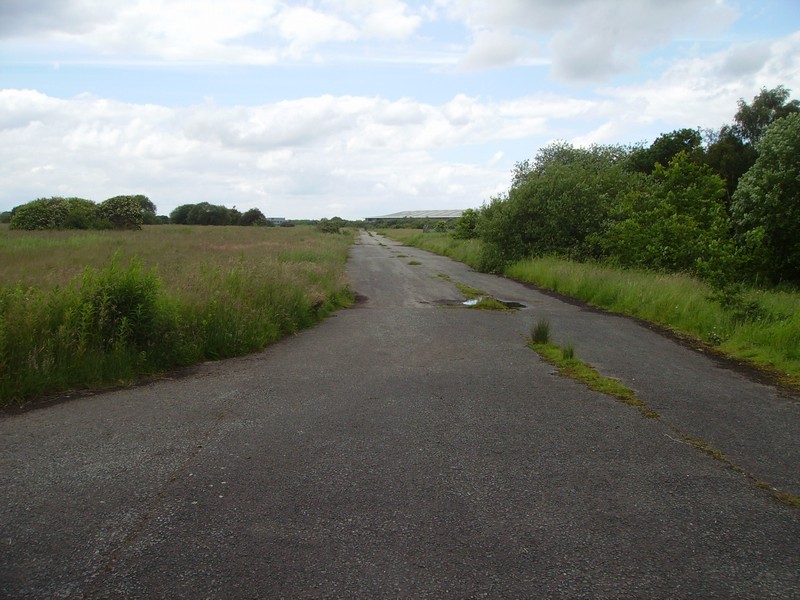

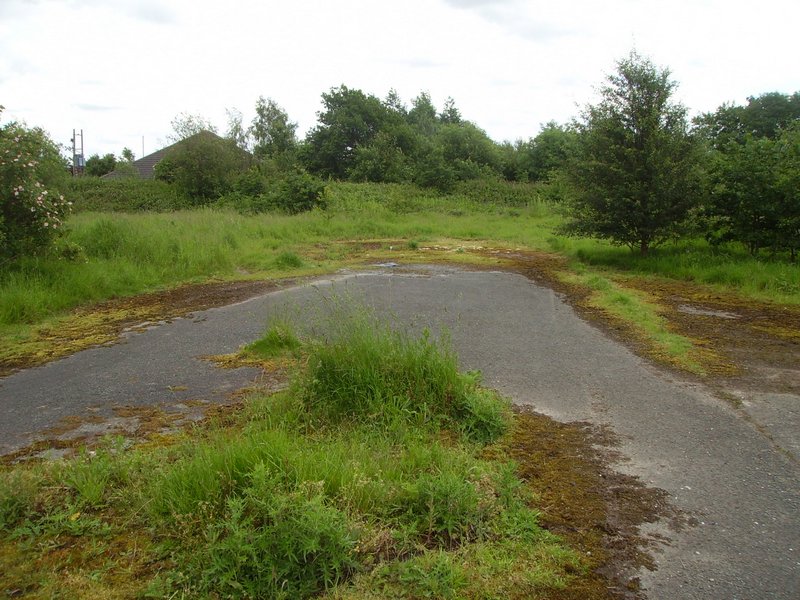
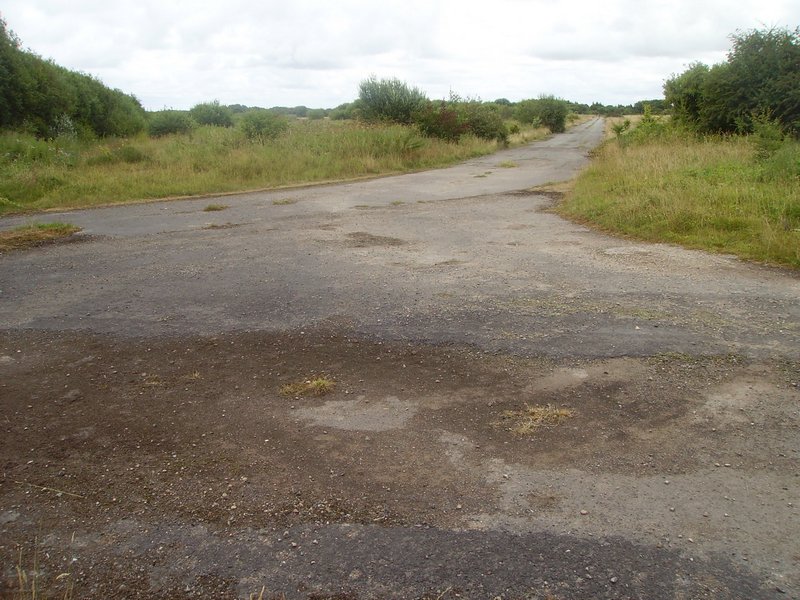
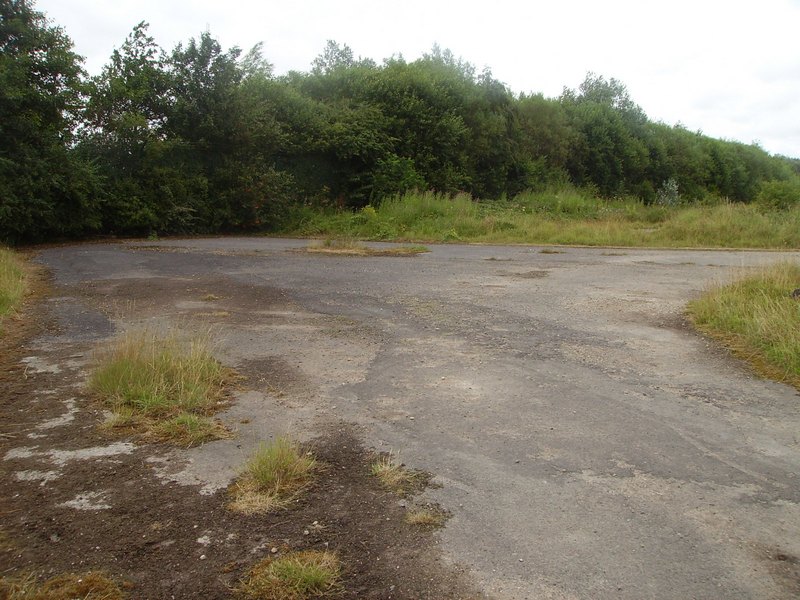
Looking North From Gate 6 towards the Junction (above)
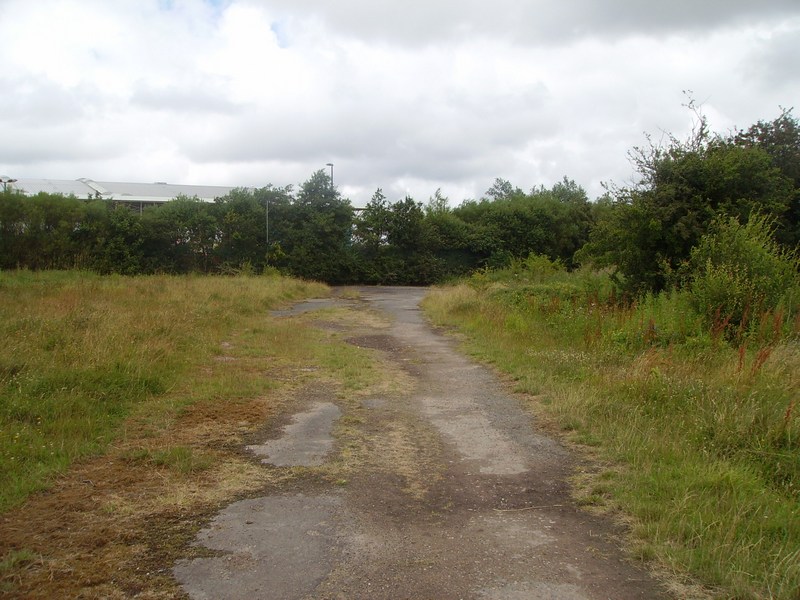
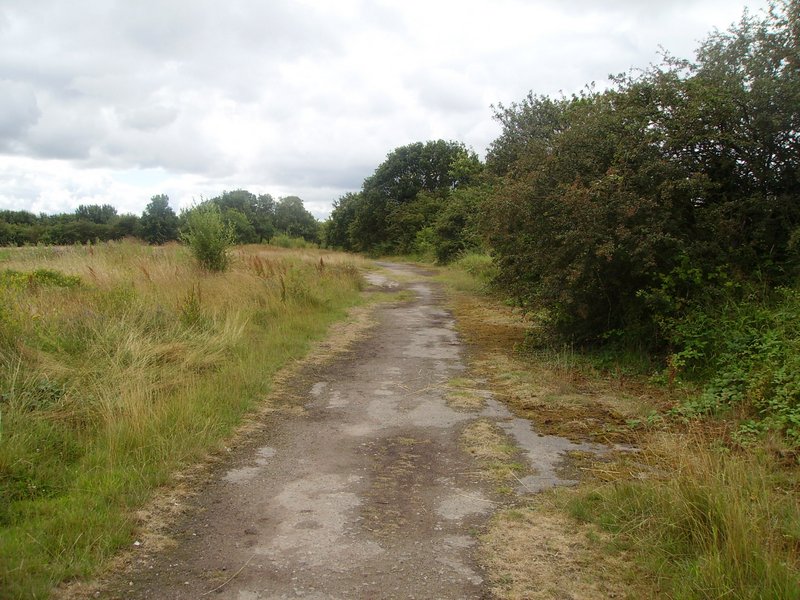
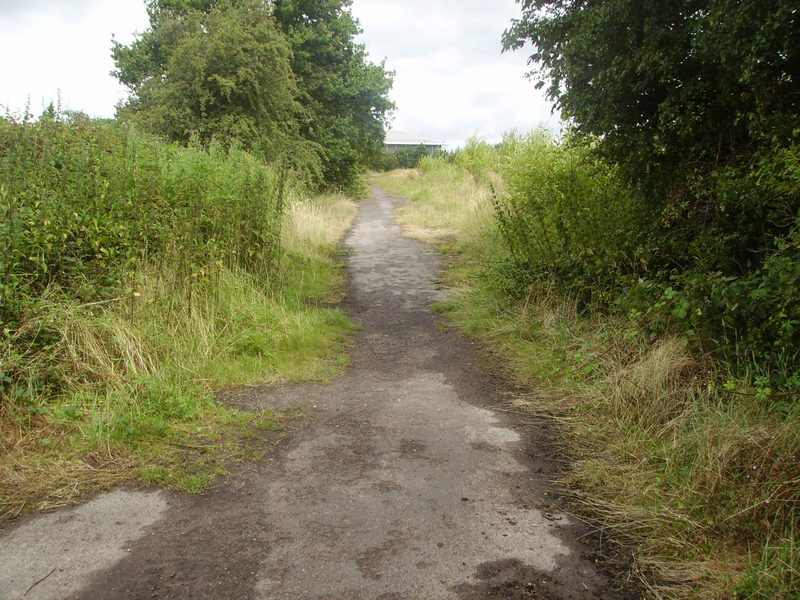
In the woods on the right (above) is a gate that was the entrance gate 6 (below)
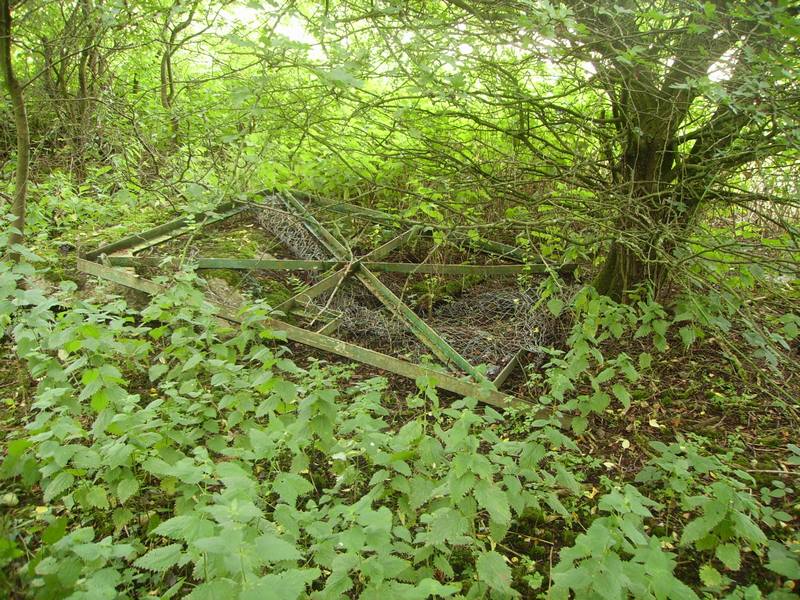
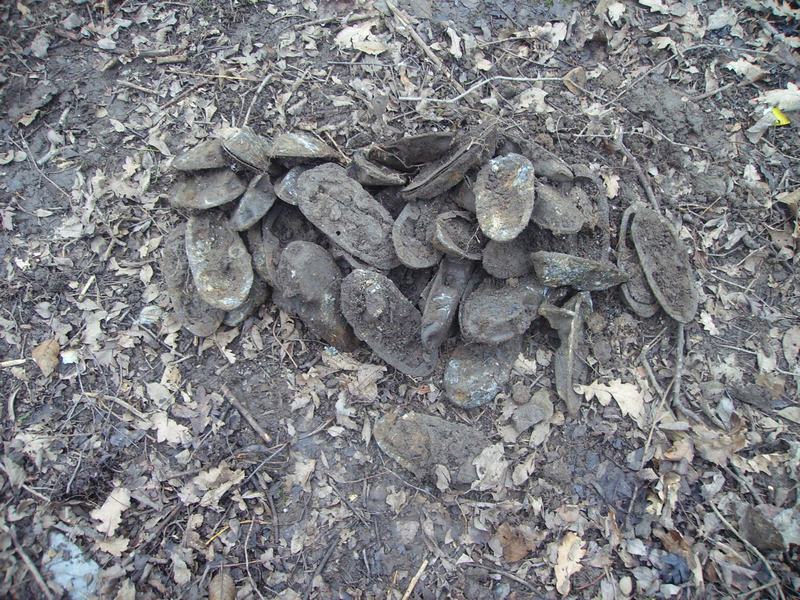
B17G Undergoing Maintenance on Either 'Technical' Site or 'A' Site
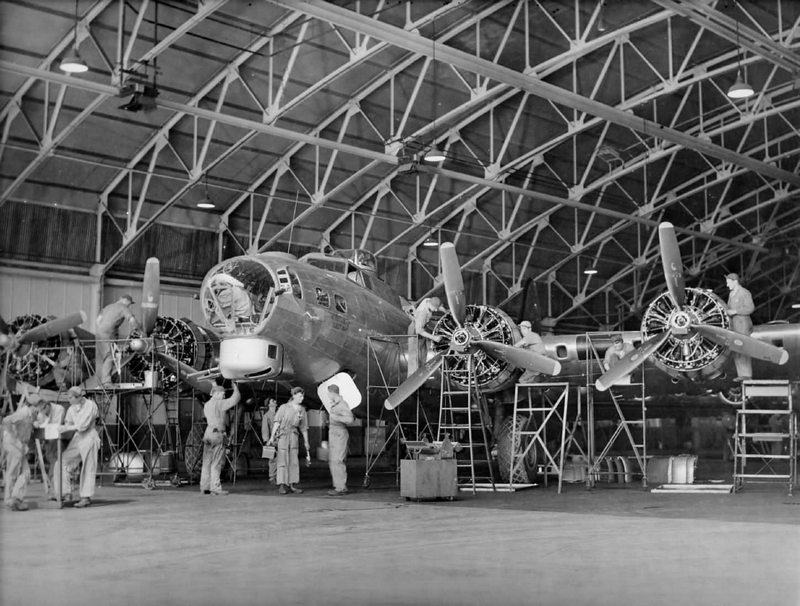
P38 Lockheed Lightning Undergoing Maintenance on Either 'Technical' Site or 'A' Site
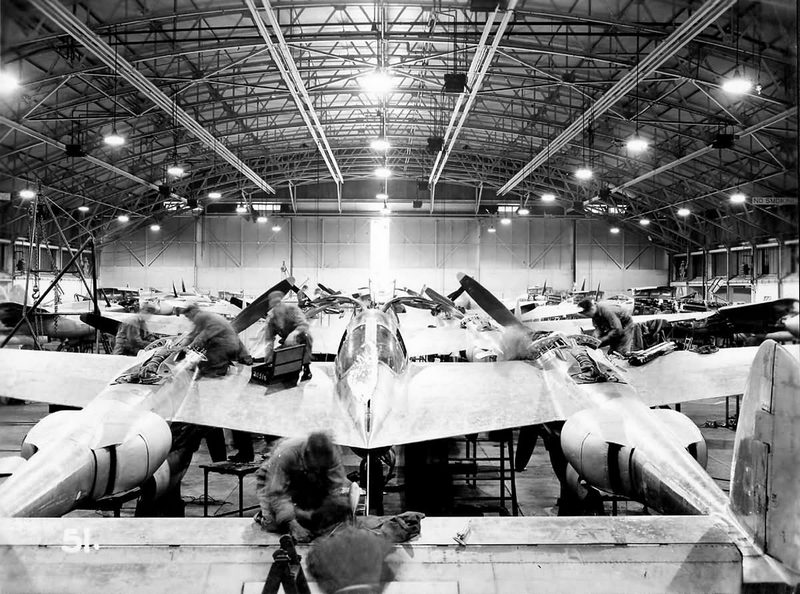
RAF Mustang I AG411 at RAF Burtonwood England

North Dispersals Area 2014
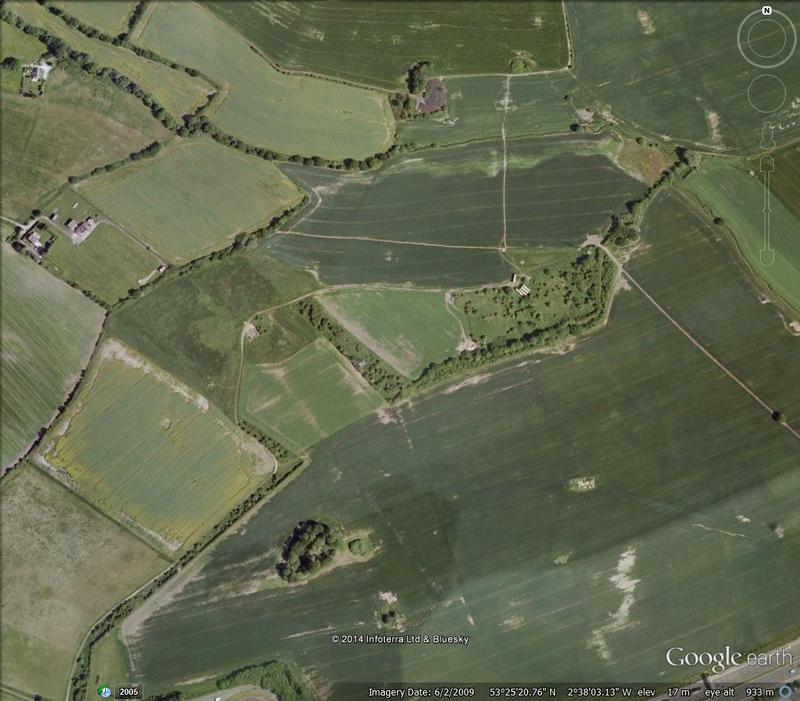
Record Site Plan of North Dispersals
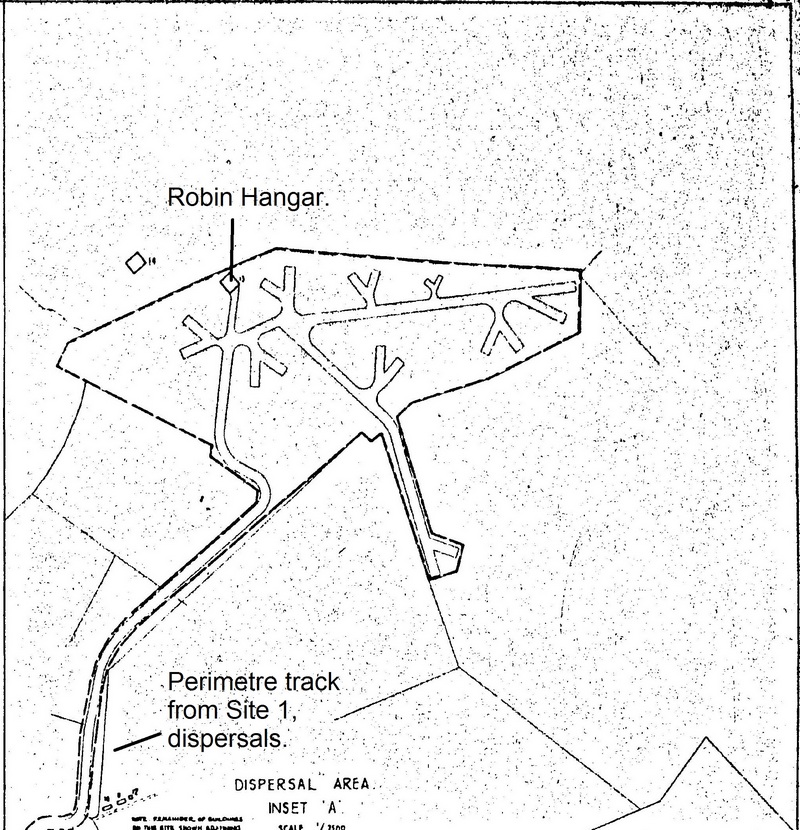
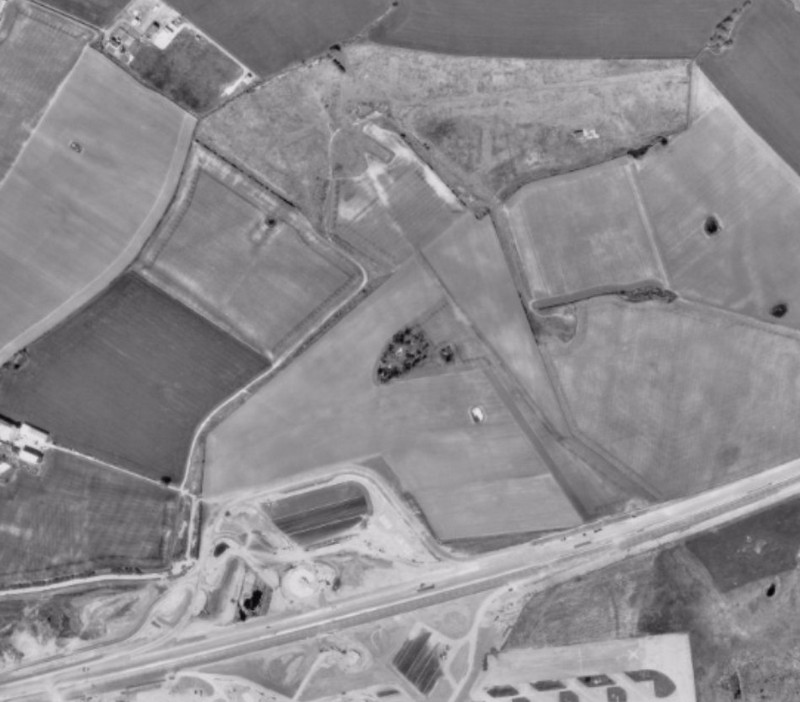
The North Dispersals in 1945 Showing Rows of B17's Waiting to be Scrapped

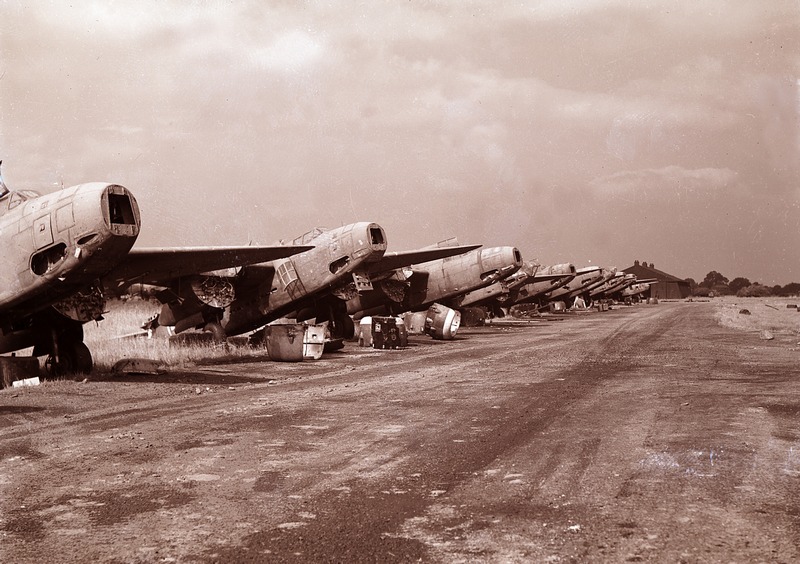
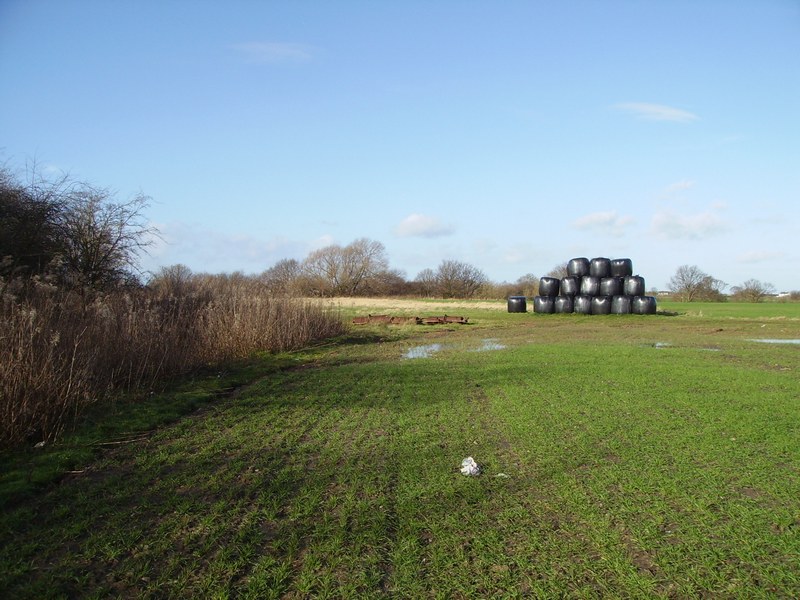
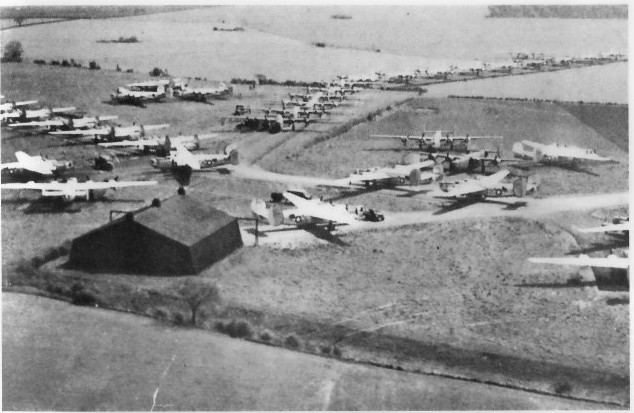
This is the Main Entrance to the North Dispersals Area looking North.
This Squared off Fenced Area is on the South Perimeter of the North Dispersals. Its Purpose is Unknown? It is Not Shown on WW2 Aerial Photos Anywhere (that we know of).
This is Unusual Because the North Disper...
This is Unusual Because the North Dispersals Area Was Not Used After WW2. This black and white photo was taken in 1972 and shows a building on it along with at least 4 concrete bases where buildings (possibly?) once stood. You cannot see the entrance or gate on this photo but there is an entrance opening at the top right hand corner of the fencing
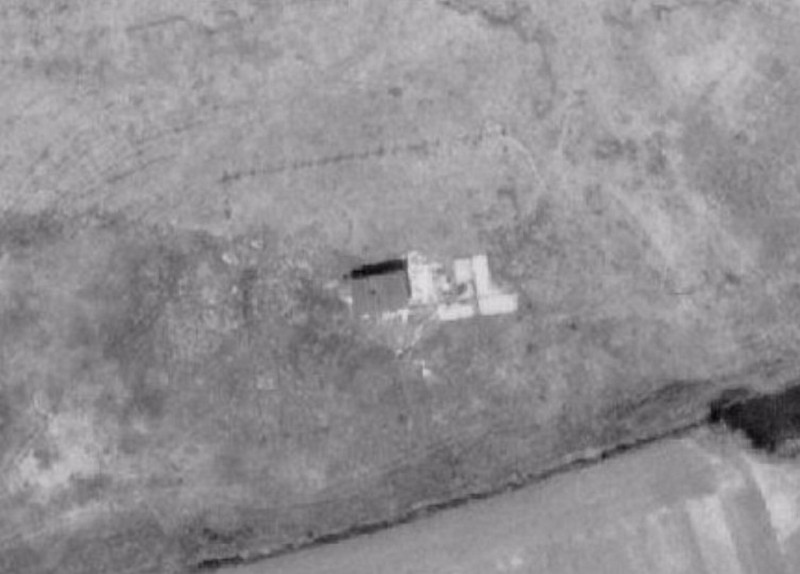
This colour photo was taken in 2014 (facing North West).
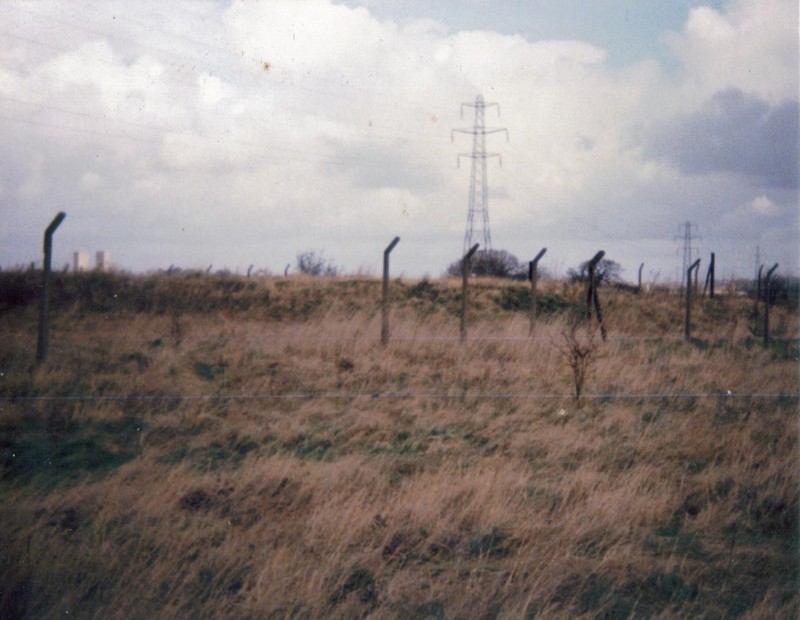
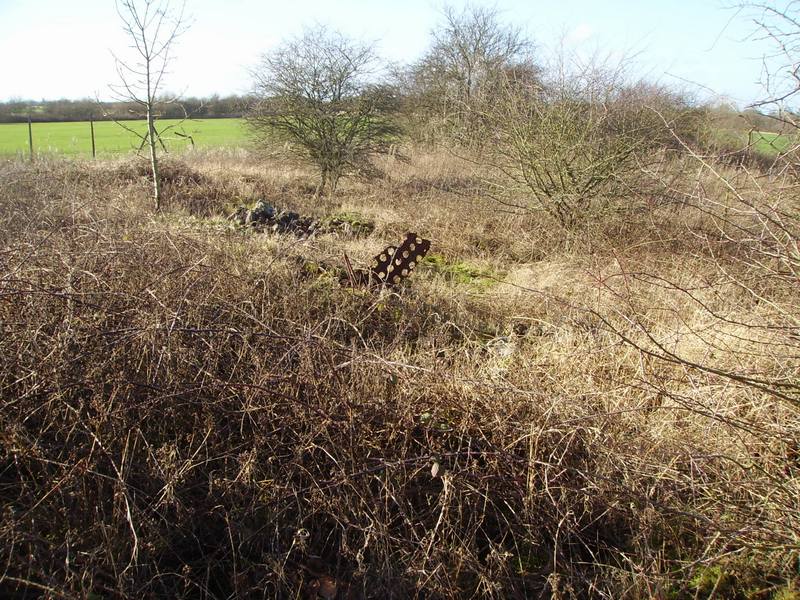
P51 Mustangs on 'E' Site in the Process of Being Scrapped 1945
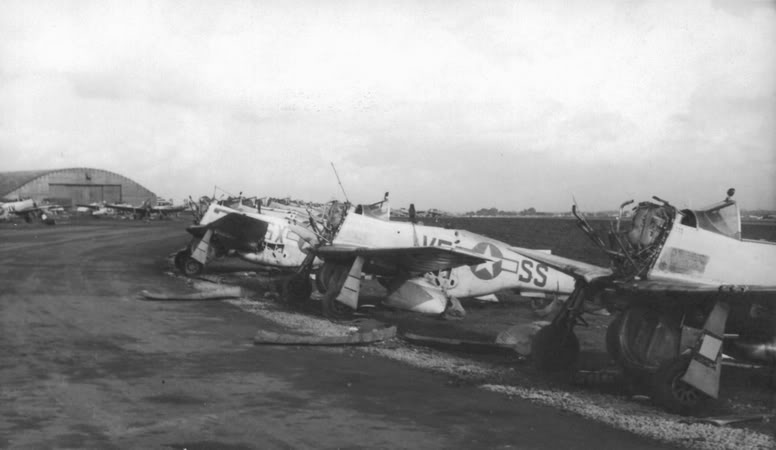
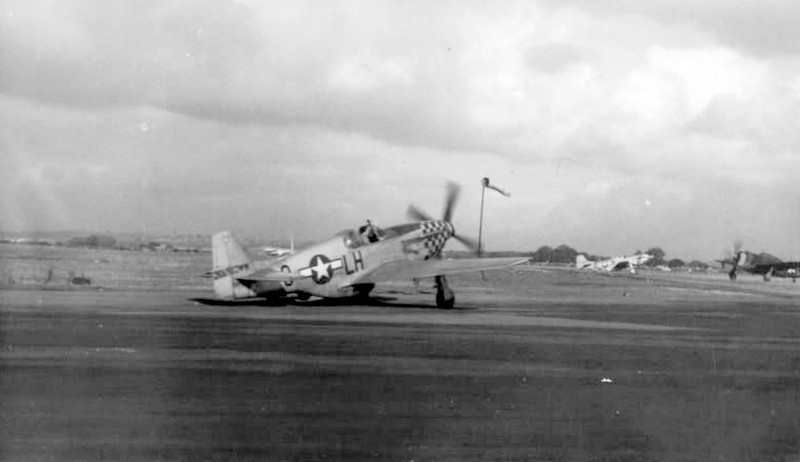
Farm girl collecting hay next to B17s next to the North dispersals looking North.
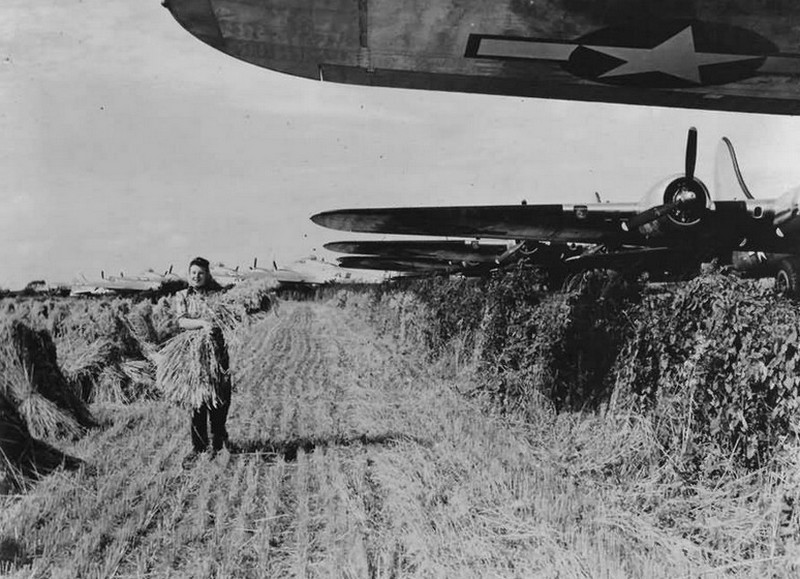
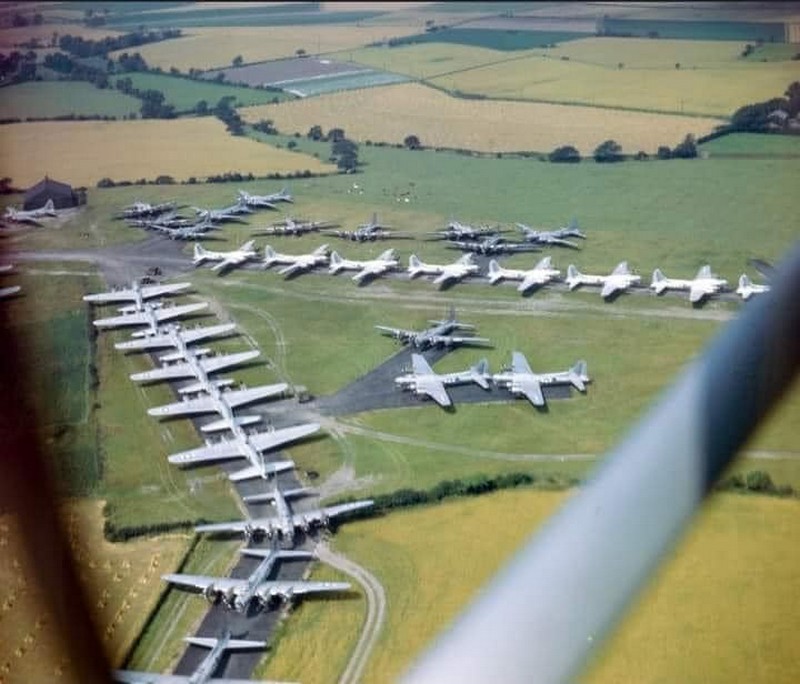
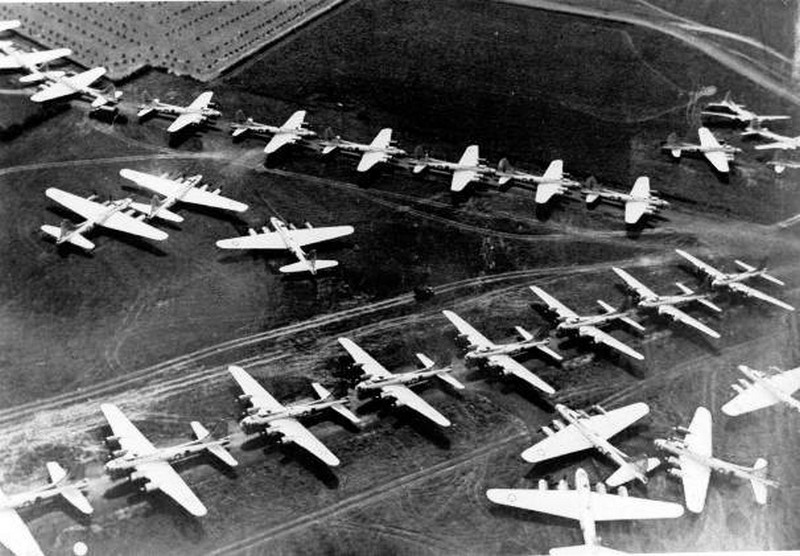
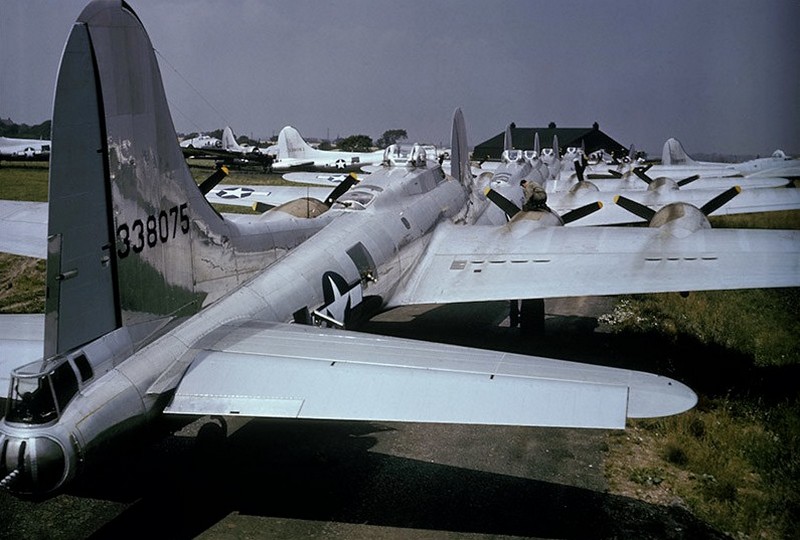
Haydock Park Racecourse Haydock Park racecourse is located 6 miles north from the town of Warrington and opened as a racecourse during 1890 and was referred to as the Ascot of the north. During world war 2 the racecourse was closed and used for military purposes. Between 1940 to 1942 Polish and Czech soldiers plus free French sailors and marines were stationed there. During the middle of 1943, the 76th infantry division of the united states army arrived at Haydock Park in the preparation for the D-Day landings.
On the 13,11,1944 detachment L supply di...
On the 13,11,1944 detachment L supply division of the united states, army air force arrived at Haydock with a complement of 165 personal and 5 officers and used Haydock as a subsite to the nearby USAAF station at Burtonwood. At this period of time Haydock Park was officially called Haydock Park United States Army Air Force station 530 storage, supply and equipment depot, the USAAF left on the 3,10,1945 when the site closed. After the end of the war on the day of the first race meeting in 1946, it was reported that the racecourse was still packed with gliders and vehicles.
Nissen hut in the Eastern wooded area
Nissen hut in the Eastern wooded area.
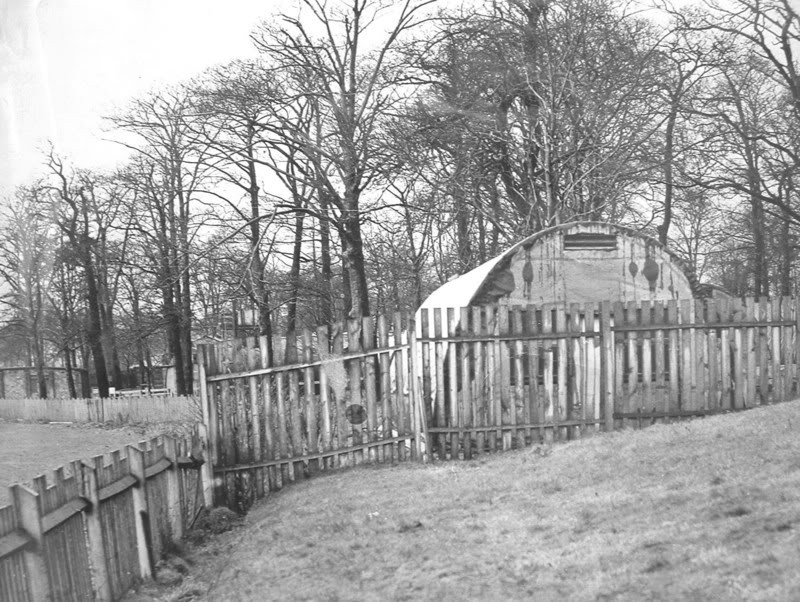
WW II buildings and Nissen huts next to the grandstands, looking northwest.
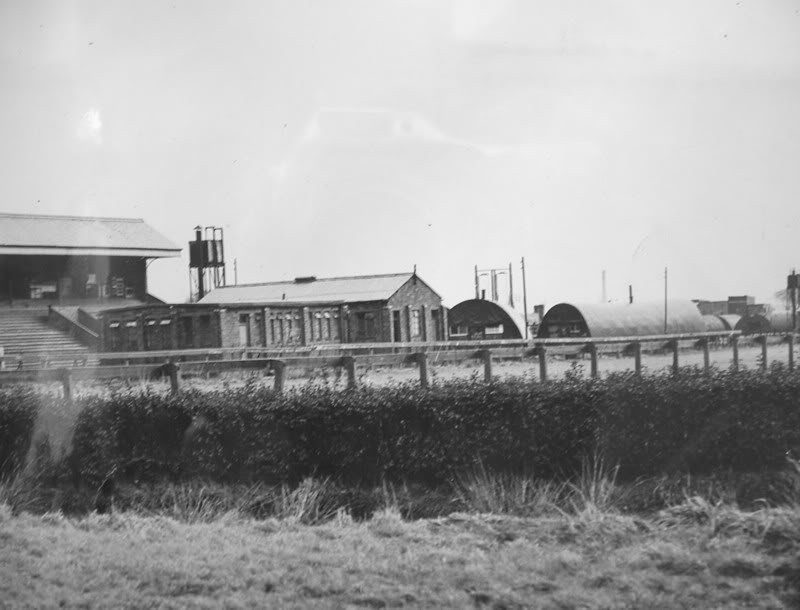
Packing cases, storage.
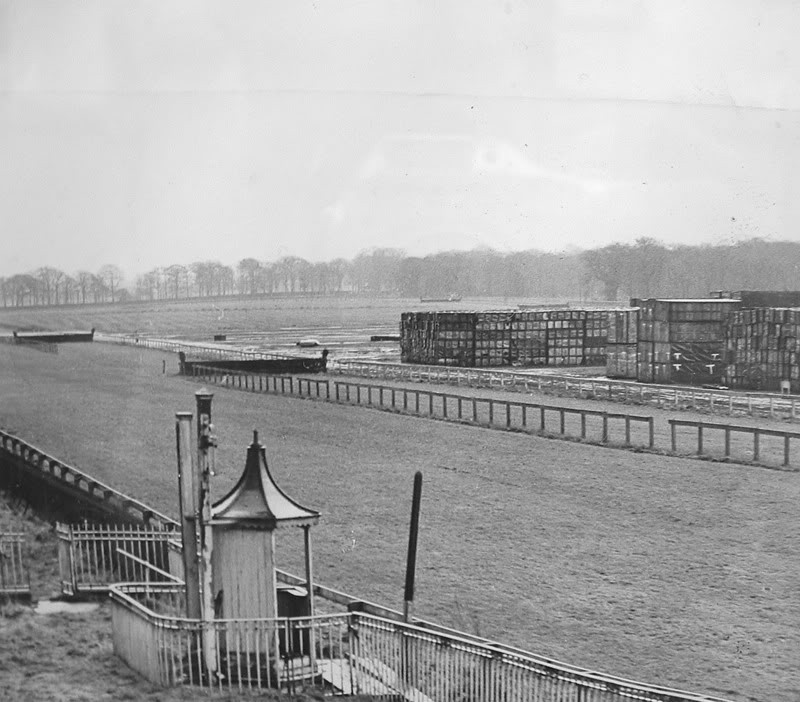
Nissen hut accommodation located at the eastern wooded area.
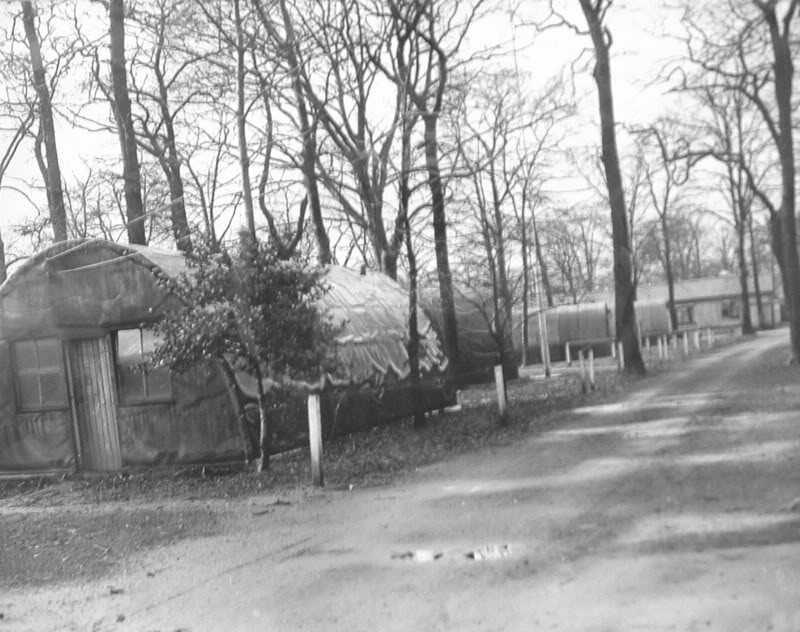
Looking North.
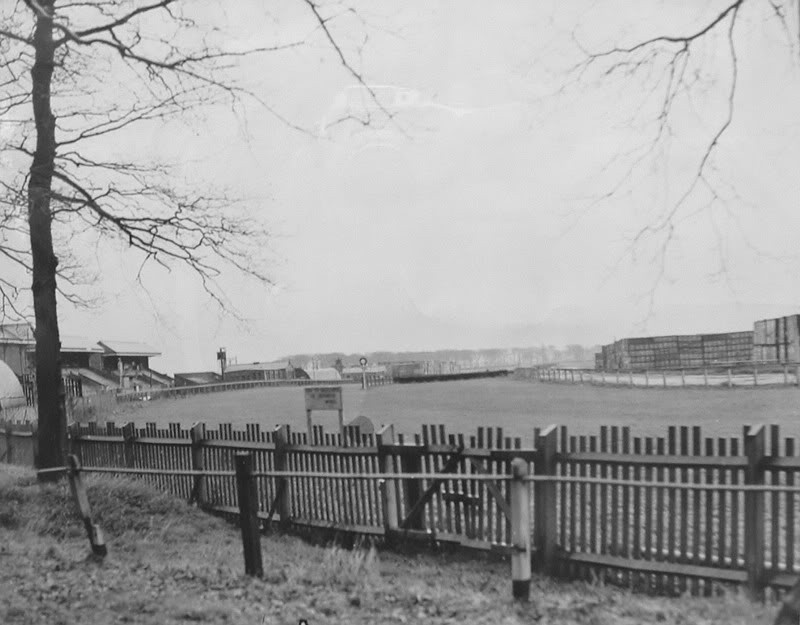
View of the grandstands looking west WW2 buildings to the right.
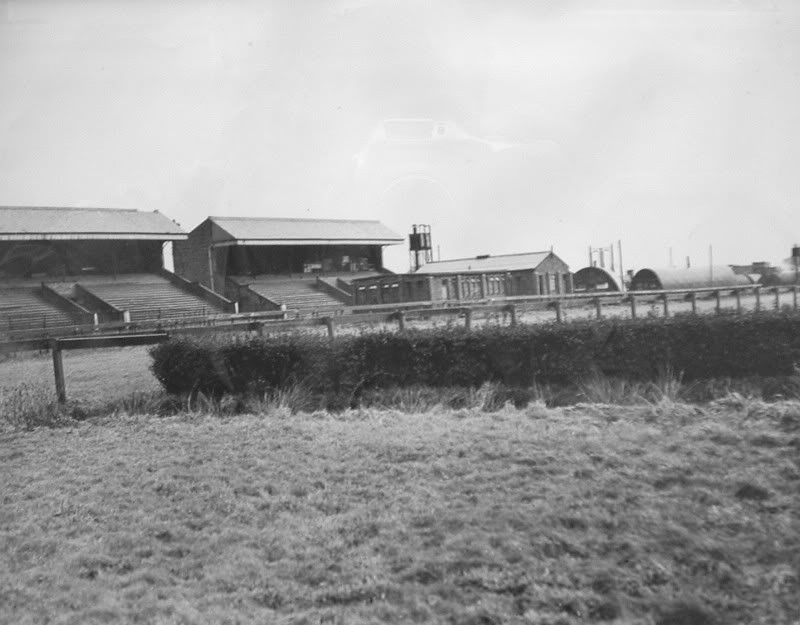
Looking North.
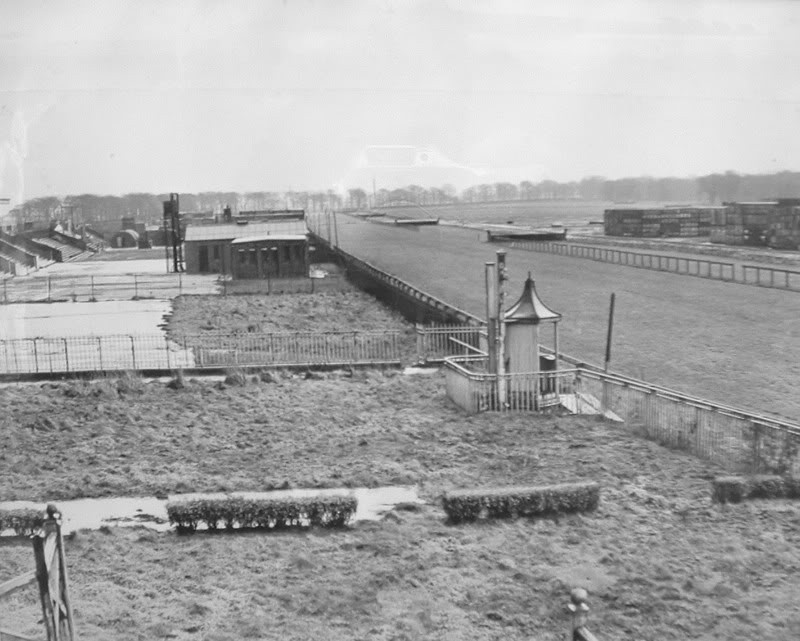
The racecourse today.
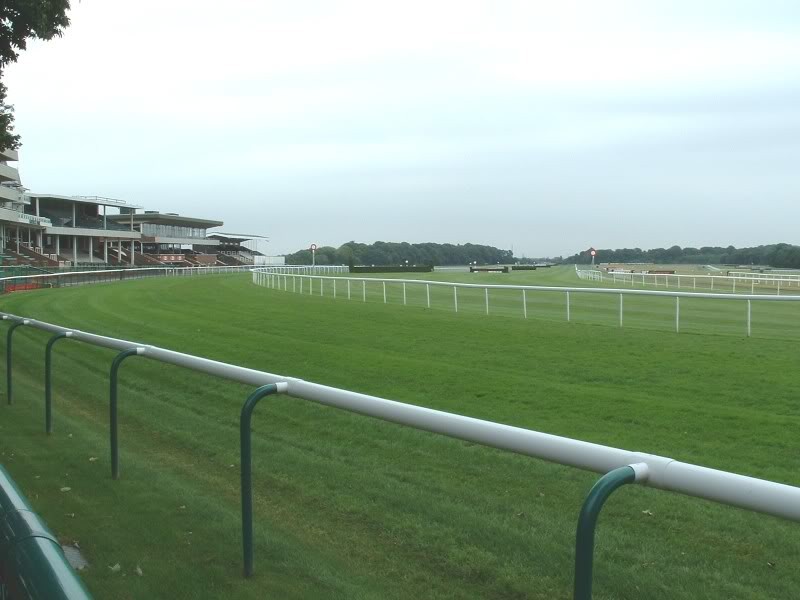
USAAF bar and mess room.
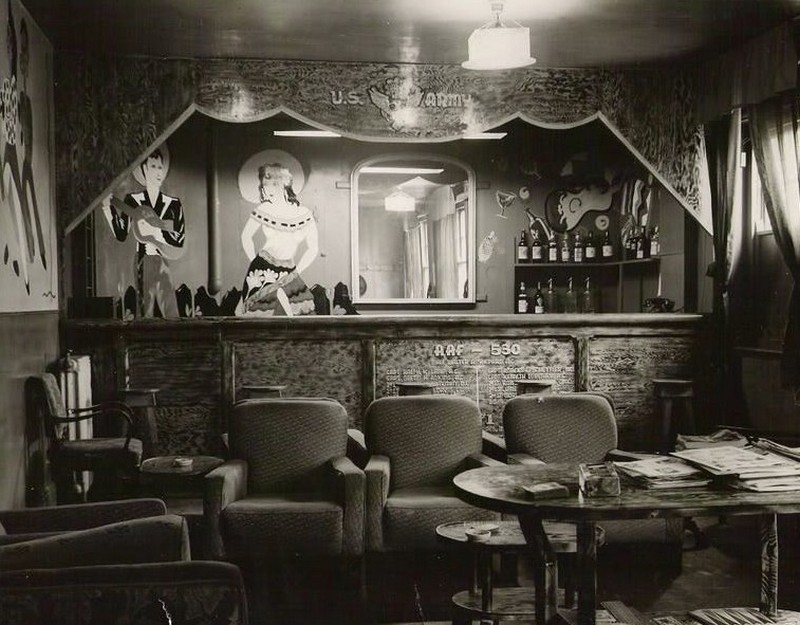
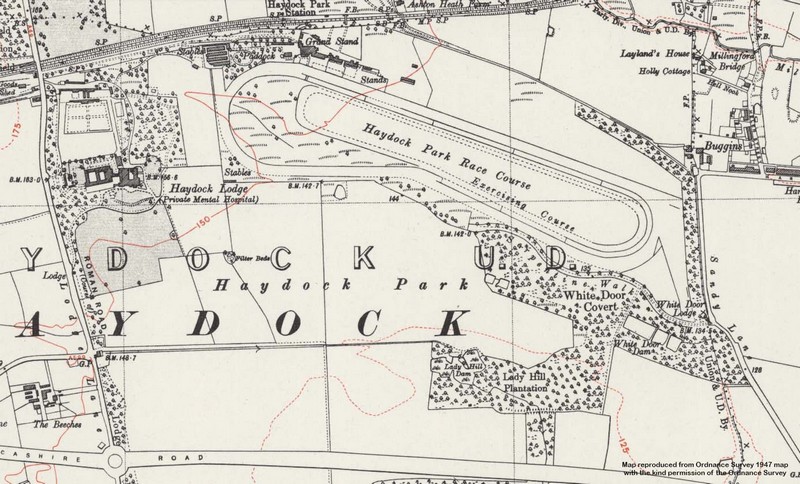
The crash landing of P38 Lightning Moss Bank Village Billinge St Helens.
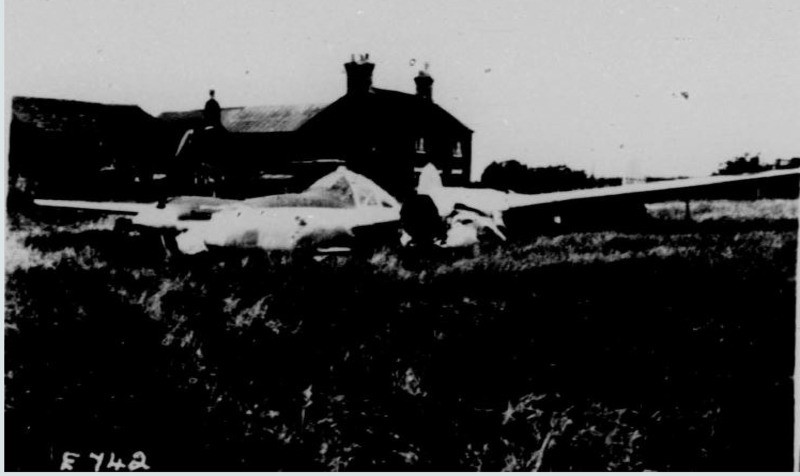
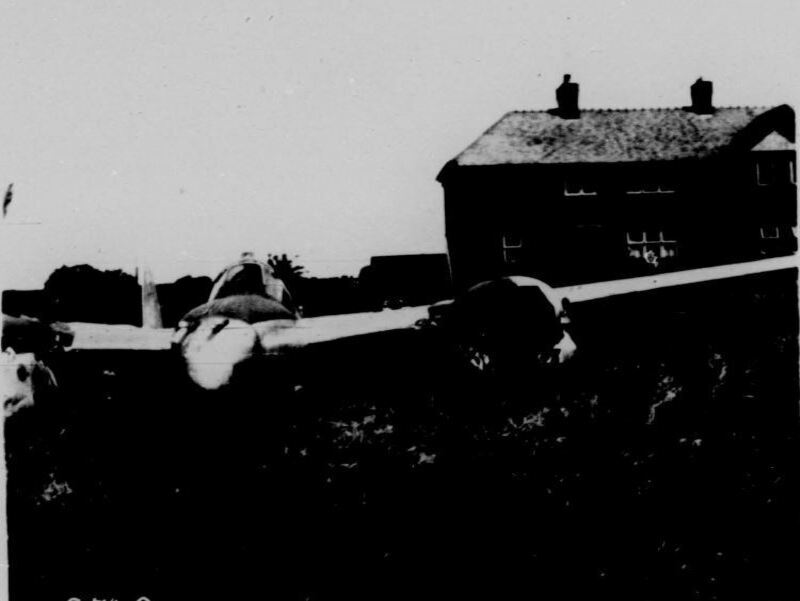
Offical United States Army Air Force Accident Report.
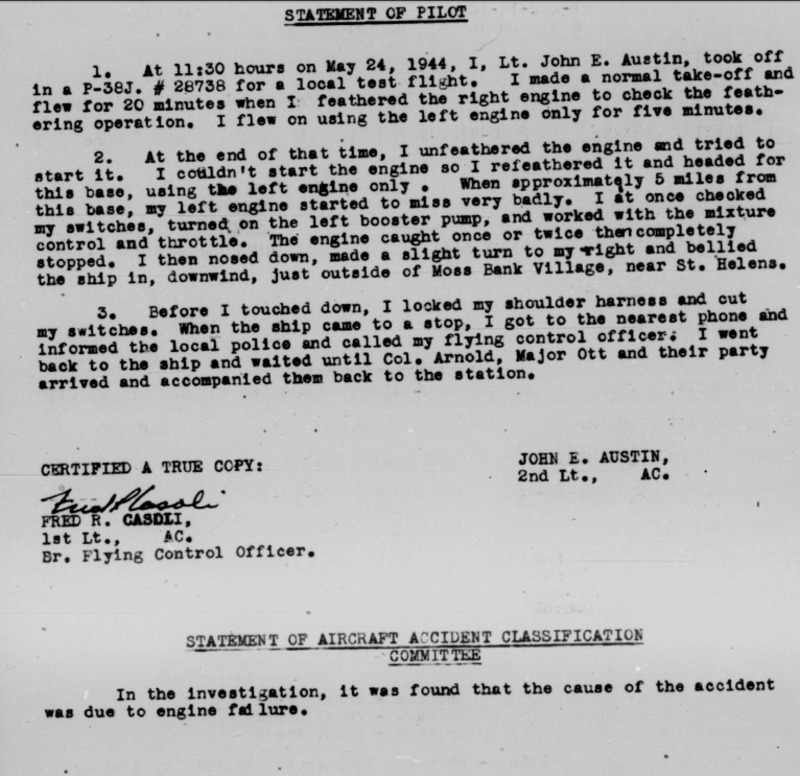


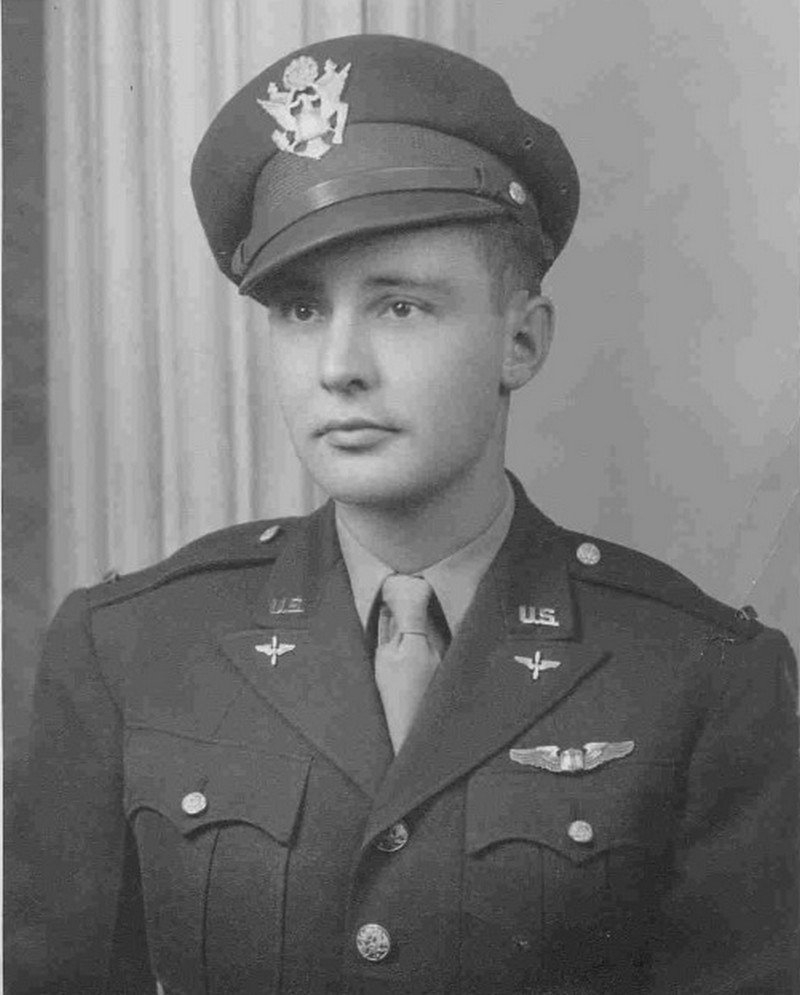

New Section: Burtonwood Preservation Efforts
Details about ongoing preservation and restoration efforts at the Burtonwood site will be added here. This section covers the work being done to maintain and protect the historic buildings and infrastructure for future generations to appreciate and learn from.