53rd weather reconnaissance squadron
53rd weather reconnaissance squadron and MATS military air transport services squadron sign-on mary ann site, with a Boeing WB 50 Superfortress in the background
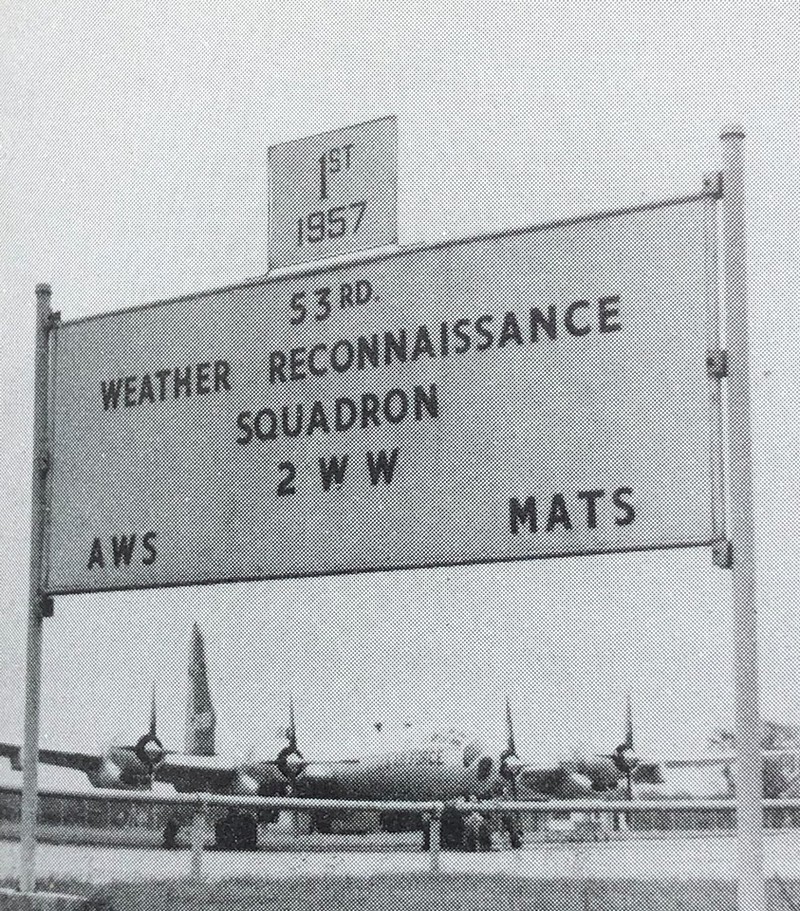
Reveille for many Burtonwood residents is provided every morning at 0700 GMT by the familiar roar of engines as the daily 53rd Weather Reconnaissance Boeing WB-50 starts its take-off roll and heads out over the cold North Atlantic to probe the secrets of the Weather. Routine? Yes, but behind this take-off are the combined efforts of every member of Lt.
53rd Weather Reconnaissance Squadron
The 53rd WRS moved to Burtonwood in November 1953 & used the ‘C’ type hangars on Mary Ann site, with a complement of 8 converted B-29 bomber’s to WB29’s & later replaced with WB-50’s. They were assigned to collecting weather data for (MATS) which stands for ‘Military Air Transport Services’. Each day they flew triangular patterns known as ‘Falcon Flights’ covering about 2,600 miles & averaging 16 hours each flight over the Atlantic. ‘Delta Flights’ left each day at Burtonwood at: 0700 hrs GMT & flew a track to the Azores – then South of Greenland – then set course East, back to home base at Burtonwood.
The flight was 3,686 miles long & the ...
The flight was 3,686 miles long & the average flying time was 15 hours. The weathermen on the aircraft recorded data such as: Pressure, Temperature, Wind Speed, Humidity, Cloud Conditions & Visibility. The 53rdWRS left Burtonwood for re-assignment to Alconbury in Cambridgeshire in April 1959.
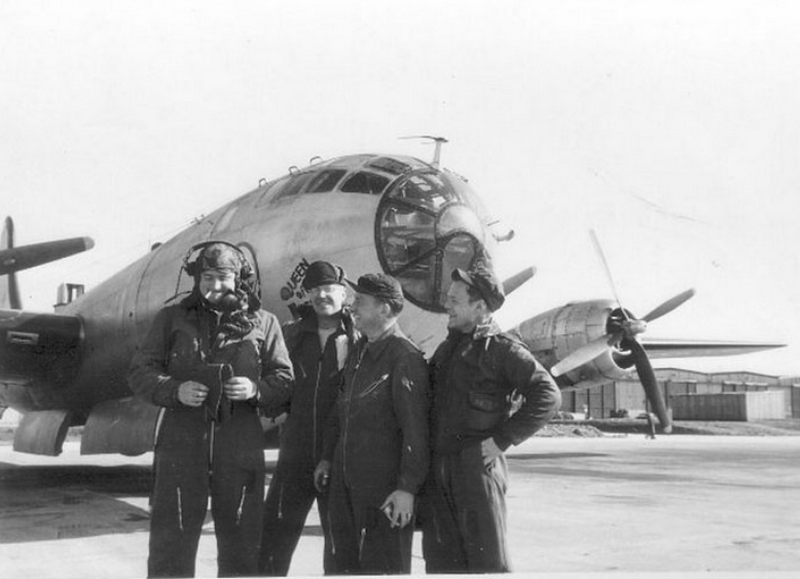
Boeing WB-50 of the 53rd Weather Reconna...
Boeing WB-50 of the 53rd Weather Reconnaissance Squadron USAF on the Apron at Mary Ann Site RAF Burtonwood named Queen of the Fleet During 1955. In the Background is one of the Depot Warehouse Workshops building 225 Left to Right our Stew Waddell, Lieutenant Alexander, Howard Evans, and John Henderson.
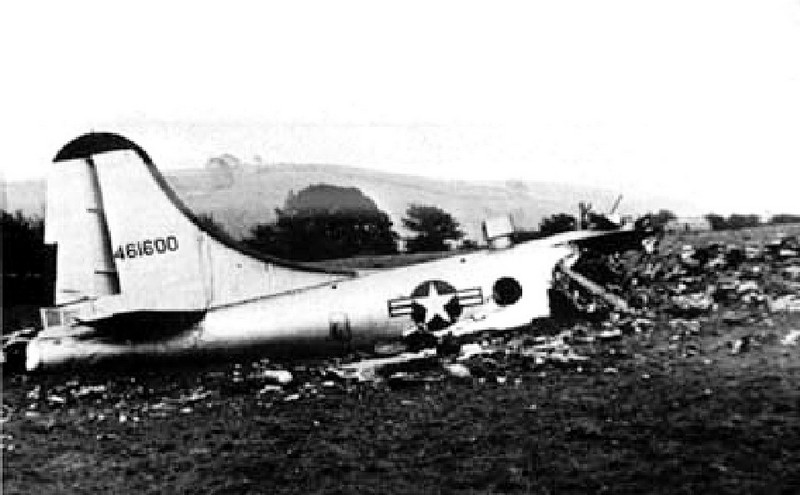
53rdWRS Crash at Lupton Fell (Nr Kendal in the Lake District) On the 25thof October 1955 Falcoln Flight WB-29-44-61600 Superfortress developed engine failure on engines 1,2 & 4 at 3,200 feet & crashed. All 11 crew safely landed by parachute & the aircraft was abandoned. The very next day, personnel from Burtonwood arrived at the crash site & began to investigate what caused the aircraft crash & too remove all of the wreckage.
Boeing Superfortress WB-29 A-35-BN 44-61...
Boeing Superfortress WB-29 A-35-BN 44-61600 of the 53rd Weather Reconnaissance Squadron crashed at Lupton Fell, Near Kirkby Lonsdale Kendal England.on October 25, 1955. The B-29 left RAF Burtonwood at 0713 hrs GMT, on A Delta Weather flight Mission. The track was 3,686 miles long and extended from Liverpool to a point 250 miles North of The Azores.
The flight track swung around along the ...
The flight track swung around along the 30th meridian to a point 420 miles south of Greenland, and then turned east towards Burtonwood. The first leg was flown at 10,000 feet, the second at 18,000 feet and the third at 30,000 feet. The flight time taken was 15 hours.
Weather observations were made at fixed ...
Weather observations were made at fixed points 150 nautical miles apart. The weatherman, seated in the nose of the aircraft, recorded wind speed and direction, pressure, humidity, temperature, cloud conditions, visibility, surface winds, and pack ice conditions (if any). Since the aircraft was unable to maintain direct radio contact with Burtonwood, the information gathered was coded by the radio operator and sent to Croughton radio station in Oxfordshire.
From there the information was transmitt...
From there the information was transmitted to the 53rd’s weather monitor at Burtonwood, where it was decoded and carefully checked for transmission errors before being sent by direct teletype to the Central Weather station at High Wycombe. Similar observations were made on the Falcon Echo Flight. This track ran down to the Maderia Islands then swings northward to a point on the 26 deg West meridian near the Azores, then almost due north-east back to England.
Falcon Alfa, flown on every third day wi...
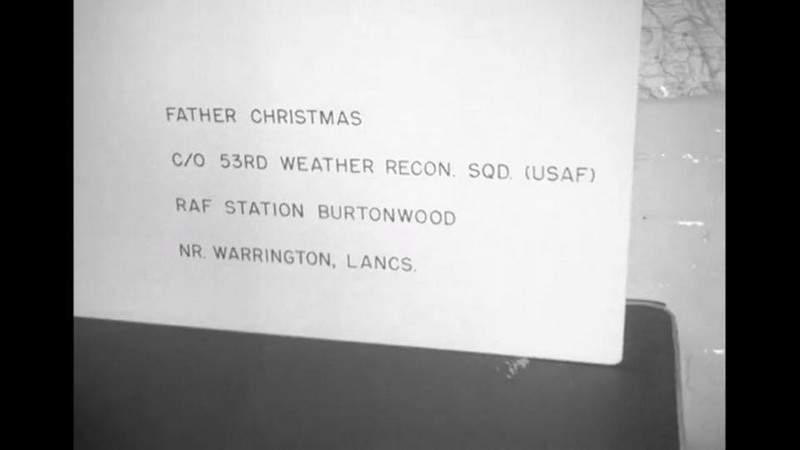
Falcon Alfa, flown on every third day with a date divisible by three. This track extends up the coast of Norway into the Polar regions and back to Iceland and down the west coast of Scotland — again out at 18,000 feet and back at 30,000 feet. This flight achieved fame in the National Press at Christmas, when it became known that the crew released letters from local Children over the North Pole addressed to Father Christmas. 25 October 1955 Boeing WB-29A 44-61600 experiences multiple problems including failed fuel feed pump and headwinds, while returning from a mission to the polar region; as fuel exhaustion becomes critical,1,300 miles from home base Burtonwood over Greenland the Boeing WB -29 develops engine trouble.
At 10,000 feet No 3 fuel tank booster
At 10,000 feet No 3 fuel tank booster pump became inoperative, the aircraft turned back and came down to 9,000 feet to conserve fuel and give maximum performance. They covered 1,100 miles to a point North of Prestwick but communications difficulties made it impossible to make an instrument approach at Prestwick. The pilot had the choice of trying to land or return to Burtonwood and he chose the latter. 40 miles south of Prestwick No 1 engine had to be shut down, No 2 developed similar fuel flow difficulties and No 4 gave indications of the same thing happening.
At 23.30 the order to abandon the aircra...
At 23.30 the order to abandon the aircraft was given, all eleven parachuting safely to the ground but the aircraft crashed and was burned out except for the rear fuselage and tail Before Parachuting out Captain Bergevin set the stricken aircraft to fly out towards the sea, but it immediately began to turn in a slow spiral descent. The occupants at a local farm near Kirby Lonsdale heard the plane flying very low, followed by a terrific crash lighting up the night sky with an orange glow. The farmer George Richardson, rang the police and then rushed to the blazing wreck, meeting the first crew members, and was informed that all 11 crewmen were accounted for, all having made a safe parachute landing, apart from a few bruises.
The crew were taken to Westmorland Count...
The crew were taken to Westmorland County Hospital at Kendal by ambulance to be checked over. The only complete remains of the USAF Boeing B-29 Superfortress 44-61600 is the tail section The rest of the aircraft was written off and destroyed by fire on October 25, 1955 All 11 crewmen were accounted for On top of the fuselage is the Observation and Weather Sampling Station.53 WRS
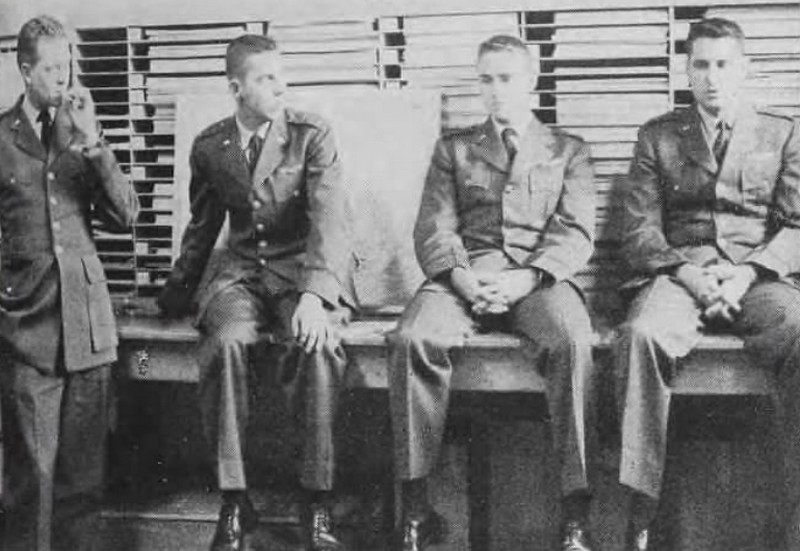
The crew of 44-61600 were Major Benjamin S. Hilkeman – Flight Commander Captain James R. Bergevin-Pilot Major Leo V.
Sayre- Navigator 1st Lieutenant Joseph F...
Sayre- Navigator 1st Lieutenant Joseph F. Daly- Navigator T/SGT. Raymond Smith – Flight Engineer A/1C Weldon D.
Wegner - Radio Operator A/2C Virgil A. H...
Wegner – Radio Operator A/2C Virgil A. Herck – Radio Operator A/1C Richard H. Serogna- Dropsonde Operator S/SGT Harry S.
Reynolds -Student Dropsonde Operator T/S...
Reynolds -Student Dropsonde Operator T/SGT. Juan De La Cruz Bou – Weather Observer S/SGT. William C.
Aken - Scanner Operator.
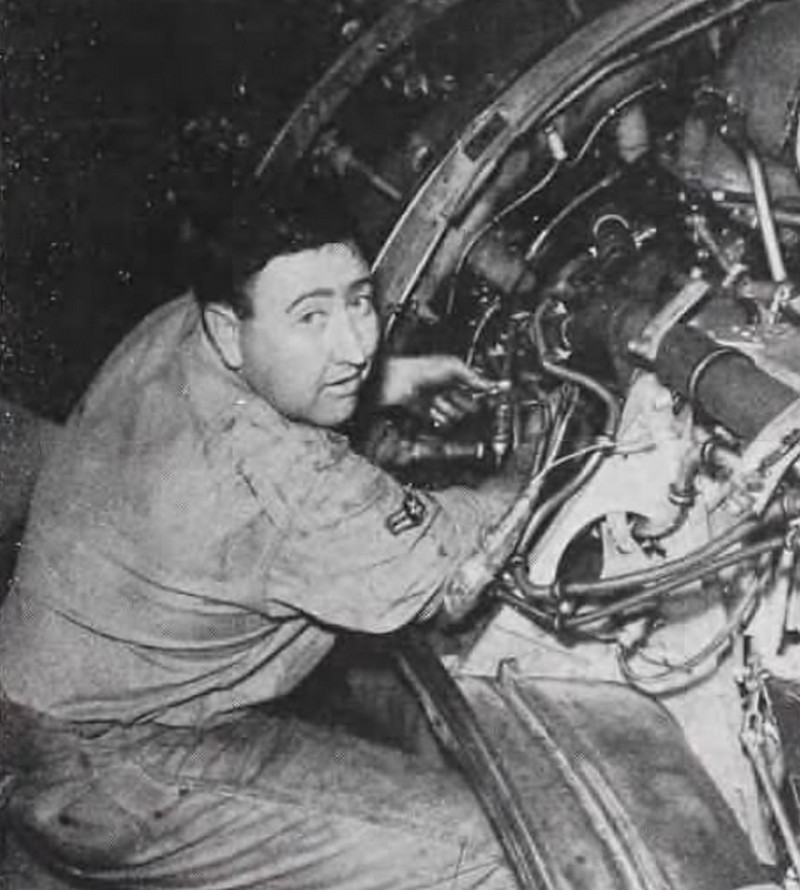
The inside man, 53 WRS
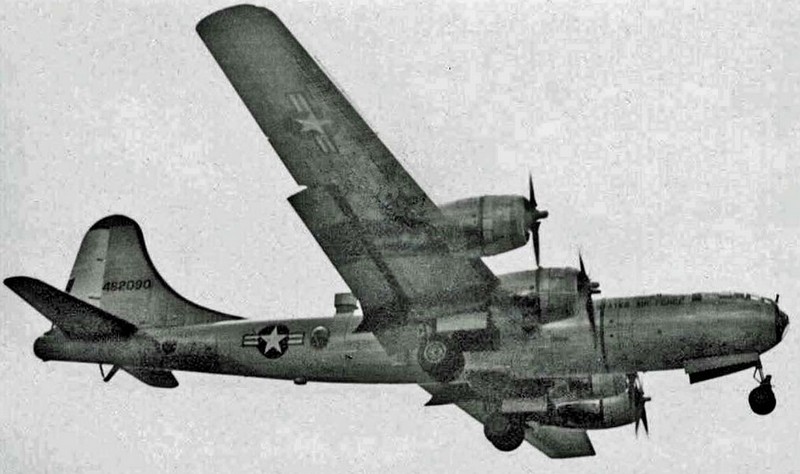
Boeing WB-29A Superfortress weather ship landing at its home base at RAF Burtonwood in 1954.53 WRS
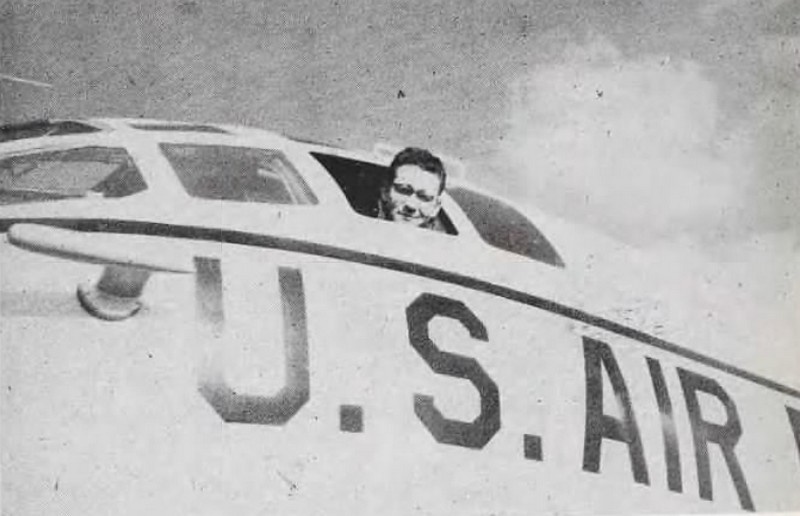
Hey Mom it's me, 53 WRS
A Boeing WB-50 of the [53 WRS] 53 Weather Reconnaissance Squadron
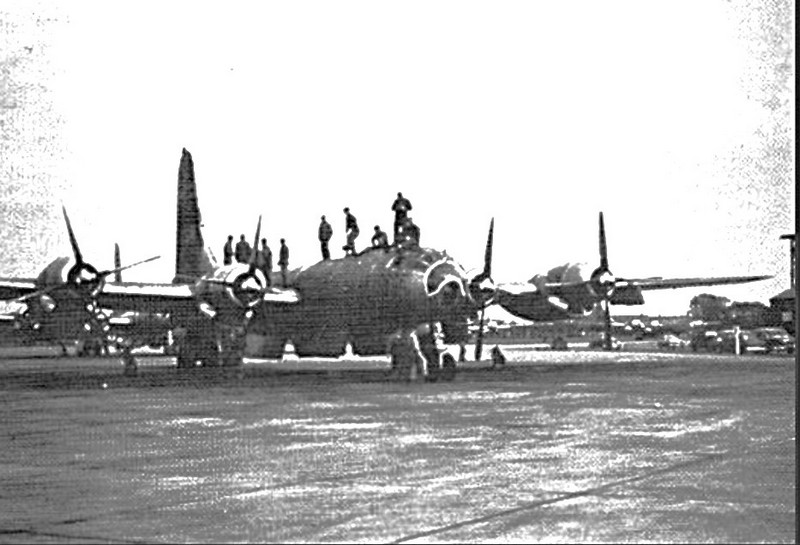
Maintenance workers are on the top of the Fuselage at Mary Ann Site Apron Burtonwood England in 1957
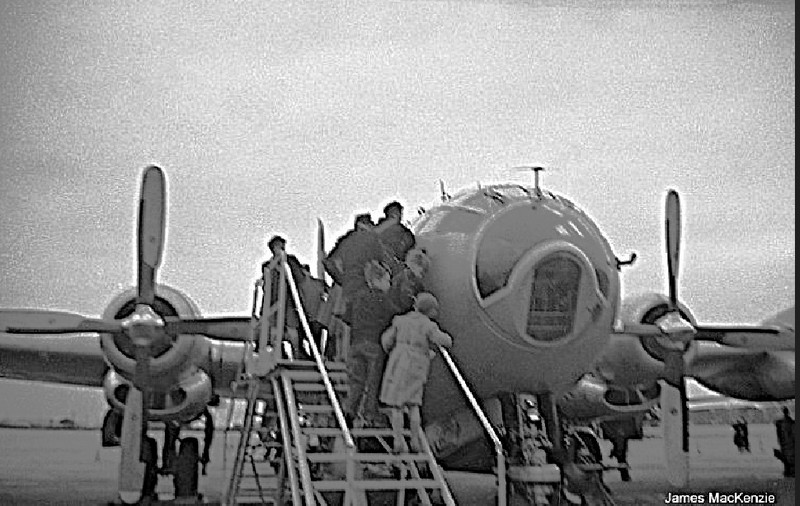
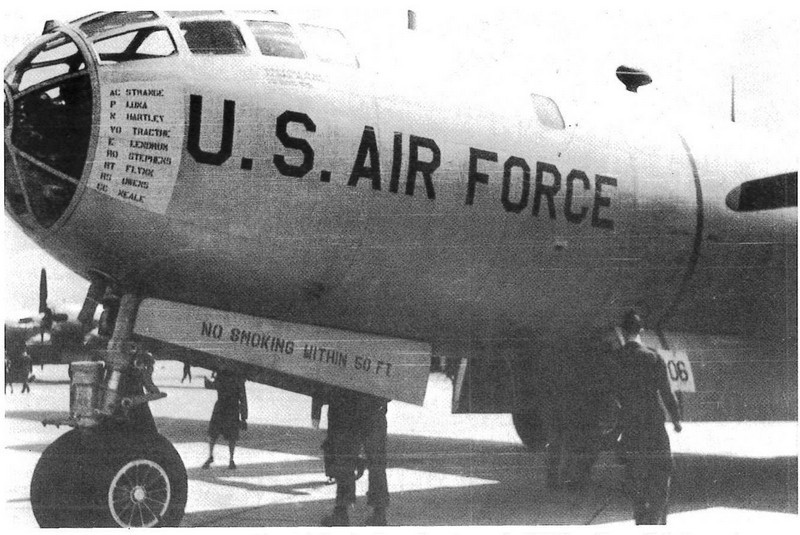
A Viewing Stand to Permit the Public to see inside the Cockpit of the WB-50 Weather ship at Mary Ann Site Apron
These are the girls that worked in the office at RAF Burtonwood during the 1950s for the 53rd Weather Reconnaissance Squadron USAF
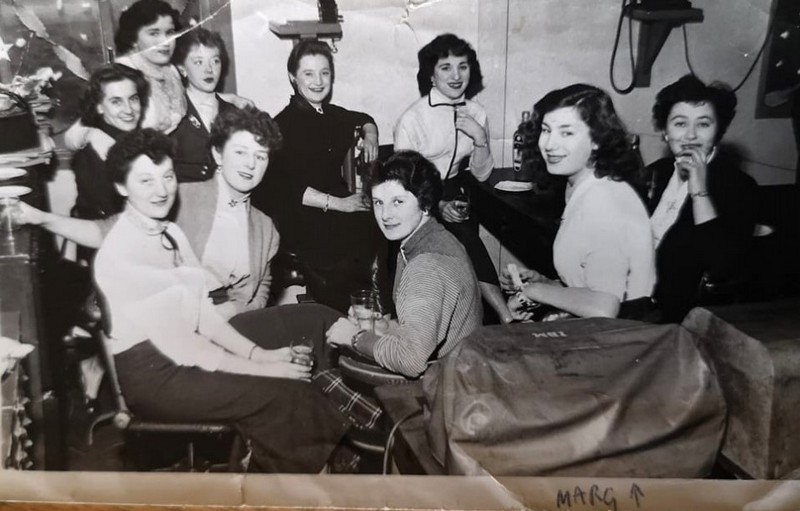
Dave Eaton from Warrington replied saying that the girl with the name ‘Marg’ at the bottom right of the photo is his sisterErin Buckley also replied by saying: “Well, we are almost 100% sure that is my Auntie Margaret (Margaret Allcock nee Chapman) on the photo?
She is first, on the left front row. We weren’t aware she worked at RAF Burtonwood as we thought she worked at Rubery Owens so we are just trying to make the connection xxx” For any help regarding the photo please email Me at:gazandmalc @ yahoo.co.uk
Members of The 53 WRS Navigation section at Burtonwood
The 53 rd Weather Reconnaissance Squadron was very proud that they never failed to complete their mission although they lost Boeing WB-29A 44-61600 they had an excellent record apart for bird strikes. On 27 January 1954, a Boeing B- 29 on a routine Falcon Alfa flight developed engine trouble when beyond the 68th parallel over the Norwegian sea. Engine number 1 was feathered and a course set to Trondheim a small airfield near Norway, but they could not make radio communication so they flew on to Oslo where a safe landing was made.
In 1957 the 53 rd Weather Reconnaissance...
In 1957 the 53 rd Weather Reconnaissance Squadron won the Senter Award for excellence in weather Reconnaissance & also, they were Awarded the Military Air Trasport Services flying safety Trophy. Dennis Sullivan – Staff Sgt 1954 – 1957 Back in May 2012 we were lucky enough to make contact with someone who was actually involved with the 53rdWRS. His name is ‘Dennis Sullivan’ & he served at Burtonwood from Feb/1954 till Feb/1957.
Here in Dennis’s own words is what his
Here in Dennis’s own words is what his role was in the 53rd& a little about the system that they used whilst on these long missions: “My job was a Ground Crew Chief (I was Staff Sgt.) in charge of the airborne radar systems for 4 of our 8 planes. There were three systems on each plane. Navigation (this was the familiar circular display that depicts the land mass below), the second system was LORAN which gave you three points of reference which then enabled you to determine your position.
The last was a radio altimeter which gau...
The last was a radio altimeter which gauged your altitude. The normal complement of crew was ten. I was not a crew member on flying status.
I was only on a flying crew if
I was only on a flying crew if there was a malfunction in the air that wasn’ t apparent when airborne.” Below are photos that Dennis has kindly emailed to us from his own private collection (please NO copying without permission from Dennis himself).
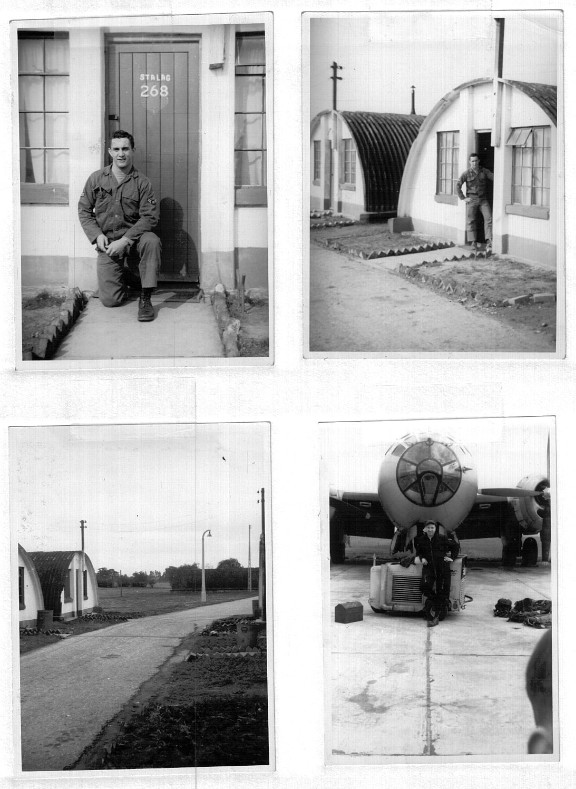
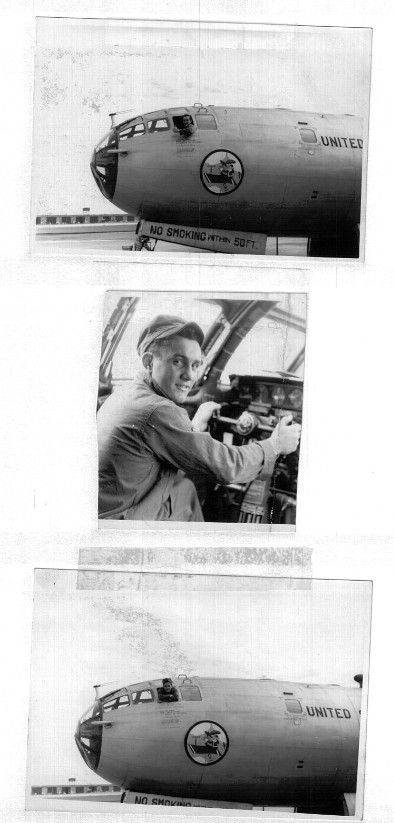
Colonel William W. Riser Commander of th...
Colonel William W. Riser Commander of the 53rd Weather Reconnaissance Squadron…. Administrative personnel, pilots, Mechanics, Navigators, Radio-men and Weathermen, all play essential parts in this exacting operation.
Charged with the responsibility of perfo...
Charged with the responsibility of performing aerial reconnaissance over the North Atlantic, the Arctic sea, and the Norwegian sea areas, 3,000-mile tracks are flown daily and weather data is gathered every 150 miles along the way. This data is immediately relayed to the 53rd weather Monitor at Burtonwood & from here, the weather data is checked and transmitted to High Wycombe Air Weather Central for dissemination to all stations requiring the information. and In twenty minutes can reach the most distant parts of the globe. From this 53rd data emerge many of the weather forecasts that appear in the daily newspapers and on T.V. with a distinguished record of successes including the coveted Senter Award for excellence in weather reconnaissance the 53rd has set an enviable mark.
And the kids of Britain will never forge...
And the kids of Britain will never forget the 53rd Weather Reconnaissance Squadron- the flyers who took their letters and delivered them personally to Santa Claus in an annual Christmas Letter- drop in the frozen wastes of the far North. Lt Colonel W. Riser Jnr, Commander of the 53rd Weather Reconnaissance Squadron at Burtonwood

Major Wernette is on the left & Major Cossaboom is on the right & they are standing in front of one of their Boeing WB-50 weather reconnaissance aircraft

Flight crewmen relax

Norahs Chuckwagon

Boeing WB-50 Pratt & Whitney radial Engine being overhauled inside one of the C-type hangars at Mary Ann site

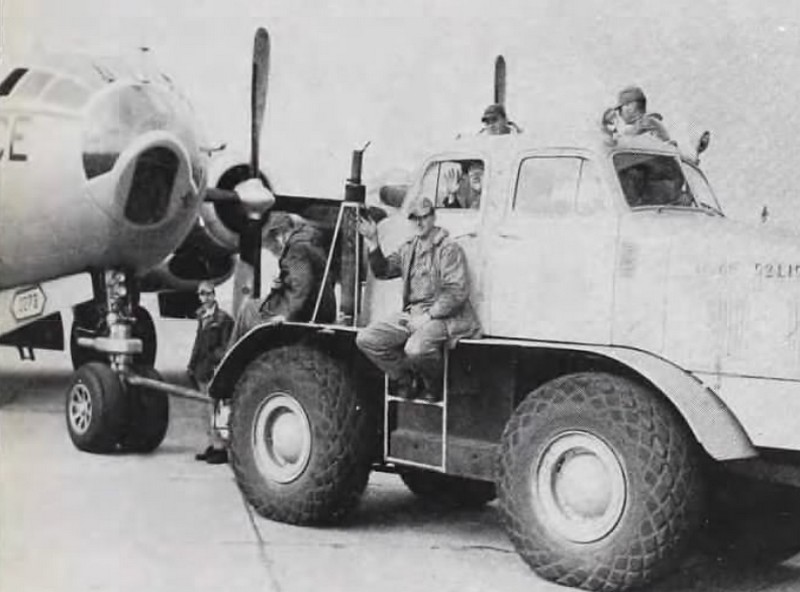
Tow truck for moving the Boeing WB 50s around the Mary Ann site apron
Come and join us

Line members

Now look who is over there

Post Flight

Ground crew on the Mary Anne site Apron are working on a Boeing WB-50 Pratt & Whitney Radial Engine

Boeing WB50 Superfortress tail number 462090 on the mary ann site apron
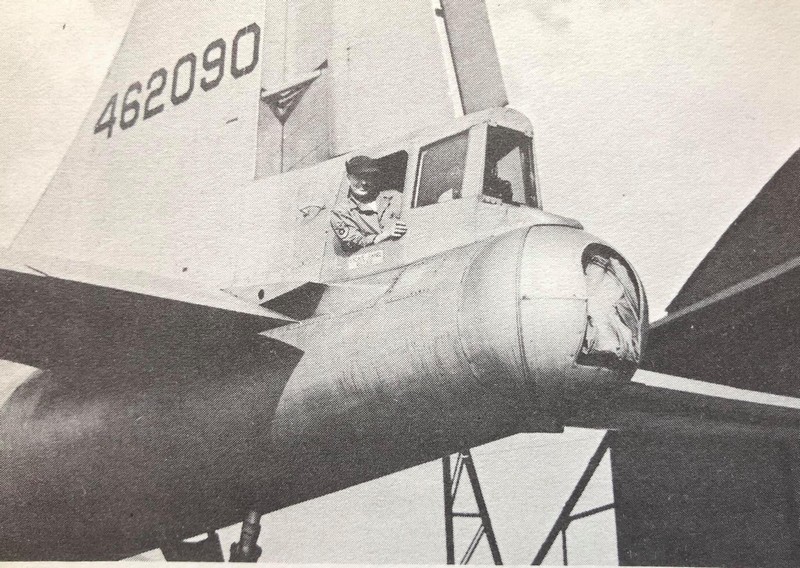
Boeing WB50 Superfortress with its tail sticking out of one of the C-Type hangar on mary ann site.
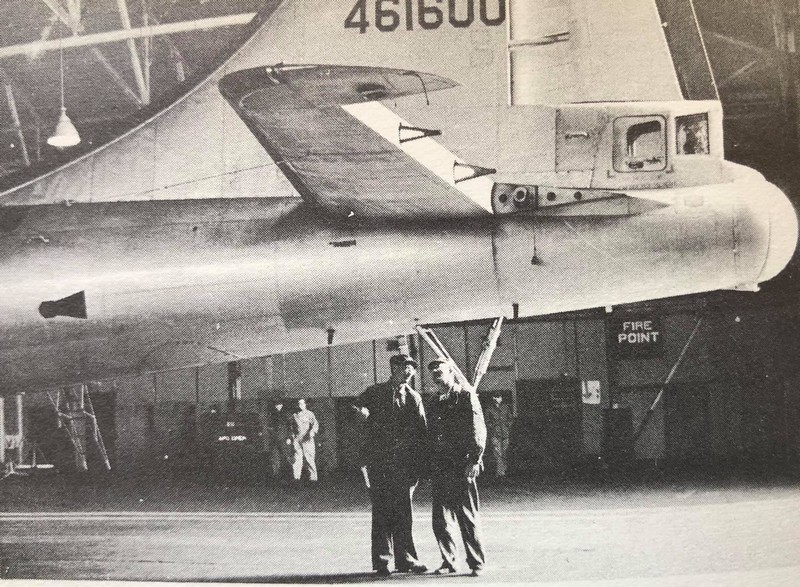
Boeing WB29 Superfortress tail number 461600 having maintenance on its elevator inside one of the C-Type hangars on mary ann site.
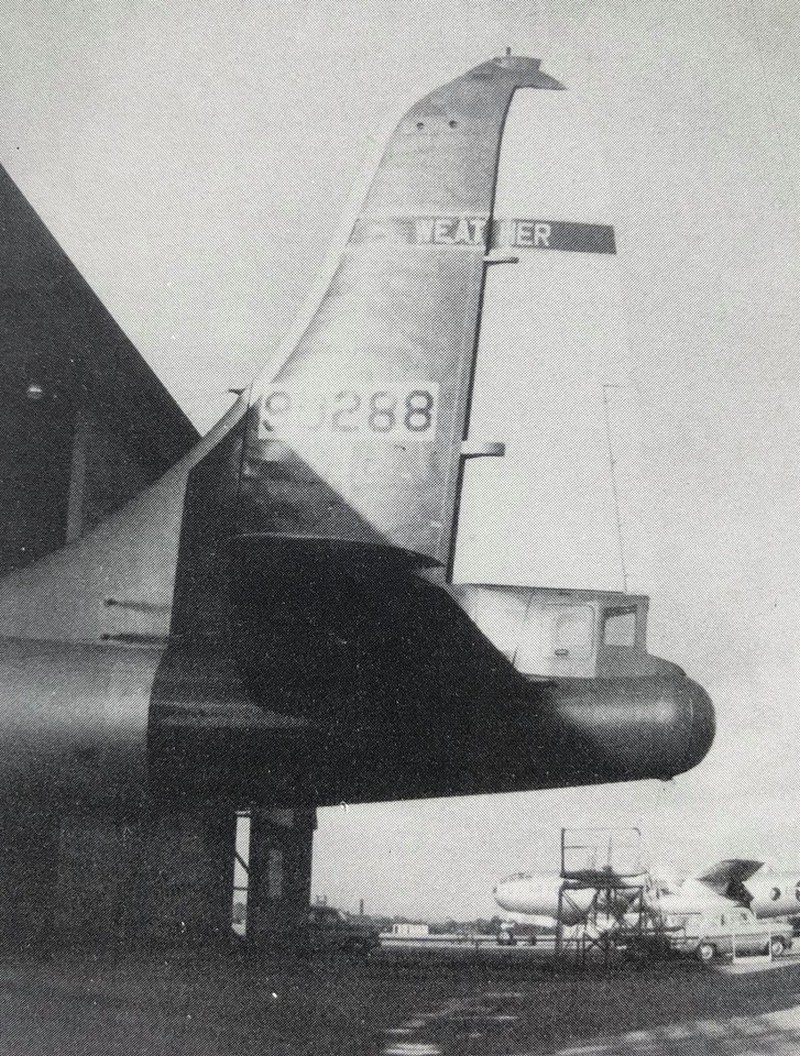
Boeing WB50 Superfortress on the mary ann site apron with the technical site in the background.
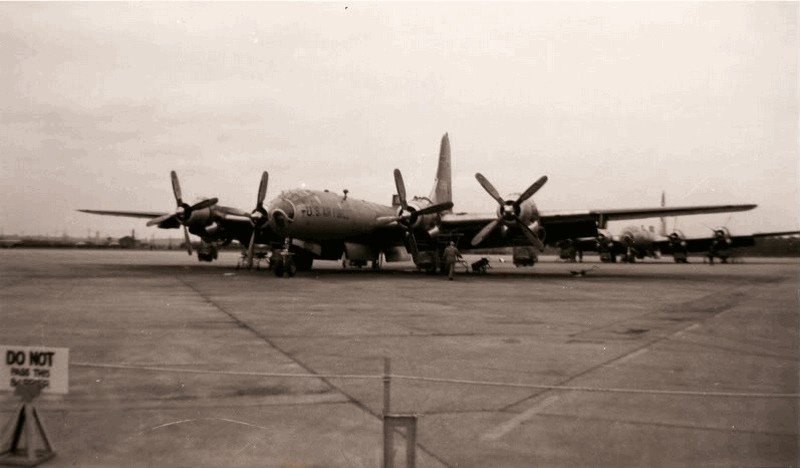
Boeing WB50 Superfortress Landing at Burtonwood
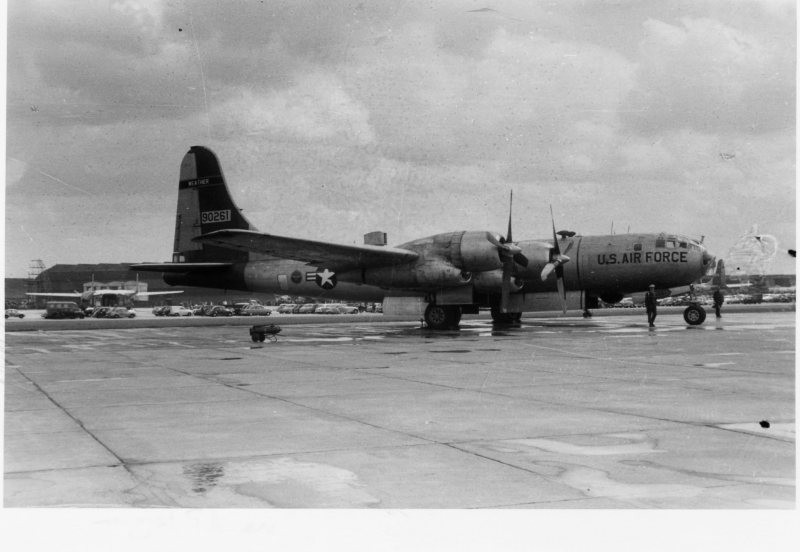
During 1959 Boeing WB-50D Superfortresses which at present comprise the 53rd W.R.Squadron’s fleet is 80060, 80071, 80116, 90261, 90273, 90275, 90286, 90288 and 90302. The reason for the recent absence of 90288 is that it has been to Birmingham, Alabama, for general overhaul by Hayes Aircraft.
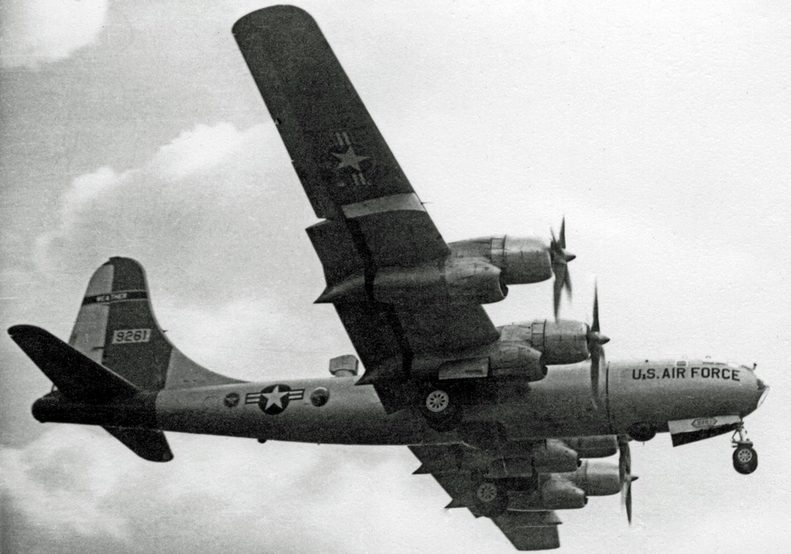
Boeing WB50 Superfortress on one of the 'Open' Days in the 1950's. (Note the weather sampling turret on top of the fuselage)
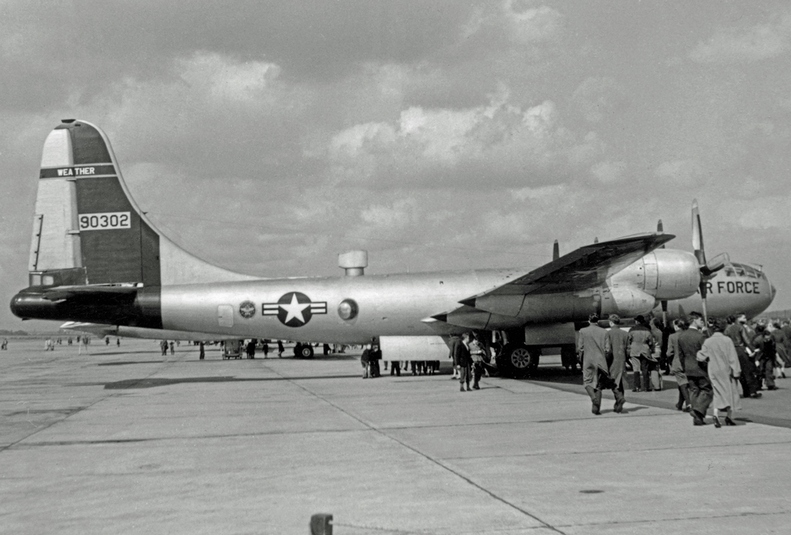
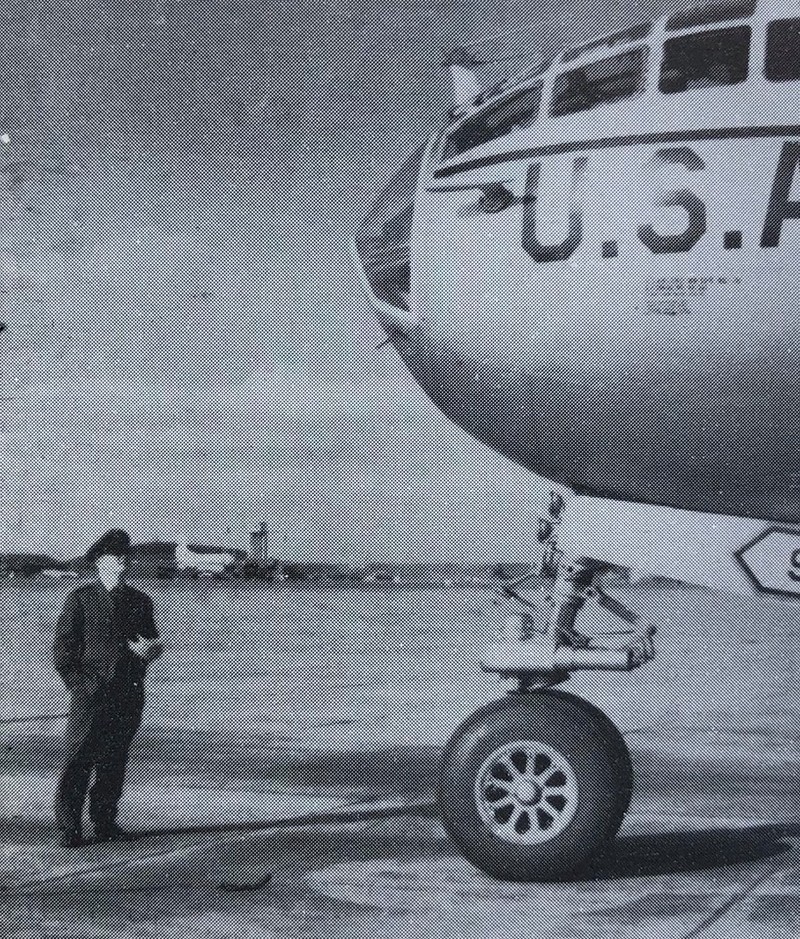
Boeing Superfortress WB-50S of the 53rd Weather Reconnaissance Squadron of the USAF at the Burtonwood Mary Ann site apron during the 1950s

Boeing Superfortress WB-50D of the 53rd Weather Reconnaissance Squadron - tail number 90275
Boeing Superfortress WB-50D of the 53rd Weather Reconnaissance Squadron tail number 90275 of the USAF at the Burtonwood Mary Ann site apron The public was invited to look in at the cockpit of the WB-50D In the background is C-type hangar number 5 Note the Weather sampling turret on the top of the aircraft’s fuselage Richard Ward took this photo on the 17th of May 1958 at the public open day

Boeing Superfortress WB-50D of the 53rd Weather Reconnaissance Squadron of the USAF tail number 9275 at the Burtonwood Mary Ann site apron
Richard Ward took this photo on the 19th of May 1956 at the public open day

Boeing Superfortress WB-50D of the 53rd Weather Reconnaissance Squadron

Boeing Superfortress WB-50D Tail Number 90261 of the 53rd Weather Reconnaissance Squadron
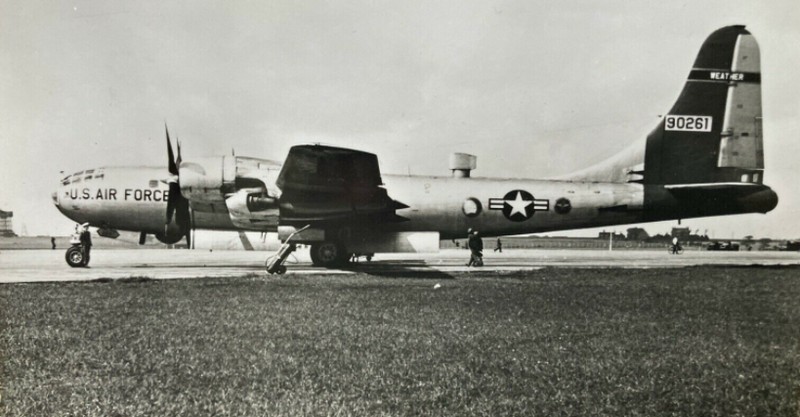

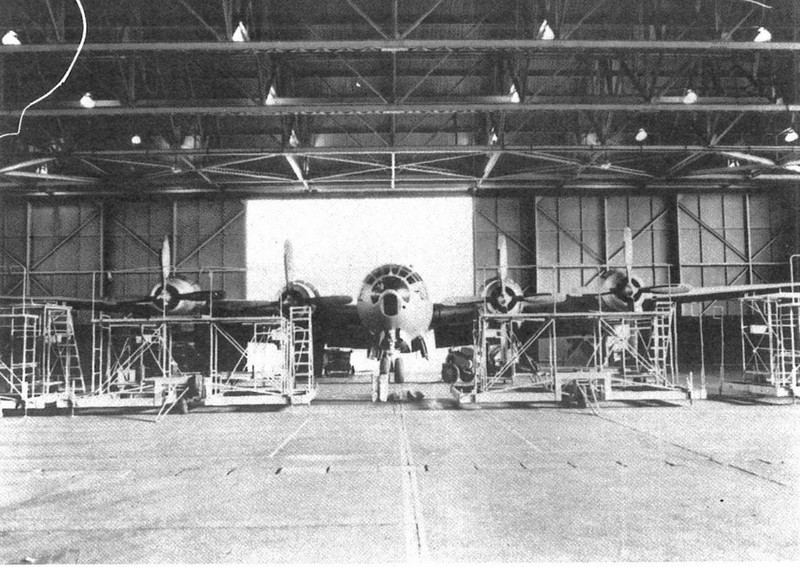
Boeing Superfortress WB-50D Undergoing Maintenance
The 17th of May 1958 open-day plan shows the location of the hangars and the Mary Ann site display area

Boeing WB-50 80071 of the 53rd Weather Reconnaissance Squadron on the Mary Ann Site Apron on the 17th of May 1958

Boeing WB-50 Superfortress on Mary Ann Site.
Boeing WB50 Superfortress on Mary Ann Site Next to one of the ‘C’ Type Hangars. (Bold Power Station Cooling Towers Can Clearly be Seen in the Background)
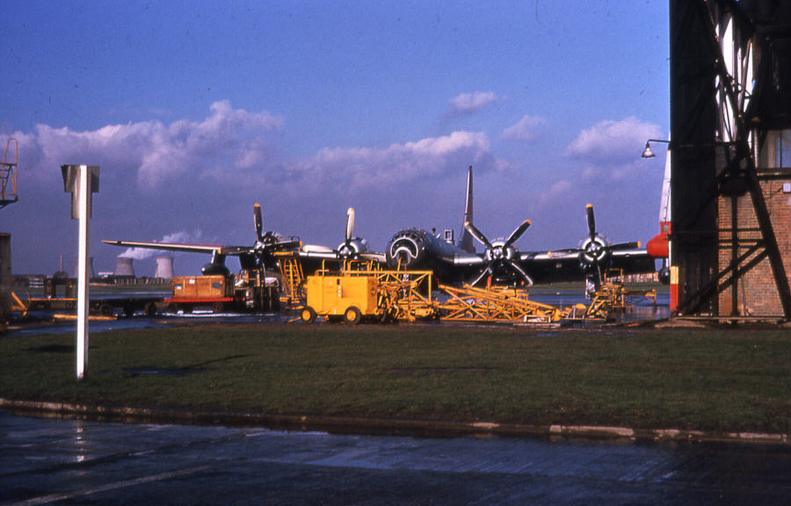
53rd Weather Reconnaissance on a Falcon Alpha Mission 1957 Over the Ice Pack.
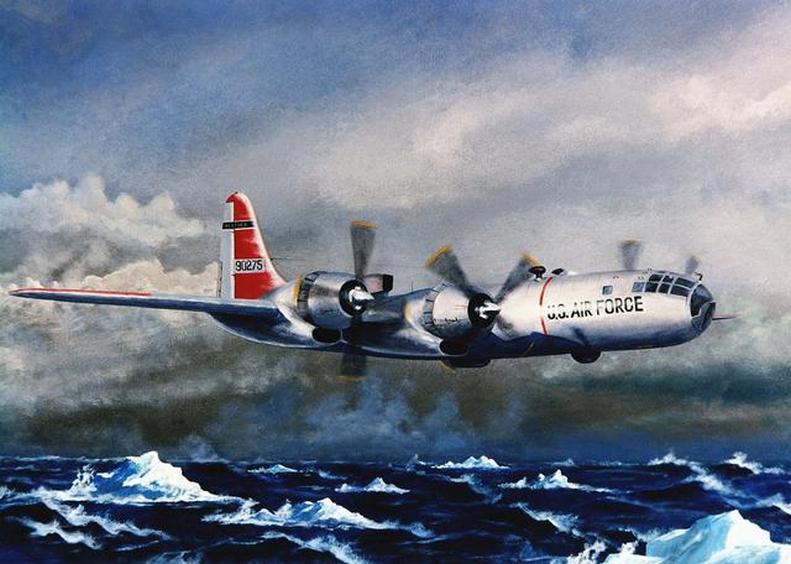
The Falcons have left Burtonwood. Some folk in the north of England will be glad. They objected to being roused early every morning by the WB-50 roaring across their rooftops.
They could not know the connection betwe...
They could not know the connection between that flight and the weather forecasts they would listen to on the radio during the rest of the day. The Falcons—the 53rd Weather Reconnaissance Squadron, U.S.A.F.—left Burtonwood because the American Air Force base is being closed. They will be continuing their meteorological flights to the North Polar region and over the Atlantic from their new base at Alconbury, near Huntingdon.
But I think we might take this opportuni...
But I think we might take this opportunity of thanking them for the work they did while at Burtonwood. The 53rd is one of seven U.S.A.F. weather reconnaissance squadrons stationed in various parts of the world. It came to England in November 1953 from Bermuda, where it had become famous as the Hurricane Hunters.
The squadron is commanded by Col. Willia...
The squadron is commanded by Col. William W. Riser, Jr.
All tracks flown by the 53rd are named
All tracks flown by the 53rd are named Falcon. The track of the first meteorological flights in England was Falcon Golf, and lay mainly over the Atlantic. When the B-29s with which the squadron was equipped were replaced by WB-50s this daily flight was extended and the track renamed Falcon Delta.
This track was flown for the 792nd and
This track was flown for the 792nd and last time on April 2. The new daily flight, Falcon Echo, is still made over the Atlantic but now goes farther south. In addition to the daily flight, Falcon Alfa was flown every third day and occasionally Falcon Special was added, to gain special data on a specific system or as a replacement for a mission which had to turn back.
The 53rd WRS arrived on the 7th of
The 53rd WRS arrived on the 7th of November 1953 and Departed the 22nd of April 1959 The last Falcon Echo took off from Burtonwood on April 22, but instead of returning there landed at Alconbury. Delta mission left Burtonwood at 0700 hr G.M.T. every day. The track, 3,686 miles long, extended from Liverpool to a point 250 miles north of the Azores, swung north along the 30th meridian to a point 420 miles south-east of Greenland, and then turned east back to Burtonwood.
The first leg was flown at 10,000ft, the
The first leg was flown at 10,000ft, the second at 18,000ft and the third at 30,000ft. Average time taken was fifteen hours. Weather observations were made at fixed points 150 n.m. apart.
The weatherman, seated in the nose of th...
The weatherman, seated in the nose of the aircraft, recorded wind speed and direction, pressure, humidity, temperature, cloud conditions, visibility, surface winds, and pack-ice conditions (if any). Radar findings were added. At five of the nineteen “obs” a radio-dropsonde was released.
Descending at l,500ft/min, this transmit...
Descending at l,500ft/min, this transmitted back to the operator in the aircraft readings of temperature, pressure, and humidity every 100ft until it hit the sea. Since the aircraft was unable to maintain direct radio contact “Falcon Echo” crews being briefed FALCON ECHO with Burtonwood, the information gathered was coded by the radio operator and sent to Croughton radio station, near Uxbridge. From Croughton the information was transmitted to the 53rd’s weather monitor at Burtonwood, where it was decoded and carefully checked for transmission errors before being sent by direct teletype to the Central Weather Station at High Wycombe.
Similar observations are made on the Fal...
Similar observations are made on the Falcon Echo flight, now being continued from Alconbury. The track runs down to the Madeira Islands, then swings northward to a point on the 26 deg W meridian near the Azores, then almost due north-east back to England. Falcon Alfa, flown on every day with a date divisible by three, is also being continued from Alconbury.
The track extends up the coast of Norway
The track extends up the coast of Norway into the Polar regions and back by Iceland and down the west coast of Scotland—again, out at 18,000ft and back at 30,000ft. This is the flight that achieved fame in the national Press one Christmas, when it became known that when flying over the North Pole the crewmen obliged homebase children by dropping letters there for Santa Claus. I was able to visit Burton wood before the 53rd left, and saw one of the WB-50s (four Pratt & Whitney R-4360) with which the squadron is now equipped.
The aircraft is large, with a wing-span ...
The aircraft is large, with a wing-span of 141ft, and a fuselage 99ft long and 33ft high at the tail-fin, yet there does not seem to be much room inside. There are two pressurized compartments, connected by a narrow tunnel running over what was the bomb-bay of the original Superfort. Instead of bombs this now houses a fibre tank, jettisonable in an emergency but necessary to enable the WB-50 to carry the 10,000 U.S. gal of fuel required for the weather flight.
Most of the space in the forward compart...
Most of the space in the forward compartment seems to be taken up by instruments. To ensure the navigational accuracy required for weather reconnaissance the WB-50 carries Loran APN-9, Nl gyro-stabilized magnetic compass, two ARN-7 radio-compasses, APS-23 radar, a much-used Dl periscopic sextant, Doppler (AN/APN-82) and a good old-fashioned drift-meter. As far as the navigator is concerned, the Doppler consists of six dials respectively showing wind speed, direction, ground speed, track, magnetic course and up to 50 degrees drift.
Behind the weatherman's position are the...
Behind the weatherman’s position are the seats for the two pilots, the flight engineer, and the two navigators. In spite of all the instruments, they still work out their position by dead-reckoning, relying on celestial fixes most of the time. In the rear compartment are the two radio operators and, in waist-blisters, the dropsonde operator and extra flight engineer.
I was told that these men have to
I was told that these men have to keep an eye on the wings, which the pilots cannot see, and that they also have to prepare the meals. For a moment I allowed myself to picture two men, with aprons over their flying suits, sitting in the waist-blisters peeling potatoes; but the two hot meals of meat, vegetables and gravy are, of course, pre-cooked and frozen in metal-foil sectioned plates and only need to be heated in the neat electric oven. Supplies of milk, coffee, fruit, cakes and candy are also carried.
I was told that the 53rd was proud
I was told that the 53rd was proud of the fact that it had never once failed to complete its mission. Aircraft have had to turn back with engine trouble—one with a seagull in one of the carburettor intakes—and one force-landed in Norway. But there has always been a WB-50 and crew standing by to finish the job.
The seven American Weather Reconnaissanc...
The seven American Weather Reconnaissance squadrons have a competition for the Senter Award “for excellence in weather reconnaissance.” In 1957 the 53rd won this award, and also a M.A.T.S. Flying Safety Trophy for an accident-free year. And yet most of the approaches at Burtonwood had to be made under G.C.A.
Some_ people think that every American a...
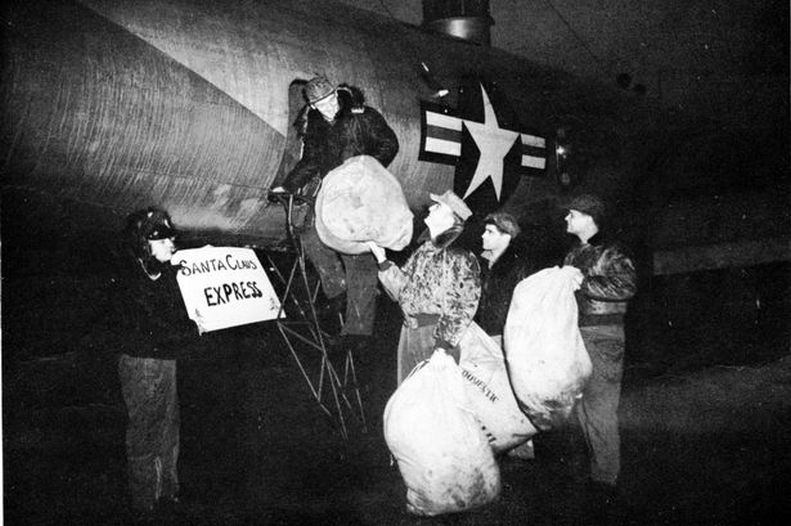
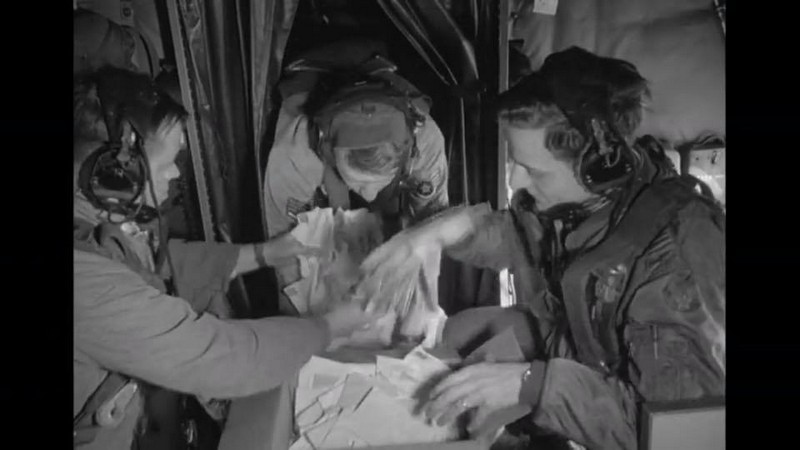
Some_ people think that every American aircraft in this country is carrying a hydrogen bomb and is a potential danger to everyone below. But here is a squadron that is making a real contribution to the safety of our aircraft as well as its own. Let us wish them good luck as they settle down at their new base at Alconbury 53rd Weather Reconnaissance Loading Mailbags of Children’s Christmas Cards to be Dropped at the North Pole for Santa Claus.
Dropping letters from British orphans and other children, including youngsters of American personnel
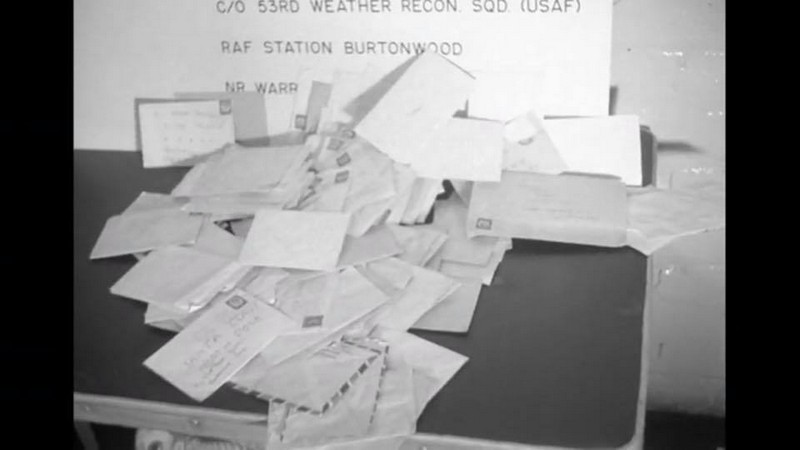
2000 letters received inside building 47A on site 6, located between technical site police station and the back of the Transent Hotel.
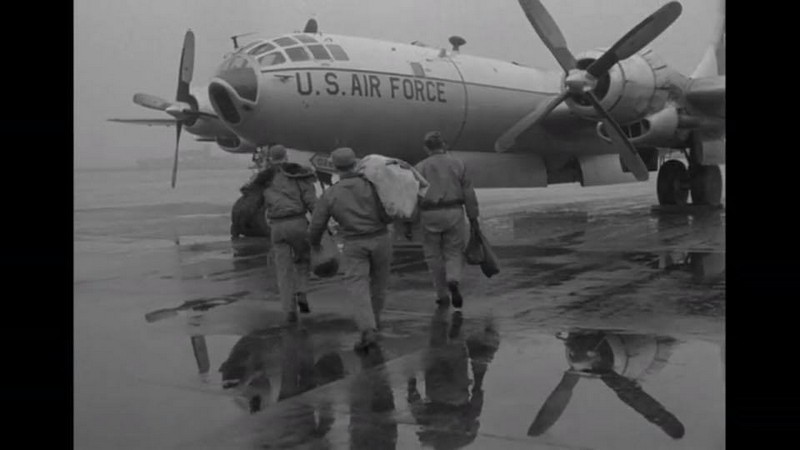
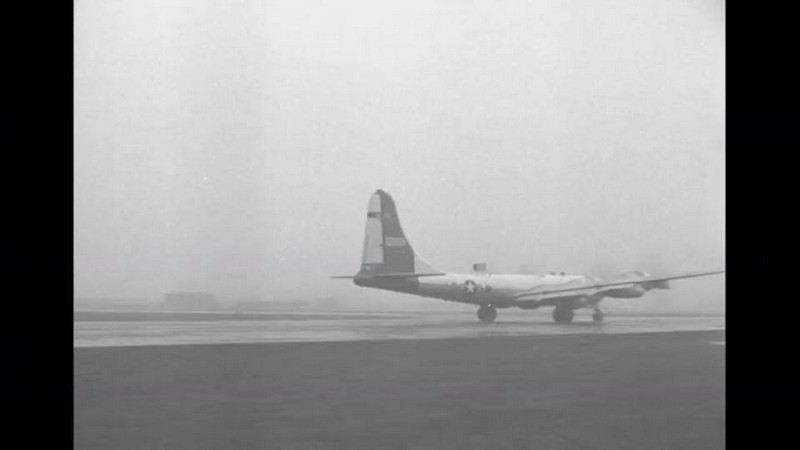
The B29 taking off from Burtonwood on route to the North Pole on its mail-drop of childrens letters
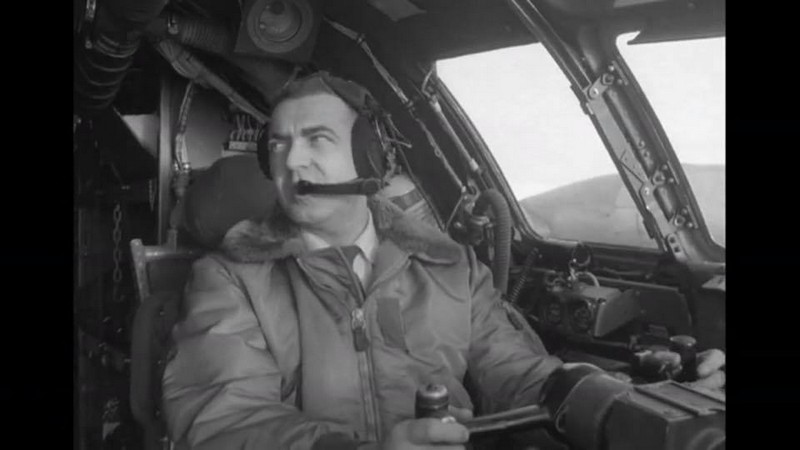
Flight engineer
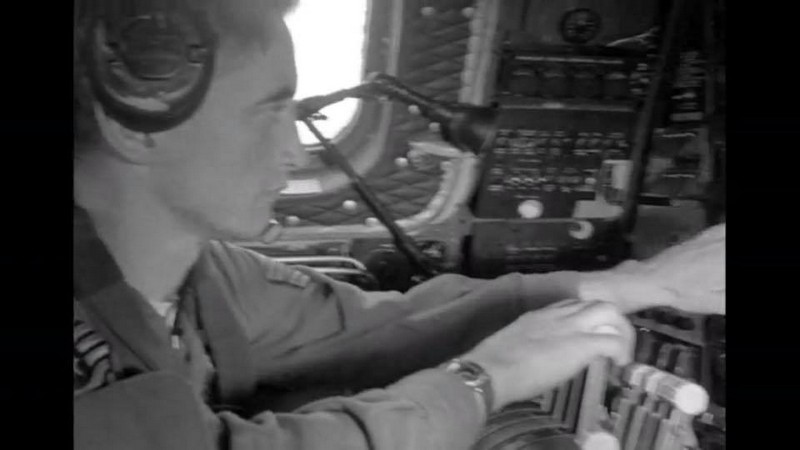
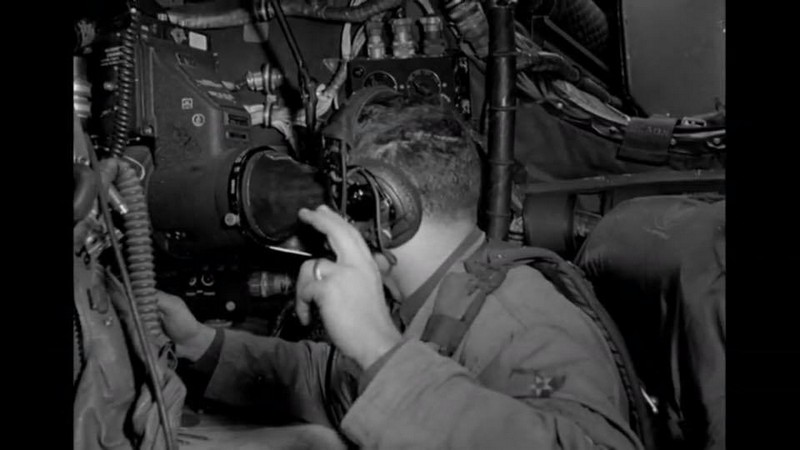
Getting letters ready for the mail drop ......
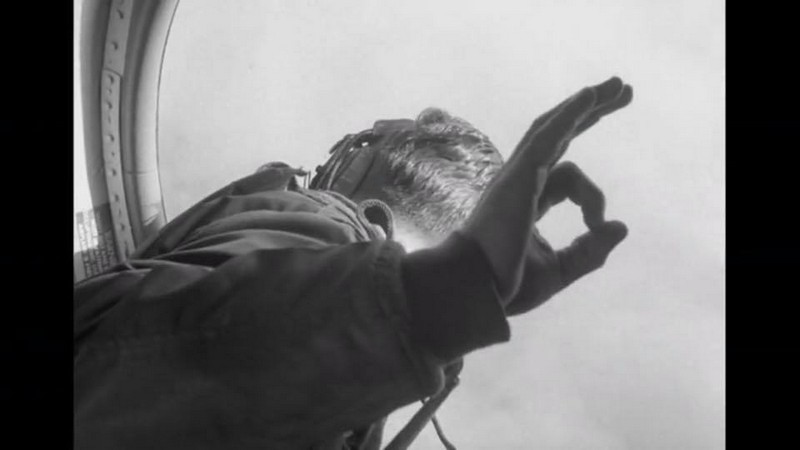
Control the precise drop area ......
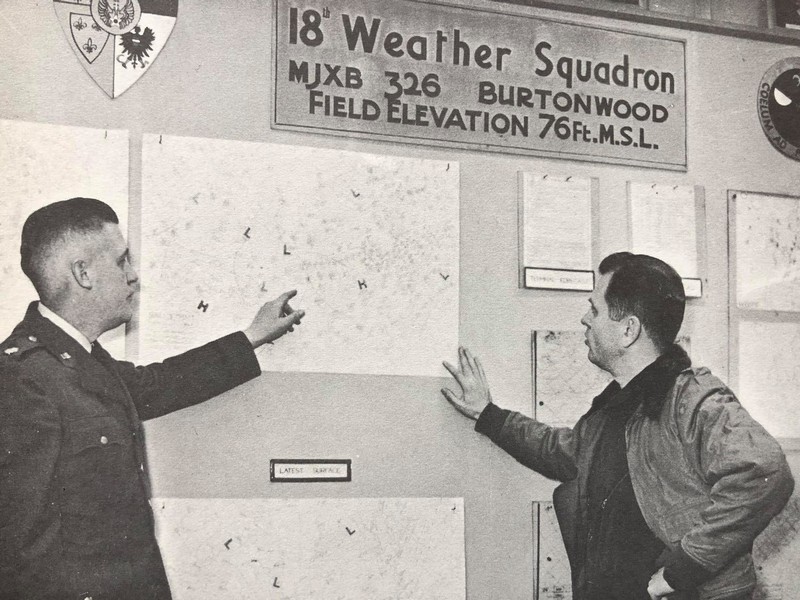
18th Weather Squadron
As well as the 53rd weather reconnaissance squadron the 18th weather squadron was assigned to Burtonwood. The 18th Weather squadron arrived at Burtonwood on December 1943 and departed on June 1945, post-ww2 the squadron returned to Burtonwood during May 1952 and departed to Prestwick in 1959 when flying at Burtonwood was wound down.
The 18th Weather squadron did not have any aircraft but operated 24 hours per day, the detachment trained with the RAF to familiarize weather forecasts with European weather patterns for each day.
53rd WRS – recently discovered photographs
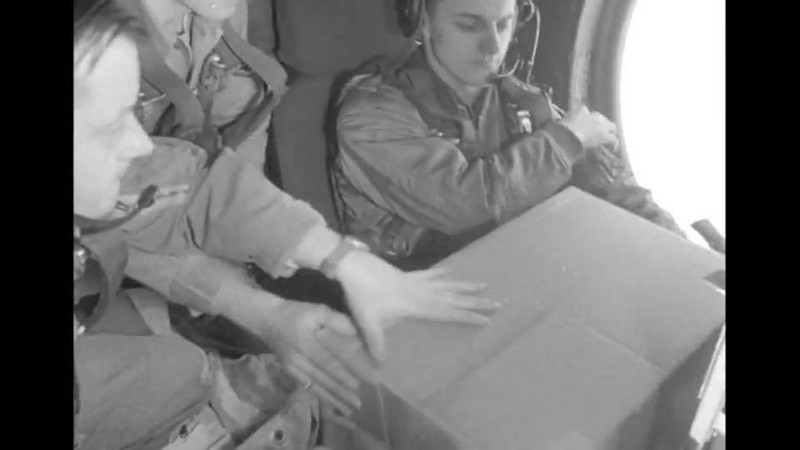
A collection of recently discovered photographs showing daily life and operations of the 53rd Weather Reconnaissance Squadron at RAF Burtonwood, including crew photographs and aircraft ground operations.